
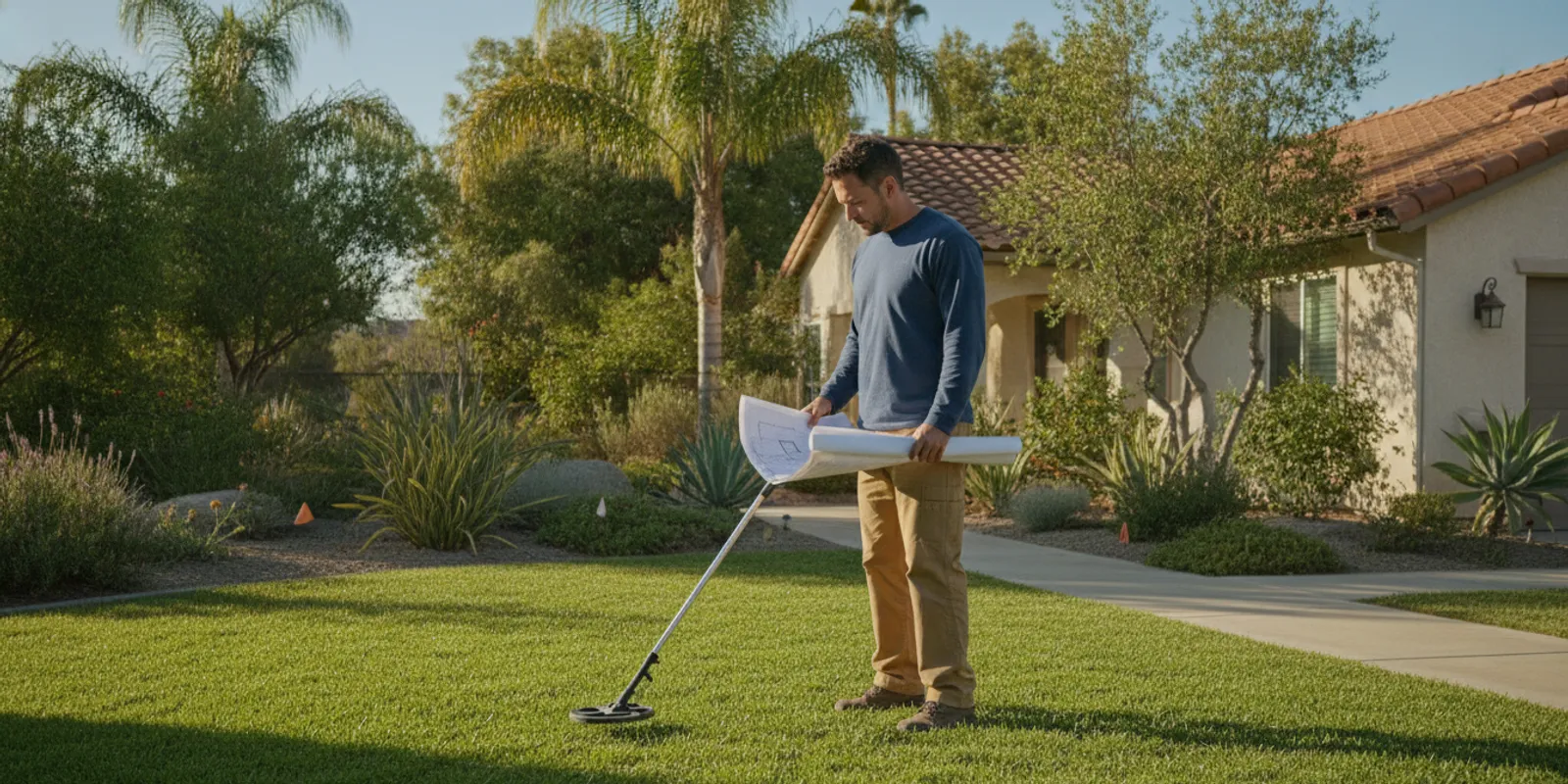
If you are wondering how to locate your septic tank, begin with records and observations instead of digging at random. A tank may be hidden under lawn, gravel, or landscaping, and its access covers may sit below grade. The useful first goal is to narrow down a search area; exact location and depth should be confirmed before excavation or service work.
Ask about septic locating help
Why can a septic tank be difficult to locate?
A septic system is underground, and its visible features can be subtle. The tank may have one or more access openings, but lids can be covered by soil, turf, mulch, or later landscaping. Older systems may have incomplete installation records. A property may also have undergone additions, grading, paving, or repairs that changed the yard since the system was installed.
The tank is just one component. Wastewater usually travels from the building through a sewer pipe to the tank, then flows to a dispersal area such as a drain field or seepage pit, depending on the approved design. The arrangement and direction can differ from one property to another. A basic review of the main parts of a septic system can help you understand what you are looking for, but a diagram cannot identify the layout at your address.
Do not rely on a rule of thumb such as “the tank is always a certain distance from the house.” Setbacks, lot shape, slope, soil conditions, property boundaries, and the system’s age all affect placement. Even if a tank is in a likely area, its exact location and depth remain uncertain until confirmed.
What should you gather before searching the yard?
Start with documents that may show the original design or a previously identified access point. Make a simple folder or digital file so that dates, sketches, and measurements can be compared rather than remembered loosely.
- Permit and property records: Look for septic permits, approved plans, installation records, or inspection documents held by the local agency that handles onsite wastewater records. Ask whether the record is tied to the parcel address or assessor information, and whether older documents are stored separately.
- Prior owner documents: If available, request a site sketch, maintenance notes, receipts, and inspection reports. A drawing may show distances from a fixed point on the house, such as a corner or exterior wall.
- Service history: Contact a prior pumping or repair provider if the owner has that information. Ask for written notes, approximate measurements, photographs, or a sketch that identifies the access point.
- Building plans: Plans sometimes indicate where the building sewer exits the structure. That can suggest a direction to inspect, but it does not establish the tank’s exact position.
- Recent project records: If there has been grading, an addition, a fence, or utility work, collect those plans too. They may explain why an old drawing does not match current surface features.
For a property in Riverside or San Bernardino County, ask the relevant local agency which office maintains records for that parcel. County boundaries and local responsibilities matter; do not assume a process used in a neighboring jurisdiction applies to your address. Records may show only the permitted layout, and work completed later may not appear.
How can yard clues narrow the search?
Once you have looked for documents, walk the property and compare the evidence. Treat each clue as a reason to inspect an area more closely, not as proof that a tank is present. Keep notes about where you looked and photograph possible features before anything is moved.
- A cleanout or visible pipe where the sewer exits the building can indicate the general direction of wastewater flow.
- A small round or rectangular cover may be a tank access point, though it could also belong to a utility or another structure.
- A slight mound or depression can reflect prior installation or settling, but ordinary landscaping and drainage can create similar shapes.
- A patch of grass that grows or dries differently may be a clue, but weather, irrigation, and soil differences can produce the same pattern.
- A straight line of disturbance, older paving, or a remembered route from past work may help you compare the yard with records.
- A service provider’s measurements from a known corner of the home can help you re-create a likely search zone.
Think in terms of evidence quality. A recent service record that measures a lid from a permanent wall is more specific than a general recollection. A marked site plan may be useful, but check its date and note whether the drawing says “proposed,” “as-built,” or otherwise distinguishes a planned layout from a completed one. If two clues conflict, keep both in your notes and do not choose one by digging.
How should you compare the information you find?
Use the record that is most direct and recent as your starting point, then check whether the property still matches it. The table below shows what each source can contribute and where it may fall short.
| Source | What it may tell you | How to check its limits |
|---|---|---|
| Approved permit or site plan | Designed or permitted system arrangement | Check date, parcel identification, and whether later changes were recorded |
| Recent pumping or inspection notes | Previously accessed cover and service observations | Ask whether measurements and sketches are included |
| Building sewer exit point | Likely direction of flow leaving the house | It does not establish tank position, size, or depth |
| Surface features | A possible search area or visible access cover | Compare against records; features may belong to something else |
| Prior owner recollection | Potential history, repair, or access information | Verify with documents or a qualified site assessment |
For example, suppose a permit sketch places the tank on the side yard, while a former owner remembers a pumping visit in the rear yard. Do not assume either account is correct. The sketch may show an original plan, while the memory may refer to a cleanout or a different system component. Ask for dated service documentation and compare fixed measurements. If the mismatch remains unresolved, get the location confirmed rather than widening the search through uncontrolled digging.
What should you avoid while looking?
Do not dig blindly, use a sharp rod to probe deeply, or lift a heavy cover without knowing what it is and how to handle it safely. A probe can damage a tank, pipe, or other buried component, and an unidentified lid may not be a septic access point. Digging can also expose underground utilities. Contact the appropriate utility-marking service before any planned excavation; utility marking and septic locating address different risks.
Never enter a septic tank. Do not lean over an open tank or leave an opening unattended. Keep children and pets away, and do not work alone around a suspected access point. A cover may be heavy, unstable, or damaged. If a lid is broken, exposed, or appears unsafe, keep people away and arrange qualified assistance rather than trying to repair or move it.
Avoid driving, parking, or placing heavy equipment over a suspected tank or dispersal area. Vehicle loads can damage buried components, and repeated traffic can compact soil where wastewater is meant to disperse. Do not plant trees or shrubs or install a patio, shed, or fence until you know where the system components and access routes are.
When you need more background on why wastewater systems and environmental protection matter, the U.S. Environmental Protection Agency is a federal information source. For a property’s record, local requirements, and parcel-specific direction, consult the responsible county or local authority rather than treating general federal information as a site plan.
When is professional confirmation the right next step?
Ask for professional help when records are missing, clues conflict, access covers are buried, or you need a reliable location before pumping, inspection, repair, construction, or landscaping. A qualified provider can review the system history and assess the site with appropriate locating methods. The method depends on the surface, soil, system design, and information already available; no single clue should be treated as confirmation by itself.
It is especially useful to confirm the tank and the dispersal area before a project that involves excavation, grading, a driveway, a new structure, or a fence line. The proposed work should be compared with the system layout, including the route needed to reach the access point for future service. If you are planning new or replacement onsite wastewater work, a septic percolation test planning guide can explain one related part of site evaluation, though it does not locate an existing tank.
If your reason for locating the tank is a warning or suspected malfunction, report the symptoms rather than focusing only on finding the lid. Slow drains, sewage odors, wet areas, or an alarm may call for system evaluation. The septic alarm guide covers safe initial observations; do not open equipment or enter the tank to investigate. For service context, see the company’s septic system service information.
What information helps make a locating visit useful?
Before asking for help, gather the property address, parcel information if available, approximate home or system age, any plan or permit you found, and the dates of previous inspections, pumping, or repairs. Include clear photos of suspected covers, cleanouts, yard changes, or the point where the sewer line appears to leave the building. Do not remove soil or lift covers to get a better picture.
Explain why you need the location. A request made before landscaping or construction has a different planning context from a request connected to an alarm or backed-up plumbing. Describe the proposed work area, the timing, and whether access to parts of the yard is restricted by gates, paving, pets, or stored materials. This helps the provider understand the site visit and what records to review.
If a previous provider left a sketch, include the original rather than redrawing it from memory. If you have several documents, label each with its date and source. A simple comparison can expose gaps: perhaps one plan identifies the tank but not the dispersal area, or a receipt confirms service without giving measurements. Knowing what is missing helps make the next question specific.
When service history is part of the question, it may also help to review the septic tank pumping guide and the explanation of how a septic tank works. These resources provide context about system components and routine service, but neither substitutes for confirming the tank location at your property.
How do you keep a confirmed location useful?
After a qualified person confirms the location, keep the written notes, photographs, and any measurements with the property records. Ask what each marker represents: a tank edge, access lid, cleanout, pipe route, or an approximate search point. Those distinctions matter when a contractor plans future work. A mark on the ground may not remain visible after mowing, rain, or landscaping, so retain a durable record as well.
Share the location with household members and anyone planning work on the property. Before digging later, compare the proposed work with the recorded septic components and arrange utility marking through the appropriate process. If the system is serviced again, ask that new observations be added to the file. Over time, a dated record trail is more reliable than relying on one person’s memory.
Where the system’s layout is uncertain or later work may have changed it, state that clearly when sharing the record. Do not present an approximate spot as an exact surveyed location. If a new project depends on precise boundaries or clearances, ask the relevant local authority and project professionals what level of confirmation they require.
Frequently asked questions
Can I locate a septic tank from the house alone?
The direction of the sewer pipe leaving the building can help narrow a search area, but it does not identify the tank’s exact location or depth. System layouts, lot conditions, and later property work vary, so use the house as one clue alongside records and service notes.
Will county records always show the tank?
No. Records may be incomplete, unavailable, or limited to an approved or original layout. Ask the responsible local agency what it has for the parcel and compare the documents with service records and current site conditions.
Is every round cover in the yard a septic lid?
No. Covers can serve utilities or other structures. Do not open an unidentified cover or assume it belongs to the septic system. Compare it with records and have it identified if it may be an access point.
Should I locate the tank before landscaping or construction?
Yes. Confirm the tank and dispersal area before excavation, grading, construction, or major landscaping. Also arrange utility marking before digging, since that process identifies a separate set of underground hazards.
Plan a safe next step
Start with the strongest records available, use surface clues only to narrow the search, and confirm the location before digging or building. If the records are unclear or you need the location for septic service in the Inland Empire, share the documents and property details with a qualified plumbing professional.

Leave a Reply