
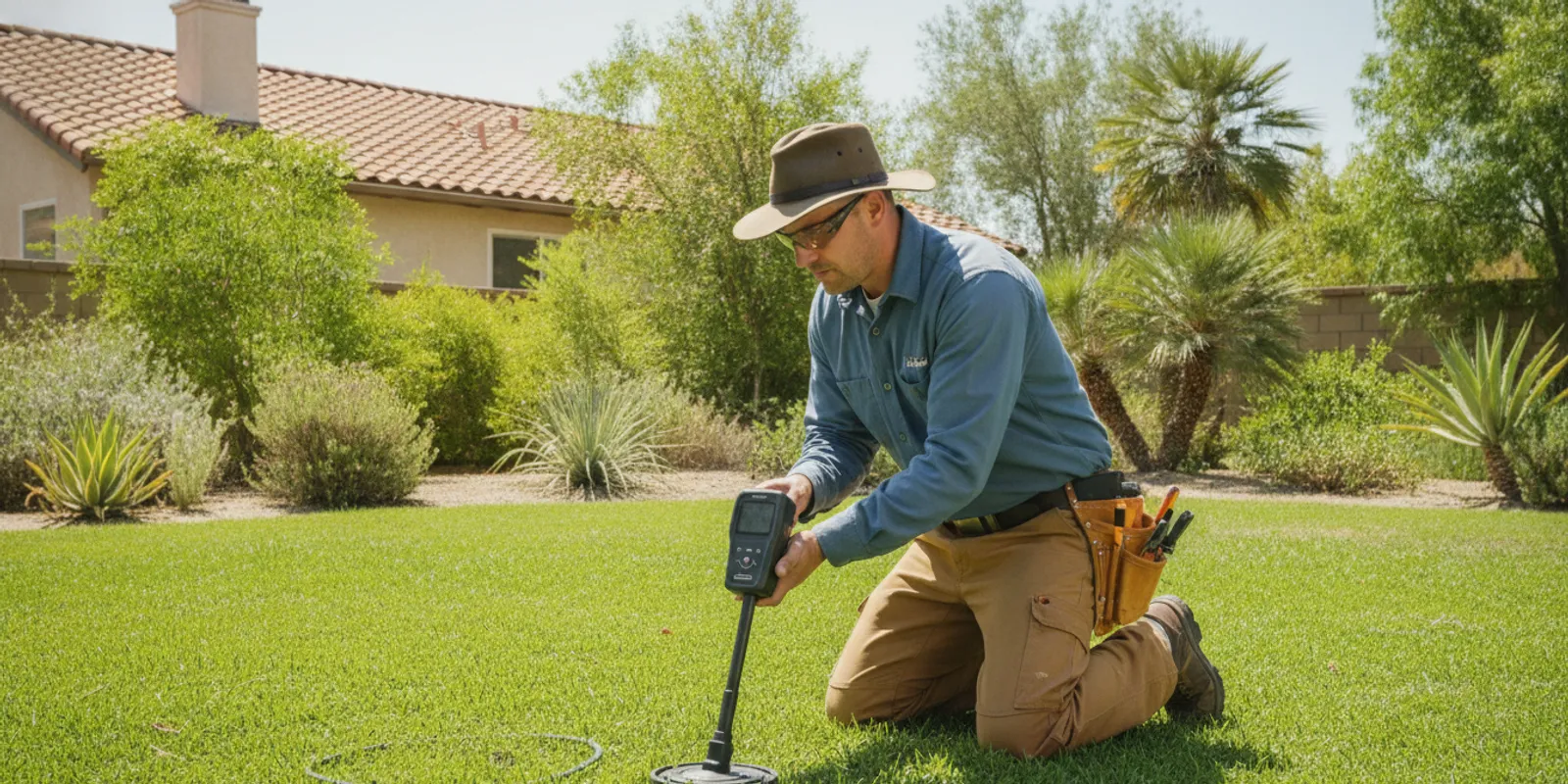
If you are wondering how to find a septic tank on your property, start with records rather than digging. A tank may be buried beneath grass, gravel, or landscaping, and its location is not always obvious from the surface. For homeowners and commercial property owners in Riverside and San Bernardino Counties, a careful search can help you plan maintenance, investigate a concern, or prepare for work without damaging buried components.
Ask about septic system service
Why can a septic tank be hard to spot?
Septic tanks are commonly installed below ground. Soil, plants, paving, and later yard improvements can hide the access covers. The tank may also be set back from the house, near a driveway, or in a location that does not match a current owner’s assumptions. Older properties may have incomplete records, and a system can have more than one tank or access point.
The visible landscape is only a clue, not a map. A slightly raised area, a shallow depression, or a patch of grass that looks different from its surroundings may be worth noting, but none proves that a tank is directly below. Soil, irrigation, drainage, and previous landscaping can create similar patterns. Use clues to guide a records search or a professional visit, not to justify excavation.
It also helps to distinguish the tank from the rest of the system. Wastewater leaves the building through a sewer pipe and enters the tank; treated effluent then flows toward the dispersal area. The tank, inlet and outlet piping, access risers, and dispersal area are separate parts with different locations. A useful overview of how a septic tank works can help clarify what you are trying to locate.
What records can show the tank location?
Begin indoors with any documents kept by the current or previous owner. Search closing files, inspection reports, repair invoices, pumping receipts, and maintenance notes. A service record may mention where the access cover was found or include a sketch. A receipt alone may not show the full layout, so look for diagrams, permit documents, or notes that identify measurements from a fixed point such as a building corner.
- Property or building file: Look for site plans, septic permits, construction records, and approved system drawings.
- Previous service paperwork: Check inspection, pumping, repair, and installation records for a location description or drawing.
- Seller or property manager records: Ask whether a prior owner, facilities manager, or maintenance contractor documented tank access.
- Local records: Contact the relevant city or county office that handles onsite wastewater or building records and ask what is available for the parcel.
Record availability and terminology vary by jurisdiction, property age, and project history. An office may have a permit or plot plan but no precise measurements, or its file may be incomplete. Ask what document the office has and whether it identifies the tank, access covers, and dispersal area separately. Do not treat an old sketch as a precise field location until it has been checked on site.
When you call an office, have the parcel address and any parcel identification information available. Explain that you are looking for existing onsite wastewater or septic system records, and ask whether requests must go through a records department or another local office. Staff may need time to search older files, and some documents may not be available electronically. Keep a note of the office contacted, the date, and the record description so you can follow up without repeating the search.
It can also help to compare records from more than one source. A property file may show the original installation, while a later service invoice or permit may describe a repair or alteration. If the documents do not agree, do not choose the drawing that seems most convenient. Share all versions with the locating professional and point out which one is newer, if known. The difference may reflect a repair, a revision, or an incomplete record; only on-site assessment can help resolve it.
If you find a diagram, note its date, scale, and reference points. A drawing that places the tank a certain distance from the house may have been prepared before additions, patios, or other site changes. Preserve the original and share it with the contractor who will locate or service the system.
Which outdoor clues are worth checking?
After reviewing documents, walk the property from a safe distance and look for clues that agree with the records. Do not lift covers or disturb soil to confirm a guess. Possible indicators include:
- A known sewer pipe route leaving the building, which may help a professional narrow the search area.
- A low-profile access riser or cover that is partly hidden by soil or vegetation.
- A subtle mound, shallow settling, or change in vegetation that appears in the area shown on an old plan.
- Past service access, such as a route or work area noted on a maintenance invoice.
None of these clues establishes the tank’s exact position. Pipes can change direction, system layouts differ, and yard grading can conceal or imitate a feature. A cleanout at the building may provide access to a sewer pipe, but it is not itself proof of the tank’s location. Likewise, an alarm panel indicates a system condition, not where the tank is buried. If an alarm is active, review a safe next step in this guide to septic tank alarms rather than searching by opening the tank.
As you review the yard, write down observations without marking the ground with stakes or digging. Note fixed landmarks, such as a building corner or driveway edge, and record which features appear on an old drawing. Photos taken from several angles can help you explain what you saw to a technician, especially if vegetation or outdoor features change later. Keep observations separate from confirmed locations: a note that says “possible cover near the side path” is more useful than an unverified mark presented as the tank position. This simple record can reduce confusion when another person reviews the property.
What should you avoid while searching?
Do not dig, drive stakes, or push a metal rod into the ground to probe for a lid. A guessed location can put you near buried piping, electrical components, or the tank itself. Tank covers can be heavy, unstable, or unsafe to approach, and opening a tank can expose a person to dangerous gases and fall hazards. Keep children and pets away from any exposed opening and leave access cover work to a qualified professional.
Before any excavation, identify utility lines and the septic system components that may be in the work area. A public utility marking request may identify certain public utilities, but it should not be assumed to locate private septic piping or a tank. Ask the locating or excavation professional how private system components will be identified. Do not rely on a utility mark as confirmation of septic layout.
Keep heavy vehicles and equipment away from the suspected tank and dispersal area until the layout and condition are understood. The ground can appear firm even where buried components are vulnerable. If there is an immediate sewage backup, strong sewage odor, or visible wastewater, avoid contact and arrange an appropriate inspection rather than continuing a yard search.
How does a professional locate a buried septic tank?
A septic professional can combine records with on-site observations and locating equipment. The exact method depends on the property, access, system design, and the reason for the search. A technician may begin by reviewing a site plan and asking about past work, then inspect accessible cleanouts or system components. Where suitable access exists, specialized locating equipment may help trace a pipe or identify a tank area without opening or excavating across the yard.
In some situations, a camera with a locating transmitter can be introduced through an appropriate accessible line to help trace its route. That method depends on pipe access, condition, layout, and equipment; it does not guarantee that every tank or component can be located from a single entry point. A professional may recommend a different approach when access is blocked, records conflict, or the system has been altered.
When the search is connected to a planned project, discuss the intended work before choosing a locating method. A homeowner looking for a cover for routine service may need a different level of detail from a contractor planning a new addition or excavation. Clarify the area that must be protected, what parts of the system need to be identified, and how findings will be recorded. If the first visit cannot resolve the location, ask what additional records or access would help and whether further steps should wait until the uncertainty is resolved.
For broad background on onsite wastewater systems and homeowner considerations, see the U.S. Environmental Protection Agency’s public information site. General information cannot confirm the location or condition of a particular property’s tank, so use local records and a site-specific assessment for that decision.
Ask what the visit is intended to establish. Finding a tank’s access cover is not always the same as mapping the complete system. If you need information for planned excavation, construction, or property documentation, ask whether the work will identify the tank, connecting piping, and dispersal area, and whether a sketch or written record will be provided. A technician should explain any limits and discuss next steps before invasive work is considered.
For owners considering inspection or maintenance, Diamond House Plumbing provides septic services in its service area. You can also read about planning septic tank pumping and the value of keeping service records. Those records can make future locating and maintenance easier.
How should you compare search options?
The right approach depends on whether you need a general idea, a service access point, or a confirmed layout before work. This comparison can help you choose a sensible first step.
| Approach | What it may tell you | Limitations | Best use |
|---|---|---|---|
| Owner and service records | Past locations, drawings, maintenance history | May be missing, old, or approximate | First step for any search |
| Local permit or property file | Recorded plans or permit information, if available | Records and detail vary by jurisdiction and age | Checking what was approved or documented |
| Surface observation | Possible covers, settlement, or likely search area | Clues are not confirmation | Noting details to share with a professional |
| Professional locating | May identify tank access or trace components using suitable methods | Method and certainty depend on access and system layout | Before maintenance, repair, or excavation planning |
What information should you prepare before arranging help?
A few details can make the initial conversation more useful. Gather whatever you have, even if it is incomplete:
- The property address and whether it is residential or commercial.
- Any site plan, permit record, service invoice, or previous inspection report.
- Where plumbing fixtures or a known cleanout are located, if you already know.
- The reason for locating the tank, such as maintenance, a suspected issue, or planned work.
- Any recent symptoms, including slow drains, sewage backup, unusually wet ground, or an alarm.
- Areas that have been paved, landscaped, extended, or excavated since the records were made.
Do not guess at facts you are unsure of. Say which details come from a document and which are your observations. If construction is planned, provide the proposed work area and schedule so the locating scope can be discussed before ground is disturbed. For a service visit or a question about the next step, use the contact page.
Frequently asked questions
Can I find the septic tank from the sewer cleanout?
A cleanout can help identify an accessible section of pipe, but it does not establish the tank’s exact location. Pipe direction and system layout vary. A professional can determine whether the cleanout provides a useful access point for locating work.
Does a septic tank always sit in the backyard?
No. The location depends on the property layout and system design. A tank may be in a side yard, front area, or another suitable part of the parcel. Use records and on-site locating rather than relying on a general assumption about where tanks are usually placed.
Will a public utility marking service locate my septic tank?
Do not assume so. Utility marking may cover public utility lines, while a private septic tank and its piping may require separate identification. Confirm the scope with the marking service and arrange private-system locating when needed before excavation.
Should I open a suspected tank cover to check?
No. Do not open or enter a tank to confirm its location. Covers and openings can be hazardous, and the tank atmosphere can be dangerous. Keep clear and contact a qualified septic professional to assess access safely.
Plan a safe next step
Start with property and service records, compare them with visible clues, and leave exact locating and excavation decisions to a qualified professional. Once the system is identified, keep the location information with your maintenance documents so it is easier to find next time. If you need help deciding how to proceed, contact Diamond House Plumbing with the details you have.

Leave a Reply