
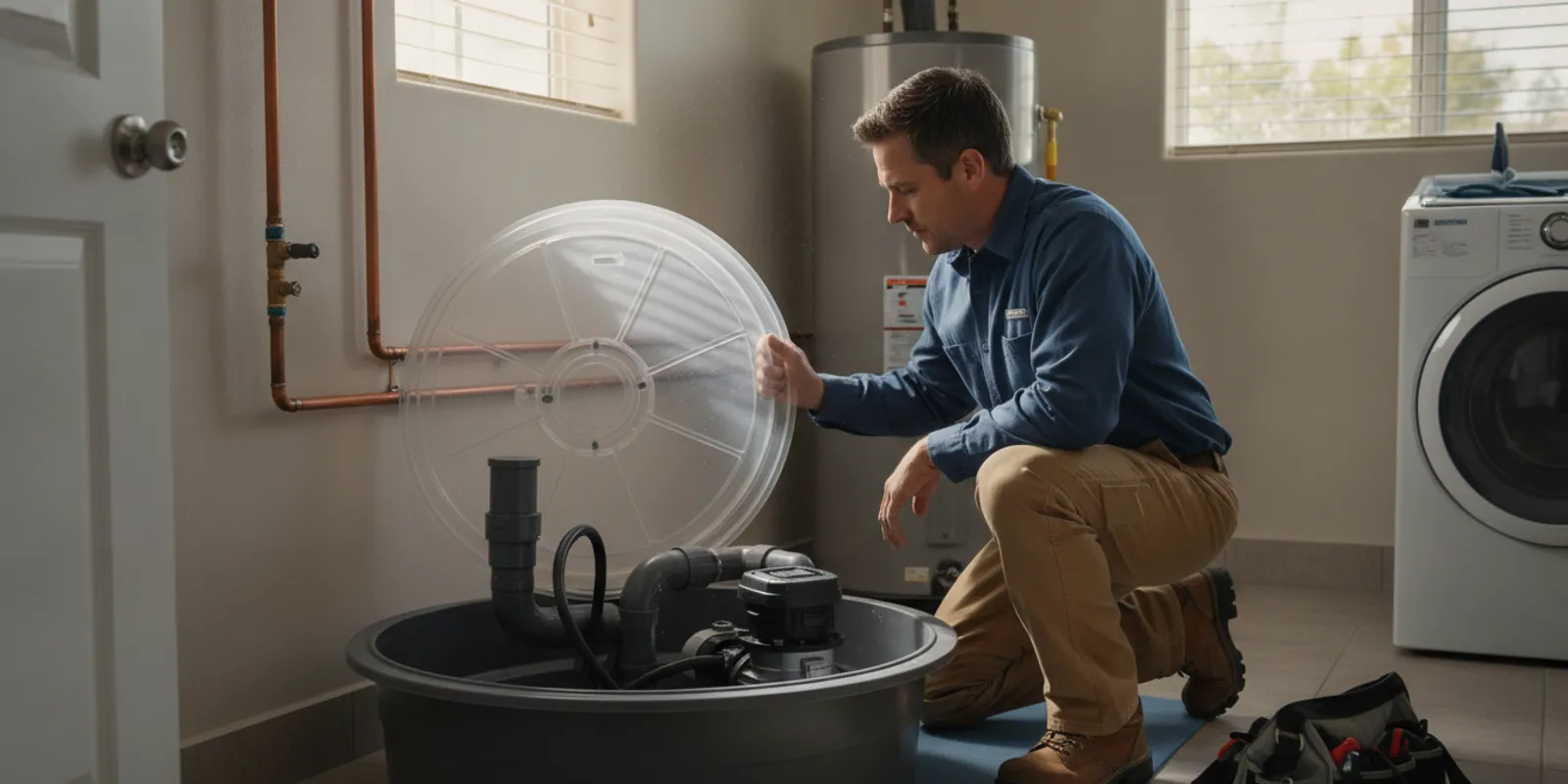
Sewage ejector pump replacement cost depends on more than the pump itself. The model, basin access, condition of the discharge piping, electrical setup, and testing all affect the work. If the pump serving a lower-level bathroom or laundry area is failing, understanding these factors can help you ask clear questions and compare estimates.
Request an evaluation for your pump
What does a sewage ejector pump do?
A sewage ejector pump moves wastewater from fixtures located below the building’s gravity sewer line or septic connection. Wastewater collects in a sealed basin, and a float or control activates the pump when the liquid reaches a set level. The pump pushes the contents through a discharge pipe to a point where they can continue by gravity.
These systems often serve basement bathrooms, laundry rooms, or other below-grade fixtures. They are different from a sump pump, which handles groundwater rather than wastewater. A replacement should match the system’s wastewater demands and the conditions of the basin and piping. The Sewage and Water Pumping Technical Association sizing guidelines describe performance data intended to help with proper pump application. Capacity and application matter, so selecting a unit by appearance alone is not enough.
What factors shape sewage ejector pump replacement cost?
Without inspecting the existing setup, there is no reliable single figure for every property. An estimate should make clear which components and labor are included. These are common factors that may change the scope:
- Pump type and capacity: The replacement must suit the fixtures served and the system’s pumping requirements. Different capacity, construction, or connection details can change equipment selection.
- Basin condition and access: An accessible basin can make removal and installation more straightforward. Tight access, a difficult cover, or damage around the basin can add labor or repair work.
- Discharge piping and check valve: Existing piping, fittings, shutoff arrangements, or a check valve may need attention if worn, damaged, or incompatible with the replacement.
- Electrical and controls: The condition of the circuit, float switch, alarm, and controls can affect the work. Electrical changes should be identified rather than assumed to be part of a basic pump swap.
- Wastewater condition and cleanup: A failed pump may leave standing wastewater in the basin. Safe handling, cleanup, and protection of the work area can affect labor and materials.
- Testing and commissioning: Closeout should include checking operation, activation and shutoff, connections, and discharge behavior after installation.
- Urgency and scheduling: A failure causing an active backup may require prompt attention. Ask how timing affects the proposed scope and any applicable charges.
- System layout: The height the pump must lift wastewater, the length and route of the discharge, and the number or type of fixtures connected help determine whether an existing replacement is suitable. The contractor should explain any change in pump selection in terms of these system conditions.
How do replacement scopes compare?
Estimates are easier to compare when the scope is broken into equipment, related parts, and verification. This table is a checklist, not a price list: actual needs depend on the property and inspection findings.
| Scope area | Basic replacement may include | What can expand the work |
|---|---|---|
| Pump | Disconnect and remove existing unit; install a compatible replacement | Different capacity or configuration required by system |
| Basin and access | Access existing basin and inspect its condition | Restricted access, damaged cover, or basin defects |
| Connections | Reconnect discharge and electrical connections as appropriate | Worn piping, fittings, valve, controls, or electrical issues |
| Closeout | Operate system and verify pump response | Further troubleshooting if it does not cycle or discharge normally |
| Site protection | Protect the immediate work area during removal and installation | Additional cleanup or restoration if wastewater has escaped the basin |
Which warning signs deserve attention?
A pump that does not start, runs continuously, or produces unusual noise may need evaluation. Other signs include an alarm, wastewater odors near the basin, repeated activation, or a backup from fixtures that drain into the system. These symptoms do not prove the pump itself has failed. A stuck float, power issue, blocked discharge, or another system problem can look similar.
If wastewater is backing up, stop using fixtures connected to the basin and keep people and pets away from contaminated water. Avoid opening the basin or handling wastewater. If the condition is active, contact a qualified plumbing professional to assess the system and advise on next steps. Diamond House Plumbing provides septic system services and drain and sewer services; the right service path depends on whether the property is connected to a septic system or sewer.
What happens during a replacement?
The exact sequence varies, but a professional replacement generally starts by confirming which fixtures use the system and examining the pump, basin, controls, and discharge line. The technician should identify whether the issue is isolated to the pump or whether another component affects performance.
- Review the system: Confirm basin location, connected fixtures, power arrangement, discharge route, and reported symptoms.
- Explain the proposed scope: Identify the selected pump and planned work on piping, valves, controls, or the basin.
- Remove failed equipment: Isolate power and handle the old pump and wastewater safely.
- Install and connect: Secure the unit and reconnect required components in line with system design and applicable requirements.
- Test operation: Verify activation, shutoff, alarm function where present, and discharge performance.
- Review the result: Explain what was replaced, any remaining concerns, and basic operating guidance.
During the evaluation, the technician may need to distinguish a pump fault from a control or piping problem. A pump that runs but does not move wastewater effectively calls for different troubleshooting than a unit that never activates. Ask what observations support the diagnosis and whether the estimate assumes related parts are serviceable. This helps prevent confusion between the immediate replacement and additional work that may only become clear after access to the basin.
For additional context, read the guide to sewage ejector pump maintenance. If a broader sewer issue is suspected, a sewer camera inspection may help assess the line, depending on the system and problem being investigated.
How can you compare estimates fairly?
Ask each provider to describe the same parts of the job. A total is hard to judge when one estimate includes only a pump and another accounts for related components and testing. Use these questions to make the comparison useful:
- What pump model and capacity are included, and why are they suitable for this system?
- Does the estimate cover removal and disposal of the existing pump?
- Are the basin, check valve, discharge piping, float, alarm, and electrical connections included, excluded, or subject to inspection?
- What happens if inspection reveals a damaged basin or another defect?
- Is cleanup included if there is wastewater in the basin?
- How will the completed installation be tested?
- What warranty applies to equipment and labor, and what conditions or exclusions should I understand?
Ask for exclusions and possible additional work in writing. Do not assume a quoted pump replacement includes repairs to the building’s electrical system, discharge piping beyond the connection, or an unrelated sewer or septic defect. A clear scope helps you understand what you are authorizing before work starts. When two proposals use different pump models or describe different tests, ask for an explanation rather than comparing totals alone.
What details should an estimate spell out?
A useful proposal makes the work understandable before the basin is opened. Look for the pump model or selection criteria, the work area, parts being reused, and the steps included for removal and testing. It should also state how the provider will handle conditions not visible at the time of quoting. That may include a process for pausing, explaining the finding, and obtaining approval before expanding the work.
Clarify whether the estimate includes disposal, cleanup, reconnection, and a functional test. If there is an alarm or backup, ask whether diagnosis is included or billed separately from replacement. For a property with multiple fixtures, confirm which ones are served by this basin and whether they can be used during the work. These details do not produce a universal price, but they make proposals more comparable and reduce surprises about what the quoted scope covers.
How should Inland Empire property owners prepare?
Before an appointment, note which fixtures are affected, when symptoms began, and whether the pump cycles, alarms, or remains silent. Keep the area around the basin clear and provide access to the electrical panel if safe and relevant. Do not pour chemicals into the system or repeatedly flush fixtures to test it when a backup is possible.
For commercial properties, share constraints on access, operating hours, or affected restrooms and work areas. If the system serves multiple tenants or a business operation, a clear account of which fixtures are unavailable can help the service professional assess the issue efficiently. Property owners in Riverside and San Bernardino Counties can use company information to learn more about Diamond House Plumbing.
What can affect the choice between repair and replacement?
A failed or noisy pump does not automatically mean the entire system needs replacement. The decision depends on what inspection finds, whether the pump is suitable for the system, and whether a fault lies in the pump, float, controls, power, or discharge path. If the problem is limited to a serviceable component, the estimate may describe a narrower repair. If the existing pump is damaged or unsuitable, replacing it may be more appropriate. Ask the provider to explain the evidence and alternatives, including what risks remain if only one component is changed.
Age by itself is not a complete diagnosis, and a symptom that appears intermittently can still deserve attention. Note how often the pump cycles and whether the alarm changes when fixtures are not in use. Do not deliberately run water to reproduce a suspected failure when the basin may be near capacity. Share the history with the professional and let the system be tested under controlled conditions.
Frequently asked questions
Can I replace only the pump and keep the basin?
Sometimes, if the basin and connected components are in suitable condition and the replacement is compatible. An inspection is needed to determine whether the basin, cover, float, valve, or piping also requires work.
Is a sewage ejector pump the same as a sump pump?
No. An ejector pump moves wastewater from below-grade plumbing fixtures. A sump pump generally moves groundwater collected in a sump pit. They serve different purposes and are not interchangeable.
Does a pump alarm always mean the pump must be replaced?
No. An alarm signals a condition that needs attention, but possible causes include a pump fault, float or control problem, power issue, or high liquid level. Have the system evaluated before assuming which component failed.
What should a replacement estimate show?
It should identify equipment, removal and installation labor, included connections or related components, testing, exclusions, and how additional findings will be handled. Ask the provider to clarify any line item you cannot match to the work proposed.
Can a replacement be planned before the pump stops?
Sometimes a recurring problem or inspection finding makes advance planning practical, but symptoms alone do not establish that replacement is necessary. A professional evaluation can help identify whether monitoring, repair, or replacement is the appropriate next step.
Talk with Diamond House Plumbing about an evaluation
How can owners reduce surprises during the work?
Even a well-prepared estimate may depend on conditions that are hidden until the basin is accessed. Before work begins, agree on how the contractor will communicate a finding that changes the scope. A useful process is simple: stop at the unexpected condition, explain what was found, describe the available options, and confirm authorization before proceeding with additional work. Ask whether the original pump can remain safely out of service during that discussion and what precautions are needed while the decision is made.
It also helps to clarify what the crew needs from the property owner. Confirm access to the basin, whether nearby storage or equipment should be moved, and whether any fixtures must remain unused. In a commercial setting, decide who can approve additional work and how that person can be reached during the visit. This can avoid delays when a manager, owner, or facilities contact is not on site.
Ask how testing will be demonstrated at the end. A useful handoff can include a description of the pump’s activation and shutoff, confirmation that the discharge connection was checked, and a review of any alarm or control that is part of the system. If a limitation remains, such as a separate piping concern that was not part of the replacement, request a clear explanation of what to monitor and what follow-up is recommended. These steps make the closeout understandable without assuming that every older component was replaced.
What should you track after replacement?
Keep the estimate, invoice, pump model information, and any operating instructions together with property records. Note the date of replacement and any components that were retained, such as the basin, check valve, alarm, or discharge piping. If a future service call is needed, these details give the professional a starting point and can help distinguish a new symptom from the original problem.
After the work, pay attention to changes in normal system behavior. An alarm, unusual repeated cycling, persistent odor, or wastewater backup merits prompt attention. Do not open the basin to investigate or keep adding water to test a concern. Instead, record what happened, which fixtures were in use, and when the symptom appeared, then contact a qualified professional. A concise record is more useful than a guess about which component failed.
For a household, this can be a brief note in a home maintenance file. For a business, include the responsible contact, relevant operating constraints, and the location of the basin so a future service visit can be coordinated. This record keeping does not replace inspection or guarantee performance; it simply preserves useful context about the installed system and the work performed.
A careful evaluation can distinguish a failed pump from a problem elsewhere in the system and clarify what the replacement scope should include. Compare written scopes and ask questions before approving work.

Leave a Reply