
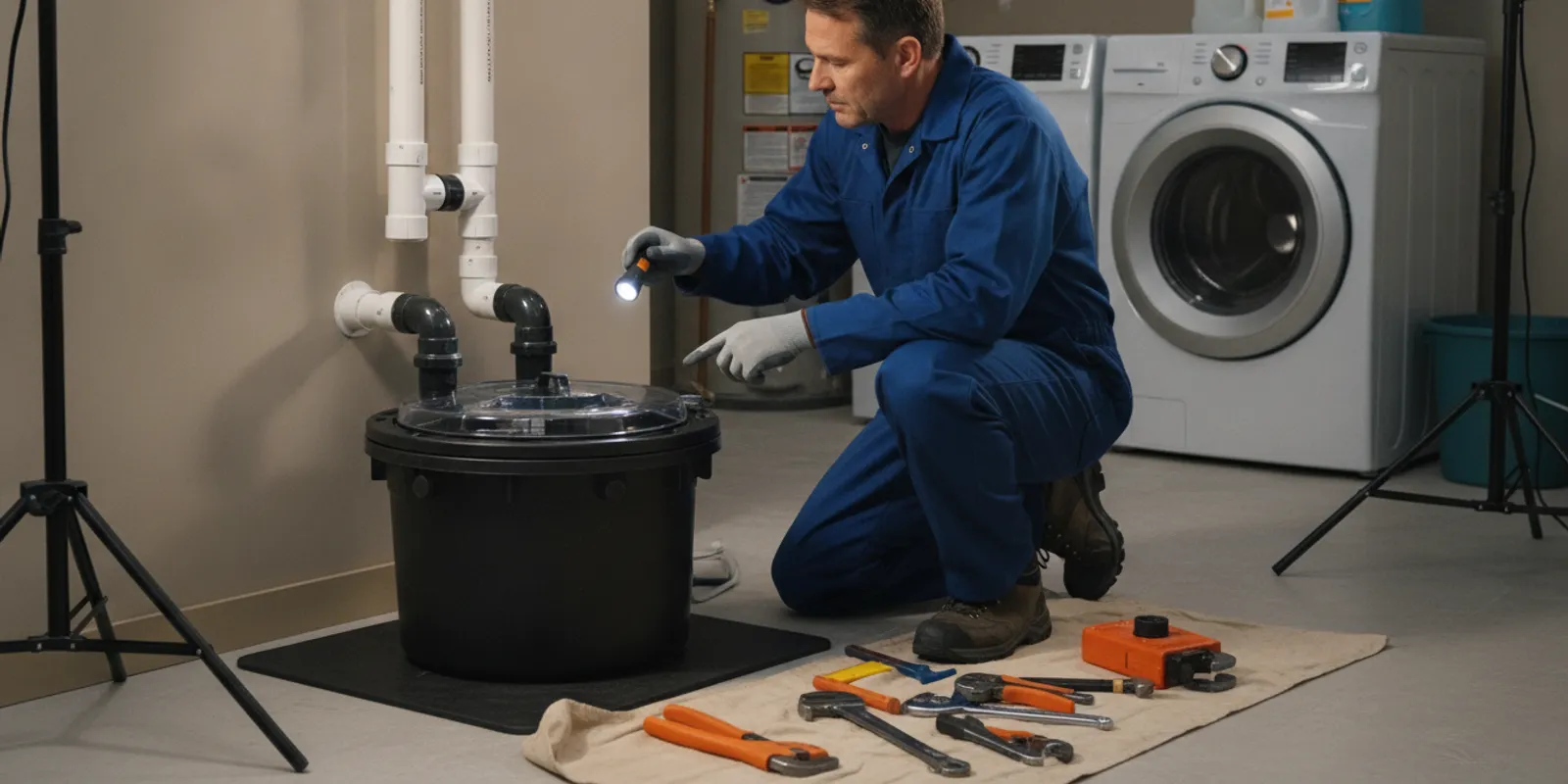
Sewage ejector pump maintenance helps property owners spot developing problems before wastewater backs up into a basement bathroom, laundry area, or commercial space. A simple observation routine can catch changes in pump cycling, alarms, and sounds, but recommendations vary by pump, basin, and use. Follow the manufacturer’s instructions and arrange qualified service for work inside the basin or on electrical and sewage components.
Arrange a pump service assessment
What does a sewage ejector pump do?
An ejector pump moves wastewater from fixtures below the level of the building’s gravity sewer line to a higher drain line. Wastewater collects in a sealed basin. When the liquid reaches a set level, a float switch signals the pump to run and discharge the contents through a pipe toward the sewer connection.
These systems may serve basement bathrooms, laundry rooms, or other fixtures below the main sewer. A property may also have alarms, check valves, isolation valves, and a vent. The exact arrangement differs, so identify the equipment and keep the installation or service records accessible. For context on related drain cleaning and sewer line service, review the system components and connections.
How often should you inspect the system?
There is no universal interval that fits every ejector pump. A reasonable approach is to visually observe accessible components regularly and test the alarm and pump operation only as the manufacturer directs. Higher-use properties, systems with a history of trouble, or locations where a failure would cause significant damage may need a maintenance plan set by a qualified service provider.
- Routine observation: Look for an alarm indicator, leaks, unusual odors, visible corrosion, or moisture around the basin and piping.
- Manufacturer-directed checks: Use the owner’s manual for any permitted test procedure, including alarm testing and any float or pump checks.
- Professional service: Ask a plumber to recommend an interval based on pump model, number of users, operating frequency, and service history.
Do not assume a fixed annual or monthly schedule applies to every unit. The pump manual, local requirements, and actual operating conditions should guide equipment-specific recommendations. A municipality’s maintenance information can help illustrate common concerns: the Fairfax County guidance for grinder and ejector pumps notes that owners are responsible for operation and maintenance of those systems in its jurisdiction. Local guidance may differ, so confirm requirements where the property is located.
Build a practical observation record
A short log makes changes easier to notice and gives a service technician useful context. Record the date, any alarm event, the approximate duration or frequency of pump operation if known, unusual sounds, leaks, and any service visit. Avoid guessing at a technical cause; describe what happened and when.
For a residence, keep the manual and log near other home maintenance records. At a business, assign a staff member to note alarms and report them promptly. If several people use the area, make sure they know which fixtures connect to the basin and who should be notified. This simple handoff can prevent one person from assuming someone else has already arranged service.
What should you observe during a routine check?
Keep the inspection visual and within the limits described by the manufacturer. Do not remove a basin cover, reach into the basin, or handle exposed wiring. Sewage, gases, moving equipment, and electrical components can create serious hazards.
- Check whether the alarm panel shows a warning, fault, or loss of power.
- Look around accessible piping and the basin cover for dampness, seepage, or a sewage odor.
- Notice whether the pump seems to run much more often or longer than usual.
- Listen for a change in the pump’s normal sound, such as repeated clicking, grinding, or a loud hum.
- Keep the area around the system clear enough for safe access by a service technician.
Record the date and any changes you notice. A brief log of alarm events, unusual cycles, and service visits can help a technician identify whether a condition is new or recurring. Do not place storage over a cover or controls, and do not treat a dry-looking exterior as proof that the pump is functioning correctly.
Use a consistent, low-risk observation routine
Choose a time when the area is quiet and accessible, then note the same visible details each time. Confirm that the alarm display is in its usual state, check the accessible floor and pipe joints for moisture, and listen from a safe distance during normal operation if it happens while you are nearby. Do not create a test cycle merely to hear the pump, and do not leave a running pump unattended for an experiment.
Consistency matters more than trying to inspect hidden parts. For example, a homeowner who records that the pump normally runs briefly after laundry may recognize a meaningful change if it later runs repeatedly between loads. A facility manager can use the same approach across shifts: record the alarm status, time, area condition, and the person notified. These notes describe observations, not proof of a failed component.
How should you check the alarm and float switches?
The alarm warns that wastewater in the basin may have risen above its normal operating level or that the system has detected a fault. Float switches control pump activation and, in many systems, the alarm level. Their design and test method vary. Use only the manufacturer’s specified test procedure, and do not manually lift or reposition a float unless the manual explicitly instructs the owner to do so.
If the alarm test is unclear, the alarm does not sound as expected, or the pump fails to start during an approved test, stop testing and arrange service. Never bypass an alarm or wire around a switch to keep the system running. A temporary silence button, if provided, may mute sound without fixing the condition.
What to do when an alarm activates
First, reduce or stop water use from fixtures that drain to the basin. Check the visible alarm indicator and note whether the system appears to have power, but do not open electrical panels or remove the basin lid. Contact a qualified plumber and explain what the alarm shows, when it began, and whether pump operation changed.
If there is an active overflow, keep people and pets away from wastewater and arrange prompt professional help. Avoid entering a flooded area if electrical equipment may be wet. Do not pour chemicals into the basin or attempt to force the pump to cycle. These actions can increase exposure or complicate diagnosis without addressing the cause.
Separate a warning from a confirmed failure
An alarm may indicate a high liquid level, a power or control issue, or another condition specific to the installed system. The indicator alone does not tell you which part has failed. Note the exact light, display message, or audible pattern if it is safe to do so, and share that description with the service provider. If the manual explains an owner-safe reset or silence control, follow its steps; otherwise leave controls untouched.
For a business, include an escalation contact who can respond outside normal office hours. If the first person who hears an alarm cannot reach the designated contact, they should know the alternate route rather than repeatedly silencing the sound. A short written sequence—limit connected water use, keep the area clear, notify the responsible person, call for service—helps avoid confusion without asking staff to diagnose the system.
How can you reduce the risk of a sewage backup?
Backup prevention starts with noticing trouble early and limiting unnecessary loading on the system. The pump and basin are designed for the wastewater and flow specified for that installation; they are not a place for wipes, hygiene products, grease, or other solids that can interfere with pumping.
- Use fixtures normally, but respond to warning signs. If the alarm activates or the pump behaves abnormally, reduce or stop water use connected to the basin until the condition is assessed.
- Keep inappropriate material out of drains. Do not flush wipes, paper towels, or hygiene products, even if packaging claims they can be flushed. Avoid pouring grease into drains.
- Protect power to the system. Do not unplug the pump or alarm to use the outlet for another purpose. If a power interruption occurs, monitor for an alarm and avoid adding wastewater to the basin.
- Do not ignore repeated cycling. Frequent starts can indicate a change in usage, a switch issue, or another system problem that warrants assessment.
- Keep service access clear. Do not store heavy items over the basin or obstruct the route to the controls.
For commercial properties, let staff know which fixtures drain to the ejector system and whom to contact if an alarm sounds. A clear response plan can reduce continued water use while service is arranged. Post a concise instruction near the relevant area, without covering the alarm or control panel.
Think about the system during planned changes, too. Adding a fixture, changing how a space is used, or increasing occupancy can change the amount of wastewater routed to the basin. Ask a qualified professional whether the existing equipment is appropriate before making a change. Do not assume that a pump sized for one use can handle a different flow pattern.
Make the response plan specific to the property
Walk through the connected area with the people who use it and identify which sinks, toilets, showers, or laundry fixtures are routed to the ejector basin. If the system serves only one bathroom, the response may be straightforward: stop using those fixtures and report the warning. If it serves a shared facility, label the relevant rooms and identify a staff member who can notify occupants while a plumber is contacted.
Plan for ordinary disruptions as well as alarms. If a power outage occurs, do not assume the pump will resume correctly when power returns; check the visible alarm state and follow the manual. If a plumbing project or occupancy change is planned, discuss expected flows and the pump system before work begins. Keeping the service path clear, protecting the outlet from casual disconnection, and making contact information available are simple measures that support a faster, safer response.
What do unusual pump noises mean?
A sound change is a clue, not a diagnosis. A brief operating sound may be normal, but a new or persistent noise deserves attention, especially if it comes with an alarm, slower drainage, odors, or repeated pump cycles.
| What you notice | Possible concern | Prudent next step |
|---|---|---|
| Repeated clicking or rapid starts | Switching or cycling behavior may have changed | Reduce use if an alarm or backup risk is present; arrange assessment |
| Loud hum without expected pumping | The pump may not be moving wastewater as intended | Do not open the basin; request prompt service |
| Grinding or harsh vibration | There may be a mechanical or obstruction-related issue | Stop relying on the system and have it checked |
| Longer or more frequent run time | Usage or equipment performance may have changed | Note the pattern and contact a plumber, particularly if persistent |
These observations do not establish the cause. A technician may need to examine the pump, switches, discharge piping, check valve, and controls using appropriate safety procedures. When possible, note whether the sound occurs at startup, during operation, or after the pump stops. That detail can be more useful than a broad description such as “it sounds wrong.”
Describe the pattern, not just the volume
When reporting a sound, mention how long it lasts, how often it occurs, and whether it is tied to a particular fixture or time of use. For instance, “a short hum after the basement sink drains” is more useful than “the pump is loud.” Also say whether the alarm is on, whether drains are slow, and whether you have noticed moisture or odor. Do not put your ear against equipment or touch the basin to locate vibration.
If the noise is accompanied by a rising alarm, sewage odor, or visible leakage, treat the combined signs as more urgent than an isolated sound change. Limit use of connected fixtures and request service. If the pump sounds different once but then returns to its familiar pattern with no other symptoms, document it and monitor for recurrence without attempting to open or adjust equipment.
When should you call for service?
Contact a qualified plumber when the alarm activates, the pump does not appear to discharge, a new noise persists, the system cycles unusually, or you see leakage or wastewater odors near the basin. Treat sewage backup or overflow as urgent. Keep people away from affected wastewater, stop using connected fixtures if it is safe to do so, and arrange prompt professional help.
Share the pump make and model if known, the alarm status, when the problem started, and whether water use or a power interruption preceded it. Do not open electrical enclosures, remove the basin lid, or attempt to clear the pump yourself. For plumbing assistance, contact Diamond House Plumbing.
For other drainage symptoms, such as recurring slow drains or suspected sewer-line trouble, see the company’s main sewer line guide. A sewage ejector system and a building’s main sewer line are related parts of a drainage path, but a symptom in one does not establish a fault in the other. Describe where the problem occurs and which fixtures are affected when requesting an assessment.
What information helps during a service call?
Before calling, write down the address and the safest access route, then gather the pump and alarm model numbers if visible without removing a cover. Note when the issue began, whether it followed heavy water use or a power interruption, what the alarm displays, and whether any fixtures are slow or unusable. Do not delay an urgent call while searching for paperwork; share what you can and provide records later.
For a commercial property, identify who can meet the technician, unlock the utility area, and notify affected occupants. Tell the service provider if wastewater has reached a floor or if electrical equipment may be wet. Keep photographs of visible conditions only if you can take them from a safe, dry location. These details can help the provider understand the situation before arrival, but they do not replace an on-site diagnosis.
How can you plan maintenance for a home or business?
Start with the records: locate the owner’s manual, installation information, and prior service notes. Make a short list of the fixtures connected to the system and identify the alarm location. Ask a plumber to document the pump model, control and alarm arrangement, observed condition, and recommended service interval. For a business, assign a staff contact and post a simple response instruction near the alarm panel.
When comparing service recommendations, ask what components will be checked and whether the proposed steps are compatible with the manufacturer’s instructions. A useful maintenance record should distinguish visual observations and approved tests from work performed by a technician. Keep copies of service findings so changes over time are easier to recognize.
Questions to ask during a service visit
- Which pump and alarm model is installed, and where can its instructions be found?
- What owner-permitted observations or tests does the manual describe?
- Which components were examined, and were any concerns found?
- Does the property’s usage or history suggest a particular service interval?
- What warning signs should prompt a call before the next planned check?
Ask the technician to explain any recommended repair in plain language and identify what further assessment is needed. If an inspection cannot confirm a cause, keep the distinction clear between an observed symptom and a confirmed fault. This helps owners make informed decisions without treating a general maintenance checklist as a diagnosis.
For residential owners, a plan may be as simple as keeping records and knowing what warning signs require attention. A business may also need a written reporting chain, an alternate contact, and a way to notify occupants that connected fixtures should not be used during a system warning. Adapt the plan to the equipment and the consequences of downtime rather than relying on a generic calendar.
How to organize records over time
Keep a single folder—digital or paper—with the manual, service notes, alarm instructions, and a current list of fixtures served by the pump. Add an entry after each observation or service visit. A useful entry is brief: date and time, condition observed, action taken, person notified, and whether the issue recurred. If a technician replaces or adjusts a component, ask for the model or part details and a plain-language description of the work.
Review the notes when you notice a change, not only at a calendar anniversary. A series of small events may reveal a pattern that one isolated visit does not show. For example, repeated alarms following a busy period differ from one warning after a known power interruption. Share the chronology with the professional, while letting them determine what it means technically.
Frequently asked questions
Can I test the pump by adding water to the basin?
Only do so if the manufacturer’s instructions specifically describe an owner-permitted test and explain how to perform it safely. Otherwise, do not add water or open the basin to trigger the pump; arrange a qualified inspection.
Should I keep using fixtures when the alarm is on?
Limit or stop water use from fixtures connected to the basin while you seek service. Continued flow can raise the basin level and increase the risk of an overflow. Follow any emergency instructions in the equipment manual.
Does every ejector pump need the same maintenance schedule?
No. The model, usage, installation, and service history matter. Use the manufacturer’s guidance and ask a qualified plumber to recommend an interval for the specific system.
What if the alarm sounds but the pump still runs?
Treat the alarm as a warning, not proof that everything is working correctly. Reduce connected water use and arrange an assessment, especially if the alarm continues or the pump’s operation has changed.
Request help with an ejector pump concern
Regular observation, manufacturer-approved checks, and timely professional service can help property owners respond before a small warning becomes a disruptive wastewater problem.

Leave a Reply