
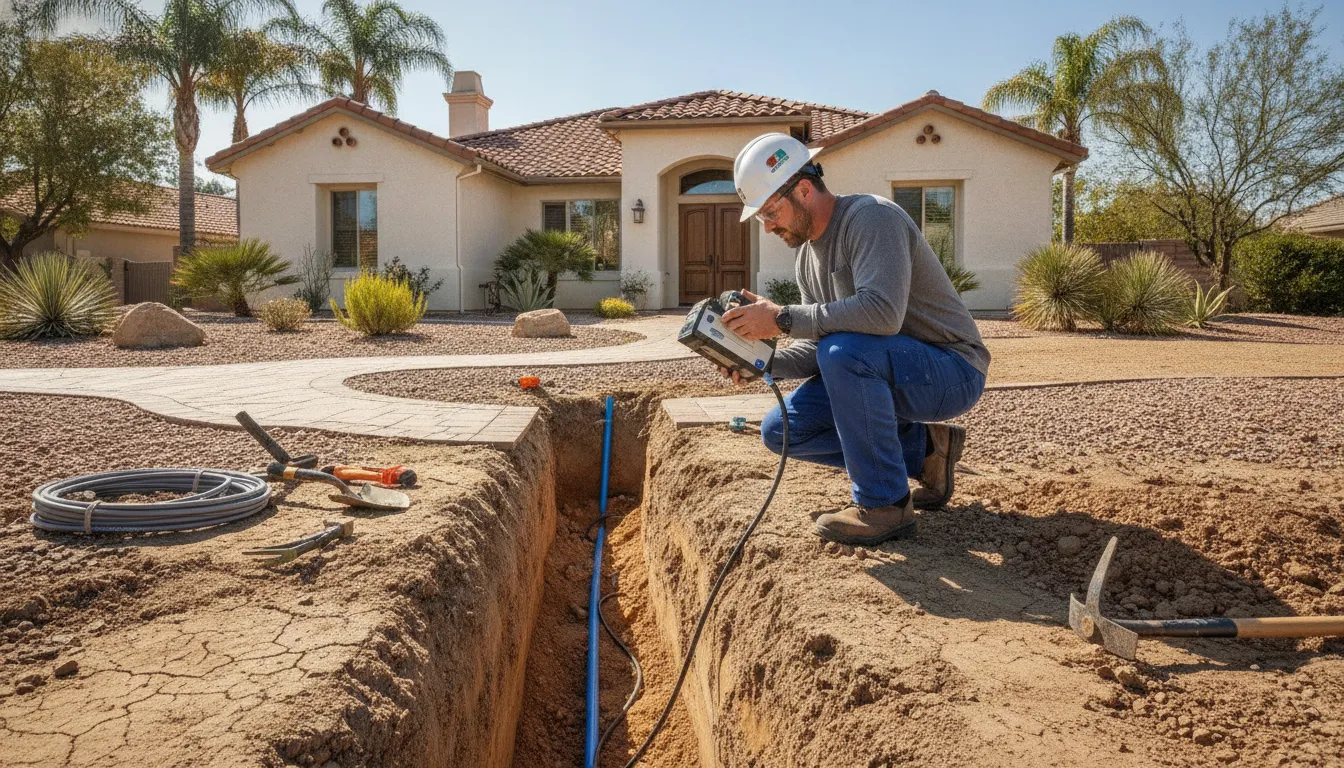
When water pressure drops across the property, the meter moves while every fixture is off, or the soil near a building stays unexpectedly wet, the problem may be underground. It may not be inside a faucet or toilet. Acting early can help protect landscaping, paving, and the building itself.
For help evaluating a suspected main water line issue, contact Diamond House Plumbing to discuss the next step.
Main water line repair addresses damage in the buried supply pipe between the street-side meter and the property’s main shut-off. A qualified plumber should confirm the source, determine who is responsible for the affected section, and recommend repair or replacement based on the pipe condition and site. In Riverside and San Bernardino Counties, that evaluation should also account for the property’s use, access, and local requirements.
For homeowners and commercial property owners, the first step is recognizing whether the symptoms point to the main supply line or another plumbing system. Understanding what this line does makes the warning signs easier to interpret and helps you prepare for a focused diagnosis.
What Is Main Water Line Repair?
Your main water line is the buried supply pipe that carries water from the street-side meter to the property’s main shut-off valve. It serves as the connection between the public water supply and the plumbing system inside a home or commercial building. When that line cracks, separates, collapses, or develops a leak, the appropriate response may involve locating the problem, repairing a limited section, or evaluating whether more extensive work is needed.
The word main matters. A fixture supply line serves one faucet, toilet, appliance, or other plumbing fixture. A problem with that smaller line may affect only one location. A main water line issue can affect water delivery throughout the property. Low pressure at multiple fixtures, unexplained water movement, or wet soil along the line may point to a supply-line concern. But these symptoms should be diagnosed before anyone chooses a repair method.
How It Differs From a Sewer Line
A water line brings clean supply water into the property. A sewer line carries wastewater away from it. These systems have different purposes, flow directions, and failure symptoms. A sewer blockage, crack, or root intrusion is not repaired the same way as a pressurized water-supply leak. If the concern involves recurring drain backups, slow drainage, or wastewater flow, a sewer line inspection may be more relevant than a main water line evaluation.
How It Differs From Septic and Interior Plumbing
A septic system treats and manages wastewater for properties that are not connected to a municipal sewer system. It does not supply drinking water to the building. Likewise, interior plumbing includes the pipes, valves, and fixtures located within or immediately around the structure. The main water line is the underground supply route before water reaches those interior branches.
For property owners in Riverside and San Bernardino Counties, identifying which system is involved helps prevent unnecessary disruption and supports a more focused inspection. Diamond House Plumbing provides residential and commercial water-line services, leak detection, and repair planning after evaluating the condition and location of the problem.
Which Signs Mean You May Need Main Water Line Repair?
A problem with the main water line can affect the entire property rather than a single faucet, toilet, or appliance. Because the buried supply line is out of sight, early symptoms may appear as changes in pressure, water use, or the condition of the surrounding soil. One sign alone does not confirm a failed line, but a pattern of symptoms deserves prompt attention.
- Low pressure throughout the property: Weak flow at multiple faucets and showers at the same time points to a supply-side concern more than an isolated fixture issue.
- Meter movement when water is off: After all faucets, toilets, irrigation, and water-using appliances are stopped, movement at the meter may indicate water is escaping somewhere.
- Running-water sounds: Hearing water flow when every fixture is turned off can signal a concealed leak along the line or elsewhere on the property.
- Wet or sinking soil: Soggy ground, pooling, an unusually lush strip of grass, or a developing depression near the line path can indicate buried water is reaching the surface or shifting the soil.
- An unexplained bill change: A higher bill without a corresponding change in occupancy, irrigation, or water use may be a reason to investigate for leakage.
- Discolored water: Muddy or discolored water can have several causes, including work on the public system or an issue within the property’s plumbing. It should be evaluated rather than assumed to be a main-line failure.
These symptoms need diagnosis before anyone chooses between a localized repair, replacement, or another plumbing solution. For example, pressure problems can also involve a valve, pressure-reducing device, interior piping, or a utility-side issue. Meter movement can come from a running toilet or irrigation leak instead of the buried main line. Likewise, wet soil may relate to drainage, irrigation, or a separate pipe.
A qualified plumber can compare pressure at different points, check the meter and shut-off locations, identify the likely path of the line, and use appropriate detection equipment before excavation is considered. Professional water leak detection can help narrow the source when the leak is hidden or the symptoms overlap with another plumbing problem.
Property owners in Riverside and San Bernardino Counties should act promptly when several signs occur together, especially low pressure combined with meter movement, running-water sounds, or saturated soil. Diamond House Plumbing provides water line repair and leak detection for residential and commercial properties, with the repair scope determined after evaluating the site and the observed symptoms.
How Is a Main Water Line Problem Diagnosed?
Diagnosis should come before choosing between a repair, replacement, rerouting, or excavation. A careful process helps separate a main supply-line problem from an interior fixture issue and protects the property from unnecessary disruption.
- Shut off fixtures and observe the symptoms. Turn off faucets, showers, appliances, and other intentional water use. If safe to do so, make sure toilets are not refilling. Note whether low pressure affects the whole property or only one fixture. A running-water sound with all fixtures off is worth reporting, especially when it occurs with unexplained wet soil, pooling, or a sudden change in the water bill.
- Observe the meter without disturbing the plumbing. With water use stopped, watch for movement on the meter indicator. Continued movement can support the possibility of a leak, but it does not identify the leak’s location or prove that the main water line is the cause. Record what you observe and when it occurs. If water is visibly bubbling or flowing from the ground, stop investigating and arrange professional help rather than opening the ground.
- Know when to stop. Do not remove soil, cut into a buried line, or attempt to expose a suspected break. Underground work can affect gas, electrical, communications, irrigation, and other utilities. A professional can perform professional water leak detection and use appropriate locating methods before recommending a scope of work.
- Have the line and failure area located. A plumber evaluates pressure, the meter-side and property-side shutoffs, visible conditions, and the likely route of the buried line. Professional locating can narrow the affected area and help limit unnecessary disturbance. The result should identify whether the evidence points to a leak, restriction, valve issue, or another plumbing condition before a repair method is selected.
- Confirm the utility boundary. Responsibility may change at the water meter, but the exact boundary depends on the local water provider and applicable service rules. Contact the utility to confirm which portion it maintains and which portion belongs to the property owner. This step is especially important when the suspected problem is near the meter, sidewalk, street, or public right of way.
- Use 811 before any planned digging. 811 is the free national before-you-dig service. Anyone planning excavation should request markings through the national 811 service or the applicable state 811 center a few business days in advance, then wait until all responding utilities have marked or cleared the area. Markings do not replace professional diagnosis, and no digging should begin while utility responses are incomplete.
Repair procedures also protect the potable water supply. The EPA explains that water-main installation and repair can create a direct contamination risk when proper procedures and standards are not followed. See the EPA guidance on new and repaired water mains for the broader public-health context. For Riverside and San Bernardino County properties, Diamond House Plumbing can evaluate the evidence and explain the next step before work begins.
Repair or Replacement: Which Approach Fits?
A visible leak does not automatically mean the entire main water line needs to be replaced. A localized failure may be repairable, while repeated leaks, incompatible materials, or a difficult route may make a broader solution more practical. The right choice comes after locating the problem, identifying the existing pipe, and evaluating the surrounding soil and access conditions.
| Situation | Likely scope | Access and disruption | Decision evidence |
|---|---|---|---|
| One confirmed break in an otherwise serviceable line | A localized repair may address the damaged section. | Work may be concentrated near the failure, although excavation and surface restoration are still possible. | The pipe condition, leak location, and quality of the surrounding material support a limited repair. |
| Multiple failures, widespread deterioration, or an unsuitable existing route | Replacement or rerouting may provide a more durable overall approach. | Access can involve a longer work area, access pits, or open-trench excavation when rerouting is necessary. | Inspection shows that repairing one point would leave significant defects or repeat risk elsewhere. |
| Buried pipe made from a material that requires a specific transition | The repair must match the pipe and use a compatible coupling or fitting. | Locating the line and exposing enough of it to make a sound connection may affect the work area. | The plumber confirms the pipe material, connection method, bedding, and backfill requirements. |
Why installation details matter
Main water lines can contain polyethylene, PVC, galvanized steel, copper, or mixed sections, especially on older properties. Those materials do not all use the same fittings or transition methods. A sound repair also depends on proper bedding beneath the pipe and careful backfill around the connection. An incorrect fitting, mismatched coupling, or compacted fill placed directly against a joint can undermine otherwise careful work.
Replacement does not always mean one identical excavation approach. Depending on the route, soil, property layout, and need to reroute, the work may use targeted openings, access pits, or traditional trenching. Driveways, sidewalks, landscaping, occupied homes, and commercial operations all affect how access and restoration should be planned. The inspection should identify these constraints before a method is recommended.
If you are weighing main water line repair against replacement in Riverside or San Bernardino County, contact Diamond House Plumbing for an evaluation. The team can assess the line and explain the observed condition, likely scope, property-care considerations, and available next steps without choosing a method before the evidence supports it.
What Should Inland Empire Property Owners Plan For?
A main water line repair affects more than the pipe itself. In Riverside and San Bernardino Counties, the practical plan should account for who needs access, how long water service may be interrupted, what approvals apply, and how the property will be restored afterward. The right approach can differ substantially between an occupied home, a rental property, an office, and a larger commercial site.
Plan access and continuity before work begins
For a homeowner, access may involve a driveway, walkway, landscaping, fencing, or an interior shut-off valve. Moving vehicles, protecting plants, and keeping people away from an excavation area can make the work safer and easier to coordinate. If the line serves a business, the planning conversation should also include operating hours, tenant communication, customer access, employee safety, and a temporary water-service strategy where appropriate.
Commercial property owners can pair repair planning with commercial plumbing maintenance. A documented maintenance plan may help the property team track recurring pressure concerns, visible changes, and previous repairs instead of treating each issue as an isolated event.
Confirm local requirements and site conditions
Permit and inspection requirements depend on the jurisdiction and the work location. Main water line work may involve plumbing permits, site plans, or additional approval if excavation reaches a public right of way. Confirm the requirements with the applicable city, county, utility, or public works department before work starts. A licensed plumbing team can help identify which questions need to be answered, but the local authority controls the final requirements.
Material selection should also be based on the existing pipe, soil conditions, local code, and the planned repair scope. Buried lines may use different materials, and fittings, bedding, coupling, and backfill all affect how an underground repair is completed. Diagnosis should come before choosing between a localized repair, replacement, rerouting, or another access method.
Include restoration in the project discussion
Underground work can disturb soil, hardscape, landscaping, or asphalt. Ask what surfaces may be affected, how the excavated area will be secured, and what restoration is included in the planned scope. Diamond House Plumbing provides residential and commercial water line repair, leak detection, preventive maintenance, and system upgrades across the Inland Empire. To discuss property access, continuity, code questions, and restoration needs, contact Diamond House Plumbing for an evaluation.
How Can You Reduce the Risk of Another Water Line Problem?
No maintenance plan can guarantee that a buried supply line will never fail. However, regular observation and timely repairs can help you notice changing conditions before a small leak causes broader property damage. The goal is to understand what is normal for your property and act when that pattern changes.
Watch pressure and meter behavior
Pay attention to water pressure at several fixtures, not just one faucet. A gradual or sudden drop throughout the property deserves attention, especially when it occurs without a change in use. You can also check the water meter when every fixture, appliance, and irrigation zone is off. Unexpected movement may indicate water is flowing somewhere it should not. Record the date, conditions, and any pressure changes so a plumber has useful information to review.
Respond to wet areas early
Walk the property periodically and look for soggy soil, unexplained pooling, unusually lush growth, surface erosion, or a depression near the buried line. These signs can also have other causes, including irrigation problems or drainage, so avoid assuming that every wet area is a main-line failure. Turn off suspected irrigation zones and compare the area over time. If water is actively bubbling or flowing, limit use of the affected supply when practical and arrange professional evaluation.
Maintain connected systems and document repairs
Inspect irrigation valves, hose connections, pressure-regulating equipment, and visible fixture supply lines as part of routine property care. Correcting a leaking fixture or irrigation component prevents confusion during future meter checks and avoids unnecessary water loss. Keep records of prior repairs, pipe material when known, shut-off locations, utility contacts, permits, and areas that were excavated or restored. Those details can make later diagnosis and planning more efficient.
For commercial properties, include water-line observations in a broader maintenance schedule. Staff should know how to report pressure changes, wet ground, or unusual water use, while managers should plan access and business continuity around any required investigation. Diamond House Plumbing can evaluate warning signs and explain the next practical step for properties across Riverside and San Bernardino Counties.
Frequently Asked Questions
How urgent is a suspected main water line leak?
Act promptly when water is pooling, the ground is becoming soggy, pressure drops throughout the property, or the meter moves while all fixtures are off. Shut off the property main valve if you can do so safely, limit water use, and arrange professional evaluation before damage spreads or excavation begins.
How do I know whether I need a repair or a full replacement?
That decision depends on the break location, pipe material, line condition, access, and whether other sections show deterioration. A localized repair may fit an isolated failure, while repeated leaks or widespread deterioration can support replacement. Diagnosis should come before selecting either approach.
Can I use the water meter to check for a leak?
Yes. Turn off faucets, toilets, irrigation, and other water-using equipment, then observe the meter. Movement after the system has had time to settle can indicate water is escaping somewhere. The check does not identify the leak location, so unusual readings deserve professional leak detection.
Is the property owner responsible for the entire water line?
Not always. Responsibility often changes at the utility meter, but the exact boundary depends on the serving utility and local rules. Confirm who owns and maintains each section before authorizing excavation, especially when the suspected problem is near the street, meter, or public right of way.
What should commercial property owners consider?
Plan around access, occupants, business continuity, shutoff timing, surface restoration, and any permit or utility coordination requirements. A commercial evaluation should account for how the work affects operations, parking, tenants, and customers, not just the buried pipe itself.
Ready to Plan the Right Water Line Repair
If you are seeing ongoing pressure changes, unexplained wet areas, or other concerns at a Riverside or San Bernardino County property, a professional evaluation can help clarify the next step. Diamond House Plumbing can review the situation and explain whether localized repair or a broader solution fits the line’s condition and access needs. To request an evaluation or estimate, contact Diamond House Plumbing through the verified contact page.

Leave a Reply