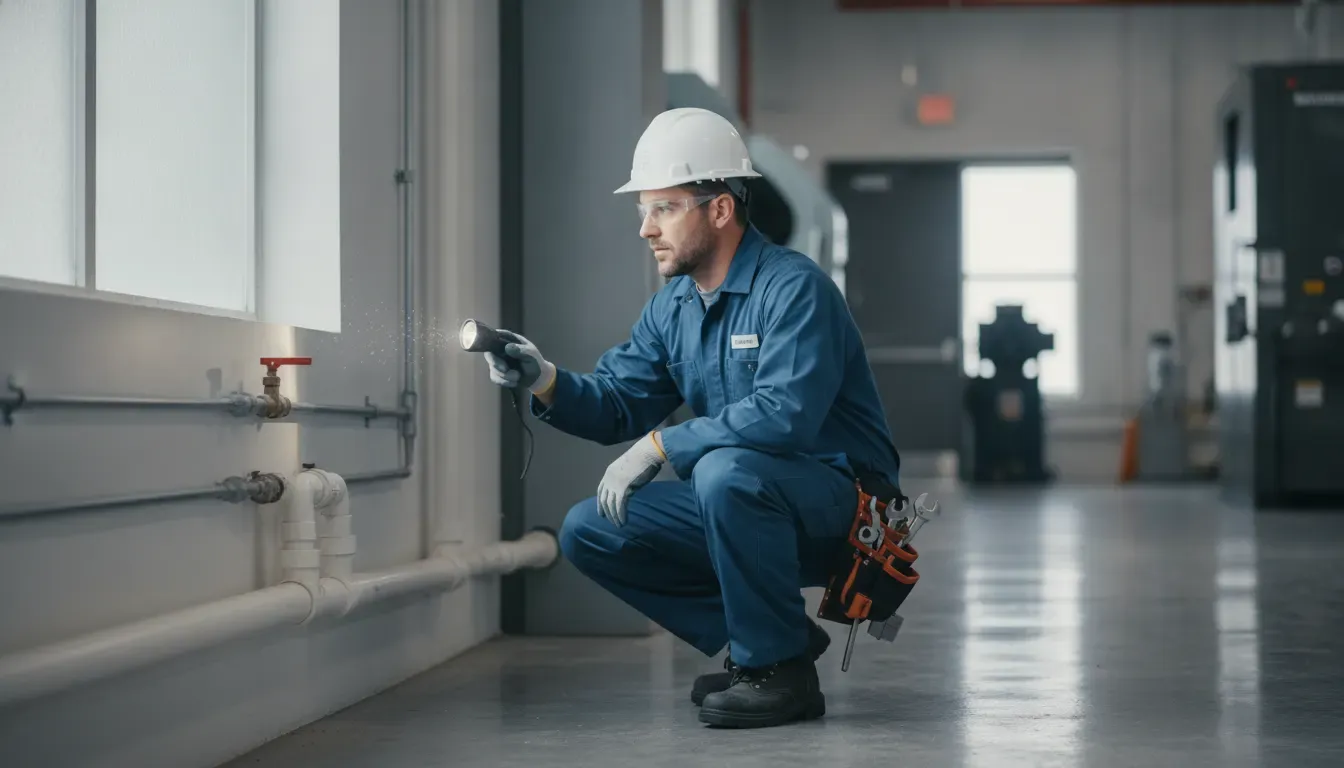
Commercial plumbing repair keeps the water, drainage, fixtures, and related systems in a business property safe and usable. For an office, restaurant, dealership, warehouse, or other facility in Riverside or San Bernardino County, the right response starts with identifying the source, protecting the building and its occupants, and planning the work around business operations.
Contact Diamond House Plumbing to discuss a commercial plumbing repair need.
What does commercial plumbing repair include?
Quick answer: Commercial plumbing repair covers the diagnosis and correction of problems in a business property’s water supply, drains, sewer lines, fixtures, water heaters, and related equipment connections. The work may involve a targeted component repair, drain or sewer service, leak correction, or a larger repair plan based on system condition and access.
Commercial repair is broader than replacing a leaking faucet. A facility may have multiple restrooms, kitchen areas, tenant spaces, floor drains, water heaters, sewer laterals, lift equipment, or specialized connections. A failure in one part of the system can affect people in another part of the building, so the first visit should consider the symptom, the building layout, and the operational impact.
Depending on the property and the problem, a repair visit may address:
- Leaking or damaged supply lines and exposed piping
- Slow, blocked, or overflowing sinks, toilets, floor drains, and branch drains
- Commercial sewer lines and building laterals with recurring backups
- Fixtures such as faucets, toilets, urinals, and other business-use plumbing equipment
- Water heater problems and hot-water supply interruptions
- Pressure, shutoff, or flow issues that affect part or all of a facility
- Leaks hidden in walls, ceilings, slabs, or landscaped areas
- Commercial septic components or sewer lift equipment where those systems serve the property
The repair method depends on what an inspection shows. A local plumber may need to isolate a section, inspect a sewer line, clear an obstruction, replace a failed component, or recommend a broader repair when the same failure keeps returning. The goal is to match the response to the actual source instead of treating every symptom as the same problem.
Which warning signs call for commercial plumbing repair?
Quick answer: Call for commercial plumbing repair when a leak, backup, loss of water, repeated clog, unusual odor, pressure change, or fixture failure affects safe building use or keeps returning. Several slow drains, water damage, sewage exposure, or a sudden service interruption deserve prompt assessment rather than repeated temporary fixes.
Some plumbing problems are obvious, while others develop quietly behind walls or below grade. A manager may first notice a wet ceiling tile, a musty smell, a toilet that refills continuously, or a drain that is slower at the end of each workday. These changes can point to a developing issue even when no pipe has visibly burst.
Watch for these signs at a commercial property:
- More than one fixture draining slowly at the same time
- Wastewater returning through a floor drain or low fixture
- Recurring clogs after a line has already been cleared
- Water stains, damp flooring, bubbling paint, or unexplained standing water
- Foul sewer odors near restrooms, kitchens, cleanouts, or exterior access points
- Unusual pipe noise, pressure changes, or a noticeable loss of water service
- A water meter or other indicator showing use while fixtures are off
- Hot-water loss that interferes with restrooms, cleaning, food service, or operations
- A lift station or septic system that alarms, backs up, or no longer cycles normally
A single slow sink may be limited to that fixture. When several drains change at once, the problem may be farther downstream. A commercial property should also treat sewage exposure, uncontrolled water, and any condition that makes a restroom or work area unsafe as an operational issue. Keep people away from affected areas, stop using connected fixtures when practical, and document what happened before the repair visit.
How does a commercial plumbing repair visit work?
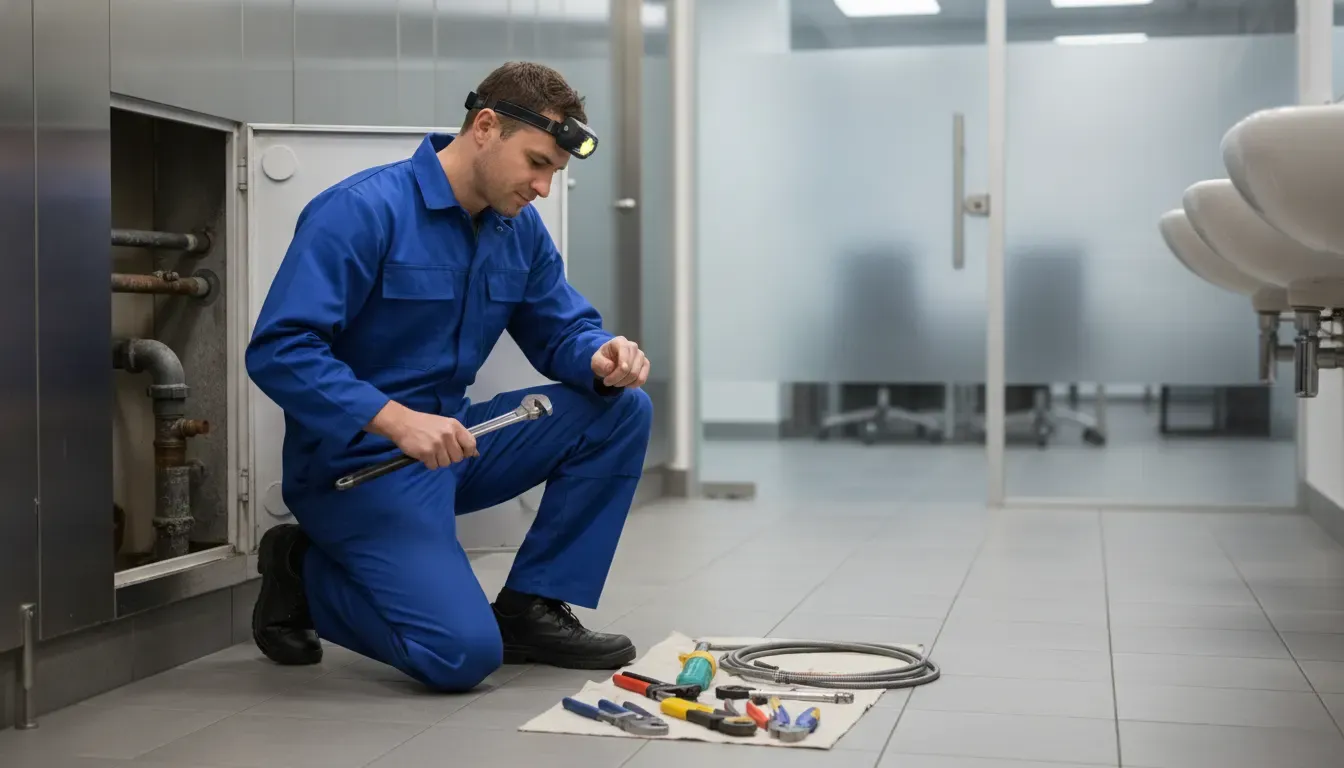
Quick answer: A commercial plumbing repair visit typically moves from symptom review to system inspection, isolation of the affected area, explanation of the repair path, and completion checks. The exact sequence varies by property, but clear access planning and communication help reduce avoidable disruption while the cause is being addressed.
- Review the report. Share when the problem started, which fixtures or areas are affected, whether the issue is recurring, and what actions have already been taken.
- Assess the site. The plumber reviews the affected room or equipment, nearby piping, cleanouts, shutoffs, drainage points, and access conditions. Photos and maintenance records can help identify patterns.
- Isolate the risk. Where practical, the affected water or drainage section is isolated to limit use, prevent additional water damage, and keep unaffected areas operating.
- Identify the source. The service path may include visual inspection, leak detection, sewer inspection, drain cleaning, or another diagnostic step suited to the problem.
- Explain the options. The property representative should understand what failed, what repair is proposed, what areas may be unavailable, and whether permits or inspection requirements may apply.
- Complete and check the repair. After the work, the system should be checked for proper flow, leaks, drainage, or other conditions relevant to the repair. The site should also be left in an orderly condition.
This process does not mean every commercial call requires a large project. A clear diagnosis can support a focused repair when the affected component is serviceable. It can also show when a recurring failure, damaged sewer lateral, aging section, or access limitation calls for a different plan. The important distinction is between a confirmed repair path and a guess based only on the first visible symptom.
How can businesses reduce disruption during a repair?
Quick answer: Businesses can reduce repair disruption by identifying a decision-maker, sharing site access information, protecting affected areas, coordinating shutoffs, and choosing work hours that fit the property’s activity. Early communication about restrooms, tenants, customers, deliveries, and temporary facilities gives the repair team a more workable plan.
Commercial plumbing repair takes place in an operating environment. A restaurant may need to coordinate kitchen access and food-service interruptions. An office or retail property may need to manage restroom availability and customer traffic. A dealership, warehouse, or multi-tenant building may need to protect loading paths, inventory, vehicles, or shared building systems.
Before the appointment, gather:
- The best on-site contact and an alternate decision-maker
- Access instructions for mechanical rooms, roofs, crawlspaces, cleanouts, and exterior areas
- Recent repair notes, inspection reports, photos, and maintenance records
- The location of shutoffs, backflow assemblies, sewer cleanouts, and affected equipment
- Known tenant schedules, delivery windows, customer traffic patterns, and restricted areas
- Any building, property-management, or safety procedures that service personnel must follow
If the issue is active, protect the area without taking actions that could create another hazard. A manager can keep staff and customers away from standing water or sewage, use only safe shutoffs they know how to operate, and communicate which fixtures or rooms should remain out of service. Do not conceal water damage or reopen an affected area simply to keep normal traffic moving.
Should a business repair or replace a plumbing component?
Quick answer: The repair-versus-replacement decision depends on the failed component, the condition of connected systems, the history of repeat failures, access, code requirements, and the consequences of another interruption. A targeted repair may fit an isolated failure, while widespread deterioration or repeated breakdowns may justify a larger solution.
A business owner should not choose between repair and replacement based only on the age of one visible part. The useful question is whether the proposed work addresses the source and supports reliable use of the system. A plumber can help the property representative compare the immediate repair with the condition of adjacent components and the building’s future needs.
| Factor | Questions to ask |
|---|---|
| Failure pattern | Is this an isolated event, or has the same area failed repeatedly? |
| System condition | Are nearby pipes, connections, drains, or supports showing related wear? |
| Access | Can the affected section be reached without opening a larger area of the property? |
| Business impact | How will each option affect restrooms, customers, tenants, staff, or production? |
| Compliance | Could the scope require permits, inspections, accessibility coordination, or review of local requirements? |
| Future planning | Does the property have a remodel, tenant change, expansion, or system upgrade ahead? |
For underground sewer work, a recurring backup may require more than another clearing visit. Line condition, access, connection points, and the surrounding property all affect the service plan. Diamond House Plumbing provides sewer line repair, sewer line replacement, building lateral service, and high-pressure hydro jetting for commercial and residential properties, according to its service information. The appropriate option still depends on the site assessment.
What should a business ask before hiring a repair contractor?
Quick answer: Before approving commercial plumbing repair, ask how the contractor will diagnose the issue, coordinate access and shutoffs, explain the scope, handle required permits or inspections, protect the property, and verify the completed work. Choose a service provider whose experience fits the building type and the affected plumbing system.
Commercial properties need a repair conversation that accounts for more than the fixture nearest the complaint. Ask for a practical explanation of the work and the assumptions behind it. Useful questions include:
- What systems and areas will be inspected before the repair method is selected?
- How will the team limit water use or drainage disruption while work is underway?
- Which areas need to be accessible, cleared, or kept out of service?
- Will the work involve a sewer lateral, lift station, septic component, water heater, or other specialty system?
- Are permits or inspections likely for this scope, and who will coordinate the requirements?
- What completion checks will confirm that the repaired system is operating as intended?
- What site restoration and cleanup should the property representative expect?
California commercial plumbing work may be affected by statewide code requirements and local jurisdictional requirements. Diamond House Plumbing’s commercial plumbing code compliance guide explains why permits, inspections, accessibility, backflow protection, and the current code framework should be considered when a project alters or replaces regulated systems.
For Riverside businesses, the service plan may also need to account for traffic, customer access, tenant schedules, and the property’s sewer connection. Diamond House Plumbing’s Riverside commercial sewer service guide covers coordination factors for business properties and sewer-related symptoms.
How can Inland Empire businesses plan for future plumbing problems?
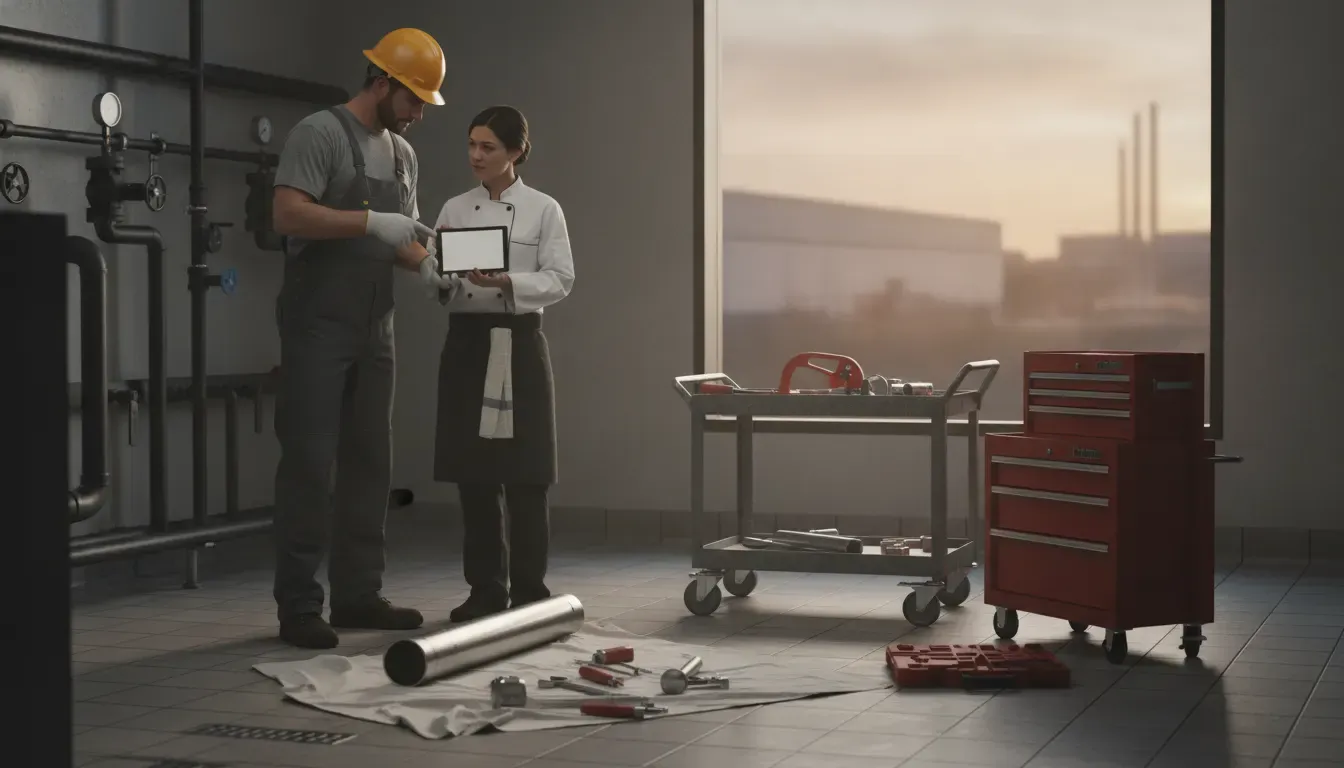
Quick answer: Inland Empire businesses can prepare by keeping system records, tracking recurring symptoms, scheduling appropriate inspections, and documenting shutoffs and access points. A maintenance plan should reflect the property’s age, use, drainage demands, sewer connection, and operational priorities across Riverside and San Bernardino County.
Preventive work cannot eliminate every failure, but it can give a property team better information before a problem becomes an interruption. Records should show where repairs occurred, what symptoms were observed, which components were replaced, and whether a drain or sewer issue returned. This history helps a plumber distinguish a new isolated event from a pattern that needs a broader review.
Planning can include:
- A current plumbing system map with shutoffs, cleanouts, equipment, and access restrictions
- Regular review of commercial restrooms, kitchens, floor drains, and water-using equipment
- Inspection or cleaning schedules suited to grease, sediment, scale, or other site-specific loads
- Backflow testing and documentation when required for the property’s system and water supplier
- Clear escalation steps for leaks, backups, loss of water, sewage exposure, or unsafe conditions
- A list of authorized contacts who can approve access, shutoffs, and repair decisions
The Inland Empire includes a wide range of commercial properties, from offices and retail spaces to restaurants, dealerships, warehouses, and facilities using septic or sewer infrastructure. A plan that fits one building may not fit another. Diamond House Plumbing serves business and residential properties across Riverside and San Bernardino County, with services that include general plumbing repairs, sewer work, septic systems, and system upgrades.
Contact Diamond House Plumbing to plan the next step for your commercial plumbing repair.
Commercial plumbing repair FAQ
Quick answer: Commercial plumbing repair is a site-specific service for restoring a business property’s water, drainage, fixtures, sewer, or related plumbing systems. Prompt assessment is especially important when a problem affects safe occupancy, customer access, sanitation, multiple fixtures, or business continuity.
What is the most common commercial plumbing repair?
Commercial properties commonly need attention for clogged or slow drains, leaking fixtures or supply lines, sewer backups, water heater problems, and damaged piping. The most useful repair depends on the source, not just the first fixture that shows a symptom.
When is a commercial plumbing problem an emergency?
A problem deserves urgent attention when uncontrolled water, sewage exposure, a major backup, loss of essential water service, or another failure makes an area unsafe or interrupts critical operations. Keep people away from affected areas and contact a qualified service provider for next steps.
How long does commercial plumbing repair take?
Timing depends on diagnosis, access, parts, system condition, the size of the affected area, and whether the property must remain open. A focused component repair may be more limited than a sewer or underground repair. The contractor should explain the expected sequence after assessing the site.
Does commercial plumbing repair require a permit?
Permit and inspection requirements depend on the work, the building, and the authority having jurisdiction. Repairs that alter or replace regulated systems may require review. Confirm the requirements for the specific scope and location before work begins.
Can a business stay open during plumbing repair?
Sometimes. The answer depends on which systems are affected, the location of the work, sanitation and safety conditions, shutoff needs, and the building’s operations. A repair plan can identify restricted areas, work hours, temporary measures, and communication steps when continued operation is practical.
Plan commercial plumbing repair before a small symptom becomes a disruption
A slow drain, recurring leak, or unexpected pressure change is useful information about a commercial plumbing system. Document the symptom, protect the affected area, and arrange an assessment that considers the building, the connected system, and the business schedule. For properties in Riverside and San Bernardino County, Diamond House Plumbing can discuss commercial plumbing repair, sewer, septic, and general plumbing needs through its contact page.

Leave a Reply