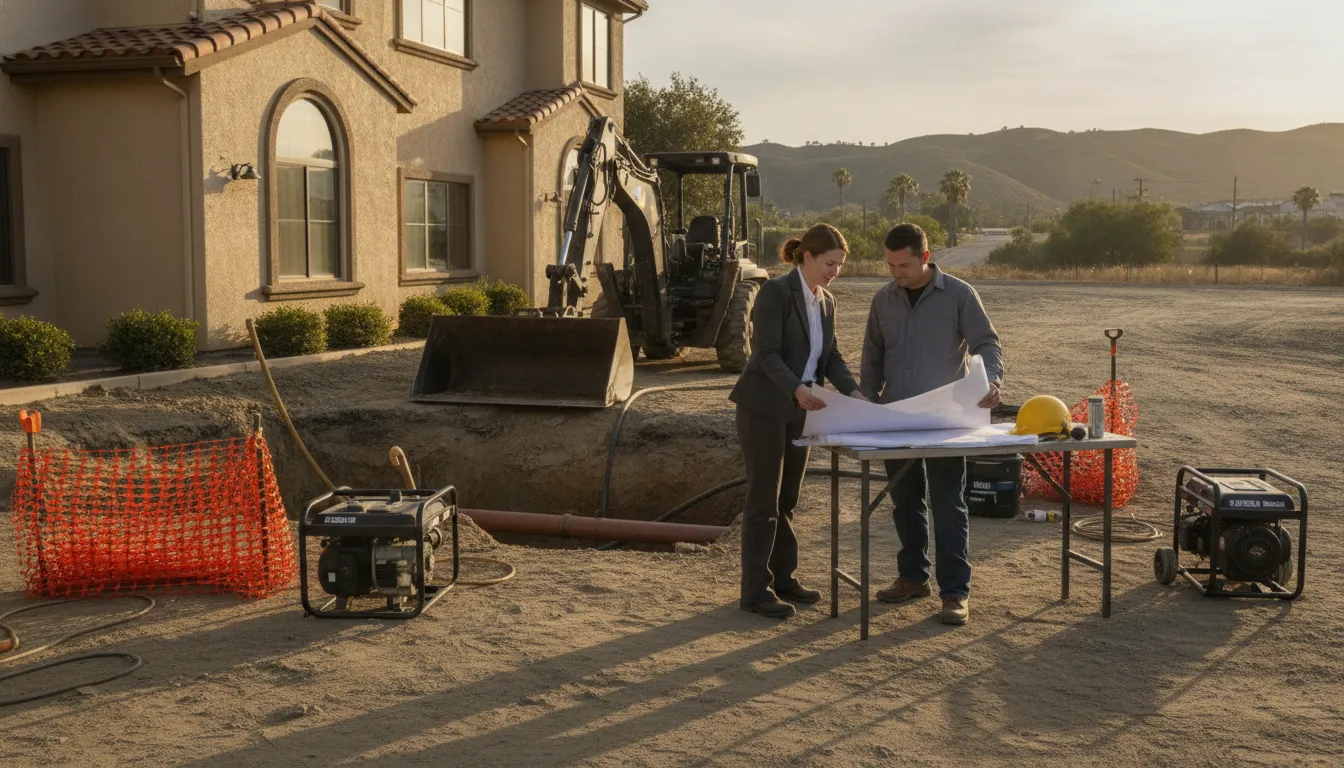
A sewer problem at an office, restaurant, dealership, retail site, or other commercial property can affect restrooms, employees, customers, and daily operations at the same time. Commercial sewer line repair starts with finding the location and cause of the failure, then matching the response to the pipe, site, and operating needs. For businesses in Riverside and San Bernardino County, a documented evaluation is more useful than guessing whether the issue is a fixture blockage, a private building sewer problem, or a damaged lateral.
Ready to discuss a commercial sewer concern? Call Diamond House Plumbing at 800-674-9440 or request an evaluation through the contact page.
Commercial sewer line repair is the diagnosis and correction of a blockage, break, root intrusion, failed joint, collapse, or other defect affecting a business’s sewer piping. The appropriate option may be professional cleaning, a localized repair, trenchless work, or replacement. Inspection findings, pipe condition, depth, access, surrounding surfaces, and the property’s operating requirements all influence the scope.
What Is Commercial Sewer Line Repair?
Commercial sewer line repair is work performed on the sewer piping that carries wastewater away from a business or commercial building. It can include clearing a restriction, repairing a limited defect, replacing a damaged section, or addressing a larger failure along a private sewer route. The term generally refers to more than a single sink or toilet drain inside the building. It may involve underground piping, cleanouts, a building sewer, or a sewer lateral that connects the property to a public sewer main.
The sewer main is the larger public pipe that carries wastewater beneath a street or through a public right of way. A building lateral connects private property plumbing to that main. The responsible party and repair process can vary by location and ownership, so the first step is to establish where the defect is located.
The commercial setting changes the planning considerations. A repair may affect tenant access, restrooms, kitchens, parking, loading zones, customer areas, or scheduled operations. The property team may need to coordinate access, protect occupied areas, control wastewater exposure, and keep a record of findings. A site-specific plan helps connect the plumbing work to the practical needs of the business.
Which Warning Signs Mean a Business Needs Sewer Repair?
Commercial sewer problems often appear as a pattern. One slow fixture can have a local cause, but recurring symptoms across several fixtures or areas deserve a broader evaluation. Early attention may help a property owner understand the issue before it becomes a larger interruption.
Recurring backups and slow drainage
Repeated backups, several slow drains, or a problem that temporarily improves and then returns can point to a restriction farther along the building sewer or lateral. Toilets, floor drains, sinks, and other fixtures may be affected when they share a line. A recurring blockage should not be treated as resolved simply because flow returns for a short time.
Odors, wet areas, and visible changes
Persistent sewage odors near cleanouts, restrooms, parking areas, loading zones, or landscaped spaces can indicate that wastewater is not moving or contained as it should. Unusually wet or foul-smelling ground, staining, recurring moisture, or an unusually lush strip of vegetation along a sewer route also merits attention. Cracks, failed joints, root intrusion, or a break can allow wastewater out of a line or groundwater in.
Fixture impacts and operational disruption
Pay attention when toilets gurgle, floor drains rise, several restrooms become unreliable, or wastewater appears in one fixture when another is used. These interactions can suggest a shared drainage or sewer issue, although symptoms alone cannot identify the defect. If staff are repeatedly closing restrooms, moving tenants, restricting customer access, or responding to the same blockage, the property should be evaluated rather than relying on another temporary clearing.
Keep people away from suspected wastewater and limit use of affected fixtures. When symptoms recur, spread across the property, create odors or wet areas, or threaten normal operations, contact a qualified commercial plumbing provider for an appropriate assessment.
How Is a Commercial Sewer Problem Diagnosed?
A useful diagnosis should do more than identify a blockage. It should clarify where the problem is, what conditions may have caused it, how much of the line is affected, and which repair scope fits the property. The exact process depends on the building and the line, but a commercial evaluation commonly considers the following steps.
- Review the property and symptoms. The evaluation begins with the building layout, affected fixtures, recent backups or slow drainage, cleanouts, surface features, and prior work. The property team should explain when symptoms began, where they occur, and how they affect operations.
- Plan safe access. Commercial sewer lines can run beneath parking areas, drive lanes, landscaped spaces, structures, or active work areas. Available cleanouts and access points help determine how the line can be reached without making assumptions about its route.
- Inspect the pipe when appropriate. A camera or another inspection method may help reveal buildup, roots, offset joints, breaks, collapse, or other conditions. Pipe size, length, accessibility, water level, blockage conditions, and the suspected failure influence which method is appropriate. Video inspection can provide useful information, but it also has limitations that should be explained in the findings.
- Locate the defect and its surrounding context. The affected area should be considered in relation to buildings, paving, landscaping, utilities, cleanouts, and connected sections of pipe. A limited defect in an otherwise serviceable line calls for a different discussion than widespread deterioration or multiple failures.
- Document the recommended scope. The property owner should receive a clear explanation of the observed condition and the next step. Depending on the findings, that may involve cleaning, localized repair, a trenchless method, open excavation, or replacement. Depth, material, structural condition, access, and business constraints all influence the decision.
Have questions about inspection, cleaning, or repair options? Contact Diamond House Plumbing for a property-specific discussion or call 800-674-9440.
Commercial Sewer Line Repair or Replacement: Which Path Fits?
The right choice depends on inspection findings, not simply on the age of the line. A localized defect may be suitable for a targeted repair, while widespread deterioration, collapse, or an unsuitable pipe configuration may support replacement. The property team should also consider access, surface restoration, building operations, and the consequences of another failure.
| Option | When it may fit | Important considerations |
|---|---|---|
| Cleaning | Buildup, grease, sludge, roots, or debris is restricting flow and the pipe remains suitable for service. | Cleaning addresses the obstruction, but it does not correct every structural defect. Recurring problems may require further inspection. |
| Localized repair | An inspection identifies a limited break, offset joint, root intrusion, or isolated weak section. | The adjacent pipe should be assessed so a targeted repair does not leave other known defects unaddressed. |
| Trenchless repair | The line has a suitable path and condition, and site conditions support a method designed to reduce surface disturbance. | Collapse, severe deformation, difficult access, unsuitable materials, or other conditions can make trenchless work unsuitable. |
| Open excavation and replacement | The line has extensive failure, lacks adequate structural integrity, or cannot accommodate another repair method. | Planning should address utilities, traffic, customer areas, landscaping, hardscape, building proximity, safety, and surface restoration. |
When a localized repair may fit
A spot repair may be appropriate when the defect is clearly isolated and nearby sections are in usable condition. Material, depth, line location, and adjacent joints still matter. Repairing one visible break without understanding the rest of the run can leave a commercial property exposed to another blockage or failure. Inspection records should identify the defect and the condition of the connected sections.
When trenchless methods may be considered
Trenchless methods can reduce disturbance to parking areas, drive lanes, landscaping, or other operating spaces when the existing alignment and pipe condition support them. They are not a universal substitute for excavation. A collapsed line, severe sag, challenging depth, unsuitable material, or configuration that cannot be properly prepared may require another approach. The goal is to choose a method that addresses the failure and fits the property, not to choose a method before the line is evaluated.
When replacement may be the responsible path
Open excavation may be considered when failure extends across the line, structural integrity has been lost, or a repair would leave too much compromised material in place. Replacement can also address connection or access issues identified during diagnosis. Because excavation affects surfaces and business activity, the plan should address staging, customer and employee access, work-area safety, restoration, and coordination with operating hours.
What Happens During a Commercial Sewer Repair Project?
The project sequence depends on the building, pipe condition, access, jurisdiction, and selected method. The property owner should understand what will happen before work begins and should identify the person authorized to coordinate access and operational decisions.
- Contain the problem and plan access. Limit exposure, protect employees and customers, and identify how crews can reach the affected line. The plan may account for restroom use, vehicle traffic, deliveries, tenants, parking, and operating hours.
- Clean or prepare the line as needed. The line may need professional cleaning or other preparation to remove grease, sludge, roots, or debris and to support a clearer inspection or repair.
- Complete the agreed repair or replacement. The work may involve a localized repair, trenchless method, excavation, or replacement. The chosen scope should relate to the documented condition of the pipe and the site.
- Inspect and test the completed work. The repaired section and connected fixtures should be checked as appropriate for flow, leaks, blockages, and proper operation before full restoration.
- Restore access and document the work. Restoration may include backfilling, addressing affected surfaces, removing equipment, and returning access areas to service. Keep the problem description, inspection findings, repair method, test results, photographs or video when available, and follow-up recommendations.
Business continuity planning should be practical and site-specific. It may include communicating with tenants, scheduling work during a lower-impact period, protecting customer routes, and identifying temporary restroom or access arrangements when appropriate. No single plan fits every property, so those details should be confirmed during the evaluation.
How Can Inland Empire Businesses Reduce Sewer Disruptions?
Preventive sewer care is easier to manage when it is part of facility operations rather than an occasional response to a backup. Businesses in Riverside, San Bernardino, Ontario, and nearby Inland Empire communities can create a clearer maintenance record, control avoidable inputs, and respond to changes in service before a problem becomes a larger interruption.
Control grease, debris, and avoidable blockages
Commercial kitchens, offices, dealerships, and other high-use properties should identify the materials most likely to enter their sewer system and reinforce appropriate disposal practices. Fats, oils, grease, some wipes, sanitary products, roots, cracks, and leaky joints can contribute to sewer problems. Drain protection, housekeeping, and prompt attention to damaged areas can support reliable operation.
Where grease, sludge, roots, or debris are recurring concerns, professional hydro jetting or cleaning may help clear buildup and support a preventive plan. The right frequency depends on property usage, line condition, prior service history, and the findings of an evaluation. A schedule should be based on the facility rather than copied from another business.
Schedule inspections and keep usable records
Inspection records, service reports, cleaning dates, observed defects, videos when available, and follow-up recommendations give facility managers useful context. A clear history helps compare recurring symptoms with earlier findings and can make the next evaluation more efficient. It also helps owners explain the work to tenants, insurers, stakeholders, or future property managers.
Plan access and emergency communication
Confirm where cleanouts, access points, shutoffs, affected work areas, and utility information are located. Identify who can authorize service, who communicates with occupants, how affected areas will be isolated, and where incident details will be recorded. A written response plan cannot prevent every failure, but it can reduce confusion when wastewater service changes unexpectedly.
If the property also has a private septic system, the septic services page provides a separate starting point for that type of evaluation. For general company information, visit the Diamond House Plumbing home page.
Need to plan the next step for a commercial sewer line repair? Call Diamond House Plumbing at 800-674-9440 or send a request through the online contact page.
Frequently Asked Questions
Can a commercial sewer line be repaired without digging up the site?
Sometimes. A localized defect or structurally suitable pipe may allow a trenchless approach that reduces disturbance to paving, landscaping, or active business areas. It is not appropriate for every line. Severe collapse, major deformation, unsuitable materials, depth, or access limitations may make excavation and replacement the better option. An inspection should guide the decision.
Is sewer pipe relining a good option for a commercial property?
Relining can be useful when the existing pipe has enough structural integrity to receive a liner and the method fits the defect, diameter, alignment, and site conditions. The evaluation should also consider connections, cleanouts, flow requirements, and business operations. Relining is not automatically better than replacement. The suitable option is the one that addresses the documented failure and fits the property’s needs.
How much does commercial sewer line repair cost?
There is no reliable price without inspecting the property. Scope can change based on the defect, pipe material and depth, access, excavation or restoration needs, connection points, and whether the line needs repair or replacement. An on-site evaluation allows the contractor to explain the condition and prepare a scope based on the actual work.
What should a business do when sewage backs up?
Protect people from contact with wastewater, limit use of affected fixtures, and keep customers and employees away from contaminated areas. Document visible impacts when it is safe, then arrange a professional assessment promptly. Repeated backups should be treated as a system warning rather than only a temporary inconvenience.
Contact Diamond House Plumbing
Commercial sewer issues require a response that accounts for both the underground line and the way the property operates. Diamond House Plumbing serves residential and commercial customers across Riverside and San Bernardino County, with experience in sewer line services and sewer lateral work. Contact the team to discuss the property’s symptoms, access, and next steps.
Call 800-674-9440 or contact Diamond House Plumbing online to request an evaluation.

Leave a Reply