
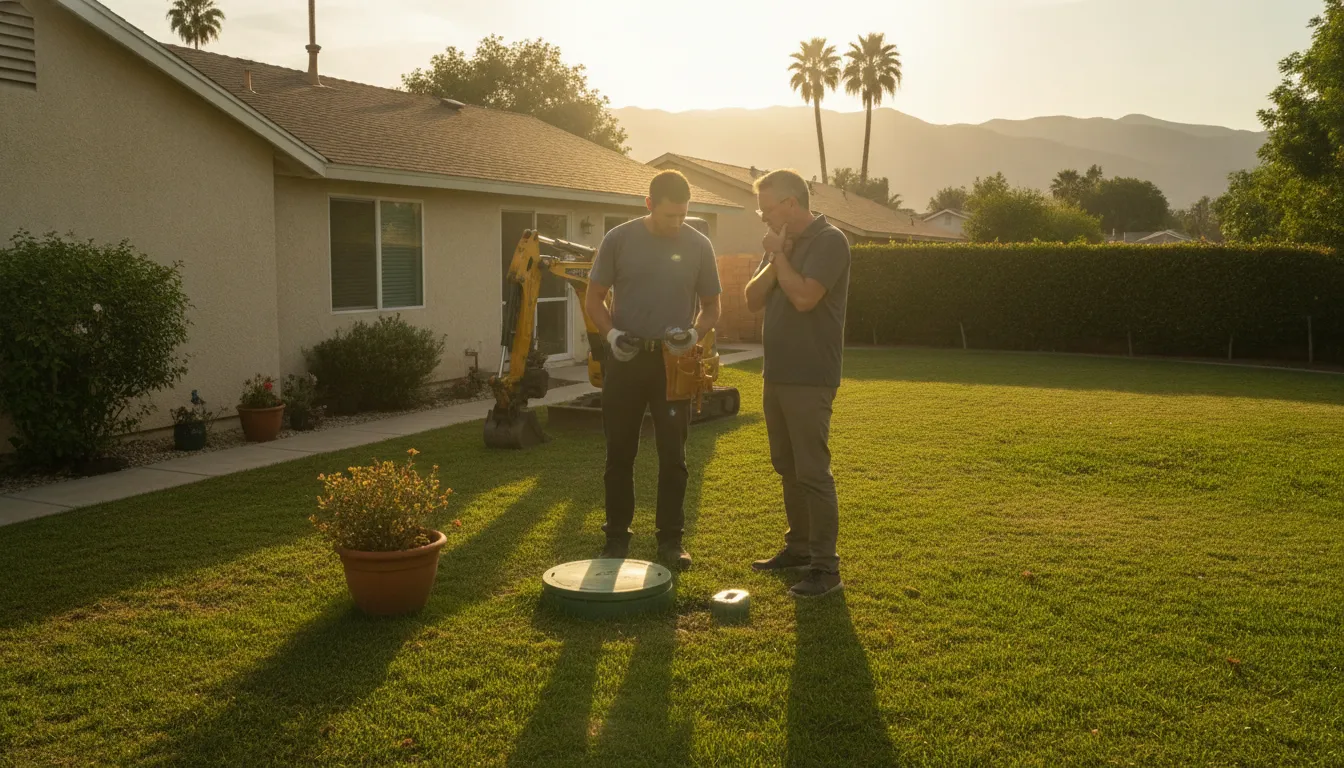
A septic system can appear quiet and healthy from the surface while older maintenance issues or underground faults are developing out of sight. That matters during a home sale, when an unexpected finding can affect the timeline, negotiations, and next steps.
The septic system inspection for home sale cost depends on the inspection scope, system type, site access, available records, and whether pumping or additional testing is needed. Confirm the fee and deliverables with the inspector before scheduling, and keep the inspection separate from any repair, replacement, or installation estimate.
For homes across Riverside and San Bernardino Counties, especially in rural and semi-rural Inland Empire communities, early planning can make the process more manageable. A qualified inspection should give the parties a clearer picture of system condition, documentation, and whether further evaluation is appropriate. Start by understanding what the inspection usually covers and which parts of the property and septic system can influence the final scope.
What does septic system inspection for home sale cost usually include?
If you are researching septic system inspection for home sale cost, the most accurate early answer is that there is no single price that applies to every property. The fee depends on the inspection scope, system type, access, available records, and whether additional work is needed to evaluate the site. A responsible provider should explain what is included before the appointment rather than present a repair or replacement estimate as the inspection fee.
A real-estate septic inspection is intended to evaluate system function and identify abnormalities. The EPA homebuyer guide explains why buyers should understand the septic system before completing a purchase. The requested service and deliverable matter when comparing estimates. Read the EPA homebuyer guide.
What the inspection fee may cover
Depending on the property and the agreed scope, the inspection may involve locating or accessing the tank. Reviewing visible components, considering the drainfield area, checking available records, and documenting observations in a report. Existing permits, as-built drawings, or other property records can help clarify the system’s location and history. Site conditions, including soil and proximity to water, can also affect how a septic system operates and what an evaluation needs to address.
Confirm whether the quoted inspection includes uncovering access points, pumping, specialized testing, photographs, or a written report. These items are not automatically part of every appointment. If a system has not been used recently, its condition may also be harder to assess, so the inspector should explain any limitations.
What is separate from the inspection
An inspection fee is not the same as the cost of pumping, repairing, replacing, or installing a septic system. If the evaluation identifies a concern, those services require their own scope and estimate. Necessary repairs or replacements may be addressed during transaction negotiations, but the inspection itself does not determine who pays or guarantee a particular outcome.
Diamond House Plumbing uses a consultation-based estimate process after an on-site evaluation. That process should not be interpreted as a fixed inspection price or as proof that an inspection is free. For property owners in Riverside and San Bernardino Counties, you can review the company’s septic system services and confirm which evaluation and follow-up services fit your home-sale timeline.
Which factors change the cost of a pre-sale septic inspection?
There is no single price that applies to every septic system inspection for home sale cost. A provider usually needs to confirm the property’s system, access, available records, and the level of evaluation requested before giving a clear estimate. A transaction inspection is also different from repair, replacement, installation, or pumping work. Keeping those scopes separate helps sellers understand what they are paying for and prevents an inspection quote from being confused with a possible repair budget.
Inspection scope and system type
A more detailed real-estate inspection may examine the system’s function and look for abnormalities, rather than relying only on what can be seen above ground. Penn State describes a real-estate septic inspection as more comprehensive than a typical home inspection. The requested report may also affect the scope. For example, a seller or buyer may need documentation of the tank, drainfield observations, system diagram, current photos, or noted deficiencies.
System design can change the work involved as well. A conventional system generally sends liquid from the tank to the drainfield, often through a distribution box. Other systems, including aerobic treatment units or sand filters, may require attention to different maintenance or discharge considerations. The property’s site conditions matter too. The EPA notes that factors such as soil type and proximity to water can affect how a septic system works. Ask the provider which components will be evaluated and whether the quoted inspection covers the system type on your property.
Access, records, and preparation
Locating and reaching the tank or other components can influence the time and equipment needed. Visible inspection caps, lids, or manhole covers can help identify the system, while a service provider may be needed to locate it when its position is unclear. Records can make that process more efficient. EPA guidance points to as-built drawings, permits, deeds, building permits, and design plans as possible sources of system information. Missing records, an outdated permit, a remodel, or an addition may prompt more questions or a closer evaluation.
Confirm whether the quote includes locating access points, uncovering the tank, photos, a written report, and any follow-up testing. Pumping is not automatically the same as a transaction inspection. If pumping or additional testing is recommended or requested, ask whether it is a separate service and why it is needed. Planning routine septic tank maintenance can help with long-term ownership, but it should not be added to a sale inspection scope without clear agreement.
For Inland Empire properties, including rural and semi-rural homes in Riverside and San Bernardino Counties, the practical next step is an on-site scope review. Request an itemized explanation of what the inspection includes, what is excluded, and how any repair evaluation would be handled separately.
| Item to clarify | Why it can matter |
|---|---|
| System type and components | The provider can explain which parts of the system are included in the agreed evaluation. |
| Access and records | Known tank locations, permits, and as-built drawings can make the visit more focused. |
| Pumping or additional testing | These may be separate services, so confirm whether they are included or recommended. |
| Written report and timing | The parties can plan around the report format, limitations, and transaction deadlines. |
How should sellers prepare for a septic inspection?
Preparation helps the inspection stay focused and gives the provider better information about the property. It can also make the home-sale timeline easier to manage. An inspection is not the same as a repair or replacement estimate, and the scope and fee should be confirmed with the provider before the appointment. EPA guidance recommends reviewing available system records and arranging an inspection before a purchase, while local rules and transaction requirements can vary.
- Gather the records you have. Look for an as-built drawing, septic permit, pumping receipts, prior inspection reports, repair invoices, and documents for additions or remodeling. EPA notes that local health department records may contain an as-built drawing, and permits may identify details such as the installation date and soil information. If you do not have a complete file, tell the provider what is missing rather than guessing about the system.
- Make the system accessible. Walk the property for visible inspection caps, lids, or manhole covers, and identify anything that could limit access. EPA lists these features as clues that can help locate a system. Do not uncover or alter buried components unless the provider directs you to do so. If the tank or drainfield location is unclear, ask whether the provider can help locate it.
- Disclose relevant history. Share known backups, slow drains, odors, wet areas, unusual pumping frequency, or previous repairs. Also mention periods when the home was vacant or the septic system was not used. An extension guide cautions that potential problems can be harder to determine when a system has not been in use, so occupancy history gives useful context.
- Schedule early enough for decisions. Coordinate the inspection with the listing, offer, due-diligence, and closing schedule. Leave time for the written report, follow-up questions, and any separate evaluation that may be needed. Do not promise a buyer that a repair, pumping visit, or replacement will be completed by a particular date until the scope and timing are confirmed.
- Coordinate with the right people. Confirm who will attend, who authorizes access, and who receives the report. Ask the real-estate professionals involved in the transaction whether they need a particular report format or documentation. Separately confirm any applicable requirements with the responsible local authority; do not assume one rule applies across Riverside and San Bernardino Counties.
- Ask practical questions before the visit. Confirm what the inspection includes, whether access covers the tank and other components, what records the provider wants. When the report will be delivered, and whether additional testing or pumping would be separate. Ask about the provider’s qualifications and what limitations will be noted in the report. These questions help you compare the inspection scope rather than comparing the septic system inspection for home sale cost alone.
For Inland Empire sellers, a clear record set and realistic schedule are especially useful when a property has an older or less familiar system. Keep the report with the other sale documents, and treat any recommended repair as a separate decision that should be evaluated on site.
What happens after the inspection report?
An inspection report is a decision document, not an automatic repair order. Start by separating what the inspector observed from what may need to happen next. The report might describe the condition of the tank, access points, distribution components, drainfield, or visible signs of malfunction. It may also identify limitations, such as areas that were not accessible or a system that has not been used recently. A real-estate septic inspection evaluates function and possible abnormalities, while repair, pumping, replacement, and installation are separate services with their own scope.
Read the findings with the buyer, seller, real-estate professionals, and inspector as appropriate. Ask which observations are confirmed, which require additional testing, and whether the report recommends monitoring, maintenance, repair, or further evaluation. If the report identifies a concern, request enough detail to understand its location, likely cause, and urgency. A clear written record helps everyone discuss the same issue instead of relying on informal descriptions.
Turn findings into documented options
Not every finding leads to the same remedy. Some situations may call for a focused repair or service visit. Others may require a broader evaluation of the system, especially when access is limited or the property has unusual site conditions. Diamond House Plumbing serves Riverside and San Bernardino Counties, including rural and semi-rural communities where septic systems are common. Its septic work includes repair, replacement, pumping, and complex projects such as seepage pit upgrades. Review septic repair options for general context, then confirm the actual scope through an on-site evaluation.
For each option, document what work is proposed, what remains uncertain, whether local permitting or authority review may apply, and who will coordinate the next step. Do not treat a repair estimate as the cost of the inspection itself. Diamond House Plumbing uses a consultation-based process, and its available customer information does not establish a fixed septic inspection fee or universal inspection scope.
Coordinate timing before closing
Once the options are clear, the parties can discuss whether to complete work before closing, negotiate responsibility, or proceed with another arrangement permitted by the transaction. Inspection costs and needed repairs may be negotiated in a real-estate transaction, but the agreement should come from the parties and their transaction professionals. If replacement is being considered, review septic system cost factors without assuming that general factors determine the cost of a specific Inland Empire property. Keep the report, photos, diagrams, permits, proposals, and follow-up notes together so the next decision is based on documented information.
Does Riverside County or San Bernardino County require a septic inspection for a home sale?
There is no single countywide answer that should be assumed for every property or transaction. Whether a septic inspection is required can depend on the property location, the responsible permitting authority. The type of transaction, and the terms set by the buyer, seller, lender, or purchase agreement. A requirement that applies in one jurisdiction or situation may not apply in another.
The U.S. Environmental Protection Agency explains that local or state governments may require a septic inspection before a home purchase. And that septic systems are typically permitted and inspected by a local permitting authority, such as a health or environmental department. See the EPA homebuyer guide for general background. This is useful context, but it is not a determination of the current rules for a particular Riverside County or San Bernardino County property.
Who should confirm the requirement?
Start with the local agency responsible for onsite wastewater permitting in the property jurisdiction. Ask whether the property is subject to a presale inspection, transfer inspection, operating permit review, disclosure requirement, or other septic-related process. Confirm the answer in writing when possible, especially if the home is in an unincorporated area or near a city boundary. The county, city, or other responsible authority may direct you to the correct department.
Also ask the real-estate agent, escrow officer, title professional, and lender what documentation the transaction requires. Those professionals can explain the contract and closing process, but they should not be treated as a substitute for the agency that administers local septic rules. A qualified septic inspector or service provider can then explain what the proposed inspection includes. What records are needed, and whether the assessment is separate from pumping, repair, replacement, or installation work.
What should sellers gather before calling?
Collect permits, prior inspection reports, pumping records, as-built drawings, and any notices from the local authority. The EPA notes that permits may include the installation date and soil information. While property records and building plans may help confirm whether a home has a septic system. These records can make it easier to identify the system and clarify the inspection scope.
For homes in rural or semi-rural parts of the Inland Empire, including areas around Hemet, Perris, Yucaipa, or Mentone, confirm the local process early. Do not use a general estimate for septic system inspection for home sale cost as proof that an inspection is required. The requirement and the fee are separate questions that must be confirmed for the specific property.
Questions to ask before scheduling a septic inspection
Before you schedule, ask enough questions to understand what the appointment will and will not cover. A real-estate inspection is different from pumping, repair, replacement, or a general plumbing visit. Clarifying the scope early helps buyers, sellers, agents, and the service provider work from the same expectations.
- What areas and components will you evaluate? Ask whether the visit includes locating the tank, checking access points, reviewing the tank and drainfield, and looking for visible signs of malfunction. The appropriate scope can depend on the system and site conditions.
- What access will you need? Ask whether lids, inspection ports, the tank, or other components must be exposed or accessible. If the system location is unclear, ask how it can be located. EPA guidance notes that a provider may help locate a system, and visible caps, lids, or manhole covers may offer clues. Review the EPA homebuyer guide for general preparation information.
- Which records should I provide or request? Ask what permits, as-built drawings, pumping records, prior reports, deeds, or building plans would help. EPA says permits may include the installation date and soil information, while property records may help confirm whether a home has a septic system.
- What will the report include? Confirm whether you will receive written findings, photos, a system diagram, identified limitations, and recommendations for follow-up evaluation. Ask whether the report separates observed conditions from proposed repairs.
- How long will the inspection and report take? Align the appointment and report timing with the purchase, listing, inspection, and response deadlines. If the system has not been used recently, ask how that limits the evaluation.
- Who confirms transaction requirements? Ask your agent, lender, title or escrow contact, and the responsible local authority which documents or deadlines apply. Requirements can vary by location and transaction, so do not assume that one inspection format satisfies every party.
For local planning in Riverside or San Bernardino County, confirm the proposed scope, records needed, timing, and any separate follow-up work before scheduling.
Frequently Asked Questions
How much does a septic inspection cost when buying a house?
There is no reliable single price for every property in Riverside and San Bernardino County. The cost depends on the system type, access to tanks and other components, available records, site conditions, and whether additional work is needed to evaluate the system. Ask for a written scope before scheduling, and keep the inspection fee separate from any pumping, repair, replacement, or permitting costs.
Is a septic inspection required when selling a house?
Requirements can depend on the responsible local authority and the details of the transaction, so do not assume there is one countywide rule. The EPA notes that local or state governments may require an inspection before a home purchase. Confirm the applicable requirements with the local permitting or health authority and your real-estate professionals. EPA homebuyer guidance
How often does a septic system need to be inspected?
Inspection timing depends on the system, its maintenance history, use, and the reason for the evaluation. A home sale usually calls for a transaction-focused inspection, while routine service-provider assessments address ongoing system condition. If the system has not been used recently, potential problems can be harder to determine. The EPA homebuyer guide offers general planning context for buyers.
What should sellers have ready before the inspection?
Gather permits, as-built drawings, prior service records, and details about remodeling or additions. Make access points identifiable and accessible, and ask whether the report will include the system diagram, current photos, and the inspector’s qualifications. EPA guidance notes that local health department records may contain an as-built drawing or permit information.
Schedule Your Septic Sale Evaluation
A clear evaluation can help you understand the system’s condition and plan the next steps for a property sale without confusing inspection findings with repair or replacement work. If your home is in Riverside or San Bernardino County, contact Diamond House Plumbing to discuss your septic service needs or an on-site evaluation. Share any available system records and your sale timeline so the team can better understand what you need.

Leave a Reply