
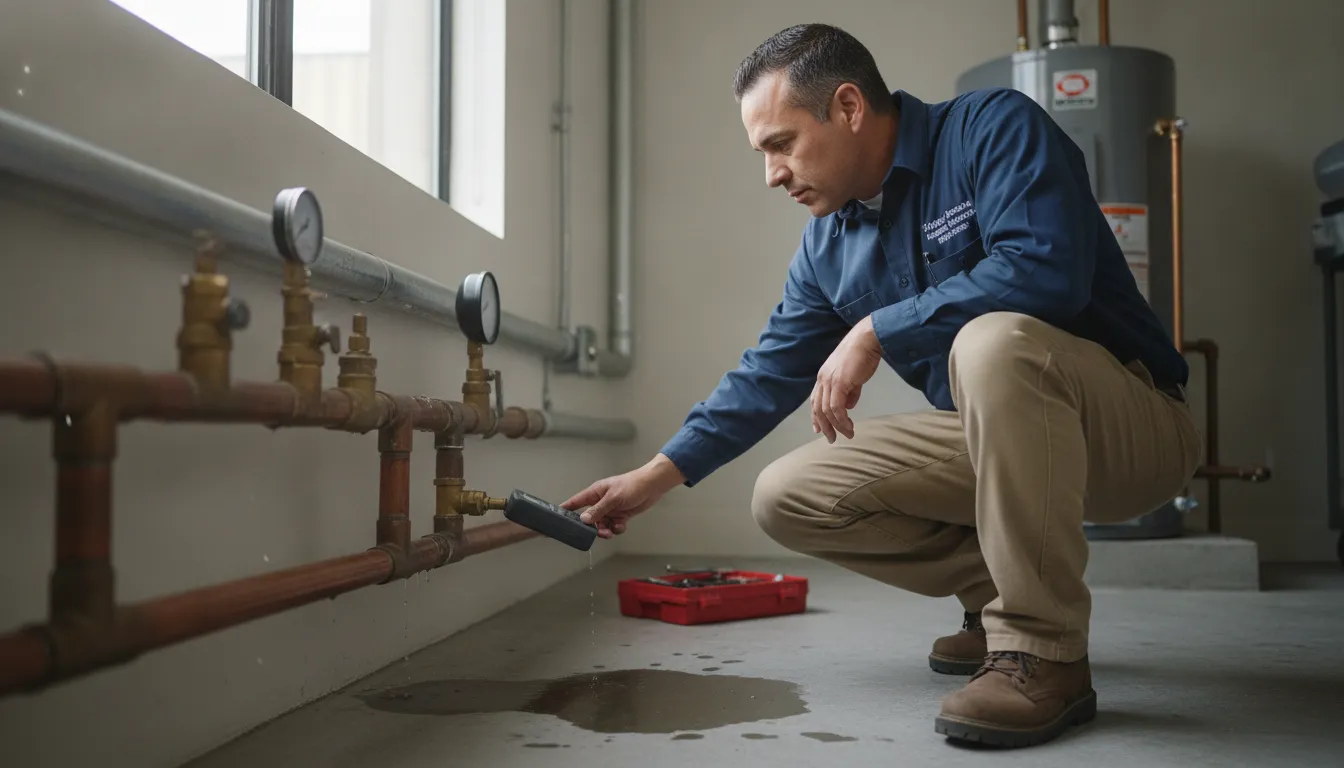
A commercial water leak rarely begins with a dramatic burst pipe. More often, it appears as an unexplained increase in water use, a damp ceiling tile, a musty odor, or a fixture that never seems to stop running. In an occupied property, noticing these clues early can help protect building materials, inventory, equipment, and daily operations.
To understand how to detect a commercial water leak, compare unusual water usage with visible moisture, sounds, pressure changes, and fixture performance. Then arrange a professional evaluation when the source is hidden, pressurized, extensive, or unsafe to access.
Start by documenting what changed, where the signs appear, and whether the problem affects one area or the wider property. Facility managers in Riverside and San Bernardino County should also consider water lines, fixtures, and water-heating equipment as possible sources. A careful detection process helps separate an isolated repair from a larger plumbing issue and supports a practical plan for limiting disruption.
How to Detect a Commercial Water Leak Before It Causes Disruption
To detect a commercial water leak, start by observing visible changes and comparing water use or flow with normal operations. Inspect safe and accessible areas, protect people and equipment, and arrange a professional evaluation when the source is hidden or uncertain. A small wet area, unusual sound, or change in water use does not always identify the exact source. It can signal that the plumbing system needs attention.
Observe the property and compare normal water use
Walk through accessible areas of the building and note damp flooring, ceiling or wall stains, peeling finishes, pooling water, or moisture around fixtures. Listen for water movement when fixtures are not being used. In a retail space, office, dealership, or other occupied property, staff may also notice a restroom, break room, or utility area that stays wet longer than expected.
Compare current flow or water usage with the building’s normal pattern. A change during closed hours or a period when major fixtures are inactive deserves attention. If the property has separate areas or submeters, comparing zones may help narrow where the issue is occurring. These observations can guide an inspection, but they do not prove whether the problem involves a fixture, supply line, water heater, or another part of the plumbing system.
Inspect only areas that are safe and accessible
Look for moisture near exposed valves, pipe connections, fixtures, and equipment without removing covers or dismantling plumbing. Check accessible ceilings, mechanical areas, and utility spaces for signs of ongoing moisture. Keep people away from slippery surfaces and protect inventory, furniture, and equipment from additional exposure where practical.
Use extra caution around electrical equipment. Do not enter a wet area if electrical hazards may be present, and do not handle unfamiliar valves under unsafe conditions. If a safe, clearly identified isolation valve is accessible and shutting it off will not create a larger operational problem. A responsible property representative may isolate that section while help is arranged.
Protect operations and arrange an evaluation
Document where the sign appeared, when it was noticed, what fixtures or equipment were operating, and whether the condition changed after water use stopped. Share those observations with the plumbing professional. Hidden, intermittent, pressurized, or extensive leaks can require professional leak detection equipment and a careful review of water lines, fixtures, and related infrastructure.
For commercial properties in Riverside and San Bernardino Counties, contact Diamond House Plumbing about a suspected leak. An on-site evaluation can help identify the source and support a repair plan that considers safety, access, and continuity of operations.
What Warning Signs Point to a Commercial Plumbing Leak?
Commercial leaks do not always announce themselves with standing water. A change in water use, a damp ceiling, or an unexplained plumbing sound can be an early signal. Especially in an occupied office, retail space, dealership, or other facility. Treat the pattern as a reason to investigate, not as proof of a specific source.
Watch water use and plumbing behavior
Check the water meter during a period when fixtures, appliances, and irrigation should be inactive. Continued movement may point to flow somewhere in the property, although the meter location and building systems should be considered before drawing conclusions. An unusual increase in water use, recurring pressure changes, weak fixture performance, or toilets and faucets that seem to run after use can also warrant attention.
Operational clues matter, too. A restroom may lose pressure at busy times, a service area may develop repeated drainage issues. Or staff may report that a fixture behaves differently from one shift to the next. These observations can help a plumber narrow the investigation while preserving normal business activity as much as possible.
Look, listen, and notice changes in occupied areas
Inspect accessible spaces for damp flooring, bubbling paint, ceiling discoloration, swollen trim, or stains that return after drying. Listen for hissing, dripping, or water movement behind walls, above ceilings, or near equipment when no fixture is operating. Musty odors and recurring moisture can indicate a persistent problem, even when the visible area looks small.
Do not assume that the nearest wet spot marks the leak. Water can travel along framing, ceilings, floors, or other building materials before it becomes visible. One sign alone may have another explanation, such as condensation, a failed fixture seal, or drainage overflow. A repeated pattern, particularly one that changes with building use, deserves a closer evaluation.
Separate clean-water concerns from drainage problems
Clear water near a supply line, fixture, or water-heating system may involve pressurized plumbing. Odor, discoloration, slow drainage, backups, or moisture near floor drains can point instead toward a sewer or drainage concern. These issues require different diagnostic considerations, and a sewage-related problem should be treated as a safety and business-continuity concern.
Property owners in Riverside and San Bernardino County can document when the warning signs appear. Restrict access to affected areas, and arrange professional help before opening walls or disturbing plumbing components. A careful evaluation can distinguish a fixture, water line, water heater, or drainage issue and help plan the next step with less disruption.
What Should a Business Do When a Leak Is Suspected?
Once a business notices a possible leak, the priority is to protect people, equipment, inventory, and the building while preserving useful information for diagnosis. Commercial plumbing systems can serve multiple floors, fixtures, and work areas, so avoid making changes you cannot confidently reverse.
Make the area safe first
Keep employees, customers, and contractors away from standing water, slippery surfaces, ceiling damage, and any location where water may have reached electrical equipment. Do not enter a wet electrical area or handle electrical panels, cords, or machinery near water. If the condition appears extensive or unsafe, move people away and contact the appropriate emergency or building-safety resource.
Use only a known, accessible shutoff
- Assess the immediate risk. Determine whether water is actively spreading, threatening an occupied area, reaching equipment, or coming from a sewage-related location. Do not dismantle a fixture, open a wall, or attempt a hazardous repair to find the source.
- Isolate water only when you know the valve. If a clearly identified, accessible isolation valve controls the affected fixture or area, and operating it can be done safely from a dry location, close it carefully. Do not search through unsafe spaces or operate an unfamiliar valve that could affect critical building systems.
- Protect stock and equipment. Relocate movable inventory, files, tools, and electronics away from the affected area when it is safe to do so. Use ordinary protective measures to limit damage, but do not place people in the path of active water or electrical risk.
- Record what you observe. Note the location, approximate start time, affected rooms, water color or odor, changes in pressure, unusual sounds, and whether the problem changes when fixtures or equipment operate. Photos or short videos from a dry, safe position can help a professional understand the conditions.
- Request a professional evaluation. Contact a qualified commercial plumber for hidden, pressurized, intermittent, extensive, or sewage-related leaks. Professional diagnosis may require inspection of fixtures, water lines, or related infrastructure, especially when the source is not visible.
Share useful details without delaying help
Tell the plumber what was isolated, if anything, and whether the leak affected operations, customers, inventory, or neighboring areas. Businesses in Riverside and San Bernardino County can use this information to help coordinate a focused evaluation and plan work with minimal disruption. If the leak involves sewage, rapidly increasing water, structural damage, or a potentially energized area, treat it as urgent and do not wait for conditions to worsen.
How Do Professionals Locate a Hidden Commercial Water Leak?
Professional diagnosis starts with narrowing the possibilities before opening walls, ceilings, floors, or other finished areas. The technician reviews the property’s history, recent changes, affected rooms, operating schedule, and any pattern in water use or pressure. This context helps distinguish an active supply-line problem from condensation, a fixture issue, or a drainage concern.
Reviewing the property and accessible plumbing
The inspection usually begins with accessible fixtures, valves, exposed piping, mechanical rooms, water heaters, and areas showing dampness or staining. The technician may compare what is happening in different parts of the building, observe when the symptom appears, and check flow or pressure conditions. These observations do not prove the source by themselves, but they help establish which part of the system deserves closer attention.
Using equipment when the source is concealed
When a leak is hidden or intermittent, professional leak detection equipment can help guide the investigation. The appropriate method depends on the building, piping, access, and symptoms. Not every property calls for the same tool, and equipment should support the inspection rather than replace it. A careful diagnosis may identify whether water is coming from a fixture, a supply line, a water heater, or another plumbing component before access is planned.
If the findings point toward a water-heating system, the next discussion may involve water-heater services. If moisture, odors, backups, or unusual drainage behavior suggest related infrastructure, the technician may also evaluate whether drains and sewer services are relevant. Separating clean-water supply issues from sewer or drainage problems matters because the safety concerns, access requirements, and repair scope can differ.
Defining targeted access and scope
Once the likely source is narrowed, the professional can explain what access may be needed, how the work could affect business operations, and whether additional inspection is appropriate. This targeted approach supports minimal disruption and gives the property owner a clearer basis for planning the repair, restoration, and next steps.
What Happens After a Commercial Leak Is Found?
Finding the source is an important step, but the repair plan depends on what failed. Where it is located, and how the work can be completed without creating unnecessary disruption. A fixture connection in an accessible room may require a very different response from a concealed pipe beneath a slab. The final scope should follow an on-site evaluation, not an assumption based on one visible symptom.
Repair scope varies by location and system
The table below summarizes common considerations for commercial leak repairs.
| Possible source | What the work may involve | Access and restoration considerations | Operational planning |
|---|---|---|---|
| Minor fixture repair | Inspecting and repairing a faucet, valve, supply connection, or similar fixture component. | Often limited to an accessible room, with attention to protecting nearby finishes and work areas. | Coordinate access around employees, customers, restrooms, or other occupied spaces. |
| Accessible pipe repair | Repairing an exposed or readily reachable section of a water line after confirming the leak location. | May require isolating part of the plumbing system and restoring the immediate work area. | Plan the work around operations and identify which areas may have limited water service during the repair. |
| Concealed or underground line work | Locating the affected section, selecting a targeted access approach, and repairing or replacing damaged piping. | Access may involve walls, ceilings, flooring, paving, or soil. Restoration needs should be documented separately. | Discuss affected areas, safe access, sequencing, and measures that support business continuity. |
| Water-heater-related service | Evaluating the water heater, connections, valves, and surrounding plumbing to distinguish the source and scope. | Keep the equipment area clear and avoid electrical or hot-water hazards. Related water-heater services may be appropriate when that system is involved. | Coordinate access and any necessary service interruption with staff, tenants, or customers. |
Documentation helps the property team make decisions
A commercial evaluation should record the observed source, affected areas, recommended repair approach, access requirements, and restoration considerations. Photos, notes about water-use changes, and information about when the issue appeared can help connect the diagnosis to the property’s operating history. Documentation also gives owners, facility managers, and contractors a clearer basis for coordinating follow-up work.
Plan the repair around business continuity
For a retail property, office, dealership, or other occupied facility, the repair plan should account for people, access, equipment, and essential operations. Diamond House Plumbing serves commercial properties in Riverside and San Bernardino Counties and provides estimates after an on-site evaluation. That evaluation allows the team to explain the recommended scope and identify a practical path forward without promising a universal method or outcome.
Frequently Asked Questions
What is the first sign of a commercial water leak?
There may not be one definitive sign. Unexplained water use, damp areas, staining, musty odors, changes in water pressure, or the sound of running water can all justify further investigation. Compare the timing and location of the signs, and arrange professional diagnosis when the source is hidden or uncertain.
Can a business safely shut off water after finding a leak?
If an accessible isolation valve is clearly identified and the area is dry and safe, shutting off the affected supply may limit further damage. Keep people away from wet areas, avoid electrical hazards, and do not dismantle plumbing. For pressurized, extensive, concealed, or sewage-related leaks, contact a licensed plumbing professional.
How do professionals locate a hidden commercial water leak?
A professional evaluation can combine the property history, visual observations, water-flow or pressure clues, and targeted inspection of fixtures, water lines, and related equipment. Diamond House Plumbing uses professional leak detection equipment to help identify the likely source before selecting a repair approach.
Could a water heater be causing the leak?
Yes. Connections, valves, tanks, and nearby piping can all contribute to water around a water-heating system. If the signs are concentrated near that equipment. Keep the area accessible for inspection and arrange commercial water-heater or plumbing service rather than assuming the leak is in a wall or underground line.
How quickly should a commercial leak be evaluated?
Prompt evaluation is important when water is actively escaping, operations are affected, structural materials are getting wet, or the source cannot be found. Early diagnosis helps the property team plan access, protect occupants and equipment, and coordinate repair work with as little disruption as practical.
Contact Us to Evaluate a Suspected Commercial Leak
A timely evaluation can help clarify whether the concern involves a fixture, visible pipe, concealed line, or another plumbing system before repair planning begins. If your commercial property is in Riverside or San Bernardino County, contact Diamond House Plumbing about a suspected leak through the contact page. Share what you have observed, where the signs appeared. And any safe first steps already taken so the team can better understand the situation and arrange the appropriate evaluation.

Leave a Reply