
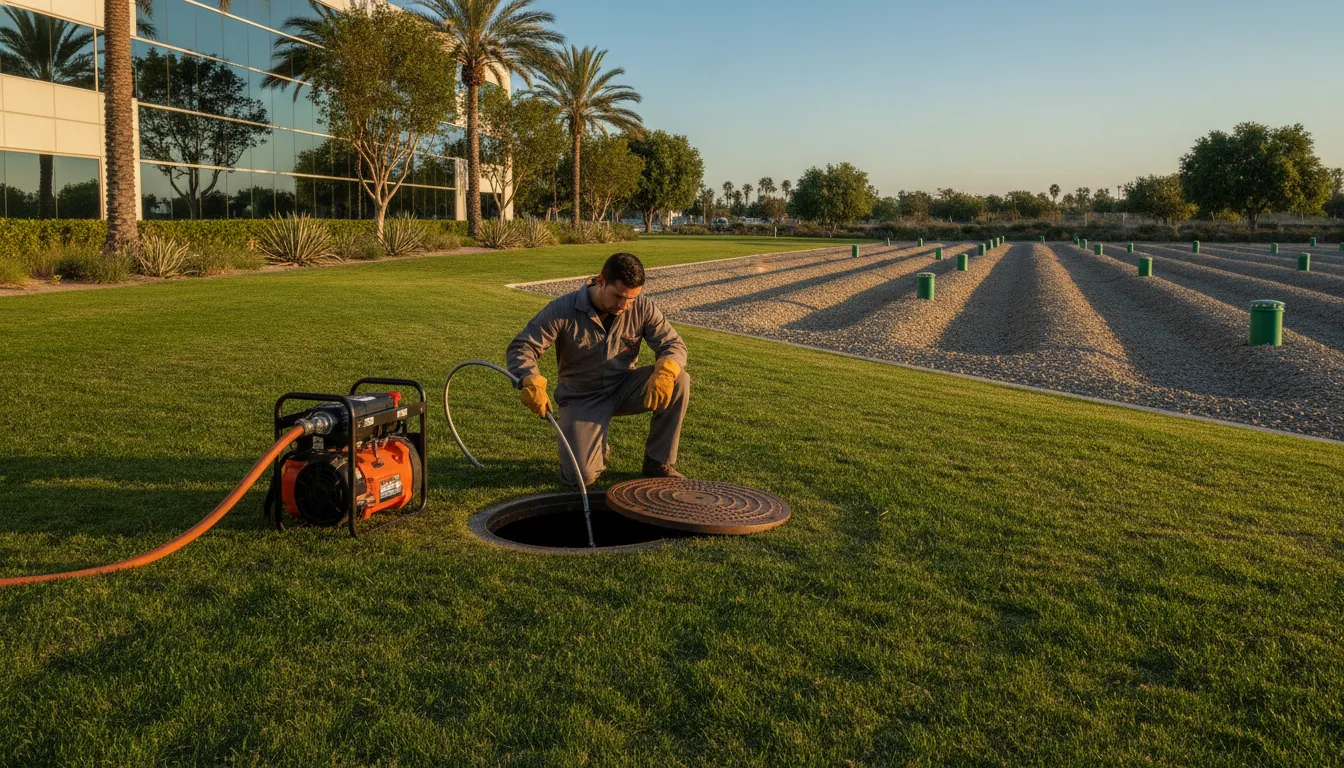
For an Inland Empire business, commercial septic maintenance can protect restrooms, customer access, staff operations, and the property itself. A practical plan keeps inspections, pumping decisions, water use, and drain-field protection connected instead of treating each symptom as a separate emergency.
Commercial septic maintenance combines condition-based inspections, documented pumping and service records, sensible wastewater practices, and protection for the tank and drain field. The right schedule depends on system design, wastewater volume, solids, and inspection findings.
For help evaluating your system or planning service around business operations, contact Diamond House Plumbing at +1 800-674-9440.
The first step is understanding why routine attention matters across Riverside and San Bernardino Counties, and what a whole-system approach should include.
Why Commercial Septic Maintenance Matters for Inland Empire Businesses
For a dealership, retail property, office building, or other commercial site, septic maintenance is part of protecting daily operations. A system problem can affect restrooms, customer access, employees, tenants, and the surrounding property. In Riverside and San Bernardino County, commercial property owners and managers benefit from treating the septic system as working infrastructure rather than waiting for an obvious backup.
Commercial septic maintenance covers the whole system. Depending on the property and system design, that can include inspecting the tank and access points, coordinating professional pumping, and checking for leaks or abnormal conditions. It also includes protecting the drain field and reviewing how water and wastewater move through the property. The right scope depends on system size, wastewater volume, equipment, and inspection findings. A universal schedule should not be assumed.
This work is distinct from general commercial plumbing maintenance. A broader plumbing program may address fixtures, supply lines, drains, or water heaters throughout the building. Septic-specific work focuses on the private wastewater treatment and dispersal system, including the tank, outlet components, and drain field. Businesses that need broader building-system support can review commercial plumbing maintenance in the Inland Empire, while property owners dealing with the septic portion can explore septic system services.
Diamond House Plumbing provides commercial plumbing support with an emphasis on scheduled maintenance and minimizing disruption, along with septic installation and repair for commercial properties. For a business manager, that combination makes it easier to keep general plumbing concerns and septic-specific needs in the right service lane.
What Should a Commercial Septic Inspection Cover?
A commercial septic inspection should review the complete wastewater system, not only the tank. The service professional should identify the system type, locate and assess access points, and note how wastewater moves from the building through the tank toward the drain field. A clear understanding of the septic tank and drain-field components makes it easier to connect a small defect with a larger operational risk.
Tank condition and wastewater levels
The inspection should look for visible leaks, unusual water levels, and evidence that groundwater or surface water may be entering the tank. The professional should examine the scum and sludge layers and record the findings. The EPA identifies household pumping triggers, including scum within six inches of the outlet bottom. Sludge within 12 inches of the outlet, or sludge and scum exceeding 25 percent of liquid depth. Those figures are useful EPA guidance, but they should not be treated as a universal commercial rule. Commercial timing depends on system size, wastewater volume, solids, and tank capacity.
Pumps, controls, and access
If the property uses pumps, electrical floats, alarms, or other mechanical components, the inspection should include their condition and operation. The EPA says alternative systems with these components generally need inspection about once a year. The appropriate commercial schedule should be based on the equipment and site findings. The inspector should also confirm that covers, risers, cleanouts, and other access points can be reached safely for future service.
Documentation and next actions
Request a service report that identifies the tank condition, measured scum and sludge levels, equipment observations, repairs completed, and recommended follow-up. Keep these records with the property’s maintenance history. A documented commercial plumbing maintenance plan helps managers compare findings over time, coordinate work, and address recommended repairs before they interfere with normal business operations. For the underlying inspection and recordkeeping guidance, see the EPA septic system care guidance.
How to Coordinate Pumping, Records, and Service Visits
A commercial maintenance plan works best when pumping is treated as a documented service decision, not a calendar reminder copied from another property. Pumping timing depends on system size, wastewater volume, solids accumulation, tank size, and inspection findings. Building use, equipment, and changes in occupancy can also affect what the system receives between visits.
EPA household guidance cites inspection and pumping benchmarks, but those figures are not a commercial promise or a universal interval. During a service visit, a qualified provider can check for leaks and examine the scum and sludge layers. EPA guidance also describes pumping thresholds involving the distance between these layers and the outlet. One threshold is six inches for scum, another is 12 inches for sludge, and another is more than 25 percent of liquid depth occupied by sludge and scum. Treat these as inspection guidance, not as a substitute for evaluating the actual commercial system with a service professional.
For background on the variables that shape scheduling, review this guide to septic tank pumping frequency. The septic tank pumping process guide can also help property managers prepare staff for what a routine visit involves.
Make every visit part of the service history
Keep the service report with the property’s maintenance records. At minimum, record the visit date, observed sludge and scum levels, tank condition, leaks or other findings, pumping performed, repairs completed, and recommended follow-up. EPA recommends recording sludge and scum levels so future providers can compare conditions and better determine when pumping is needed. A clear history also helps a new provider understand prior work without relying on memory.
Give the provider useful operating information
Before the visit, share changes that could affect wastewater flow, such as a remodel, occupancy increase, new fixtures, drainage problems, or recurring odors and backups. Ask the provider to explain findings in practical terms and identify which repairs need prompt attention. If the property has pumps, electrical controls, or other mechanical components, mention them when scheduling so the visit addresses the full system. Keeping communication, reports, and follow-up decisions together gives managers a more dependable basis for commercial septic maintenance in Riverside and San Bernardino County.
How Can Businesses Protect the Tank and Drain Field?
Commercial septic maintenance should protect the system before solids, grease, or excess water reach the soil absorption field. In a business setting, that means managing what enters the tank, checking tank components, and keeping the area above and around the drain field usable.
Control grease and solids at the source
In large commercial systems, a separate oil and grease removal system may be used before wastewater enters the septic tank. Inside the tank, solids settle while oil and grease rise. Material that remains accumulates as sludge and eventually requires pumping. Keep food waste, oils, chemicals, and other inappropriate materials out of drains, and coordinate waste handling with the businesses using the property.
Managers should also retain service records and ask that pumping or inspection reports document tank condition. The septic tank and drain-field components work together, so a problem in one part can affect the rest of the system.
Protect the tank outlet and absorption field
The tank must be watertight. As the EPA explains, groundwater entering the system can saturate the soil absorption field and contribute to system failure. During service, inspect for leaks and address damaged covers, seams, or connections through a qualified professional.
The outlet tee helps retain floating scum, oil, and grease that could otherwise clog the absorption field. An effluent filter provides another barrier against solids, but it must be cleaned regularly. These components deserve attention during planned service rather than only after a backup occurs.
The soil absorption field provides final treatment and distributes wastewater into the soil. Keep vehicle traffic, stored materials, structures, and heavy equipment off the field. Direct roof runoff, parking-lot drainage, and other surface water away from it so the soil can accept wastewater without becoming saturated. For additional context, review these drain-field warning signs and arrange an evaluation if wet areas, odors, or unusually slow drainage appear.
How Should a Business Plan Septic System Usage?
Start with flow awareness rather than a guessed capacity formula. Review how the property uses water, which fixtures serve customers or staff, and whether operating hours or seasonal activity create predictable surges. Efficient water use supports septic system operation and can reduce the risk of malfunctions, according to the U.S. Environmental Protection Agency.
Fix running fixtures and watch for unusual flow
A leaking faucet, running toilet, or other fixture problem can add wastewater continuously. The EPA gives a household example in which one leaky or running toilet can add as much as 200 gallons of water per day. That figure is an example, not a commercial design limit, but it illustrates why businesses should repair running fixtures promptly and investigate unexplained increases in water use.
Managers can compare water bills, meter readings, occupancy, and operating schedules to identify changes. A sudden increase may indicate a plumbing leak, a process change, or unusually high use. Discuss the change with a septic professional before it becomes a system problem.
Control waste and coordinate high-use periods
Keep inappropriate materials, fats, oils, and grease out of the septic stream. Large commercial systems may use separate oil and grease removal before wastewater enters the tank, depending on the system and facility. Businesses should also coordinate planned high-use periods, equipment changes, or expansions with a qualified professional instead of assuming the existing system can handle them.
Inside the tank, wastewater is held while settleable solids sink and floatable oils and grease rise. The EPA describes a minimum 24-hour holding period in its large-flow system guidance to allow solids to settle. Remaining solids accumulate as sludge and require periodic pumping. For site-specific commercial septic service options, an on-site evaluation can connect usage patterns with the condition and design of the system.
Warning Signs and a Commercial Septic Emergency Plan
Early warning signs include slow drains throughout the property, recurring backups, sewage odors, or changes in fixture performance. Watch for wet or soft ground near the tank or drain field and any standing wastewater. A single slow fixture may have a localized cause. Multiple affected fixtures or sewage surfacing deserves prompt attention.
What to do when a problem appears
- Stop or reduce water use in the affected building. Pause nonessential restroom, laundry, kitchen, and process-water activity until the cause is assessed.
- Keep employees, customers, and vehicles away from sewage, standing wastewater, and visibly saturated soil. Use temporary barriers and follow your established workplace safety procedures.
- Protect the system from additional damage. Do not drive heavy equipment over the drain field, open tank covers, or attempt repairs without qualified guidance.
- Notify the property owner, facility manager, and relevant staff. If operations must change, document which fixtures or areas are out of service.
Gather useful information for the service professional
Record when the symptoms began, which fixtures or buildings are affected, and whether wastewater is surfacing. Note any recent event such as unusually high use, construction, heavy rain, or a power interruption. Have tank and pump records, prior service reports, site plans, alarm information, and access-point locations available. These details can help the technician distinguish a capacity, pumping, blockage, component, or drain-field concern.
Call a qualified septic professional when wastewater backs up or surfaces, odors persist, alarms activate, drainage problems spread across the property, or operations cannot continue safely. Diamond House Plumbing supports septic installation and repair for commercial properties, along with emergency interventions for sewage backups and system failures. Contact the team for an on-site evaluation when a property needs troubleshooting or repair. Review the commercial septic service options available for your property and request an assessment before resuming normal use.
Commercial Septic Maintenance Checklist by Timing and Trigger
A commercial septic maintenance plan should follow the system’s design and operating conditions, not a generic calendar. EPA identifies inspection and pumping, efficient water use, proper waste disposal, and drainfield care as core upkeep elements. Use the checklist below as a planning framework, then adjust it after a qualified inspection.
| Maintenance item. | Timing or trigger. | What to document. |
|---|---|---|
| Inspect the tank, components, and site. | At an interval set by system design, wastewater volume, solids, and operating history. Inspect sooner after backups, odors, or slow drains. | Tank condition, leaks, liquid levels, visible defects, warning signs, and recommended repairs. |
| Measure sludge and scum and coordinate pumping. | When inspection shows accumulation approaching the service thresholds, or when the system’s records and flow history indicate pumping is due. | Measured sludge and scum levels, pumping date, hauler or provider, and disposal documentation. |
| Review water use and waste handling. | During routine management reviews and whenever occupancy, equipment, menu, production, or business use changes. | Major flow changes, unusual discharges, staff instructions, and corrective actions. |
| Check grease removal and effluent filtration. | For systems with commercial grease loads or effluent filters, follow inspection findings and component cleaning needs rather than a universal interval. | Grease-control service, filter condition and cleaning, solids observations, and parts replaced. |
| Protect the drainfield. | Review after landscaping, paving, drainage changes, flooding, or signs of surfacing wastewater. | Surface conditions, runoff changes, access restrictions, vegetation concerns, and follow-up work. |
EPA recommends keeping maintenance records and having service reports note repairs and tank condition. Large-flow systems may require separate oil and grease removal, while effluent filters need regular cleaning to help protect the absorption field. See EPA septic care guidance and the agency’s large-flow septic guidance for context.
After a professional inspection, revise each interval to reflect measured accumulation, actual flow, equipment, and site conditions. Keep septic tasks distinct from sewer upkeep; businesses can review commercial sewer preventive maintenance separately.
If your business needs help planning commercial septic maintenance or responding to a current concern, contact Diamond House Plumbing about an on-site evaluation for septic installation, repair, or emergency response.
Frequently Asked Questions
How often should a commercial septic system be inspected and pumped?
There is no single schedule for every business. Inspection and pumping depend on tank size, wastewater volume, solids accumulation, and system components. EPA household intervals are not a commercial policy. A service professional can check leaks, sludge, and scum, then use documented findings to plan the next visit. See the EPA septic care guidance for general maintenance factors.
What is the best way to maintain a commercial septic tank?
Use a coordinated plan that combines inspections, condition-based pumping, efficient water use, proper waste disposal, and drain-field care. Keep service reports, sludge and scum measurements, repair notes, and tank-condition records together so property managers can track changes and schedule work before a disruption develops.
How can a business protect its septic drain field?
Prevent excess solids, oil, and grease from reaching the absorption field. Depending on the system, this may include maintaining an oil and grease removal system, checking the outlet tee, and cleaning an effluent filter regularly. Keep the tank watertight as well, because groundwater intrusion can saturate the soil absorption field. These points are covered in the EPA large-flow septic fact sheet.
What are the warning signs that a commercial septic system needs maintenance?
Recurring slow drains, sewage odors, wet or unusually lush areas near the drain field, backups, or changing toilet and fixture performance warrant prompt assessment. Reduce unnecessary water use and keep people away from sewage or unsafe standing water while arranging professional troubleshooting.
What should a business do during a septic system emergency?
Stop or limit water use, keep staff and visitors away from sewage, and note which fixtures or areas are affected. Do not conceal the problem or assume continued use is safe. Contact a qualified septic professional for an on-site assessment, pumping, troubleshooting, or repair, depending on the system condition.
Contact us about commercial septic maintenance
A practical maintenance plan can help your business organize inspections, repairs, and next steps around the needs of its septic system. Contact Diamond House Plumbing to discuss your situation and request an on-site evaluation.

Leave a Reply