
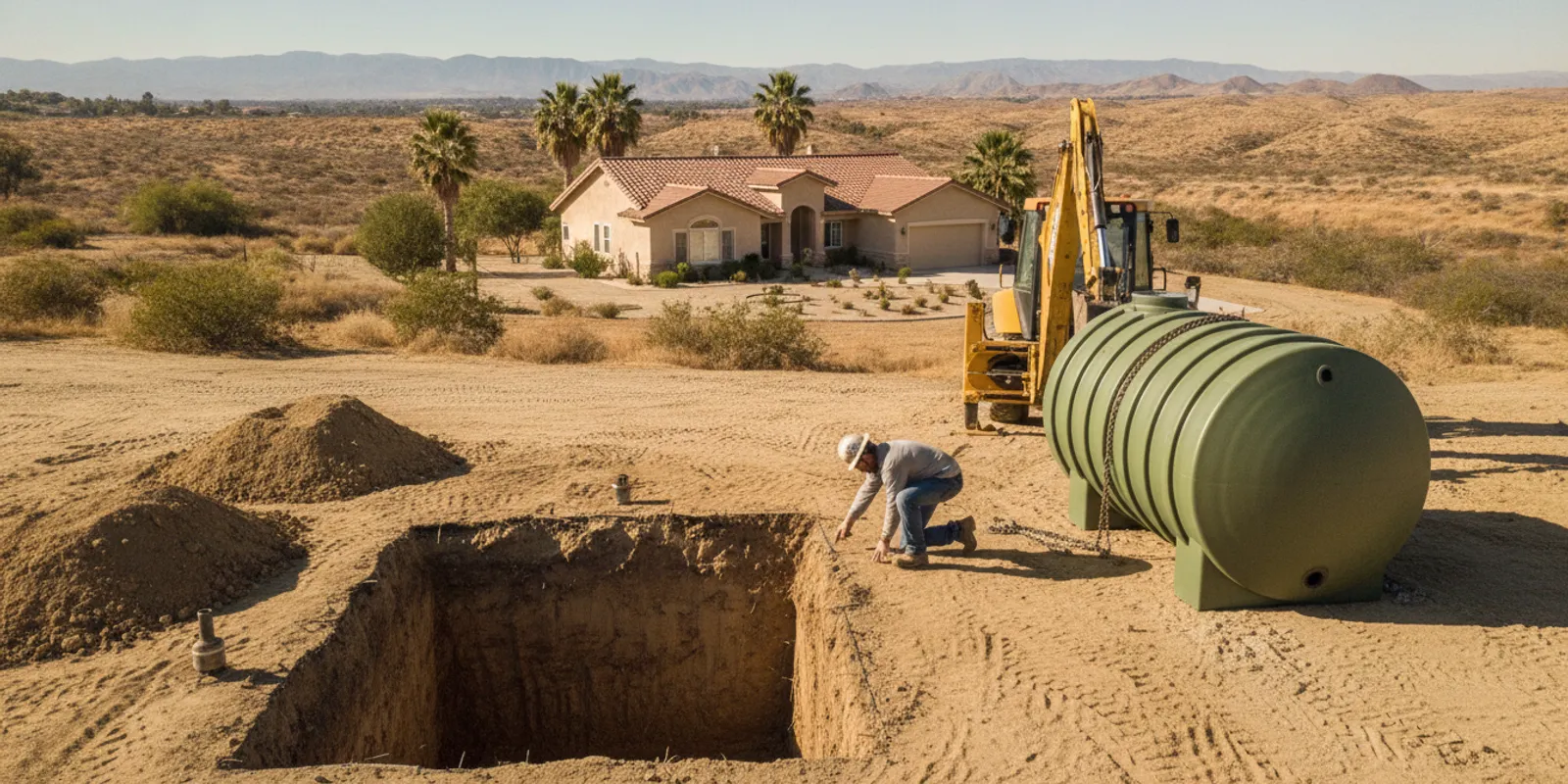
If you are asking how much is a septic tank, the useful answer depends on whether you mean the tank itself, a replacement, or a complete onsite wastewater system. Installation costs can vary with the approved design, the property, permits, excavation, and the condition of existing components. A tank price alone does not tell you what the full project will involve.
Why is there no single septic tank price?
A septic tank is one component in a wastewater system. The full scope may include site evaluation, design, permits, tank delivery and setting, inlet and outlet piping, treatment or dispersal components, inspections, backfill, and restoration of disturbed areas. Not every property needs the same work, and the required design is not chosen by tank price alone.
Two nearby properties can have different project costs because they may differ in soil, slope, groundwater, equipment access, system age, and local approval requirements. A new installation is also different from a tank replacement. Replacement may involve removing or properly abandoning an old tank, reconnecting piping, or assessing whether other parts of the system can remain in service.
For context on components and wastewater flow, see the guides to septic system parts and how a septic tank works.
What parts of the project affect the estimate?
Tank capacity, material, and delivery
Tanks come in different capacities and materials. The appropriate specifications depend on the system design and expected wastewater demand. Ask the contractor to identify the tank type and capacity in the proposal and explain how those details align with the approved design. Also confirm whether delivery, setting, connections, and any required access equipment are included.
Do not choose a tank solely because its listed capacity looks large enough or its initial price is lower. The tank must work as part of the designed system. A change in tank specification may affect connections, excavation dimensions, handling, or approval, so any proposed substitution should be discussed before work begins.
Soil, slope, and groundwater
Site conditions influence which system design can be used and how much preparation construction requires. Soil must be assessed for its ability to receive and treat wastewater. A sloped lot, shallow groundwater, restrictive soil, or limited usable area may change the design and the work. A neighboring property’s installation is not a reliable cost template for yours.
Ask what site assessment has been completed and whether its findings are reflected in the proposal. If testing or design work is still pending, ask which parts of the estimate are firm and which depend on the results. This helps you understand why the scope might change before construction rather than treating later changes as a surprise.
Dispersal area and system components
The tank is not the whole system. Depending on the approved design, the project may include a drain field, seepage pit, or another treatment and dispersal arrangement. An existing component can remain only if its condition, design, and applicable requirements allow it. Learn about the distinction between seepage pits and drain fields before assuming that one option is interchangeable with another.
When a property owner expects a tank-only replacement, the evaluation may reveal that a connection or dispersal component also needs attention. That does not mean every replacement requires a new dispersal area. It means a complete assessment is needed to determine what can be retained and what belongs in the project scope.
Access, excavation, and restoration
Equipment access can affect labor and site work. A narrow side yard, retaining wall, paving, landscaping, utility conflicts, or a long route to the work area may require extra planning. Ask whether excavation, soil handling, old-tank removal, backfill, and restoration of concrete, paving, or planting areas are included.
Walk the site with the estimator if practical. Point out gates, overhead obstructions, known utility locations, irrigation, and areas that must be protected. Clarify what the contractor will restore and what the property owner should arrange separately. A proposal that simply says “installation” may not make these boundaries clear.
Design, permits, and inspections
Approval and inspection steps depend on the jurisdiction and the project. Confirm which agency reviews the design, what permits are required before construction, and whether application or inspection fees are included or listed separately. Requirements can differ across Riverside and San Bernardino counties and among local jurisdictions, so do not apply a generic online fee to every property.
Ask who is responsible for submitting plans, coordinating inspections, and retaining final records. If the project is a replacement, ask whether the existing system history or site plan will help with review. Getting these responsibilities in writing makes it easier to see what the estimate covers and what remains for the owner.
How do common septic project scopes compare?
It helps to separate three questions that often get blended together: what is being bought, what is being built, and what must happen before the system can be used. A tank is a manufactured component. Installation is the labor and site work to place and connect it. A complete system project may also require design, approvals, and a treatment or dispersal area. When an estimate uses one broad label, ask for each layer to be described.
Consider a hypothetical owner whose existing tank has a documented structural problem but whose surrounding site has not yet been evaluated. The owner may initially expect a tank swap. The estimate can only address that expectation accurately after someone confirms the tank location, access, connections, disposition of the old tank, and whether other components can remain. If inspection or agency review is pending, the proposal should say what is provisional rather than imply a final scope.
A second example is a new system on a lot without usable records. The owner may need site evaluation and design steps before the size, layout, excavation, and dispersal method can be set. In that case, an early tank figure would not answer the larger budgeting question. Ask what work can be priced now, what decisions depend on assessments, and when the remaining scope will be clarified.
Commercial properties can require the same careful distinction. A larger or differently used building may have different wastewater demand and approval considerations than a residence. Do not transfer a residential proposal to a commercial site without confirming the design basis, operating use, and applicable review process. The estimate should identify what assumptions it makes about the property.
| Project scope | Work that may be involved | What to verify in the estimate |
|---|---|---|
| Tank replacement | Prepare excavation, remove or abandon the old tank as required, set a new tank, reconnect piping | Removal, disposal, connections, inspections, and surface restoration |
| New system | Site evaluation, design and approvals, tank, piping, treatment and dispersal components, excavation | Included design and permitting steps, system components, and completion requirements |
| Repair or upgrade | Work on identified components, connections, or a failing portion of the system | How the issue was identified, what remains in service, and whether further evaluation is needed |
This table describes possible scopes, not fixed packages or guaranteed inclusions. Ask the contractor to explain which scope fits your property and list exclusions before you authorize work.
How can you compare septic tank estimates?
Before comparing totals, normalize the proposals. Write a simple checklist with the same line items for each provider: assessment and design, permits and agency coordination, tank specification and delivery, excavation, piping, dispersal components, old-system handling, inspections, backfill, and restoration. Mark each item included, excluded, allowance, or pending. That format makes gaps visible without assuming that every project requires every item.
For example, if one proposal lists a fixed amount for excavation but the other says excavation is subject to site conditions, those are not equivalent offers. Ask what the first amount assumes about soil, equipment access, and spoils, and what could cause a change. If a proposal includes an allowance, ask how it will be reconciled against actual work and whether you will approve a change before it proceeds.
Also compare deliverables and sequence, not only construction tasks. Does the estimate describe who provides design documents, who submits them, and who coordinates inspection visits? Does it say whether work can begin before approvals are complete? A clear sequence helps you understand when cost and schedule decisions can still change.
Request a written, itemized proposal based on the property and the intended work. Compare the descriptions and assumptions, not just the totals. One proposal may include design coordination, old-tank removal, and restoration, while another may leave those items outside its price.
- Ask what tank type and capacity the design specifies and why.
- Confirm whether site evaluation, design coordination, permit fees, and inspections are included.
- Find out what happens to the existing tank and whether removal or abandonment is part of the work.
- Check whether piping, treatment and dispersal components, excavation, backfill, and restoration are covered.
- Ask which items are allowances, what assumptions they depend on, and what conditions could change the scope.
- Confirm who schedules inspections and what records you will receive or should keep.
A useful comparison can be made line by line. For example, if Proposal A includes removal and surface repair but Proposal B does not, the lower total may not represent the lower complete project cost. Ask each provider to clarify the same set of items so you can compare equivalent work.
Diamond House Plumbing provides septic system services, including installation, repair, and replacement. When you request information, share the project goal and any existing plans or records so the discussion can start with the actual property rather than a generic tank price.
What should Inland Empire property owners check first?
Use a practical preparation sequence. First, collect records already on hand, including permits, prior inspection notes, pumping receipts, repair invoices, and any sketch showing the tank or dispersal area. Do not delay a needed assessment because the file is incomplete; simply tell the estimator which details are confirmed and which are guesses. A remembered tank location, for example, should be labeled approximate until verified.
Next, describe the reason for the project in plain terms. “The tank is old” is useful background, but “a recent inspection identified a damaged component” is more actionable if you have that report. For alarms, backups, wet ground, or odors, note when they began, where they occur, and whether they recur. These details help distinguish a potential tank issue from a concern in piping or another part of the system; they do not replace inspection.
Finally, identify site constraints before the estimate is finalized. Mention locked gates, narrow access, steep areas, paving, landscaping, irrigation, and known utilities. If you are planning other construction or landscaping, say so early because the work area and restoration expectations may need coordination. In Riverside and San Bernardino counties, check the relevant local review process rather than assuming that a neighboring city uses the same steps.
Gather the information already available: system location, past pumping or repair records, inspection reports, permits, and site plans. Note any alarms, backups, wet areas, odors, or recurring drainage concerns. These observations can help identify whether the issue may involve the tank, piping, or another component. The septic tank alarm guide explains why an alarm should prompt attention and assessment.
For a first conversation, prepare the property address, the reason for considering work, known system age if available, and any access limitations. Mention recent landscaping, additions, paving, or other changes near the system. Avoid treating a symptom as proof that the tank itself must be replaced; assessment should establish the problem and the appropriate scope.
EPA guidance explains that septic system owners should have systems inspected regularly by a qualified professional and that system-specific conditions influence maintenance. This supports a property-based evaluation rather than assuming all systems have the same needs. See the U.S. Environmental Protection Agency’s septic systems guidance for general information.
How can you plan for uncertainty in the scope?
Some decisions are not settled until the site and proposed design have been reviewed. Instead of asking only whether an estimate is “final,” ask which assumptions are already verified and which remain open. A useful proposal can identify a base scope, explain likely decision points, and describe how additional work would be reviewed and authorized.
For instance, a contractor may be able to describe tank setting and connection work while a permit or site assessment is still pending. The proposal should distinguish that known work from any contingent excavation, dispersal-area changes, or restoration. Ask whether you will receive an updated written scope after the outstanding information is available. This creates a sensible checkpoint before construction commitments become broader.
Budget planning should account for the whole project boundary, not just the tank purchase. Keep separate notes for proposal amounts, agency fees if listed separately, owner-arranged work, and possible changes that have not been priced. Do not treat an unpriced possibility as a confirmed charge, but do not assume it is included either. Written clarification is the best way to keep the comparison meaningful.
What questions should you ask before approving work?
Once you have a proposed scope, use a short review to confirm the practical details. A clear answer to each question can prevent a misunderstanding about what is included:
- What condition or project need is this proposal intended to address?
- Which components are being replaced, repaired, or kept in service?
- What design or approval is the work based on, and are any decisions still pending?
- Who handles permits, inspections, and communication with the reviewing agency?
- How will access, excavation, spoil, backfill, and disturbed surfaces be handled?
- What work is excluded, and how will a change in conditions be documented and approved?
- What completion records, inspection results, or care instructions will be provided?
Keep the estimate, approvals, inspection records, and service history together. These documents can help with future troubleshooting, maintenance planning, or a later property transaction. If more than one proposal is under consideration, use the same questions for each one and request written clarification for any ambiguous line.
Frequently asked questions
Does a septic tank price include installation?
Not necessarily. A tank-only figure may exclude delivery, excavation, setting, connections, design, permits, inspections, and dispersal components. Review the written scope line by line.
Can a neighbor’s installation give me a reliable estimate?
It may offer context, but it is not a dependable estimate for your property. Soil, access, design, existing components, and local requirements can differ between lots.
Does replacing a tank always mean replacing the dispersal area?
No. Whether existing components can remain depends on their condition, the system design, and applicable requirements. Have the whole system assessed before deciding the scope.
What information helps prepare an estimate?
Share the property address, known system location, project reason, available plans or service records, and symptoms such as alarms or backups. Describe access limits and recent site changes as well.
Request a septic project consultation
Plan a clear next step
The most useful answer to “how much is a septic tank?” comes from defining the complete project scope and reviewing the property conditions. A written estimate that explains inclusions, exclusions, and approval steps gives you a stronger basis for planning.

Leave a Reply