
Seepage Pit vs Drain Field for Southern California
A septic system can look fine at the surface while the disposal component below ground is approaching failure. For Inland Empire property owners comparing a seepage pit vs drain field, the right choice depends on usable space, soil conditions, groundwater separation, wastewater demand, and local requirements. Neither option is automatically best for every lot.
Schedule a professional septic system evaluation before choosing a new disposal system or replacing a failing one.
A drain field distributes septic tank effluent through shallow horizontal trenches, allowing unsaturated soil to treat it across a broad area. A seepage pit disperses effluent through the sides of a deep vertical structure, using less surface space. Site testing and local rules determine which design is suitable for a Southern California property.
Understanding the differences helps you ask better questions, recognize warning signs, and avoid planning improvements over land that may be needed for wastewater disposal. A licensed septic professional can evaluate the complete site rather than relying on lot size alone.
Seepage pit vs drain field: key differences
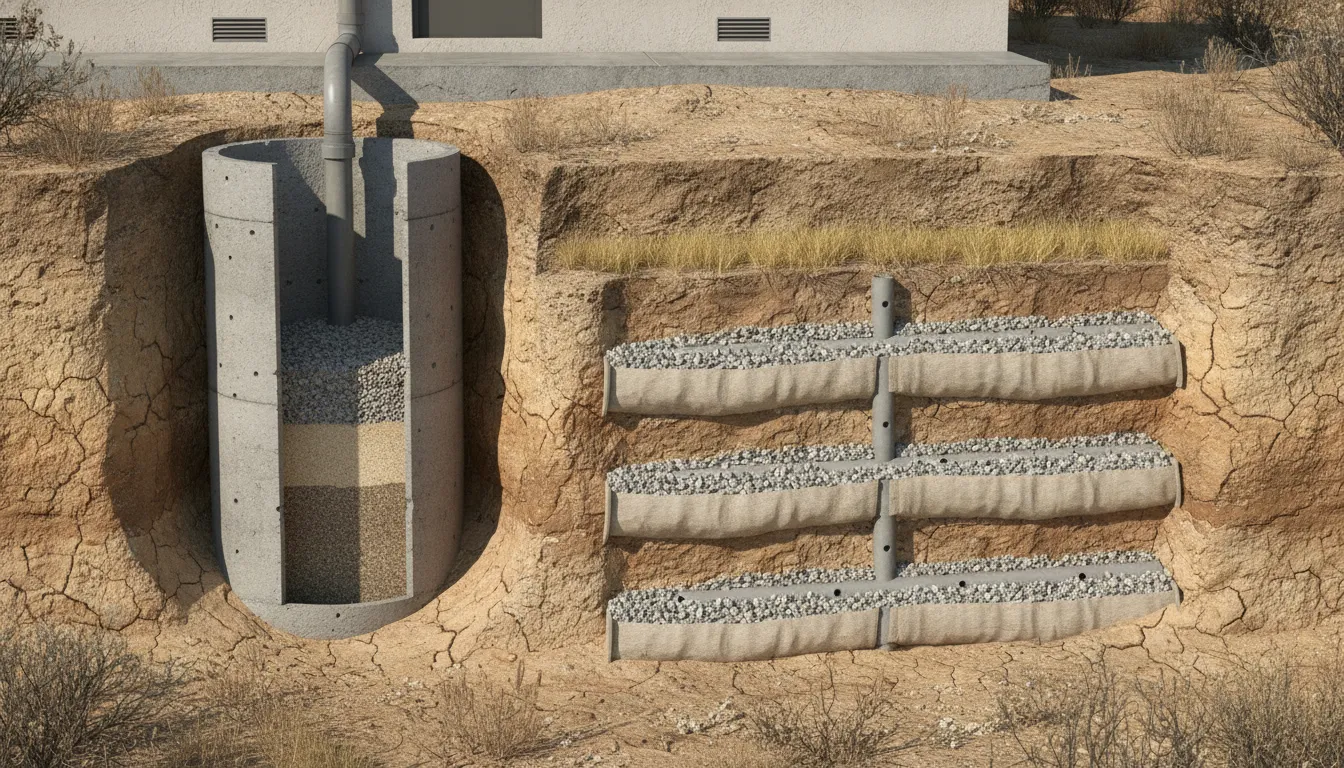
Both components receive liquid effluent after solids settle inside the septic tank. Their shared purpose is to disperse that liquid into suitable soil. The major difference is geometry: a drain field spreads flow outward through shallow trenches, while a seepage pit sends it through the sidewalls of a deep vertical chamber.
| Factor | Seepage pit | Drain field |
|---|---|---|
| Layout | Deep and vertical | Shallow and horizontal |
| Surface footprint | Relatively compact | Requires a broader open area |
| Soil treatment zone | Along the pit sidewalls at depth | Across shallow, unsaturated soil |
| Site use | May suit constrained sites when approved | Needs protected field and reserve space |
| Selection basis | Soil testing, setbacks, design flow, groundwater, and local approval | |
Vertical disposal in a compact footprint
A seepage pit is typically a deep excavation with a perforated or open-joint lining. Effluent moves from the septic tank into the pit and disperses through its sidewalls. Because the system goes down rather than spreading across long trenches, it can preserve more usable surface area. Diamond House Plumbing has experience with challenging septic installations, including driveway seepage pit and septic replacement projects that require careful planning and appropriate materials.
Horizontal distribution across shallow soil
A drain field, also called a leach field, uses multiple shallow trenches and perforated distribution pipes. The larger footprint spreads effluent across more soil. Oxygen and microorganisms in unsaturated soil help treat wastewater as it moves downward. The field must remain free from buildings, paving, vehicle traffic, and other uses that could compact soil or damage pipes.
How does a seepage pit work?
A seepage pit receives clarified effluent from the septic tank and disperses it through the sidewalls of a deep vertical chamber. Its compact footprint can help on constrained lots, but approval depends on soil, groundwater separation, setbacks, and local requirements.
Wastewater first enters a watertight septic tank. There, heavier solids settle to the bottom, grease and lighter material rise, and liquid effluent remains between those layers. An outlet baffle helps keep solids in the tank while allowing effluent to move toward the disposal component.
In a seepage pit system, that effluent enters a deep chamber. The liquid temporarily collects inside the pit, then moves outward through openings in the sidewalls and into surrounding soil. Its useful infiltrative area comes mainly from those vertical sidewalls rather than a wide bed near the surface.
Why depth can help and create limitations
The deep configuration can reach soil layers that accept water differently than shallow soils. That does not mean any property with dense surface soil is automatically suitable. A pit must maintain required separation from groundwater and restrictive layers, and deep disposal may provide a different treatment environment than shallow trenches. The design therefore depends on measured site conditions, not a visual guess.
Local restrictions also matter. Rules can vary by jurisdiction and by sensitive area. A professional should confirm current requirements, required setbacks, permit conditions, and whether a seepage pit is allowed before design work begins.
How does a drain field work?
A drain field distributes clarified septic effluent through shallow perforated pipes across a broad area. Unsaturated soil treats the wastewater as it moves downward, so the field needs suitable soil, protected open space, and careful water management.
A drain field receives clarified effluent from the septic tank and distributes it through perforated pipes placed in shallow trenches. The trenches provide a broad interface between effluent and unsaturated soil. Flow should be spread evenly so one section does not become overloaded while another remains unused.
Soil provides essential treatment
As effluent passes through the soil, physical filtration and biological processes help reduce contaminants. The shallow treatment zone generally has more oxygen than deeper soil. This is one reason site evaluators pay close attention to soil texture, structure, depth, and the seasonal high groundwater level.
The field needs long-term protection
A drain field requires enough open land for the active trenches and, where required, a reserve area for future replacement. Owners should keep heavy vehicles, structures, paving, and deep-rooted landscaping away from it. Excess water use, leaking fixtures, or stormwater directed toward the field can also overload the system.
See how Diamond House Plumbing helps Inland Empire property owners plan and maintain dependable plumbing and septic systems.
Which option fits a Southern California property?
The right option is the system that fits the property’s tested soil, groundwater separation, available area, setbacks, expected wastewater demand, and current local rules. A compact lot does not automatically qualify for a seepage pit, and a large lot does not automatically suit a drain field.
Southern California lots vary widely. A property in Riverside County may have a broad, gently sloped yard, while a home in San Bernardino County may sit on a smaller lot with tight setbacks or challenging terrain. Climate alone does not decide the system. The evaluator must consider the individual property and current local standards.
Available space and future plans
A drain field usually needs more uninterrupted surface area. That requirement can affect plans for an addition, pool, accessory structure, driveway, or landscaping. A seepage pit has a smaller surface footprint, but its depth and separation requirements may rule it out. Tell the evaluator about future property plans so the septic design does not conflict with them.
Soil profile and groundwater
Soil must accept effluent at an appropriate rate while providing enough treatment before it reaches groundwater or another sensitive feature. Testing identifies soil layers and other conditions that cannot be confirmed from the surface. Both overly slow and overly rapid movement can create concerns, so a professional design balances dispersal with treatment.
Setbacks, access, and wastewater demand
The system must fit around wells, structures, property lines, drainage features, and other required setbacks. Equipment also needs safe access for installation and future service. Finally, the design must handle expected wastewater demand. A system that is undersized or poorly distributed can become overloaded even when the basic disposal method is otherwise appropriate.
Common signs of seepage pit or drain field failure
Warning signs include slow drains across several fixtures, recurring backups, sewage odors, standing wastewater, persistently wet soil, or unusually lush grass above the disposal area. Because blockages and full tanks can cause similar symptoms, a professional diagnosis is essential.
Failure symptoms can appear inside the building, outdoors, or both. One symptom does not prove which component has failed. A blockage, damaged line, full tank, overloaded disposal area, or another plumbing problem can cause similar signs. Prompt evaluation is the safest way to identify the cause.
- Slow drains affecting several fixtures
- Gurgling toilets or recurring backups
- Sewage odors indoors or near the disposal area
- Standing water or persistently wet soil during otherwise dry weather
- Unusually lush grass over a drain field or disposal area
- A septic alarm, when the system includes one
What to do when warning signs appear
- Reduce water use immediately to limit additional flow into the system.
- Keep people and pets away from standing wastewater or affected soil.
- Avoid driving or operating heavy equipment over the suspected disposal area.
- Note where and when symptoms occur, including whether they follow heavy water use or rain.
- Call a septic professional for diagnosis rather than opening or entering a tank or pit.
Wastewater exposure and confined spaces are serious hazards. Do not enter a septic tank or seepage pit. A professional can inspect accessible components, determine whether pumping or repair is appropriate, and explain whether the disposal system requires further evaluation.
How to protect the disposal area
Protect a septic disposal area by spreading out water use, repairing leaks, keeping vehicles and structures away, managing surface drainage, and pumping the tank according to professional guidance. These habits reduce avoidable stress but cannot correct an unsuitable or failing design.
Daily habits affect both seepage pits and drain fields. The septic tank needs time to separate solids before effluent moves into the disposal area. When too much water enters at once, the tank may send flow onward faster than the receiving soil can accept it. Spread laundry across the week, repair leaking fixtures, and avoid directing roof or surface drainage toward septic components.
Keep solids where they belong
The septic tank is designed to retain solids. Items that do not break down can clog plumbing or move toward the disposal component. Use the system only for wastewater and appropriate toilet paper. Kitchen grease, wipes, and other debris can create blockages or interfere with normal tank operation. Routine pumping intervals vary, so base service timing on household use, tank size, system condition, and professional guidance.
Protect the ground above the system
Know the approximate location of the tank, pit, field, and reserve area. Keep vehicles and heavy equipment away unless the specific installation was designed for traffic. Do not add structures or paving without confirming required clearances. Maintain appropriate landscaping, and ask a professional before planting trees or other deep-rooted vegetation near septic components.
Good care cannot correct an unsuitable or already failing design, but it can reduce avoidable stress. Keep records of inspections, pumping, repairs, and permits. Those records give a septic professional useful context when conditions change or a property improvement is planned.
Why should a licensed septic professional evaluate the site?
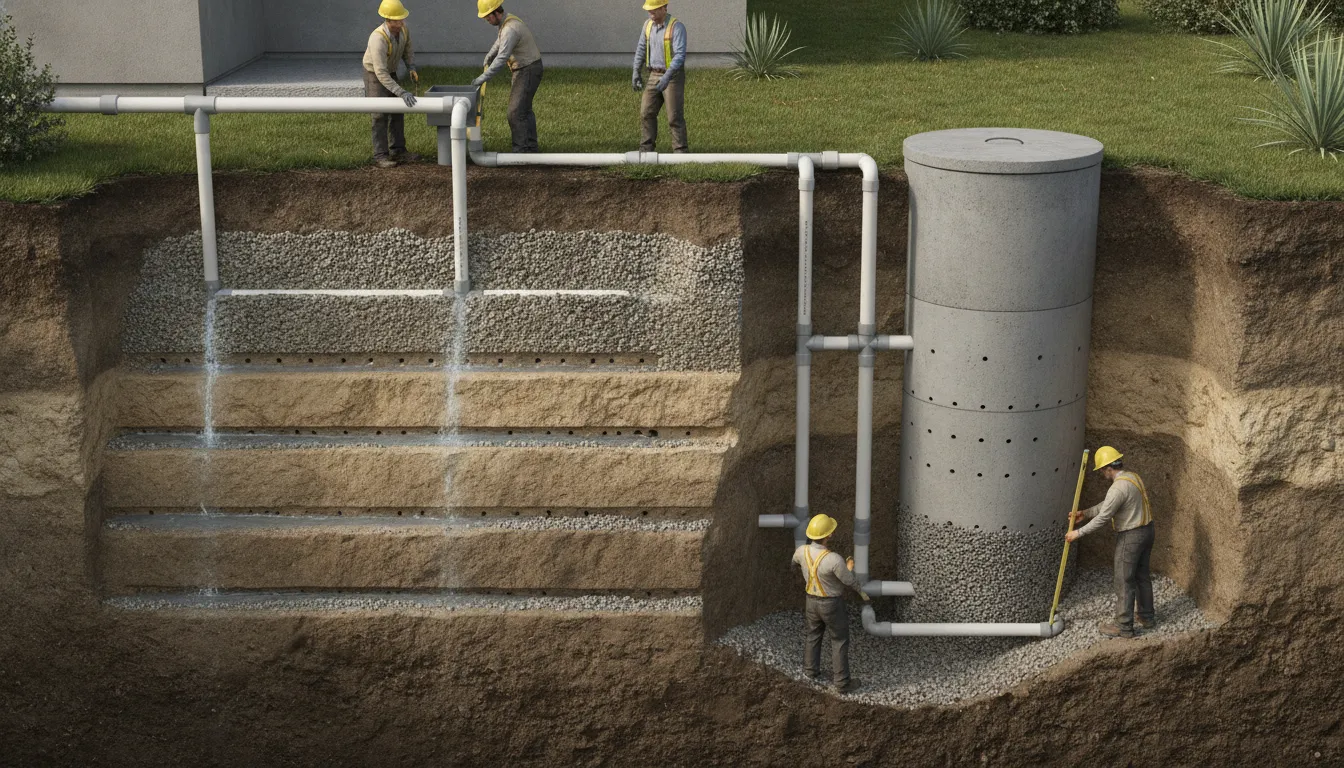
A licensed septic professional evaluates the complete property rather than choosing by footprint alone. Site observations, soil testing, groundwater separation, setbacks, wastewater demand, system history, permits, and future property plans all shape a responsible recommendation.
A responsible seepage pit vs drain field recommendation requires more than selecting the option that takes up less yard. A professional combines site observations, testing, system history, wastewater demand, and current requirements into one design decision.
Site testing replaces assumptions
Soil layers can change across a single property. Conditions near the house may differ from those farther downslope, and surface appearance does not reveal groundwater separation or restrictive layers. Proper testing helps determine whether the proposed location can disperse and treat effluent as intended.
Correct sizing protects the full system
The septic tank and disposal component must work together. The evaluator considers expected flow and the site’s ability to accept it. Correct sizing, distribution, and placement can reduce the risk of premature overload and protect space that may be needed for future repairs.
Permits and installation details matter
Local approval requirements, inspections, setbacks, and construction details protect the property and surrounding environment. Specialized sites may require traffic-rated materials, careful excavation, or restoration after work. Browse Diamond House Plumbing’s completed plumbing and septic projects to see examples of the care involved in complex installations.
Request an evaluation from Diamond House Plumbing to discuss your property’s septic system, soil, available space, and next steps.
Frequently asked questions
Is a seepage pit better than a drain field?
Not universally. A seepage pit uses less surface space, while a drain field distributes effluent through a broader shallow treatment area. Soil conditions, groundwater separation, setbacks, demand, and local rules determine which option is suitable.
Can a seepage pit replace a failing drain field?
Only when a site evaluation and the applicable authority confirm that a seepage pit is suitable and permitted. A failing drain field should first be diagnosed because the underlying cause may involve excessive water use, solids carryover, damaged components, or unsuitable site conditions.
Can I build or park over a drain field?
Generally, structures and vehicle traffic should be kept off a drain field. Added weight can compact soil or damage pipes, and construction can interfere with access and treatment. Ask a septic professional before changing how the area is used.
How do I know where my septic disposal area is?
Property records, permit documents, visible access points, and professional locating methods can help identify system components. Avoid exploratory digging because buried utilities and septic components can create hazards.
What information should I provide during an evaluation?
Share any available permits or plans, pumping and repair history, recent symptoms, household or commercial usage, and future construction plans. This context helps the evaluator assess the entire property rather than only the visible problem.

Leave a Reply