
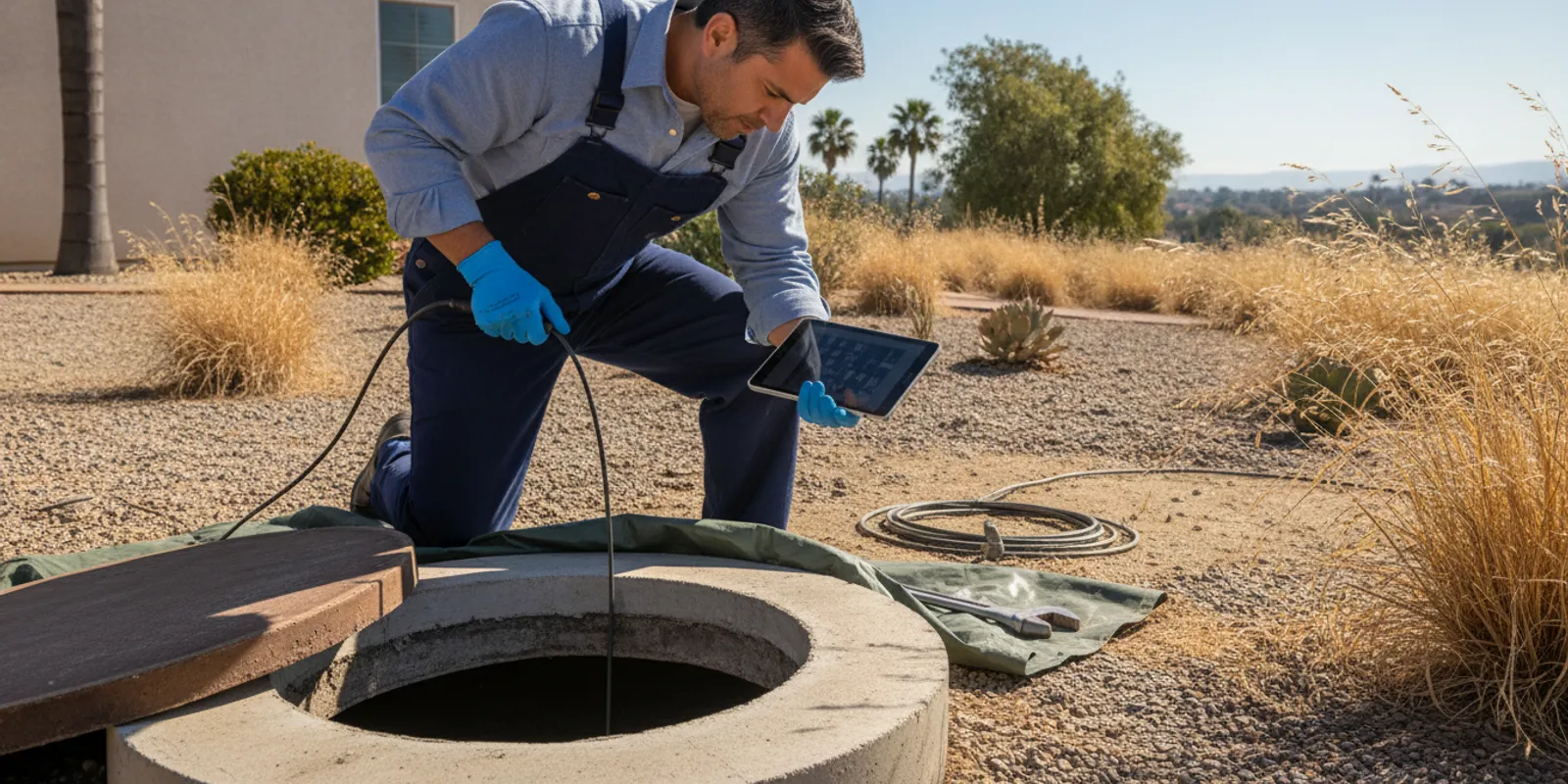
When a septic concern appears, the right septic solutions depend on what is happening, what the system contains, and what a qualified inspection finds. A slow drain, alarm, wet area, or overdue service can point to different needs; choosing a service before identifying the problem may waste time. This guide helps Inland Empire property owners sort common needs and prepare for a useful conversation.
Discuss your septic system concern
How do you match a septic concern to a service?
Start with the symptom, its location, and whether it is getting worse. A single slow fixture may have a localized cause, while several slow drains, sewage odors, or wastewater at the surface can indicate a broader system issue. These signs do not identify a specific failed part by themselves. They help determine what to report and how promptly to request assessment.
Think of the service paths as distinct questions: Does the system need evaluation? Is routine pumping due? Is a component damaged? Is the system beyond practical repair? Does the property use a seepage pit? Is there an active backup or overflow needing urgent attention? Diamond House Plumbing documents septic installation, repair, replacement, and emergency response capabilities. Start with its septic services page to review the relevant service path.
| What you notice or need | Likely service path to discuss | Useful next step |
|---|---|---|
| Unclear system condition, property purchase, or recurring symptoms | Septic inspection | Describe symptoms and ask what the inspection covers |
| Routine service interval or suspected tank accumulation | Septic pumping | Find prior service records and ask whether pumping is appropriate |
| Localized malfunction or damaged component | Septic repair | Record where and when the problem occurs |
| Repeated failures or system near end of useful life | Replacement assessment | Compare repair findings with replacement scope |
| Property uses a seepage pit | Seepage-pit evaluation | Confirm system type and explain any drainage symptoms |
| Active sewage backup or surface discharge | Emergency service | Keep people away from wastewater and seek prompt help |
When should you start with a septic inspection?
An inspection is a sensible starting point when the cause is uncertain. It can help establish system condition and identify issues that warrant more focused service. Consider asking for an inspection when you have persistent warning signs, incomplete maintenance records, a change in how the system performs, or a property transaction where system condition matters. An inspection is not a guarantee that every concealed or intermittent problem will be found; ask what components and records will be reviewed.
Before arranging an assessment, gather the property address, the approximate age of the system if known, available installation or repair documents, and the dates of prior pumping. Note whether symptoms affect one fixture or the whole property and whether they happen after heavy water use. A clear timeline helps a professional distinguish a recent change from a long-running concern.
For a closer look at the usual process, see this guide to what a septic system inspection involves. If the system is part of a purchase, the separate septic inspection home-purchase guide can help you frame questions for the inspection.
Is pumping the right response?
Pumping removes accumulated solids from a septic tank, but it does not repair a damaged tank, blocked line, failing disposal area, or other defect. Nor does a recent pumping alone prove that the entire system is in good condition. If symptoms remain after pumping, or return quickly, ask for a broader evaluation instead of assuming another pumping will resolve the cause.
Service frequency depends on system and household conditions. Rather than relying on a calendar rule without context, keep service records and ask a qualified professional what interval makes sense for your tank and use. The Washington State University Extension resource on household wastewater treatment provides background on onsite wastewater systems and the treatment of household wastewater. It offers general context, not a substitute for local requirements or a property-specific assessment. The septic tank pumping guide explains the basic service and what homeowners can prepare. Report unusual odors, slow drains, alarms, or wet ground when scheduling so the provider can advise whether an evaluation is also needed.
When does a septic system need repair?
Repair is a path to consider when inspection identifies a problem that can be addressed at a component or localized-system level. The solution depends on what is damaged and why. A symptom such as a gurgling drain is not enough to diagnose the fault, and digging or disturbing system components without a plan can create safety and property risks.
Ask the service provider to explain the observed issue, which part is affected, what repair is proposed, and whether related components were checked. Request a written scope that separates diagnosis from repair work and describes any access or restoration work that may be involved. If the issue has happened before, share prior findings and invoices; recurring symptoms can matter when deciding whether repair remains a sound option.
Use the septic tank repair guide to understand common repair considerations. If the problem is an urgent backup, mention that clearly when contacting a professional rather than treating it as routine maintenance.
How do you know when replacement deserves discussion?
Replacement may enter the conversation when inspection finds extensive deterioration, repeated failures, or conditions that cannot be reliably addressed with a limited repair. No single symptom proves replacement is necessary. The decision should be tied to documented findings, the system’s overall condition, and the scope and expected limitations of repair alternatives.
Ask for the evidence behind a replacement recommendation. Which component or area has failed? What repairs were considered, and why might they not resolve the issue? What work is included in the proposed replacement, and what site or approval questions remain? Compare like-for-like written scopes rather than choosing from a headline price alone.
Installation or replacement plans may require site-specific evaluation and applicable approvals. Requirements vary by location and project, so confirm the process with the relevant local authority and the contractor rather than assuming one countywide rule. Diamond House Plumbing documents septic installation and replacement capabilities; its septic service information is a starting point for asking about project scope.
What if the property has a seepage pit?
Some properties use a seepage pit rather than a conventional drain field, and the system layout affects which components a professional should assess. Do not assume that a wet area or slow drainage has the same cause on every property. Start by confirming the system type from available records or a qualified assessment.
Share any property plans, prior service paperwork, and the location of access points. Describe where surface moisture appears and whether it changes over time. Keep vehicles, heavy equipment, and new construction away from system areas until their location and condition are understood. For a basic comparison of these system components, read seepage pit versus drain field.
When is septic service urgent?
Treat sewage backing up into a building, wastewater surfacing, or a sudden system alarm with urgency. Avoid contact with sewage and keep children and pets away from affected areas. Do not flush or run unnecessary water while waiting for guidance; additional flow may worsen an active overflow. If wastewater is near electrical equipment, avoid the area and contact the appropriate emergency professional.
When you call, say plainly whether sewage is inside, outside, or both; when it began; whether multiple fixtures are affected; and whether the system has an alarm. Ask what immediate precautions to take and whether the situation requires emergency attendance. Diamond House Plumbing provides emergency response services, including interventions for sewage backup and system failure, according to its company information. Contact the company through its contact page and state that the issue is urgent.
What should you prepare before requesting service?
Good information helps a provider direct the request to an appropriate service path. You do not need to diagnose the system yourself. Focus on observable facts and records:
- Symptoms: List slow or gurgling fixtures, odors, alarms, backups, or wet areas, including when each began.
- Pattern: Note whether one fixture or several are affected and whether the problem follows heavy water use.
- System details: Share the tank or system location, known type, and any available plans or permits.
- Service history: Gather pumping, inspection, installation, and repair dates or invoices.
- Access: Identify gates, pets, landscaping, and known access points, without opening or entering the tank.
- Urgency: Report active sewage, overflow, or an alarm at the beginning of the call.
For estimates, ask what the visit includes, whether diagnosis is separate from repair, what conditions could change the scope, and whether permits or other approvals may apply. A clear answer should identify the next decision point instead of promising a particular outcome before the system is evaluated.
How can you choose the right service path?
It can help to separate an immediate symptom from the longer-term service decision. A drain that slows during one busy morning may call for observation and a conversation about what changed. Several fixtures slowing together, recurring wastewater odors, or visible discharge deserves a more complete assessment. Write down the timing rather than relying on memory, especially if the problem appears and disappears.
Ask the professional to describe what was directly observed, what remains uncertain, and what would confirm the suspected cause. For example, a recommendation may depend on access to a particular component, review of past service records, or further testing. Clarify which steps are diagnostic and which steps would involve repair or installation. This makes it easier to understand the decision without treating an early symptom as proof of a specific failure.
For a property with a known seepage pit or an older system, confirm the layout before comparing service options. A plan or prior permit may identify components, but records can be incomplete or out of date. Avoid assuming that a neighboring property has the same arrangement, even when the homes look similar. The system configuration and its history are part of the context an assessment needs.
When comparing proposals, check that each one describes the same problem and scope. Look for the work included, any exclusions, access needs, restoration assumptions, and the point at which the provider will pause to discuss unexpected findings. A lower or higher total cannot be compared fairly if one proposal includes diagnosis or restoration and another does not. Ask questions before authorizing work if the scope is unclear.
Match the response to the evidence. An inspection helps clarify an unknown condition; pumping addresses accumulated tank contents; repair responds to a repairable defect; replacement is considered when findings indicate a broader or unworkable failure; and seepage-pit assessment accounts for a different system layout. Active sewage problems call for prompt attention and practical precautions, not a routine appointment weeks away.
Keep records from each visit and ask the provider to explain findings in plain terms. If the recommendation changes from inspection to repair or replacement, request the reason and scope in writing. That makes it easier to compare options and plan the next step for a home or business in Riverside or San Bernardino County.
How should you prepare for the first visit?
Before the appointment, make the access route as clear as practical and tell the provider about locked gates, pets, parked vehicles, or landscaping that could affect access. Do not uncover or open a tank unless the professional specifically instructs you; access covers can be heavy, and the tank environment can be hazardous. Keep children and pets away from the work area. If you have a site sketch or prior service diagram, have it available rather than trying to locate buried components yourself.
Write down the questions you want answered. Useful ones include: What did you inspect? What could not be accessed? Which findings are certain, and which are possibilities? Is the recommended next step maintenance, additional diagnosis, or corrective work? If further work is proposed, ask whether the recommendation depends on new information that will be available only after opening or exposing a component. This helps you understand what is known before approving a larger scope.
How can commercial property owners coordinate septic service?
For a business or multi-use property, identify a point person who can describe the symptoms and approve access arrangements. Record when the issue first affected operations, which fixtures or areas are involved, and whether the problem changes during periods of higher use. Share any building or site plans and prior work records if available. A concise timeline helps prevent separate staff members from giving conflicting descriptions.
Ask how the work area will be accessed and whether any part of the property may need to be kept clear during assessment. If service could affect normal use, discuss the expected sequence and what information the provider needs before arrival. Avoid promising employees or tenants a fixed restoration time until the scope is confirmed. The same principle applies to a home: distinguish what is currently observed from what still needs diagnosis, then use the findings to plan the next step.
After service, retain the written findings with invoices and previous records. Note the date, reported symptom, work performed, and any follow-up recommendation. If a symptom returns, this history can show whether it is the same location and pattern or a new change. Organized documentation also makes future inspection and proposal comparisons more useful.
Frequently asked questions
Can pumping fix a failing septic system?
Pumping removes tank contents, but it does not correct every possible system defect. If symptoms persist or return, ask for an assessment of the tank, connected components, and disposal area as appropriate.
Should I wait to see whether a septic backup clears?
No. Reduce water use, avoid contact with wastewater, keep people and pets clear, and contact a qualified service provider promptly. Report whether the backup is indoors, outdoors, or both.
Does every septic system have a drain field?
No. System configurations differ, and some properties use seepage pits. Confirm the property’s layout from records or professional evaluation before assuming which component is involved.
What records should I keep?
Keep inspection findings, pumping receipts, repair scopes, installation information, and any permits or approvals. These records help future providers understand the system’s history.
Request help with your septic service needs
When you know what has changed and have the system’s records ready, a qualified professional can help identify the next appropriate step.

Leave a Reply