
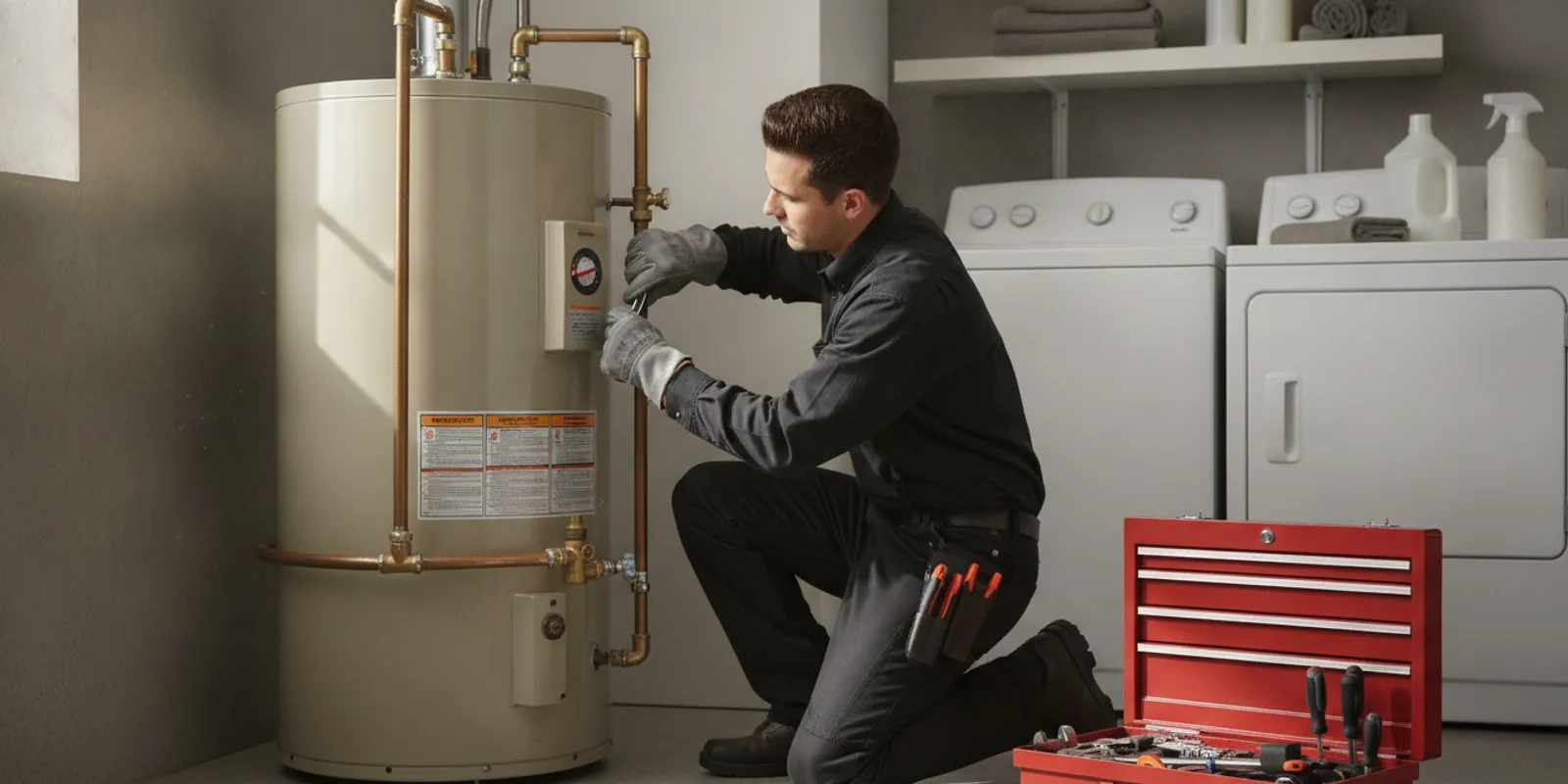
Water heater maintenance can help you spot leaks, corrosion, unusual changes, and other concerns before they interrupt hot water service. For Inland Empire homeowners, a simple routine starts with observing the heater safely and following the manufacturer’s instructions. If you need an inspection or repair, contact Diamond House Plumbing to discuss your water heater.
What Does Water Heater Maintenance Include?
Maintenance is a combination of visual checks, manufacturer-directed care, and professional attention when a condition needs diagnosis. The exact tasks depend on the heater type, age, installation, and manufacturer instructions. A storage-tank unit and a tankless unit do not have identical service needs, so avoid applying a generic checklist without checking the model information.
Begin by locating the owner’s manual, model number, and any service records. If the manual is missing, the manufacturer may provide instructions by model. Keep records of any professional service, replacement parts, and changes in performance. This gives a plumber useful context if a problem develops later.
- Look for visible water around the base, fittings, and nearby floor.
- Notice rust, corrosion, damaged insulation, or loose-looking connections from a safe distance.
- Pay attention to changes in hot-water supply, unusual sounds, or recurring error messages.
- Follow the manufacturer’s stated service interval and instructions.
- Arrange professional assessment when a check reveals a concern.
Do not remove covers, reach into equipment, or adjust gas, electrical, temperature, or pressure controls unless the manufacturer’s instructions specifically permit it and you can do so safely. Water heaters can involve hot water, electricity, gas, pressure, and combustion venting. When uncertain, leave the equipment undisturbed and call a qualified professional.
How Often Should a Water Heater Be Checked?
There is no single interval that fits every model and household. Manufacturer recommendations, water conditions, usage, heater type, and service history all matter. The City of Portland’s guidance on water heater maintenance notes that maintenance or flushing intervals vary by manufacturer. Use the instructions for your specific unit rather than treating an annual schedule as universal.
A practical approach is to look over the accessible exterior periodically and review the manual for any owner-permitted checks. Schedule service on the manufacturer’s timetable or sooner if you see a leak, corrosion, or a change in operation. If the unit has not been serviced for a long time, ask a plumber what is appropriate for its condition before attempting any maintenance yourself.
| Maintenance item | What the owner can do | When to involve a professional |
|---|---|---|
| Exterior and floor check | Look for water, visible corrosion, or damage without touching hot or powered parts. | When moisture, rust, or deterioration appears. |
| Manual and service history | Record the model and review the maker’s service guidance. | When instructions are unclear or the unit’s history is unknown. |
| Tank flushing or sediment service | Do not assume the task or interval is the same for every heater. | Ask a plumber to determine whether it is suitable for the model and condition. |
| Tankless maintenance | Check the model-specific manual and note any displayed alerts. | For descaling or other service requiring isolation, tools, or internal access. |
| Gas, electrical, venting, or control concern | Keep clear and do not dismantle or adjust components. | Arrange prompt professional evaluation. |
How Can You Make a Useful Maintenance Visit More Efficient?
A service visit is easier to plan when you gather a few details before making an appointment. You do not need to diagnose the heater yourself. The goal is to describe what you have observed and give the plumber enough context to identify the right next step. Write down the brand and model from the rating label if it is visible without moving or opening anything. Note whether the unit stores hot water in a tank or heats it on demand, and when you first noticed the change.
Keep the description specific. “The hot water is acting strangely” is less useful than “the shower turns cool sooner than it did last week” or “there is a damp patch near the front-right side after a heating cycle.” Include whether the issue occurs at one fixture or throughout the property, whether it is constant or intermittent, and whether anyone else has noticed it. If a tankless display shows an alert, record the exact code and avoid repeated resets.
- Have the make, model, and approximate age available if known.
- Describe the symptom and when it occurs, without touching hot surfaces or controls.
- Mention visible moisture, corrosion, noise, or recurring alerts.
- Share prior service dates or repairs if you have records.
- Ask what access the technician will need and whether the visit requires shutting off water, power, or fuel.
For a commercial property, identify the rooms or operations that depend on hot water and ask how access can be coordinated. A restaurant, office, or other workplace may have different scheduling needs than a single-family home. Avoid promising a particular repair time before the condition has been assessed. Clear information helps set expectations and can prevent unnecessary delays in understanding the issue.
What Should You Look For During a Visual Check?
Make observations from outside the appliance. Do not remove panels or handle pipes that may be hot. If water is actively escaping, keep clear of electrical equipment and follow the manufacturer’s emergency guidance; contact a plumber. If you smell gas, leave the area and contact the gas utility or emergency services from a safe location, following local emergency guidance.
Water around the heater
Moisture may come from a connection, a nearby plumbing leak, condensation, or the tank itself. The source is not always obvious from a glance. Note where and when the water appears, and avoid assuming that a small amount is harmless. A continuing leak or water coming from the tank warrants prompt professional evaluation.
Corrosion or damaged connections
Rust-colored marks, corrosion, or visibly deteriorated fittings can signal a developing issue. Do not tighten a fitting or apply a temporary seal without understanding the cause. Document what you see and have a plumber determine whether the connection, piping, or heater needs attention.
Changes in hot-water performance
Hot water that runs out sooner than usual, fluctuating temperature, or slow recovery can have several causes. Household demand may have changed, or the heater may need diagnosis. Write down when the change began, whether it affects every fixture, and any pattern you notice. This information can help narrow the service assessment.
Unusual sounds or alerts
Rumbling, popping, or a new mechanical noise may merit inspection, particularly if it persists or appears alongside a performance change. For tankless models, record any displayed code rather than repeatedly resetting the unit. Consult the manual and seek service if the warning recurs or its meaning is unclear.
Does Maintenance Differ for Tank and Tankless Heaters?
Yes. A storage-tank heater holds hot water in a tank; tankless equipment heats water as it flows through the unit. Their internal components and maintenance procedures differ. The maker’s instructions are the starting point for both, and professional service may be appropriate when a task involves draining, flushing, descaling, opening the casing, or working around gas or electrical components.
For tank models, ask about the unit’s condition and whether sediment-related service is recommended for that particular heater. Do not open a drain valve or begin a flush without understanding the procedure and risks: hot water can cause injury, and an improperly handled valve can leak or fail to close. For tankless models, ask whether the model requires periodic descaling and what conditions affect the interval. Diamond House Plumbing provides water heater service information for homeowners considering professional help.
In either case, age alone does not establish that a heater needs replacement. A plumber can assess condition, performance, repair needs, and the appropriate next steps. For background on symptoms that call for diagnosis, see this guide to water heater noise and possible causes.
How Should You Track Maintenance and Changes Over Time?
A short, consistent record can make later decisions clearer, especially when a home changes owners or a property has several maintenance providers. Use a notebook or digital file to note the date, who performed the work, the service description, and any part or setting changed. Save the invoice and any written recommendations with the water heater manual. Do not rely on memory to compare performance across seasons or after a repair.
It can also help to record a simple baseline when the heater is operating normally. Note how many fixtures typically receive hot water at once, whether recovery seems consistent, and any existing sounds that are normal for the unit. This is not a technical test or a substitute for a professional inspection. It is context that can help distinguish a new change from a long-standing characteristic when you request service.
After a service visit, read the notes and ask about anything unclear. Confirm whether the recommendation comes from the manufacturer’s schedule, an observed condition, or a repair need. If maintenance is deferred, ask what changes would make it more urgent and when to revisit it. That approach keeps the plan tied to the actual equipment instead of a generic calendar reminder.
Which Water Heater Maintenance Tasks Should You Leave to a Plumber?
Leave work involving internal components, gas lines, electrical wiring, venting, temperature or pressure controls, and active leaks to a qualified professional. Flushing and descaling may look straightforward in general descriptions, but the correct procedure depends on the specific equipment and its condition. Incorrect handling can cause burns, leaks, equipment damage, or an unsafe operating condition.
When arranging service, share the model and approximate age if known, describe the symptom, and mention whether it is a tank or tankless unit. Ask what the proposed inspection includes, whether any maintenance is recommended by the manufacturer, and whether the work will require shutting off water, power, or fuel. If the unit serves a business, also discuss timing and access needs to reduce disruption.
How Can Inland Empire Owners Plan Ahead?
A little recordkeeping makes maintenance more useful. Keep the manual and service receipts together. Write down the date of each inspection or repair, the work performed, and any parts replaced. Note recurring performance changes rather than relying on memory. If you are buying or managing a property, ask whether service records are available and have the unit evaluated if its condition or history is uncertain.
Local water conditions and household usage can influence service needs, but they do not replace model-specific directions. An Inland Empire homeowner in Riverside, Fontana, or Palm Springs should use the same careful process: identify the heater, follow its manual, observe safely, and ask a professional when a concern appears. For broader plumbing needs, review Diamond House Plumbing’s residential and commercial plumbing services.
Frequently Asked Questions
Should I flush my water heater every year?
Not automatically. Recommended maintenance intervals vary by manufacturer and model. Check the manual and ask a plumber whether flushing is suitable for your unit and its present condition.
Can I turn up the water heater temperature as part of maintenance?
Temperature settings are not a routine visual-check task. Follow the manufacturer’s guidance and applicable safety recommendations. If you have concerns about temperature or scalding risk, ask a qualified plumber to assess the setting and system.
What if I see water near the heater?
Keep clear of any electrical hazard and do not dismantle the unit. Note where the water is appearing and contact a plumber to identify the source. If water is actively spreading, follow the manufacturer’s directions for the appliance and take appropriate steps to protect people and property without approaching unsafe equipment.
Does a tankless water heater need maintenance?
It may. Maintenance needs and intervals depend on the model and conditions. Review the owner’s manual and ask a plumber about model-specific inspection or descaling requirements.
Talk with a plumber about maintenance
Regular observation, model-specific guidance, and timely professional attention can help you make informed decisions about your water heater and maintain dependable hot water.

Leave a Reply