
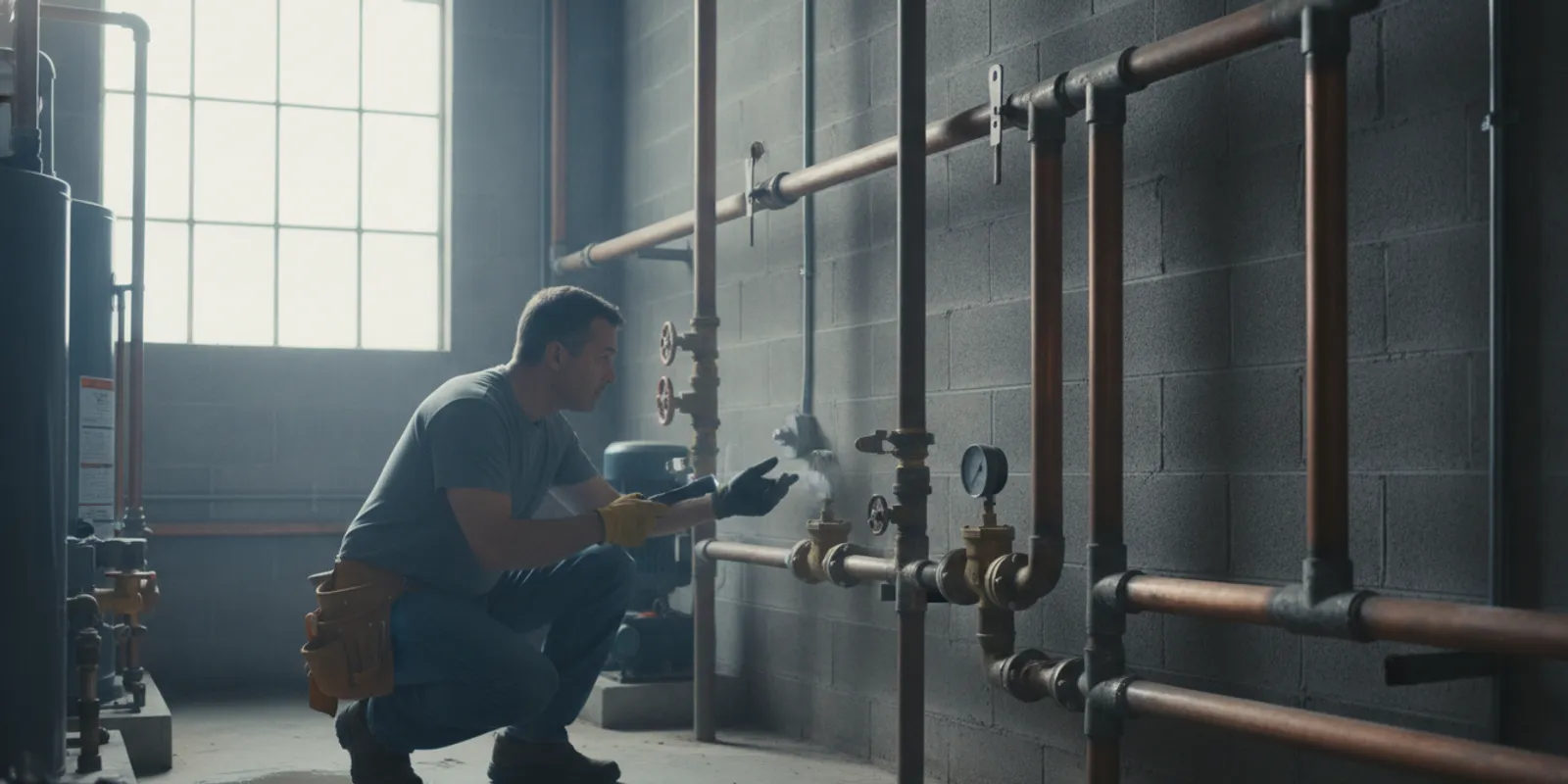
A commercial plumbing inspection checklist helps business owners spot developing problems before they interrupt daily operations. A planned review of water supply, drains, sewer laterals, fixtures, water heaters, and backflow risks gives you a practical record and clear next steps.
Request an inspection discussion
How should a business plan a plumbing inspection?
Start by deciding what the inspection needs to answer. A routine review may focus on visible leaks, fixture operation, and maintenance records. A property with recurring backups, unexplained water use, or a change in occupancy may need closer attention to drains or the sewer connection. Clarifying the purpose helps the inspector understand which areas matter most and helps your team prepare appropriate access.
Choose a time that limits impact on customers, tenants, staff, and operations. Tell the inspector which areas must remain accessible and identify business-critical fixtures. Before work begins, confirm whether water needs to be shut off, how long access may be limited, and who will approve additional investigation. A planned walkthrough and repair work may require different schedules, so do not assume both fit in one visit.
- Gather previous inspection notes, repair invoices, and plumbing plans if available.
- Identify shutoff valves, water heaters, backflow devices, cleanouts, and equipment rooms.
- List recurring symptoms, including slow drains, odors, leaks, or pressure changes.
- Arrange access to restrooms, kitchens, utility spaces, and exterior cleanouts.
- Agree on how urgent findings and follow-up recommendations will be communicated.
Ask whether the visit is intended as a visual condition review, a diagnostic visit for known symptoms, or a review connected to planned work. These scopes are not interchangeable. A visual review can record accessible conditions, while investigating a recurring blockage or pressure issue may require testing or equipment. Clarify what the written report will include and whether it will distinguish observations from confirmed defects. Ask who will receive urgent updates and how approval will be obtained if the inspection identifies a concern outside the original scope.
What should the commercial plumbing inspection checklist cover?
Use this checklist as a discussion guide. The inspector may adapt the scope to the building, its plumbing layout, observed conditions, and applicable local requirements. A visual review does not replace testing or opening concealed systems when further investigation is warranted.
| System | What to review | Useful next step |
|---|---|---|
| Water supply | Visible piping, shutoffs, pressure symptoms, corrosion, and leaks | Record location and request diagnosis for unexplained changes |
| Drainage | Slow drains, odors, backups, accessible traps, and cleanouts | Investigate repeated symptoms and note affected fixtures |
| Sewer lateral | Backup history, cleanout access, and evidence of recurring blockage | Consider closer evaluation when problems recur |
| Fixtures | Toilets, faucets, sinks, flush valves, and visible connections | Log leaks, poor operation, and areas needing repair |
| Water heaters | Visible leaks, connections, venting or electrical condition as applicable, and service history | Arrange qualified review of concerns and maintenance needs |
| Backflow risk | Devices and connections where contamination could be a concern | Verify applicable testing and documentation requirements |
| Records | Prior work, inspections, permits, and recurring issues | Keep a dated record of findings and completed work |
How do you check the water supply and look for leaks?
Walk accessible pipe routes and look for active drips, moisture, staining, corrosion, damaged insulation, or signs of past leaks. Pay attention to connections near equipment, fixtures, and water heaters. Note the exact location rather than writing only that there is a leak in a back room. A clear location helps the service team plan access and identify affected operations.
Ask whether staff have noticed a change in pressure, intermittent loss of water, or unexplained increases in consumption. Those observations do not prove a particular fault, but they help narrow the investigation. Confirm that shutoff valves are identifiable and accessible; do not force a valve that appears stuck or damaged. If a valve location is unknown, note that for the facilities contact rather than attempting to operate unfamiliar equipment.
Where an issue could affect a tenant or customer area, discuss containment and scheduling before repairs. A plumber can explain whether a localized repair, additional testing, or a planned water interruption is appropriate. Keep staff away from wet areas and report active leaks promptly. If water is near electrical equipment, keep people clear and follow the building’s safety procedures while arranging qualified assistance.
During the walkthrough, note whether moisture is isolated or appears across several locations. Record nearby equipment, the time symptoms were noticed, and whether the area was recently cleaned or used. These details help separate a current leak from residual water or condensation without assuming a cause prematurely. A short written observation such as the room, fixture, time, and visible condition is more useful than an unsupported guess about the source.
What should you inspect in drains and sewer laterals?
Check sinks, floor drains, toilets, and other fixtures for slow drainage, gurgling, recurring clogs, or sewer odors. Ask staff whether symptoms occur at one fixture or across several areas, and whether they follow heavy use or particular operating periods. These details can help distinguish an isolated fixture problem from a broader drainage concern.
Review access to cleanouts and note any history of backups, root intrusion, or repeated drain clearing. If a blockage keeps returning, repeated clearing may not address its cause. Depending on the symptoms, a qualified plumber may recommend further evaluation of the building drain or sewer lateral. A business should record which areas were affected and whether the issue disrupted operations, rather than treating every slow drain as evidence of the same fault.
For drain and sewer service information, see Diamond House Plumbing’s drain and sewer services. Do not put materials into drains just to test them; use normal operating conditions and report unusual behavior.
Make a simple location map for recurring concerns. Mark the affected fixture or area, nearby cleanout if known, and whether adjacent fixtures are affected. A pattern involving several fixtures may warrant a different diagnostic conversation than one slow sink. Keep the map factual: note what staff observed, not an unverified explanation for the problem. If a tenant reports an odor or backup, include the time and the location so the inspection can be coordinated with the person who noticed it.
Which fixtures and water heaters need attention?
Operate accessible fixtures and look for leaks, loose handles, poor flushing, slow fill, unusual noises, or inconsistent hot water. In public or employee restrooms, a small fixture issue can quickly become an operational problem. Record the room or fixture identifier and whether the issue is constant or intermittent. Include any concern about a fixture that is out of service so that its status is clear to staff and the service team.
For water heaters, inspect only areas that are safely accessible. Note visible corrosion, water around the unit, damaged connections, unusual sounds, or changes in hot-water availability. Do not remove covers or adjust fuel, electrical, temperature, or safety controls as part of a routine walkthrough. Ask a qualified professional to assess concerns and review service history. More detail about equipment and service options is available on the water heater service page.
Consider how the building uses hot water before planning any work. A business with a kitchen, employee facilities, or customer-facing restrooms may need a service window that preserves essential functions. List locations that cannot be taken offline at the same time and ask the plumber what sequencing options are practical. Avoid promising uninterrupted service; confirm the likely access and shutdown needs for the specific scope. If a water heater serves several areas, identify them before choosing a work window.
How should a business assess backflow risks?
Backflow prevention helps protect potable water from contamination risks where plumbing arrangements could allow reverse flow. During an inspection, identify devices and connections serving relevant equipment or processes, and gather available test and service records. Exact device requirements and testing obligations depend on the installation and the authority having jurisdiction.
Ask the inspector whether devices appear accessible and whether records indicate testing is current under applicable rules. Do not assume a device is compliant just because it is present. If a concern is identified, confirm the required next step with a qualified professional and the relevant local authority. Keep the device location and available documentation together so a future facility manager can identify what was reviewed.
Useful records include the device location, identification information, date and result of any available test, and follow-up work. If records are missing, make that a question for the appropriate authority or qualified tester rather than assuming that a test is or is not required. Keep documentation with the building’s other plumbing records so it can be retrieved during future service or an official review.
What code and permit questions should you ask?
Plumbing work may be subject to adopted codes, permits, inspections, and local amendments. Requirements can depend on the scope of work, building use, and jurisdiction. An inspection checklist is not a code determination, and this article cannot establish whether a particular installation complies.
Before authorizing alterations, ask which permits or inspections may apply and who is responsible for coordinating them. For work requiring official review, confirm details with the local building department. The City of Frisco’s commercial inspection checklist and guide illustrates how inspection requirements may be documented by a municipality; it is not a substitute for rules in Inland Empire jurisdictions.
Separate questions about existing conditions from questions about proposed work. Ask whether the inspection itself involves a permit, whether a repair or alteration may require one, what documents the local department expects, and who will request any required inspection. The answer can vary by scope and local rules, so record the department’s guidance and any reference information provided. Avoid relying on another city’s checklist to determine requirements for your building.
How can you keep an inspection from disrupting business?
Separate observation from repair planning. A walkthrough can identify concerns, but repair work may need a distinct visit or planned service window. Coordinate the sequence with the plumber so essential restrooms, food preparation areas, customer spaces, and equipment remain available whenever possible.
- Schedule access around business hours or lower-demand periods where practical.
- Notify affected staff or tenants about access limits and potential shutoffs.
- Group work by area when it can reduce repeated disruption.
- Ask which findings need immediate attention and which can be scheduled.
- Confirm how the work area will be left and who will verify normal operation.
Prepare a point of contact who can open restricted areas and answer operational questions. Let that person know which decisions they can make and which require approval from a property manager or owner. If tenants occupy the building, agree on how notices will be shared and who will coordinate access to their spaces. A short pre-visit message can tell staff which areas must be cleared, what access is needed, and whom to contact if a fixture becomes unavailable.
For proposed repairs, ask for the sequence in plain language: what area is accessed first, whether water or a fixture must be unavailable, what conditions could change the scope, and how completion will be confirmed. A written plan helps the business compare the practical impact of alternatives, not just the technical description. If the work reveals a separate issue, pause for an explanation and authorization before expanding the scope.
What maintenance records should you keep?
Maintain one record for each inspection and repair. Include the date, areas reviewed, reported symptoms, findings, recommended actions, work completed, and any follow-up date. Keep permits, inspection outcomes, device testing documentation, and invoices with the related entry. A consistent history can help a new facility manager understand what has already been addressed.
For each open item, name a responsible person and a target date. Mark whether it is an observation, a confirmed defect, or a recommendation for further testing. This avoids treating every note as an emergency while helping ensure important issues are not forgotten. Where several people manage a property, state where the record is stored and who updates it after service.
A useful entry might state: North restroom, third stall: intermittent slow drain reported by staff on two shifts; plumber to evaluate; access coordinated for Tuesday morning. That is more actionable than a generic restroom plumbing issue. Add a photo only when it can be taken safely and does not expose private customer or employee information.
Review the open-item list after work is completed. Record whether the symptom stopped, whether a follow-up test was recommended, and who received the report. If a problem returns, the date and prior action will give the next service visit a clearer starting point. Keep digital or paper records organized so a facilities contact can find them when needed. A simple log also helps a business distinguish a one-time complaint from a repeated condition that merits follow-up.
How can you turn inspection findings into clear next steps?
Ask the plumber to explain each finding in plain language and connect it to a location, symptom, and recommended action. When more than one option is appropriate, ask what each option involves, what access or shutdown it requires, and what uncertainty remains. Request written scope details before approving work that extends beyond the inspection.
Sort findings by operational urgency rather than by where they appear on a report. An active leak affecting a work area may need prompt attention. A minor fixture concern with no immediate impact may be scheduled. A recommendation for further testing is not the same as a confirmed failure; ask what question the proposed test is meant to answer and how its result may change the plan. Then assign each action to a person and set a review date.
For a commercial property in Riverside or San Bernardino County, a focused review can help prioritize repairs around business needs. Learn about plumbing services for Inland Empire businesses, read the commercial plumbing repair guide, and review the main sewer line guide for related planning context. You can also learn about Diamond House Plumbing before arranging a service discussion.
Discuss an inspection and scheduling needs
A documented inspection gives your business a clearer view of plumbing conditions, practical priorities, and the next steps needed to keep operations moving.

Leave a Reply