
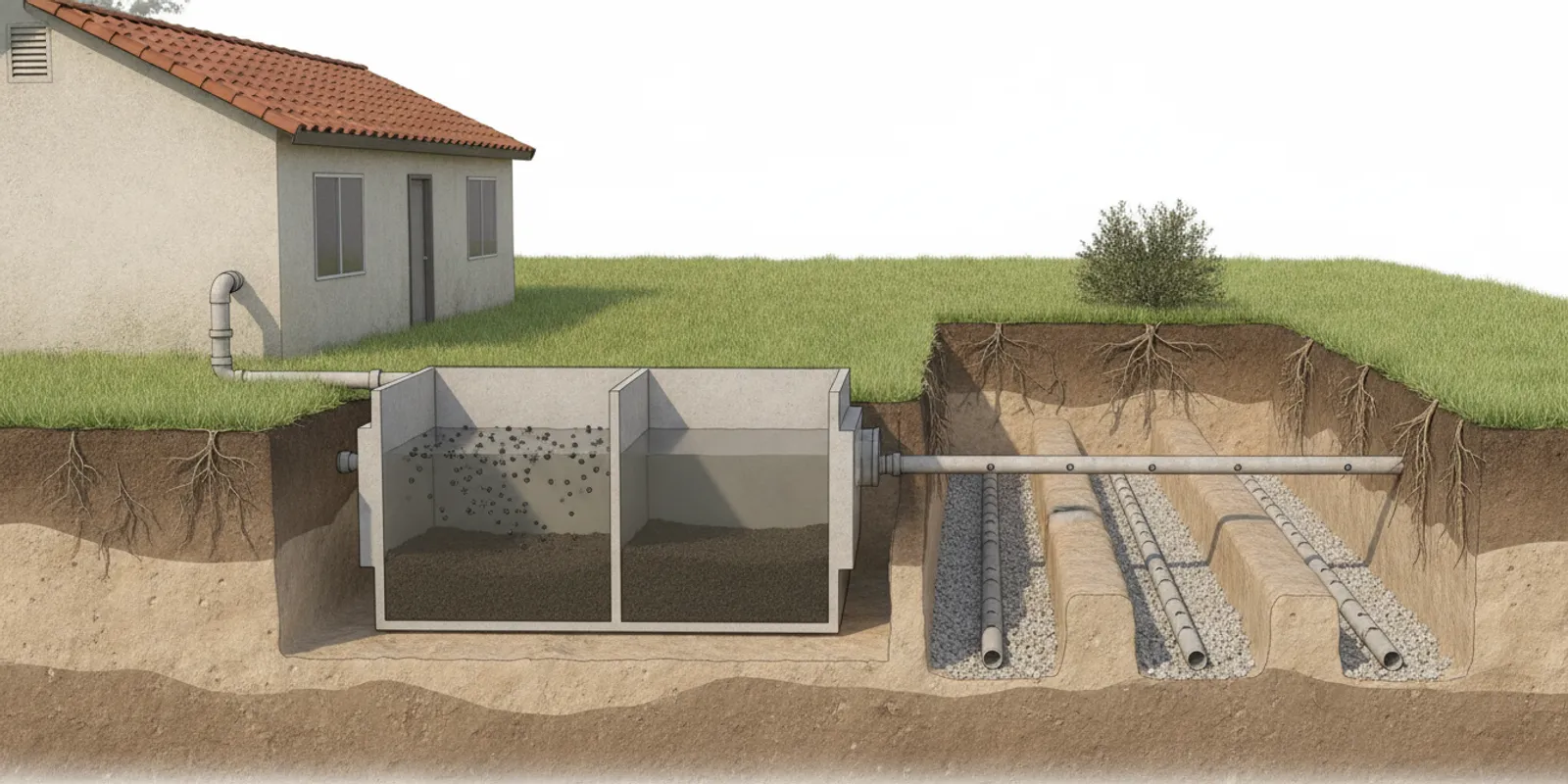
If you have searched “what is a septic tanks,” you may be trying to understand a system at your home or property. A septic tank is a buried, watertight container that receives wastewater from a building, holds it so solids can separate, and sends liquid onward for treatment in the soil or another approved dispersal area. The tank is important, but it is only one part of a complete onsite wastewater system.
Contact the plumbing team about your septic system
What does a septic tank do?
A septic tank provides a place for wastewater to collect and separate before it moves to the next stage of treatment. Wastewater from toilets, sinks, showers, laundry, and other connected plumbing enters the tank through an inlet pipe. Inside, heavier solids settle to the bottom and form sludge. Oils and lighter materials float and form a surface layer called scum. The partially clarified liquid between those layers is called effluent.
Bacteria in the tank break down some of the organic material, but they do not make the wastewater safe to discharge anywhere. The effluent must continue through a properly designed and maintained treatment or dispersal area. That distinction matters: a tank by itself is not the whole wastewater system, and a tank that appears intact may still be connected to a failing or unsuitable downstream component.
For a basic overview of onsite wastewater treatment, the U.S. Environmental Protection Agency is a starting point for federal environmental information. Local permitting and operating requirements are handled through the applicable state and county authorities, so property owners should confirm local instructions for their address and type of work.
How does wastewater move through the system?
In a conventional gravity-fed arrangement, wastewater follows a sequence. The exact layout varies by property, soil, design, and local approval, but the basic stages are often as follows:
- Wastewater leaves the building. Plumbing fixtures drain into a building sewer pipe leading toward the tank.
- The tank receives and holds wastewater. An inlet fitting helps direct incoming flow and reduce disruption to the layers inside.
- Solids separate from liquid. Sludge settles, scum floats, and the middle layer becomes effluent. Some organic matter decomposes over time.
- Effluent leaves through an outlet. An outlet fitting or filter may help limit the movement of solids toward the next component, depending on the system design.
- The soil or approved treatment component receives effluent. A drain field or another permitted arrangement disperses and further treats the liquid.
Flow problems at any stage can affect the rest of the system. For example, a blocked building sewer may keep wastewater from reaching the tank, while a problem beyond the tank may cause slow drains or backups even if the tank itself is not damaged. A diagnosis should consider the full path rather than assuming every symptom means the tank needs replacement.
What are the main parts of a septic system?
System layouts differ, and not every property has the same components. A typical arrangement may include the building sewer, tank, inlet and outlet fittings, access openings, an effluent filter, and a soil treatment or dispersal area. Some properties use pumps or other equipment when gravity alone cannot move wastewater as intended.
| Component | What it does | What a property owner should know |
|---|---|---|
| Building sewer | Carries wastewater from the building to the tank. | A blockage or damaged pipe can resemble a tank problem. |
| Septic tank | Holds wastewater while solids and lighter materials separate. | Access, condition, capacity, and maintenance history help inform service decisions. |
| Inlet and outlet fittings | Guide flow into and out of the tank. | Damage or obstruction can interfere with normal flow. |
| Effluent filter, if present | Helps keep suspended solids from moving downstream. | It needs inspection and service according to its design and the system’s needs. |
| Drain field or other approved dispersal component | Receives and treats or disperses effluent. | Surface conditions, soil, and wastewater loading can affect performance. |
| Pump or alarm, if present | Moves wastewater where needed and may signal a high-water condition. | An alarm should be taken seriously; identify the system instructions and seek qualified help. |
For a closer look at how components fit together, see this septic system parts overview. If you are unsure whether the property uses a conventional tank and drain field or a different approved design, records and an onsite assessment can help clarify the layout.
How is a septic tank different from the whole system?
People often use “septic tank” to mean the entire onsite wastewater setup. Technically, the tank is the container where initial settling and separation occur. The system also includes the pipes that carry wastewater, fittings that control flow, and the downstream area that receives effluent. Depending on the site, it may include a pump, alarm, filter, or other equipment.
This difference is useful when explaining a problem or comparing proposed work. A tank repair addresses the tank or a component attached to it. A sewer pipe repair addresses the pipe bringing wastewater from the building. A drain field concern involves the area that receives effluent. These parts connect, but they are not interchangeable. Ask which component was examined, what was observed, and how the findings support the recommended work.
When the suspected issue is in a pipe between the home and the public connection, it may involve a sewer lateral rather than a septic tank. The relevant service depends on the property’s layout. Diamond House Plumbing describes its septic system services and its drain and sewer work on separate pages.
What can affect how well a septic system works?
System performance depends on more than the tank’s age. The design and capacity must suit the property and expected wastewater use. The soil and dispersal area need to function as intended. Changes in water use, leaks, blocked pipes, damaged fittings, or equipment failure can also create trouble. Heavy traffic or construction over system components may cause damage, and directing roof runoff toward the dispersal area can add unwanted water to the site.
Everyday water use matters because a large surge can send more wastewater into the tank and downstream area in a short period. Spread out laundry loads when practical, repair plumbing leaks, and avoid treating toilets or sinks as waste bins. Follow guidance for your specific system; do not put instructions for one design ahead of the records and requirements that apply to your property.
There is no single maintenance schedule that fits every system. The suitable inspection and service interval depends on design, use, household or business activity, and local requirements. Keep receipts, inspection notes, permits, and system plans together. Those records can help a qualified professional understand the system and compare current conditions with previous visits.
How can you recognize a possible septic problem?
Warning signs can include slow drains in more than one fixture, gurgling sounds, sewage odors, wastewater backing up, unusually wet or spongy ground near system components, or a change in the yard above the dispersal area. A single slow fixture may have a local plumbing cause, but symptoms affecting several fixtures can indicate a shared drain or system issue.
These signs do not identify the cause by themselves. For example, a backup might stem from a blockage in a building sewer, a tank condition, a pump or filter issue, or trouble in the downstream treatment area. Avoid opening or entering a tank. Septic tanks can contain hazardous gases and present serious physical hazards. Keep people and pets away from a suspected surfacing wastewater area, reduce water use if a backup is occurring, and arrange an assessment.
If the problem appears connected to a building drain or sewer pipe, a professional can determine whether the issue is within the plumbing, tank, or another part of the system. This septic tank repair guide explains the kinds of information useful when considering repair needs, while a septic alarm guide covers practical steps when an alarm is present.
What should you prepare before requesting an inspection?
A little preparation can make a service conversation more productive. Gather the property address, any available tank or system records, prior inspection or pumping information, and a description of the symptoms. Note when the issue started, which fixtures are affected, whether water use has changed, and whether an alarm or visible wet area is present. Photos from a safe distance may help describe a surface condition.
Also mention planned work that could affect wastewater use, such as a remodel, additional plumbing fixtures, or a change in building occupancy. Do not assume an existing system can support a change without review. A qualified professional or local authority can explain what documentation or approval applies. For residential work, the company’s residential plumbing information provides a relevant starting point; commercial properties can use the contact page to discuss the property and its needs.
Ask what the inspection will cover, whether access needs to be prepared, and what findings will be documented. If a repair or replacement is proposed, ask which component is affected, what alternatives were considered, and whether permits or approvals may be needed. Request a written scope that separates inspection findings from proposed work so you can make an informed decision.
How can you learn what system a property has?
Start with documents already associated with the property. A site plan, building or plumbing permit, prior inspection report, service invoice, or real-estate file may identify the tank location and the type of downstream treatment. These documents can be incomplete or outdated, especially if work was done long ago, so treat them as useful clues rather than proof of current condition. A professional assessment can help compare records with what is actually installed.
If you have recently purchased the property, ask the seller or prior owner for maintenance records and any available system plans. Mark the approximate location of the tank, access covers, pipes, and dispersal area on a simple property sketch, and note whether the information is confirmed or estimated. Do not dig to find a tank or pipe without first considering buried utilities and site hazards. When access or location is uncertain, ask how the service provider will locate components safely.
For a commercial building, keep records of occupancy, fixture changes, and any changes in how the building is used. A restaurant, office, and other business may place different demands on plumbing than a residence, and past use can be important context during an assessment. Do not assume a system designed for one use can accommodate a new use or a substantial increase in activity without review.
Owners considering a change from onsite wastewater to a public sewer should confirm the local process before arranging construction. The steps can depend on jurisdiction, property conditions, and the scope of the proposed work. The septic-to-sewer planning guide outlines questions to consider when evaluating that type of project. For local approvals, verify current requirements with the authority responsible for the property.
Frequently asked questions
Is a septic tank the same as a cesspool?
No. The terms refer to different arrangements. A septic tank separates and holds wastewater before sending effluent to a separate treatment or dispersal component. A cesspool is a different type of wastewater pit. Do not infer a property’s system type from appearance alone; records or a qualified assessment can identify it.
Does every septic system have a drain field?
No. Many conventional systems use a drain field, but site conditions and approved designs can lead to other arrangements. Check the property’s plans and local records to learn which components are present.
Can a tank look fine while the system has a problem?
Yes. A blockage, damaged pipe, failing fitting, equipment issue, or problem in the dispersal area can affect operation even when the tank is not the source. A complete assessment should consider the connected components and the symptoms.
Should I open the tank to check it?
No. Opening or entering a septic tank can expose people to serious hazards. Leave access and inspection work to qualified professionals with appropriate procedures and equipment.
Request information about septic service
Plan a safe next step
A septic tank is the settling and separation stage of a larger wastewater system, so understanding the connected pipes and treatment area is essential when planning maintenance or troubleshooting. Keep the property’s records, act on warning signs, and arrange a qualified assessment when the system’s condition or layout is unclear.

Leave a Reply