
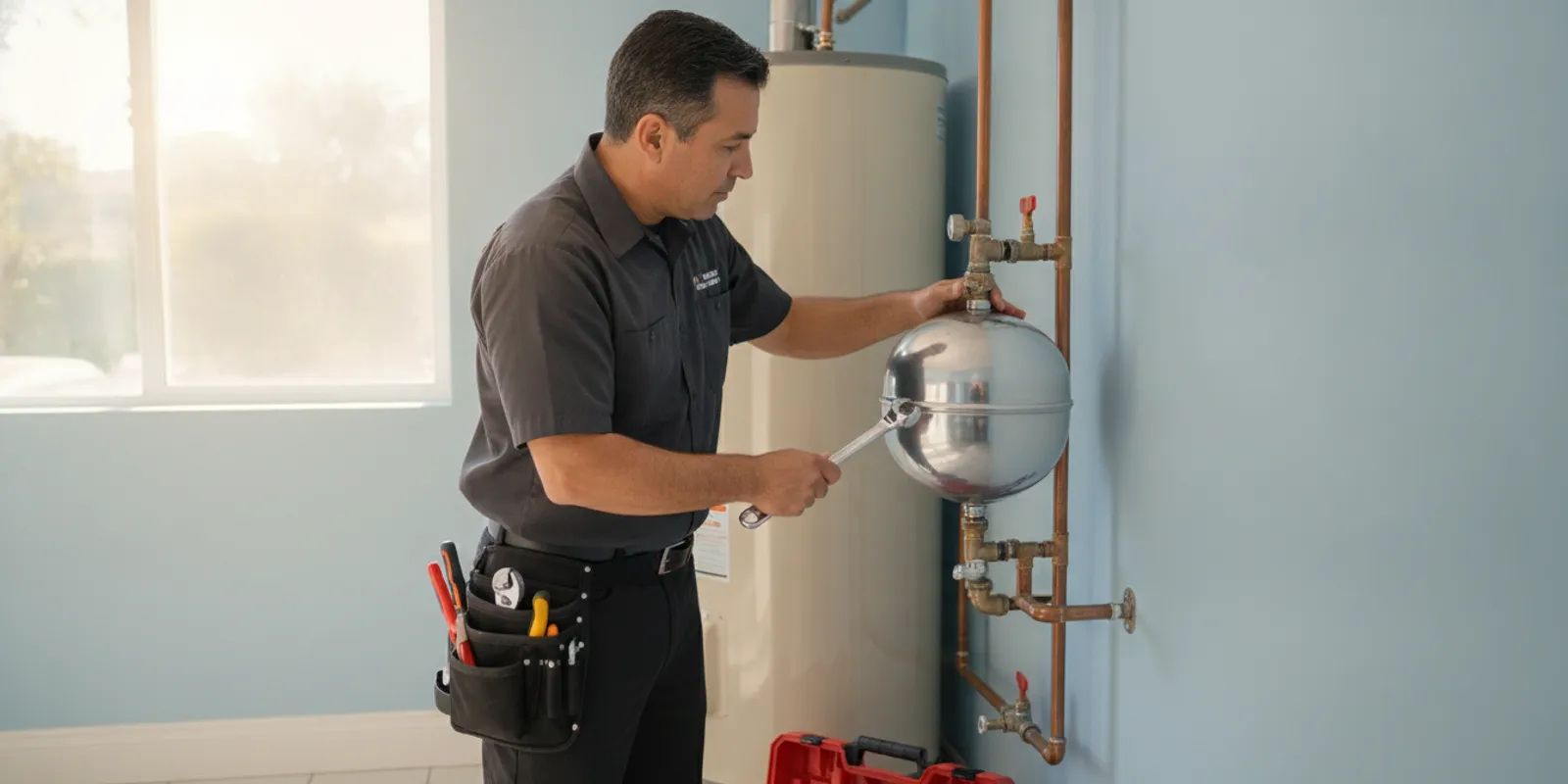
Water heater expansion tank replacement may be needed when the tank no longer absorbs pressure changes as water heats, or when it leaks, corrodes, or has a failed internal bladder. If you notice water around the tank or unusual pressure symptoms, start by identifying the source rather than assuming the expansion tank is the only issue.
What does a water heater expansion tank do?
Water expands as it warms. In a plumbing system that prevents water from flowing backward into the supply, this expansion can raise pressure in the piping and water heater. A thermal expansion tank provides a small space to accommodate some of that expanded water. The tank typically contains an air chamber separated from water by a diaphragm or bladder. Local government guidance describes the tank as a way to help manage thermal expansion and reduce pressure-related stress on plumbing components. See the thermal expansion FAQ for a plain-language explanation.
Not every home has the same plumbing configuration. A well system may already have a pressure tank that serves this function under certain conditions, while other systems may use a separate expansion tank. The correct arrangement depends on the plumbing and applicable requirements, so a plumber should assess the system before recommending a change.
What signs can point to an expansion tank problem?
A symptom can have more than one cause. Treat these observations as reasons to investigate, not proof that the tank itself has failed:
- Water or rust near the tank: Moisture may come from a tank leak, a nearby fitting, a connection, or another source. Persistent wetness or visible corrosion deserves prompt attention.
- Pressure changes: Pressure that fluctuates or seems unusually high may involve thermal expansion, a pressure-reducing valve, a regulator, or another component.
- Dripping at a relief valve: A water heater temperature-and-pressure relief valve that discharges water should be evaluated. Do not cap, block, or disable the valve.
- Visible damage: A dented, badly corroded, or leaking tank may need replacement, but the cause and connected piping should also be checked.
- Repeated plumbing concerns after heating: If symptoms occur as the heater cycles, note when they happen and share that timing with the plumber.
Do not hit, puncture, or try to open the tank to test it. The water heater and its connected system can contain hot water and pressurized components. If there is active leaking, keep clear of hot water, protect nearby belongings if safe, and contact a plumbing professional.
When is replacement more likely than continued use?
Replacement may be considered when the tank body is leaking or corroded, when its internal diaphragm has failed, or when it cannot maintain the condition needed to absorb expansion. Some tanks can be checked using a pressure measurement or other professional diagnostic steps, but symptoms alone do not establish the correct diagnosis.
It is also important to confirm whether the tank is correctly sized and installed for the system. A new tank that is unsuitable for the water heater, pressure conditions, or mounting arrangement may not solve the underlying problem. A plumber may inspect the tank, nearby shutoff and connection points, water pressure, heater configuration, and the relief-valve discharge pipe as part of determining the next step.
Explore Diamond House Plumbing’s water heater service information if you also have concerns about the heater itself. For broader plumbing symptoms, the plumbing services page outlines the company’s general service path.
What happens during water heater expansion tank replacement?
The exact work depends on the installation and condition of the surrounding plumbing. A typical service visit may include these stages:
- Confirm the concern. The plumber asks about leaks, pressure symptoms, and when they occur, then inspects the tank and connections.
- Assess the system. The plumber checks relevant pressure conditions, the heater and shutoff arrangement, mounting support, and whether the existing configuration calls for a separate expansion tank.
- Isolate and relieve the system as appropriate. Work on pressurized hot-water plumbing requires care. The plumber determines the safe procedure for the specific installation.
- Remove and replace the tank if appropriate. The replacement should match the requirements of the system and be securely supported with suitable connections.
- Restore service and check operation. The plumber checks for leaks and confirms the system is returned to service. Any related issue found during inspection may require separate discussion.
These are general stages, not a promise that every visit follows an identical sequence. Older plumbing, limited access, corroded fittings, or an unrelated pressure problem may change the work needed. Ask what the inspection found and which items are included in the proposed work.
How do you compare possible next steps?
| Finding or situation | Possible next step | What to clarify |
|---|---|---|
| Tank body is leaking or badly corroded | Discuss replacement and inspect nearby fittings | Is the leak from the tank, a connection, or another component? |
| No visible leak, but pressure symptoms persist | Diagnose system pressure and expansion control | What measurements or observations support the diagnosis? |
| Relief valve discharges water | Have the water heater and pressure conditions evaluated | What is causing discharge, and is the valve functioning safely? |
| Tank appears intact and symptoms are absent | Ask whether inspection or monitoring is appropriate | Is any action required now, and what change should prompt a call? |
The table is a discussion aid, not a substitute for inspection. Never ignore a relief-valve discharge or attempt to stop it by blocking the outlet. When you describe the problem, separate what you observed from what you suspect: “water appears at the threaded connection after a heating cycle” is more useful than concluding that the tank bladder has failed. If the pattern is unclear, a brief record of dates, approximate times, and whether the heater had recently run can help the plumber compare symptoms with the equipment’s operation.
What should you understand about pressure checks?
Pressure is one part of the diagnosis, but a single reading may not tell the whole story. A plumber may consider the supply pressure, how pressure behaves while water is heated, and whether valves or other devices prevent water from moving back toward the supply. The measurements and interpretation depend on the system. Ask what was checked, when the reading was taken, and how it relates to the complaint. This helps you understand why a replacement is being recommended or why the investigation is looking elsewhere.
It is also useful to distinguish a tank’s physical condition from its ability to perform its role. A tank can look intact from the outside yet fail to provide the expected air cushion; conversely, a wet connection nearby can make a sound tank appear to be the source. A professional assessment should consider both the component and its connections. Avoid relying on generic online test instructions, since handling a pressurized or hot-water component can create a hazard and may not produce a reliable result.
Ask how the proposed work addresses the observed condition. If pressure regulation, a relief valve, or another plumbing component is also implicated, request a clear explanation of whether it is part of the same scope or a separate concern. The goal is not to request unnecessary testing, but to understand the evidence and the limits of what a particular inspection can establish.
How can you review the replacement proposal?
Before approving a replacement, make sure the proposal describes the work in practical terms. It should identify the component being replaced, any fittings or support work included, and the steps for restoring service and checking for leaks. If the installation requires changes beyond the tank itself, ask why those changes are needed and whether they are required to address the diagnosed issue or are an optional improvement.
Compare proposals by scope rather than by a headline alone. One proposal may include inspection of related connections or correction of a mounting concern, while another may describe only the tank exchange. Ask whether the tank selection is based on the heater and plumbing conditions, and what assumptions the proposal makes about existing shutoffs and piping. This makes it easier to compare like with like without presuming that every installation should have identical work.
Clarify what happens if the plumber discovers a corroded fitting or another issue once work begins. You can ask how additional work will be explained and approved before proceeding. Also confirm how the area will be checked after the system is returned to service and what symptoms should prompt a follow-up call. These details set expectations without assuming that a diagnosis will uncover only one issue.
What can make a replacement visit more involved?
Several details can change the time and scope of a visit. A tank may be easy to reach in an open utility room, or it may be mounted above a heater in a narrow closet. Access affects how a plumber can protect nearby surfaces, handle the component, and provide secure support afterward. Let the plumber know about stairs, locked gates, pets, or other access considerations when arranging a visit, and keep the route to the equipment clear.
The condition of the connected piping matters too. Older, corroded, or seized connections may not separate as easily as newer fittings. The plumber may need to discuss whether a connection can be reused or whether a related repair is advisable. Do not try to loosen a fitting in advance; movement can worsen a leak or expose you to hot water.
System layout is another factor. A home with a pressure-reducing valve or check valve may behave differently from a system without those devices, and a well system can have a pressure tank that changes the assessment. For a commercial building, multiple heaters, recirculation loops, and scheduling constraints can add coordination. These are reasons to evaluate the actual layout rather than assume the same replacement plan applies everywhere.
What should you do if you find water near the heater?
First, consider personal safety. Water near electrical equipment, hot pipes, or a heater can create risks. Do not step into standing water if electrical equipment may be affected, and do not touch a leaking hot-water connection. If the leak is active or spreading, contact a plumbing professional promptly. If you can safely keep belongings away from the water without touching equipment, do so, but do not delay getting help to take photographs or gather details.
When it is safe, look from a distance to see whether moisture appears to come from the expansion tank, its threaded connection, a pipe above it, or the water heater itself. This is only an observation, not a diagnosis. Note whether the water is a small intermittent drip or a steady flow, and whether you noticed it after hot-water use. Share that information when you call. Avoid operating valves unless you have been instructed on what to do for your specific situation.
If there is no active leak, but you see rust, mineral deposits, or recurring dampness, arrange an assessment rather than waiting for the condition to become clearer through repeated exposure. A photo taken from a safe location can show the general layout and help the service provider understand access. Do not touch or wipe a suspected leak source before the plumber has had a chance to inspect it if doing so would put you near hot or electrical components.
How should homeowners think about timing?
Timing depends on the condition, not simply on the age or appearance of the tank. Active leakage, significant corrosion, or water discharging from a relief valve calls for prompt professional attention. A dry tank with no symptoms may not require immediate replacement solely because it is present, but its installation and the overall plumbing arrangement can still be evaluated if you have concerns or are already scheduling water-heater work.
When contacting a plumber, explain whether water is actively escaping, whether the issue is recurring, and whether the relief-valve discharge pipe has released water. Those details help communicate urgency. Do not treat a temporary stop in dripping as proof the issue is resolved: the cause may still need assessment. Likewise, do not assume every occasional pressure change means the expansion tank has failed. The timing decision should follow the observed condition and professional findings.
For planned work, coordinate access and make sure the person approving the repair can review the diagnosis and scope. In a household, that may mean sharing the plumber’s explanation with the owner before work is authorized. In a business, it may mean identifying an on-site contact and a time window that fits operations. Clear communication can reduce avoidable delays and help everyone understand what is being addressed.
What affects the scope of the work?
There is no reliable one-size-fits-all replacement plan without seeing the installation. Relevant factors can include:
- Tank condition: A straightforward tank exchange differs from a job involving leaking or seized connections.
- Access and mounting: A tank in a cramped closet or overhead location may require more careful access and support planning.
- System pressure and configuration: Pressure-regulating equipment, check valves, and other flow-limiting components can affect how thermal expansion is handled.
- Existing water heater condition: The heater, shutoff, and nearby piping may need separate attention if they show wear or leakage.
- Required corrective work: A diagnosis may reveal an underlying pressure issue or installation concern beyond the tank.
For a useful estimate, ask for the diagnosis, the tank and fittings included, labor, any additional recommended work, and how the plumber will verify the result. Ask the provider to distinguish required repairs from optional improvements. Diamond House Plumbing serves homeowners and businesses across Riverside and San Bernardino Counties; you can use its service-area information to check the local service path.
What should Inland Empire homeowners ask the plumber?
Before approving work, consider asking:
- What evidence points to the expansion tank rather than a fitting, pressure regulator, or relief valve?
- Does this plumbing system require a separate expansion tank, or does another tank already serve that role?
- How will the replacement be selected and supported for this particular installation?
- Does the scope include checking the relevant pressure conditions and nearby connections?
- What is included in the quoted work, and what would be handled as an additional repair?
- What should I watch for after service, and whom should I contact if symptoms continue?
Keep the area around the water heater accessible and tell the plumber about any recent leaks, pressure changes, repairs, or relief-valve discharge. Do not remove covers or adjust valves to prepare for the visit.
How can you prepare for the visit and assess the result?
A few observations can make the conversation more useful without requiring you to handle the equipment. Note when you first saw moisture, whether it appears after the heater runs, and whether it is constant or intermittent. If you can do so safely, take a photo of the general area from a distance. Avoid touching hot pipes, standing water near electrical equipment, or any valve or fitting that appears damaged.
Make a short list of related symptoms. Include whether hot-water use seems normal, whether the relief-valve discharge pipe has been wet, and whether other fixtures have pressure changes. Mention recent work on the water heater or main plumbing, since a change in configuration can help explain why a symptom began. Do not delay a call to gather details if water is actively leaking.
During the visit, ask the plumber to identify the source of the concern and explain the proposed work in plain terms. If replacement is recommended, clarify how the new tank will be selected, how it will be supported, and which nearby connections are included. If the diagnosis points elsewhere, ask what evidence supports that conclusion and whether the expansion tank needs any action now.
After service, look for visible signs of leakage from a safe distance and follow the plumber’s instructions for reporting any return of symptoms. A new tank does not correct every possible pressure, valve, or water-heater issue. If the original symptom continues, describe when it occurs and contact the service provider rather than adjusting the system yourself.
What is different about evaluating a commercial water heater?
Commercial properties can have larger or more complex hot-water systems than a typical residence. A plumber may need to consider multiple heaters, recirculation equipment, larger piping, or operating schedules that affect when the system can be taken out of service. The exact configuration matters; avoid assuming that a residential replacement procedure or tank selection will apply to a business.
For a business, identify the person who can authorize work and explain any access or operating constraints before the appointment. If hot water is essential to daily operations, ask how the inspection and any proposed work will be coordinated. The plumber can explain what can be assessed during the visit and whether additional planning is needed before work begins.
Property managers should also record the location of the equipment, any previous service notes, and the best way to reach an on-site contact. This helps separate the immediate concern from unrelated maintenance requests and allows the person approving the work to review the scope. It does not replace the plumber’s inspection or guarantee a particular schedule.
Frequently asked questions
Can I tell by tapping the tank whether it needs replacement?
A sound or touch test is not a dependable diagnosis for a homeowner. A plumber can assess the tank and pressure conditions using suitable methods for the system.
Does every water heater need a separate expansion tank?
No single answer applies to every configuration. Flow-limiting devices, the water supply arrangement, and any existing pressure tank can affect the system. Have the actual plumbing evaluated rather than relying on a generic rule.
Should a leaking expansion tank be addressed quickly?
Yes. A leak can damage the surrounding area, and the source may be the tank or a connection. If water is actively escaping, avoid contact with hot water and arrange professional assessment.
Will replacing the tank stop a water heater relief valve from dripping?
Not necessarily. Discharge can have multiple causes, including pressure or temperature concerns. The heater and the relief-valve system should be evaluated; never cap or obstruct the discharge pipe.
Can an existing well pressure tank replace a separate expansion tank?
In some well-system configurations, an existing tank may serve a thermal expansion function, but the arrangement of flow-limiting components matters. Have a plumber evaluate the complete system before adding or removing equipment.
Contact Diamond House Plumbing about your water heater
A careful diagnosis can determine whether the expansion tank is the issue and whether replacement is the appropriate next step for your plumbing system.

Leave a Reply