A broken sewer line often forces homeowners to choose between a destroyed yard and functional plumbing. Modern technology now offers Inland Empire homeowners a way to fix pipes without digging long trenches through their property. The choice between no-dig and open-trench methods affects your timeline, budget, and landscaping for years to come.
Schedule your sewer line inspection today and get expert advice on the best repair method for your property.
What Is Trenchless Sewer Line Repair?
Trenchless sewer line repair is a modern method that restores damaged pipes from the inside out using minimal excavation. Techniques like cured-in-place pipe (CIPP) lining, pipe bursting, and sliplining allow plumbers to fix cracks. Root intrusion, and even collapsed sections through one or two small access holes instead of a full trench.
Trenchless sewer line repair uses your old pipe as a base for a new, strong liner. Unlike traditional excavation, it does not require a deep trench through your lawn or driveway. This technology has been in use since the 1970s but has become far more common in recent years because it is fast and clean. It minimizes environmental disruption and spares you the mess of a major dig. Many homeowners prefer this approach because it preserves their landscaping and hardscaping.
Cured-In-Place Pipe (CIPP)
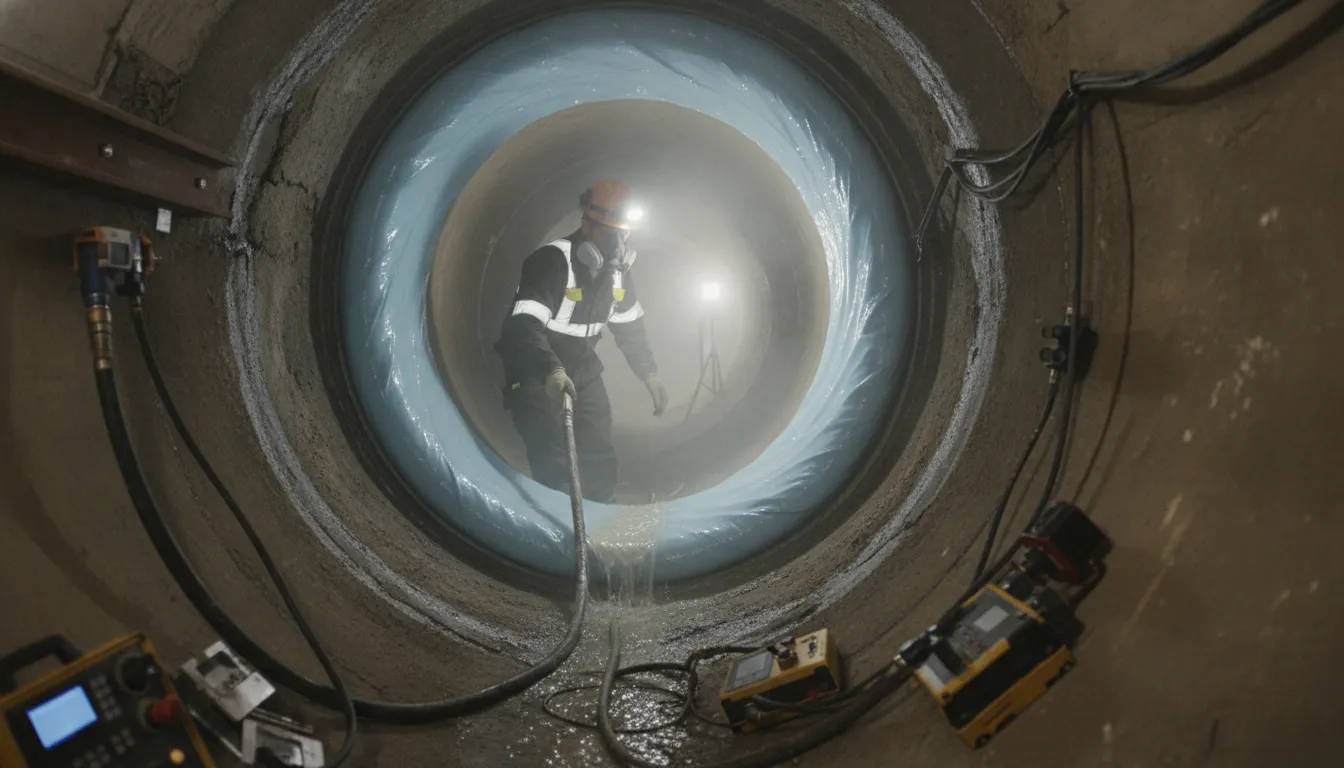
Cured-in-place pipe is the most widely used trenchless technique. A flexible tube saturated with special resin is inserted into the damaged pipe. Once positioned correctly, the resin hardens to form a solid new pipe wall inside the old one. The curing process typically uses steam or hot water, allowing the liner to set in just a few hours.
CIPP is an excellent solution for sewer lateral line problems because it seals cracks and blocks tree root intrusion. According to the Environmental Protection Agency (EPA), this method requires significantly less surface restoration afterward. It also handles pipes with bends or slight offsets that other techniques may struggle to navigate.
Pipe Bursting
Pipe bursting, also called in-line expansion, takes a different approach. Instead of lining the old pipe, a conical bursting head is pulled through it. This head fractures the existing pipe into fragments and pushes them into the surrounding soil. Simultaneously, a brand-new high-density polyethylene (HDPE) pipe is pulled into place behind the head.
This method is ideal when you need a replacement pipe that matches or exceeds the original diameter. Pipe bursting works well for lines that are too damaged to hold a liner. Because it only requires two small access pits, it preserves your yard and hardscaping. The result is a full pipe replacement with the strength of a traditionally installed line.
Sliplining
Sliplining is one of the oldest trenchless repair techniques. It involves inserting a smaller-diameter pipe inside the existing damaged pipe. Once in position, the annular gap between the old and new pipes is filled with grout. This creates a smooth, leak-free channel for wastewater flow.
While sliplining reduces the pipe diameter slightly, it remains a reliable choice for long sections of deteriorated pipe. The new pipe is typically installed as a continuous length, minimizing joint-related leak points. This technique is often faster to mobilize and requires less specialized equipment than other trenchless methods. It is a practical option for extending the service life of aging sewer systems.
How Does Traditional Open-Trench Excavation Work?
Traditional sewer repair relies on open-trench excavation. This method involves digging a continuous trench along the entire length of the damaged pipe to expose and replace it. Unlike trenchless alternatives, it requires unearthing the full pipe run, which is why professionals often call it the “dig-and-replace” approach.
The excavation process
The work begins by locating the exact path of your sewer line. Crews use heavy machinery such as backhoes or mini-excavators to remove soil. They must dig deep enough to fully expose the pipe, which often creates large soil piles in your yard. This method is the only option when the existing line has fully collapsed or shifted out of alignment. Once exposed, plumbers can directly observe sewer lateral line problems that video inspection may not fully reveal.
After the damaged sections are removed, new pipe segments are laid in the trench and joined with couplings. Because the entire line is open, every joint can be inspected for a perfect seal. The pipe bed must be prepared with sand or gravel to prevent future settling and misalignment.
Property disruption and timeline
The most significant drawback of open-trench excavation is the property damage. Large trenches cut through driveways, sidewalks, and landscaping. Heavy equipment can leave ruts and compact soil. While trenchless repairs are often completed in one day, traditional excavation typically takes multiple days. Homeowners should plan for several days of noise, restricted access, and disrupted plumbing.
Site restoration adds further time and cost. After the new pipe is tested, the trench must be backfilled in compacted layers. However, homeowners still need to reseed lawns, repave driveways, and replant gardens. These expenses are important sewer lateral repair cost factors to consider before work begins, as restoration costs are often separate from the plumbing bill.
When traditional excavation is necessary
Despite its drawbacks, open-trench excavation remains essential in certain situations. Pipes with reversed slope or “bellies” cannot be corrected with liners, since the liner follows the existing pipe contour. Excavation allows the crew to regrade the soil for proper drainage. It is also required when pipes are too narrow for lining equipment, when access points are blocked, or when the entire system has collapsed.
- Full pipe collapse where tools cannot pass through.
- Lines with severe sags or improper grading.
- Shallow pipes at risk of surface heave from bursting tools.
- Major joint offsets caused by soil settlement or tree roots.
- Pipes too narrow for liner insertion equipment.
Trenchless vs. Traditional: A Side-by-Side Comparison
When your sewer line fails, understanding the differences between repair methods helps you make an informed decision. Trenchless techniques use small access points to fix pipes from the inside, while traditional excavation requires digging up the entire line. Each approach has distinct advantages depending on your specific situation.
| Factor | Trenchless Repair | Traditional Excavation |
|---|---|---|
| Completion Time | Typically 1 day | 2 to 5 days or more |
| Property Damage | Minimal (2 small access holes) | Extensive (full-length trench) |
| Pipe Durability | 50+ years (CIPP, HDPE) | 50+ years (new PVC or cast iron) |
| Noise Level | Moderate | High (continuous heavy equipment) |
| Surface Restoration | Negligible | Required (sod, paving, planting) |
| Suitable for Collapsed Pipes | Pipe bursting only | Yes |
| Suitable for Bellied Pipes | No | Yes |
Property impact comparison
Traditional excavation can disrupt your entire yard, driveway, and landscaping. Crews must remove large volumes of earth, often destroying gardens and hardscaping that took years to establish. Trenchless methods cause minimal property damage because they only require one or two small access holes. This preserves your landscape and eliminates the cost of post-repair restoration.
The restoration phase significantly affects total project cost. When you choose a trenchless approach, you avoid the expense of new sod, concrete, or plants. The EPA confirms that these techniques require less restoration and cause less soil disturbance. For Inland Empire homeowners with mature trees or custom hardscaping, this benefit is often decisive.
Cost considerations
The true cost of sewer repair extends beyond the plumbing invoice. While trenchless methods may have a higher upfront fee, they eliminate restoration expenses. Factors such as pipe depth, soil conditions, and accessibility also affect the final cost of replacing your main sewer line. A professional video inspection helps determine the most cost-effective approach for your property.
Both methods deliver durable, long-lasting results. Trenchless liners and HDPE replacement pipes are long-lasting and durable, often matching the service life of new traditionally installed pipe. These systems can perform reliably for 50 years or more when installed by qualified professionals.
When Should You Choose Trenchless Sewer Line Repair?
Selecting the right repair method depends on the type and extent of pipe damage. Modern trenchless techniques offer significant advantages for common sewer issues, particularly when preserving landscaping is a priority.
Root intrusion and crack sealing
Tree roots are a leading cause of pipe failure in the Inland Empire. Small cracks allow moisture to escape, attracting roots that eventually grow inside the pipe and block flow. Trenchless techniques such as CIPP lining and pipe bursting seal these entry points or replace the compromised section entirely. These methods work well when the original pipe is structurally sound but needs internal sealing to prevent further root intrusion.
For minor cracks and pinhole leaks from pipe aging, CIPP lining can restore integrity for decades. The smooth inner surface also improves flow and reduces future clog potential. Addressing these problems early can prevent the need for emergency replacing your main sewer line after complete failure.
Landscape preservation
Property preservation is one of the strongest arguments for trenchless repair. Traditional excavation requires a long, deep trench across your land, destroying grass, flower beds, walkways, and driveways. Trenchless repair needs only one or two small access pits. This preserves your yard and eliminates the cost and effort of post-project landscaping restoration.
Choosing a trenchless approach means significantly less mess when the work is complete. The EPA notes that these methods require less surface restoration and cause less ground disturbance than open-trench excavation. For homeowners with mature shade trees, custom patios, or extensive irrigation systems, this advantage is often the deciding factor.
When Does Traditional Excavation Make More Sense?
While trenchless methods offer clear benefits in many cases, they are not suitable for every situation. Some plumbing problems require direct access to the pipe. Traditional excavation remains the appropriate choice when the pipe structure is too compromised for trenchless tool passage.
Complete collapses and joint offsets
A pipe must have an open channel for trenchless equipment to work. If a sewer line has fully collapsed, there is no path for a liner or bursting head. This scenario is common with aging clay or cast iron pipes that have reached the end of their service life. In these cases, excavation is necessary to remove the debris and install a new pipe. This also allows the crew to inspect the surrounding soil for additional issues.
Joint offsets are another limitation for trenchless techniques. Soil settlement can shift pipe joints out of alignment, creating a “stair-step” obstruction that equipment cannot pass. The Environmental Protection Agency recognizes traditional excavation as the standard approach for correcting these structural failures. While more invasive, it provides a reliable long-term solution.
Slope correction and bellied pipes
Gravity drives proper sewer function. Pipes must maintain a consistent downward slope toward the municipal main. When soil erosion causes a pipe to sag or “belly,” wastewater pools in the low section, leading to clogs and backups. Since trenchless liners follow the existing pipe contour, they cannot correct grade issues. Excavation is required to lift and re-support the pipe on a properly graded bed.
Shallow lines and poor soil conditions
Pipe depth also influences method selection. Shallow pipes are at risk of surface heave during pipe bursting, which can crack driveways or patios. In these cases, careful excavation is safer. Unstable soil conditions, such as loose sand or expansive clay, can also complicate trenchless tool performance. Open excavation allows the crew to stabilize the soil and ensure proper pipe bedding.
Sewer Line Repair in the Inland Empire: Local Considerations
Homeowners across Riverside and San Bernardino County face unique challenges with aging plumbing infrastructure. Many homes in the Inland Empire were built with clay or cast iron pipes that are now reaching the end of their design life. Understanding local conditions helps residents make informed repair decisions.
The Services page on the Diamond House Plumbing website provides detailed information about sewer repair options available throughout the region.
Who owns the sewer lateral?
Most property owners are surprised to learn they own the pipe connecting their home to the municipal sewer main. This section, called a sewer lateral, is the homeowner’s responsibility. When a leak or blockage occurs in this segment, the property owner bears the repair cost. Regular maintenance is essential to protecting the public wastewater system and preventing neighborhood-scale sanitation issues.
Regional pipe challenges
Inland Empire cities such as Riverside, San Bernardino, Fontana, and Redlands have large neighborhoods with pipes installed in the 1960s and 1970s. These older systems are prone to root intrusion, cracking, and joint deterioration. The region’s clay soils also contribute to pipe shifting during dry-wet cycles. Homeowners in areas like Moreno Valley, Corona, and Rancho Cucamonga should consider video inspections every 2 to 3 years to catch problems before they become emergencies.
Permitting and local codes
Both trenchless and traditional sewer repairs typically require permits from local municipal agencies. Cities such as Riverside and San Bernardino County have specific requirements for trench restoration, traffic control, and pipe material specifications. A licensed plumbing contractor familiar with local codes ensures the work passes inspection. City-specific requirements vary, so working with a local company that understands each jurisdiction’s process is important.
How to Choose the Right Sewer Repair Method
Deciding between trenchless and traditional repair requires evaluating several factors unique to your property. A professional assessment provides the clarity needed to make the right choice.
- Pipe condition , Fully collapsed or bellied pipes require excavation. Cracked but structurally sound pipes are candidates for trenchless lining.
- Property layout , Lines running under driveways, patios, or mature landscaping favor trenchless methods to avoid expensive restoration.
- Soil and depth , Shallow pipes or unstable soil may make excavation the safer option.
- Budget , Consider the total cost, including restoration. Trenchless may cost more upfront but eliminates landscaping repair expenses.
- Timeline , Trenchless repairs are typically faster, often completed in a single day versus multiple days for excavation.
Frequently Asked Questions
How long does trenchless sewer line repair last?
Cured-in-place pipe liners and HDPE replacement pipes installed via trenchless methods typically last 50 years or more. The lifespan depends on pipe material quality, installation precision, soil conditions, and how well the system is maintained.
Is trenchless sewer line repair more expensive than traditional digging?
The upfront cost of trenchless repair can be higher than traditional excavation. However, when you factor in surface restoration expenses for traditional digging, the total project cost is often comparable or even lower for trenchless methods. A video inspection helps provide an accurate comparison.
Can trenchless repair fix a fully collapsed sewer pipe?
Pipe bursting can replace a collapsed pipe without full trenching, but only if the collapse is not completely blocking the pipe path. For pipes with total blockage or severe shifting, traditional excavation remains the required approach.
Will trenchless sewer repair work under my driveway or house?
Yes, trenchless techniques are especially effective for pipes running under driveways, patios, porches, and even structures. The repair is performed through small access points at each end of the pipe section, avoiding the need to cut through concrete or foundations.
Ready to Fix Your Sewer Line?
A failing sewer line does not have to mean losing your yard. Understanding the strengths of each repair method helps you make an informed choice that protects your property and your budget. Whether trenchless lining or traditional excavation is right for your situation, working with an experienced local plumbing team ensures the job is done correctly the first time.
Contact Diamond House Plumbing today to schedule a sewer camera inspection and receive a personalized repair recommendation for your Inland Empire home.
Request your sewer line inspection now and get expert guidance on the most cost-effective repair approach for your property.

Leave a Reply