
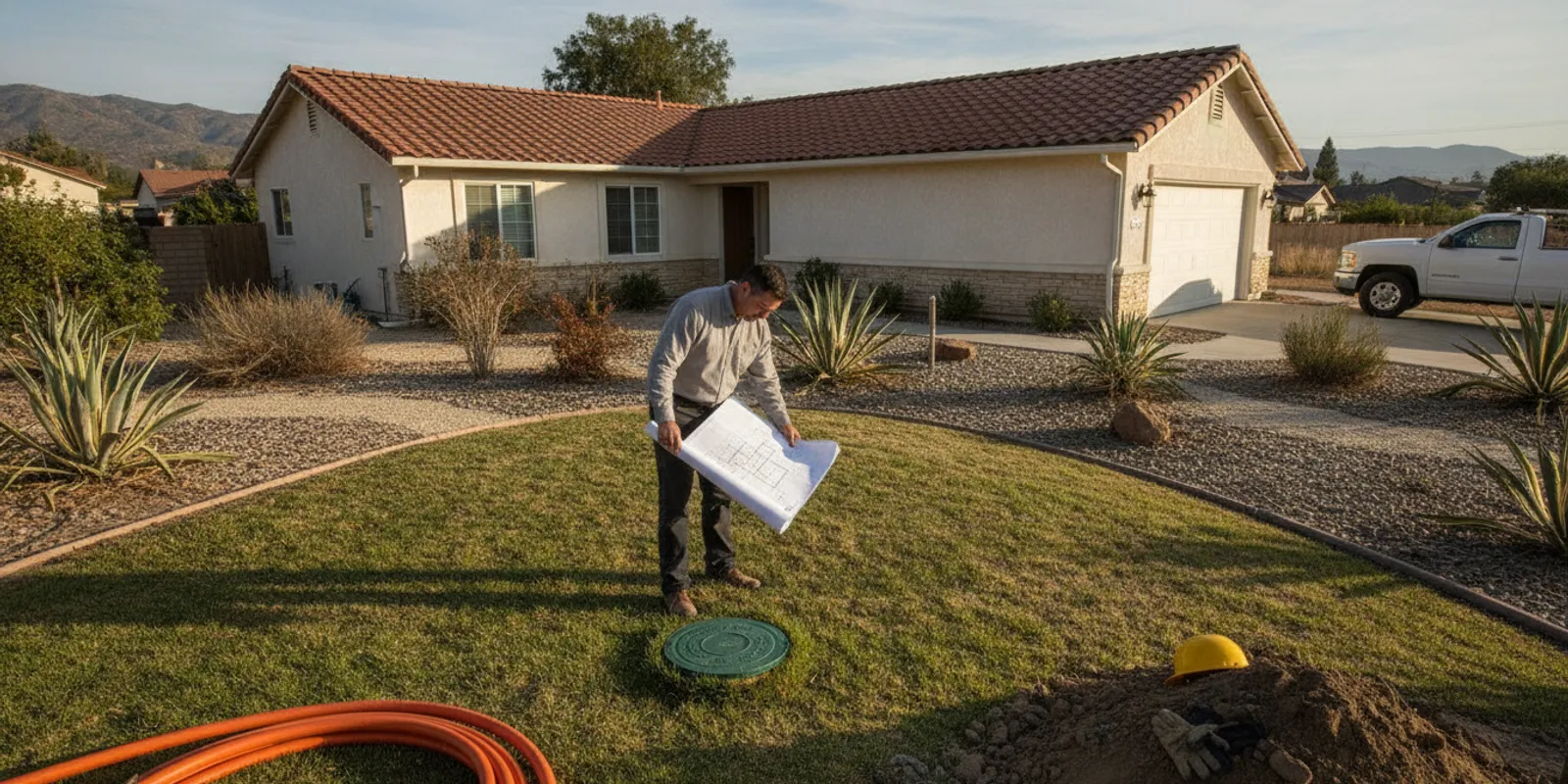
Septic to sewer conversion requirements California property owners need to follow are not set by one universal statewide checklist. The sewer provider, county health department, city, and site conditions can each affect the approvals and work involved. Before scheduling construction, confirm which agencies have authority over your parcel and what they require.
Discuss your property’s conversion project
Why do California conversion requirements vary?
Connecting a property to a public sewer is not only a plumbing job. It can involve a new service connection, work in a public right-of-way, changes to onsite wastewater equipment, and a final inspection or record update. Different agencies may oversee different parts of the project.
For example, a city or sewer district may control connection eligibility, fees, connection specifications, and inspection of work on its system. A county environmental health department may oversee the existing onsite wastewater system, including how it must be taken out of service. A city building department may require permits for plumbing or excavation. If work reaches a public street, a separate encroachment or right-of-way approval may apply.
The parcel’s location determines which agencies apply. A property in an incorporated city may follow a different process from one in an unincorporated area. Even nearby parcels can be served by different sewer providers. Do not assume a neighbor’s approval, contractor’s prior project, or general online checklist establishes the requirements for your address.
What should you confirm before planning the work?
Start with the property address and parcel information. Ask the local sewer provider whether the parcel is eligible to connect, where the connection point is, and whether the public sewer has capacity and is available at the property frontage. Ask whether the provider requires an application, a connection permit, a specified contractor, or an inspection before the line is covered.
Then contact the local environmental health authority and ask what it requires for the existing septic system. A conversion may require documentation that the old system has been properly disconnected, pumped, removed, filled, or otherwise addressed. The approved method can depend on the system design and local rules. Do not choose a closure method before receiving directions from the agency responsible for onsite wastewater systems.
Confirm the city or county building permit requirements as well. Find out whether separate permits are needed for building plumbing, trenching, or work in a street or sidewalk. If the parcel has an easement, shared driveway, private road, or unusual site constraints, ask whether another owner or authority must approve the route.
Use a current septic system inspection overview to organize questions about the existing system, but treat the responsible agency’s directions as controlling for a specific parcel.
When contacting an office, record the date, department, and instructions received. Ask where to find the current application and whether the office can provide its directions in writing. Note whether its answer concerns connection eligibility, construction standards, the former septic system, or another part of the project. These may be separate questions handled by different departments. If you receive conflicting directions, explain what the other office said and ask which agency has authority over that item. Keep applications and written responses together so the contractor can plan using the same information you received.
What information should you gather for the first calls?
Have the service address and parcel number available, along with any septic-system inspection reports, permits, site plans, or prior repair records you can find. If you have received a sewer-connection notice or letter, keep it nearby and note its date and issuing agency. You do not need to guess at missing technical details; tell the office what documents you have and ask what it needs to determine eligibility.
Prepare a short set of separate questions rather than asking generally, “What are the rules?” For example: Is a public sewer connection available for this parcel? Which application begins the review? Who approves the route and the connection? What must happen to the existing tank and disposal area? Which inspections must occur before backfilling? This makes it easier to identify the right department and record a useful answer. If an office cannot answer a question, ask which agency or division handles it.
Which agencies may be involved?
| Party or authority | What to ask | What to keep |
|---|---|---|
| City or sewer district | Is public sewer service available? What application, connection standards, fees, and inspections apply? | Eligibility confirmation, approved plans, permit, inspection sign-off, and account or connection records |
| County environmental health | How must the existing septic tank and disposal components be handled and documented? | Written closure directions, required inspection records, and any completion confirmation |
| City or county building department | Which plumbing, excavation, or construction permits and inspections are required? | Issued permits, approved plans, and final inspection records |
| Public works or road authority | Does excavation or connection work affect a street, sidewalk, or right-of-way? | Right-of-way approval, traffic or restoration conditions, and closeout records |
| Property owner and contractor | Who is responsible for applications, coordination, restoration, and arranging inspections? | Written scope, approvals, inspection dates, and project completion documents |
This table is a planning guide, not a list of approvals that every California parcel needs. Some agencies combine responsibilities; others require separate applications. Ask each relevant office to confirm its role for your address.
What does the conversion process usually involve?
The sequence should be confirmed with the agencies and contractor before work begins. A typical project moves through these stages:
- Verify sewer availability. Obtain confirmation from the sewer provider that the property can connect and identify the authorized point of connection. Clarify any capacity, route, or application conditions.
- Request the applicable requirements. Contact the sewer provider, environmental health authority, and building department. Ask for current instructions in writing, including submittal documents, inspections, and the required approach to the old septic system.
- Assess the site and plan the route. A qualified plumbing professional can review access, existing plumbing, the proposed connection path, and potential conflicts. Soil, grade, paving, utilities, and distance to the approved tie-in can affect the scope. If an onsite system assessment is needed, see the company’s septic planning and perc-test information; a perc test does not replace sewer-provider approval or a required permit.
- Submit plans and secure approvals. Apply for the permits and connection authorization that the agencies identify. Do not rely on a verbal estimate as permission to excavate or connect.
- Complete authorized installation and connection work. The contractor performs the approved work, coordinates required inspections, and follows conditions for trenching, connection, and surface restoration. Keep the connection exposed until the responsible inspector approves covering it, if that is required.
- Address the existing septic system. Follow the environmental health authority’s specified process for the tank and any leach lines, seepage pit, or other disposal components. Requirements may distinguish pumping, disconnection, removal, and closure; one action should not be presumed to satisfy all of them.
- Pass final inspections and retain records. Obtain the closeout documentation required by the sewer provider and permitting agencies. Keep approvals, inspection results, invoices, and a record of the connection route with the property documents.
Before approving a proposal, compare its scope against the permits and written agency requirements. A clear proposal should identify which work is included, which approvals remain pending, who will arrange inspections, and what conditions could change the schedule or scope.
How can you keep the stages coordinated?
Make a simple project file with a copy of each application, approved drawing, permit, inspection request, and agency response. Use one current version of the approved route when discussing the work with each party. If a plan changes after review—for example, the route shifts to avoid an obstruction—ask whether the change needs updated approval before installation continues.
Before excavation, confirm how utility locations will be identified and who is arranging any required marking or clearance. Ask the contractor which inspection must happen before a trench is backfilled and how much notice is needed to schedule it. If work is divided among multiple parties, identify who will make the connection, who will restore disturbed areas, and who will send completion records to the agencies. These handoffs are easy to overlook when each approval is handled separately.
What happens to the existing septic system?
When a home switches to public sewer, its old onsite system generally cannot simply be left connected to household plumbing. The agency responsible for the system determines how it must be disconnected and what, if anything, must be removed or filled. A septic tank, distribution components, and disposal area may have different handling instructions.
Ask whether the tank must be pumped by an authorized provider, whether an inspection is needed before closure, and what proof must be submitted afterward. Ask separately about the leach field or seepage pit; the tank’s closure does not necessarily address every component. If the required work includes removal, a septic tank removal guide can help you understand the type of work to discuss, but it is not a substitute for site-specific agency direction.
Keep receipts and any inspection or closure records. They can help document that the former system was handled as directed. If a property is being sold or remodeled, ask the relevant agency and transaction professionals which records are required for that separate process.
Why should the tank and disposal area be discussed separately?
The tank is only one part of an onsite wastewater system. A property may also have distribution piping, a leach field, a seepage pit, or other components, and their location or condition may not be obvious from a brief visual review. Ask the agency to clarify which components its closure instructions cover and whether it expects separate verification for any of them.
Do not assume that pumping alone means the system has been formally closed, or that removing a tank resolves every requirement for the disposal area. Keep the written direction, service receipt, inspection result, and any completion confirmation together. If older records use different names for the system components, share those records with the agency and ask it to confirm what the terms mean for the parcel.
How do Riverside and San Bernardino County owners find the right rules?
There is no basis in the information available here to treat Riverside County and San Bernardino County as having one identical conversion checklist. Owners should identify the exact local sewer provider and environmental health authority serving the parcel, then request their current requirements directly. Within either county, a city sewer district, unincorporated area, or special service boundary may affect who handles a particular approval.
Make a short call list from your parcel location. Ask the sewer provider for its connection application and specifications. Ask the county or city environmental health office how it handles septic-system closure after sewer connection. Ask the building department what permits apply to plumbing and excavation. If work may enter a public street, ask the road authority about right-of-way approval and restoration.
For context only, Imperial County publishes a policy concerning evaluation and certification of existing septic systems. That is a county-specific example, not a rule for Riverside or San Bernardino County, and it illustrates why owners should request the guidance that applies to their own jurisdiction: Imperial County existing-system evaluation and certification policy.
Diamond House Plumbing provides septic services in the Inland Empire. For questions about the plumbing scope, you can also review the company’s sewer lateral replacement information; agency approval and connection eligibility must still be confirmed for your parcel.
What can affect the project scope and schedule?
Connection distance and route can affect excavation and restoration. Paving, hardscape, landscaping, access limits, utilities, elevation changes, and the location of the approved connection point may add work. A public-right-of-way crossing or shared access route can involve additional coordination. Existing plumbing layout and the condition of the onsite system also matter.
Agency review and inspection timing are separate from construction time. Applications may need corrections or additional documents, and an inspection may need to occur before the trench is covered. Ask the provider and contractor what decisions must be made before a start date can be set. Avoid treating a preliminary estimate or target date as final until required approvals are in hand.
Costs should be discussed as a project-specific scope, not as a single statewide conversion price. Ask for separate line items where practical for permits or connection charges, excavation and plumbing, restoration, septic pumping or closure, and inspection-related work. The responsible agency sets its own charges; the contractor can explain the work included in its proposal.
How do common site conditions change the planning questions?
A short, accessible route across an open yard raises different planning questions from a connection that crosses a driveway or public sidewalk. In the first case, ask how the trench will be located and what landscaping restoration is included. For a paved route, ask who approves cutting and restoring the surface, what standards apply, and whether traffic or access needs to be managed. These are questions to resolve in the scope, not assumptions about the final price.
Shared driveways, easements, and private roads can add coordination with other owners or an association. A difficult slope, limited equipment access, or an existing utility near the planned route may prompt a revised design or additional review. If the site plan changes in response to a field condition, confirm that the revised route still matches the approvals before work proceeds. Ask the contractor to identify assumptions and exclusions in writing so you can distinguish known work from items that depend on inspection or agency direction.
What questions should you ask before signing?
- Has the sewer provider confirmed that this parcel is eligible to connect, and where is the approved tie-in?
- Which permits and inspections apply, and who will obtain and schedule them?
- What written instructions govern disconnection and closure of the septic tank and disposal components?
- Does the proposal include restoration of pavement, landscaping, or other disturbed areas?
- What work is excluded, and what site conditions could change the scope?
- What records will be provided after final inspection and septic closure?
A project proposal should make these responsibilities understandable. If the requirements are unclear, pause to obtain written guidance from the agency with authority rather than guessing about a permit, connection standard, or closure method.
Frequently asked questions
Does California have one statewide septic-to-sewer permit?
Do not assume there is one permit that covers the entire project. The sewer provider, local building department, environmental health authority, and road authority may have separate roles. Ask which permits apply to your address and whether one application coordinates any of them.
Can I start construction while applications are under review?
Do not begin excavation or make a connection based only on an estimate or pending application. Confirm which approvals must be issued first and whether the provider or permitting agency must inspect the work before it is covered. Your contractor can help coordinate the work, but the agency with authority determines its approval conditions.
Is an old septic tank always removed?
Not necessarily. The agency responsible for onsite wastewater determines how the tank and other components must be addressed. Depending on the site and local direction, the process may involve pumping, disconnection, removal, filling, or another approved method. Get the instructions for the specific property before deciding.
Should I rely on a nearby property owner’s experience?
A neighbor’s project can suggest useful questions, but it does not confirm your parcel’s eligibility, provider, permit requirements, or septic closure method. Service boundaries, site conditions, and agency procedures can differ. Use the address and parcel information to request current directions from the offices responsible for your property.
Plan the next step
Gather your property address, parcel number if available, existing septic records, and any notice or sewer availability letter. Contact the local sewer provider and environmental health authority first, then share their written instructions with a qualified contractor. This helps keep the proposed work aligned with the approvals that apply to the property.
Contact Diamond House Plumbing about your project
Because conversion rules depend on the parcel and local agencies, confirm every approval and septic-closure instruction before work begins, and retain the final records with your property documents.

Leave a Reply