
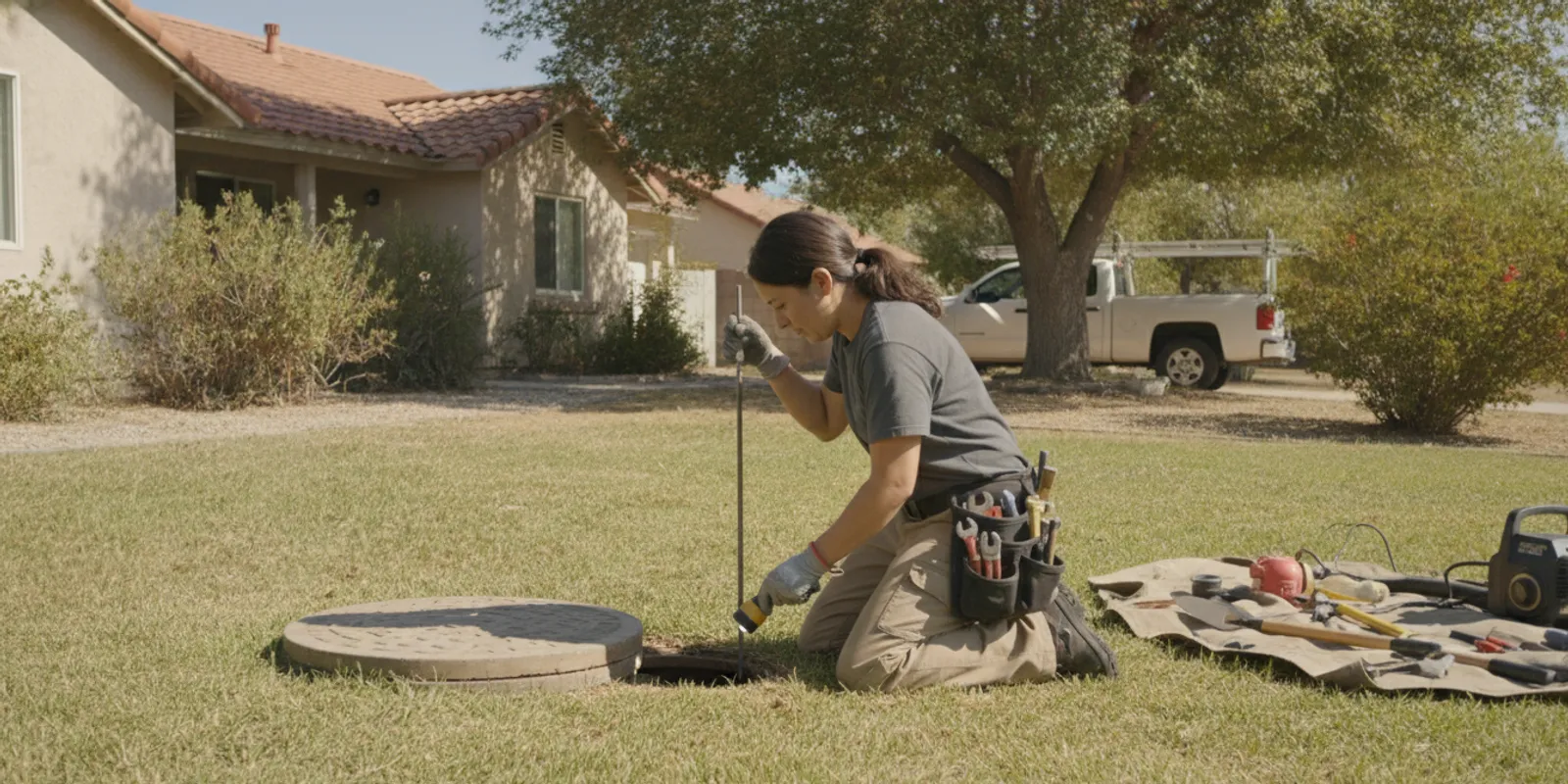
When a septic system fails, the need may feel urgent, but emergency septic tank installation is not always the first or only solution. A prompt evaluation can distinguish a blocked line or failed component from a damaged tank or system that cannot safely handle wastewater. For property owners in Riverside and San Bernardino Counties, the useful first question is not simply how fast a tank can be installed. It is what has failed, what must be done now to reduce risk, and what steps are required for a lasting repair.
What counts as a septic emergency?
A condition deserves prompt attention when wastewater backs up into the building, surfaces in the yard, or creates a health or property concern. Several slow drains, strong sewage odors, unusually wet ground near the system, or an alarm on a pump system can also indicate a serious issue. None of these signs proves that the tank itself needs replacement. They are reasons to arrange an assessment and describe the symptoms clearly.
If drains are backing up, reduce water use where possible. Keep people and pets away from sewage, saturated ground, and open access points. Do not open a tank or enter a confined space; septic gases can be dangerous. If wastewater is inside, avoid contact and tell the service provider which fixtures are affected, when the issue began, and whether it is getting worse.
For a business, note whether restrooms, food-preparation areas, or other essential operations are affected. Do not assume a temporary workaround is safe for customers or staff. Communicate the situation to the responding professional and follow any safety instructions while a plan is made.
Does a septic failure mean you need a new tank?
No. Similar symptoms can come from different parts of the system. A blockage in a building sewer or septic line, a damaged baffle, a pump or float issue, a full tank, or a failing dispersal area can produce overlapping signs. Odor or backup alone cannot show which component failed. A replacement decision should follow inspection and diagnosis rather than a guess based on one symptom.
The appropriate work may range from clearing a line or repairing a component to replacing a tank or planning a broader system installation. A professional should consider the layout, accessible components, observed condition, and whether the rest of the system can function. Ask what evidence supports the recommendation and whether a limited repair could safely address the immediate problem.
It helps to separate the urgent symptom from the permanent solution. For example, a backup may require immediate steps to limit exposure, while the cause still needs investigation. A temporary measure may reduce a near-term risk without restoring normal system function. Ask what it resolves, what it does not resolve, and what follow-up decision is needed.
What should you do while waiting for help?
- Reduce wastewater use. Pause laundry, dishwashing, long showers, and other nonessential water use. This limits additional flow into a stressed system while the cause is unknown.
- Keep the area clear. Keep children and pets away from pooling wastewater and exposed components. Do not drive over a suspected tank or dispersal area, and do not dig to locate a buried component.
- Record the symptoms. Note which fixtures are affected, whether the problem is indoors or outdoors, any alarm indicators, and recent changes such as unusual water use or heavy rain. A simple timeline can help distinguish a sudden event from a developing problem.
- Gather useful records. Find prior inspection or repair notes, a site plan, and permit documents if readily available. Do not delay an urgent call while searching for paperwork.
- Explain access conditions. Mention gates, landscaping, hardscape, vehicle access, nearby utilities if known, and business hours that may affect inspection or work.
- Share the immediate risk. Say plainly if sewage is entering the building, surfacing outdoors, or affecting an operating business. This is more useful than describing the issue only as a bad smell.
For a suspected line issue, review the overview of septic services and the guide to main sewer line symptoms and inspection. If a pump alarm is involved, the septic tank alarm guide explains why an alarm warrants assessment. These resources can help frame questions, but they do not replace an on-site diagnosis.
How is emergency septic tank installation assessed?
Urgent work generally begins with understanding the immediate risk, then identifying the work that is appropriate. The exact sequence depends on the property and system. A useful assessment may include several parts:
- Symptom review: The technician asks when the problem began, which fixtures are affected, whether alarms are active, and whether wastewater is visible.
- System identification: Records and visible components can help establish tank type, access points, and general layout. If records are missing, the professional may need to clarify what can be confirmed safely.
- Condition checks: Relevant accessible components are evaluated for signs that distinguish a localized repair from a larger failure. A finding in one area does not automatically establish the condition of every other part.
- Site and access review: Space, surfaces, utilities, and equipment access can affect a safe work plan. Existing landscaping or paving may also need to be considered when describing the scope.
- Scope and next steps: The provider explains the recommended response, what remains uncertain, and whether additional evaluation or agency approval may be needed.
Installation may involve excavation and coordination beyond the tank itself. The tank, connecting pipes, access, and wastewater dispersal area must work together. A new tank alone will not solve a problem caused elsewhere, so ask how the proposed scope addresses the suspected failure mechanism. If the diagnosis is preliminary, ask what additional observation would confirm it before permanent work proceeds.
A practical way to understand the assessment is to ask for a sequence: what will be inspected first, what finding would support repair, what finding would support replacement, and when the owner must make a decision. This helps prevent an urgent conversation from becoming a vague commitment to work whose boundaries are unclear.
Repair, replacement, or new installation: how do the options compare?
| Option | When it may be considered | What to clarify |
|---|---|---|
| Targeted repair | A specific component or line issue appears to be the source, and the rest of the system may remain serviceable. | Which part failed, what supports the diagnosis, and whether follow-up inspection is advised. |
| Tank replacement | The tank is damaged or unsuitable for continued service, while other system elements may be usable. | Whether connecting lines and the dispersal area were assessed, and what restoration is included. |
| Broader system installation | Evidence indicates the existing system cannot be restored with limited repair or tank-only work. | Site and design requirements, agency approvals, work boundaries, access, and the expected sequence. |
| Temporary risk reduction | Immediate conditions need attention while a lasting scope is evaluated or authorized. | What the measure does and does not resolve, and what must happen next. |
This comparison is a discussion guide, not a diagnosis. The right option depends on observed conditions and applicable local requirements. Do not approve replacement based only on a general estimate that does not explain what is failing. Ask the provider to identify which system elements are included, which are excluded, and how the recommendation relates to the symptoms you reported.
What can affect the timing and scope?
Emergency work is shaped by more than the tank. Site access, soil and groundwater conditions, the existing system configuration, excavation needs, and utility locations can affect the plan. The time needed to reduce an immediate risk is different from the time needed to complete a permanent installation. A contractor should explain these as separate stages rather than imply that a quick response means a complete replacement can also be finished immediately.
Permits, inspections, and approvals may be required depending on the work and jurisdiction. The available government reference, Septic Installation Basics, describes installation considerations under Cascade County, Montana standards; it is not local guidance for California. For an Inland Empire property, ask which county or local agency applies and request confirmation of requirements for the address and scope before work begins. Do not treat a guide from another state as a substitute for local direction.
Commercial properties may also need to manage occupancy, staff, customers, and wastewater use during work. Explain operating constraints early so the contractor can discuss access and sequencing. A residential owner may have different priorities, such as protecting finished yard areas or coordinating household use. The plumbing services overview provides a route to discuss residential or commercial plumbing needs.
What can affect septic tank installation cost?
An estimate for emergency septic tank installation is based on the property and the complete work scope, not the tank alone. Before approving a proposal, ask the provider to explain which of these items were reviewed and which are still assumptions:
- Site evaluation: What condition was observed, and what inspection or design work is needed to confirm whether installation is necessary?
- Tank and seepage-pit scope: Does the proposal cover the tank, seepage pit or other dispersal components, connecting lines, access risers, and required connections? A tank-only allowance may not describe the full system.
- Access: Will gates, landscaping, paving, structures, slopes, or limited equipment access affect the work plan?
- Approvals: Which permits, inspections, or local agency requirements may apply, and who will confirm them for this address?
- Excavation and site conditions: How could soil, groundwater, buried utilities, removal of existing components, or difficult excavation affect the scope?
- Restoration: Does the proposal include backfill and restoration of disturbed soil, paving, landscaping, or other surfaces, or are those items separate?
Ask for an estimate that separates confirmed work, allowances, exclusions, and possible additional work. If the system is failing, describe the symptoms, property access, and any wastewater exposure when you request septic service. Diamond House Plumbing can use that information to discuss the next assessment step; an on-site evaluation is needed before a final installation scope is confirmed.
How can you compare a repair plan with a replacement proposal?
When the emergency has been stabilized enough to consider options, compare the proposals by scope rather than by the headline description. One proposal may cover only an immediate repair; another may include investigation, removal, replacement, and restoration. A clear comparison starts with the same questions for each provider.
- Diagnosis: What condition was observed? Which facts are confirmed, and what still needs investigation?
- Included components: Does the work cover only the tank, or also relevant connections, access, and other affected system elements?
- Exclusions: Are excavation, surface restoration, additional discoveries, or agency steps outside the stated scope?
- Approvals: Which permits or inspections may apply, who is responsible for confirming them, and what must be cleared before permanent work?
- Sequence: What happens first, what decision is required from the owner, and what conditions could change the plan?
- Interim instructions: What should occupants avoid or reduce until the system is operating as intended?
For example, suppose one bathroom is affected while other fixtures drain normally. That pattern alone does not establish that the septic tank has failed. It is a reason to report the specific fixture and ask how the provider will distinguish a localized drain or line problem from a system-wide issue. If several fixtures are affected and wastewater is surfacing outside, report both observations and ask what immediate safety steps are appropriate while the full scope is determined.
These examples are not diagnostic rules. Their purpose is to show why detailed observations matter: the same general phrase, “septic emergency,” can describe very different conditions. A provider’s explanation should connect the reported signs to the planned inspection and work, not skip directly from a symptom to a predetermined replacement.
What should you ask before approving urgent work?
- What condition did you find, and what evidence points to that cause?
- Is the recommendation a temporary response, a repair, tank replacement, or complete system installation?
- Which system components are included, and which fall outside the proposed scope?
- What inspections, permits, or agency decisions may apply to this address?
- What site or access conditions could change the work plan?
- What should we stop using or avoid until the system is working?
- What is the next decision point if excavation or inspection reveals a different condition?
A written scope helps you compare proposals. It should identify the diagnosed issue, work included, assumptions, approvals that remain pending, and exclusions. Ask how changes will be discussed if further inspection reveals a condition different from what was first observed. For a commercial property, ask how access and facility use will be coordinated; for a home, clarify how occupants should manage water use during each stage.
How can Inland Empire owners prepare for a septic service call?
Share the property address, whether it is in Riverside or San Bernardino County, the symptoms, and the best contact person. Mention whether wastewater is actively backing up or surfacing, as that helps communicate urgency. If available, provide system records or a prior site sketch, but avoid guessing at the tank location or digging to find it.
Before the visit, make a short list of affected fixtures and recent changes. Note whether the problem began suddenly, whether an alarm is present, and whether any recent work or unusual water use preceded it. If a gate needs a code or a vehicle must be moved to provide access, arrange that in advance when possible. These details can save time without substituting for the technician’s evaluation.
Diamond House Plumbing serves property owners across the Inland Empire and provides septic system and sewer lateral services. To discuss an urgent concern, contact the service team and describe what is happening. The septic-to-sewer conversion guide is relevant to longer-term property planning when a conversion is under consideration, rather than as a substitute for responding to an immediate failure.
Frequently asked questions
Can a septic tank be installed immediately during an emergency?
Not necessarily. A prompt response may be possible, but permanent installation can depend on diagnosis, site conditions, design, access, and required approvals. Ask what can be addressed immediately and what steps are necessary before permanent work.
Should I keep using water if the septic system is backing up?
Reduce water use and stop nonessential use while arranging help. If wastewater is entering the building, avoid contact and tell the provider which fixtures are involved.
Does a septic odor prove the tank has failed?
No. Odor can have several causes and does not identify a failed tank by itself. An assessment is needed to locate the source and recommend an appropriate response.
Who determines local installation requirements?
The applicable county or local authority determines requirements for a specific property and scope. Ask which agency applies and verify permit or inspection steps with that agency.
Talk with Diamond House Plumbing about your septic concern
When a septic system problem is urgent, limiting water use, keeping people away from wastewater, and getting a clear diagnosis are sensible first steps. Confirm the proposed scope and local approval requirements before permanent installation work proceeds.

Leave a Reply