
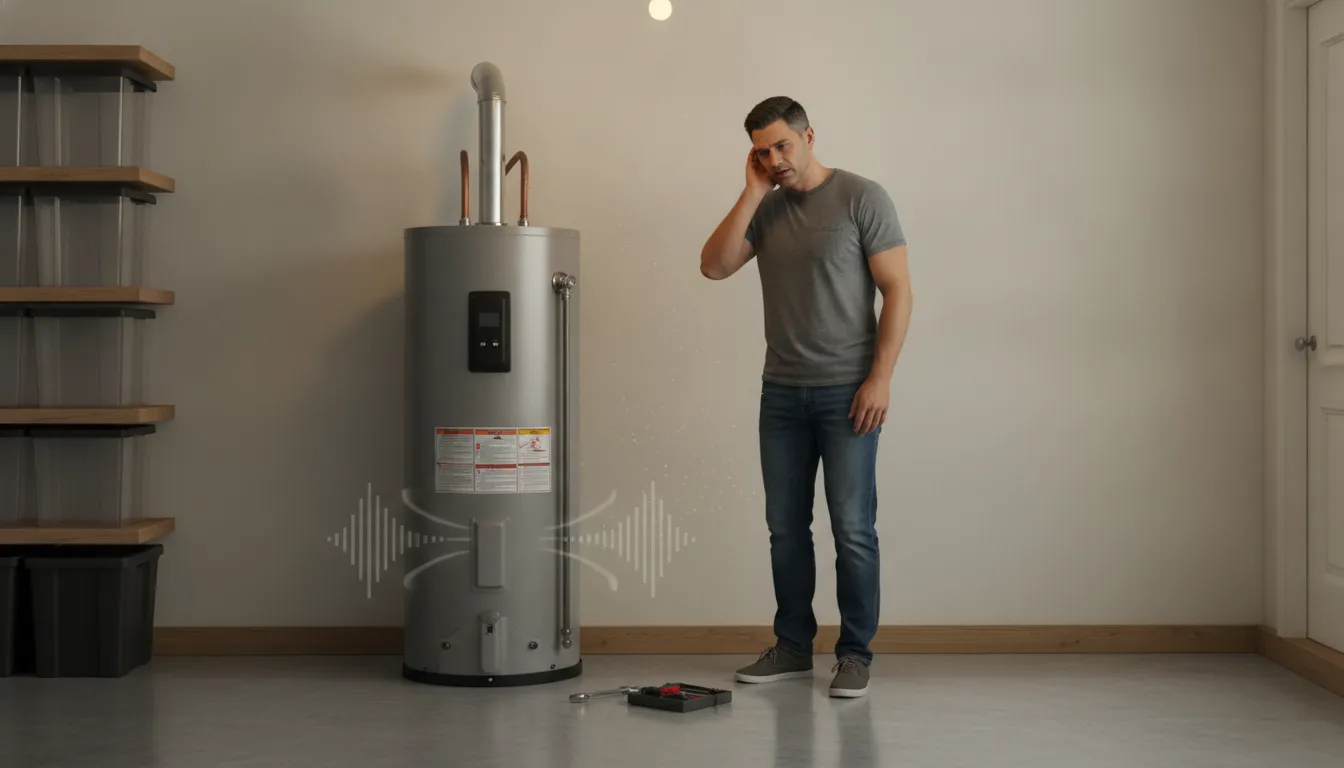
A loud popping or crackling sound from your utility closet is not a normal plumbing noise. This sudden sound usually means mineral scale has trapped boiling steam at the bottom of your tank.
A water heater making noise is typically a sign of sediment buildup, where thick mineral scale at the bottom of the tank traps boiling steam. While popping or rumbling points to heavy mineral buildup, other noises like sizzling or hissing often signal an active water leak. You might also hear loud banging from water hammer pressure issues, or high-pitched whistling from a failing temperature relief valve. According to the A. O. Smith Troubleshooting Guide, catching these mechanical symptoms early can save you time and money. This practice helps you resolve minor faults before they cause total system failures. Identifying the precise sound helps you protect your plumbing system and decide when to schedule professional repair service.
How do you know which sounds need quick action and which ones can wait? You can find out by looking at the common noise types below. Understanding the cause behind each specific sound is the first step toward keeping your water heater running smoothly and your home safe.
Water Heater Making Noise: Common Water Heater Noises and What They Mean
Is your water heater making noise when you take a shower? You might ignore a quiet tank. But a loud sound is a clear warning that something is wrong.
These noises point to unique issues inside your water heating system. They can start as small hums and grow into loud banging. Knowing these sounds helps you find minor faults before they get worse and cost more to repair. Here is what your tank is trying to tell you when it starts to make noise.
Popping and rumbling noises
If you hear popping sounds from your tank, you are not alone. It is a very common issue in homes with hard water. This noise happens when mineral scale coats the bottom of your tank over time.
According to an Ao Smith water heater guide, sediment buildup is the main cause of popping and rumbling noises. Minerals like calcium form a thick, hard crust over the gas burner or heating element. This crust traps pockets of water below.
As the water heats up, it boils and turns to steam. These steam bubbles then burst through the mineral crust and make loud pops. If you hear a deep rumbling instead of a pop, the sediment layer has grown very thick. Your tank is working much harder to heat the water.
Hissing and clanking issues
Do you hear a hissing or sizzling sound from your unit? This is one more warning sign to watch for. According to a US Craftmaster water heater manual, hissing or sizzling can mean a leak or water dripping on a hot heating element or burner.
In electric systems, the sound can mean a heating element is starting to burn out. If water drips on the hot gas burner, it boils off fast and sizzles like a hot pan. You should check around the base of the tank for wet spots or pooling water.
Meanwhile, rattling or clanking sounds often mean a metal part is loose. The same guide notes that loose parts inside the unit can rattle or clank during work. A loose pipe or burner shield could be the cause of this sound. These parts may need a quick tighten to stop the noise.
Banging and whistling problems
A loud bang from your pipes is hard to miss. It is a sudden shock that can shake your walls. This sharp banging, known as water hammer, is caused by pressure shifts in your plumbing. It happens when valves close too fast and the fast-flowing water slams into the pipe walls.
A small device can help absorb this shock and protect your pipes. Last, high-pitched whistling sounds are a clear sign of trouble. According to the US Craftmaster guide, whistling can mean an issue with the temperature and pressure relief valve.
It can also show a blocked water flow. This blocked flow often comes from a mineral buildup in water heater pipes or valves. If you hear this high-pitched sound, do not ignore it. A blocked valve can cause pressure to build up to unsafe levels.
Why Is Your Water Heater Making Popping or Rumbling Noises?
If you hear strange noises from your utility closet, you might have a water heater making noise. It is common to hear popping sounds from your tank when the unit runs. These noises can sound like boiling water or loud crackling. In most cases, sediment buildup is the cause of these popping and rumbling sounds.
Sediment and hard water buildup
According to expert guides, sediment buildup at the bottom of a water heater tank is the main cause of popping and rumbling noises. This issue is common in gas water heaters because the burner sits directly below the tank floor. In the Inland Empire, our hard water contains high levels of minerals like calcium and magnesium. These minerals settle out of the water as it heats and form a thick layer of scale at the bottom of your tank.
As this mineral scale grows, it creates a hard crust that blocks heat, so your water heater must run longer. Over time, this constant heat stresses the metal tank, which can weaken the steel and lead to leaks. When your system works harder, it also uses more energy and raises your utility bills.
The steam bubble effect
How does sediment make so much noise? The mineral scale acts like a thick blanket that blocks heat from reaching the water quickly. This causes water under the sediment to boil, creating small steam bubbles that pop as they rise. If you hear a loud popping noise when the burner turns on, you have a clear sign of sediment buildup.
You can think of this sound like water boiling in a pot on your stove. In a water heater, steam bubbles are trapped under a heavy layer of mineral scale and sand. When they finally burst through the sediment, they make a sharp popping sound that you can hear through walls.
Steps to check the noise
You do not have to guess what is going on with your system. You can follow a few simple steps to find out why your water heater is making noise. Checking these factors will help you understand the health of your unit before you call for service.
- Listen to when the noises happen. If you hear loud popping right when the heat turns on, it is a sign of heavy sediment buildup.
- Check how old your unit is. Systems in our region more than eight to ten years old often have thick scale that is hard to clear.
- Try to flush your tank. You should flush your tank at least once a year to clear out the mineral scale. This stops these noises before they ruin your tank.
- Call a plumber if the noise remains. If you flush the tank but the loud sounds do not stop, you need an expert to check the system.
What Causes a Hissing or Sizzling Water Heater?
If you hear your water heater making noise, a high-pitched hiss or sizzle is a clear warning sign. These sounds often mean water is escaping from the unit. When liquid drips onto a hot burner or a hot heating element, it boils away and makes a sharp sizzling noise. Indeed, a US Craftmaster guide notes that hissing means water is dripping onto a hot element or burner.
Dripping on hot burners or elements
The exact cause depends on what kind of system you have in your home. In an electric unit, water may drip from a loose seal onto the heating element. Gas units use a burner at the bottom to heat the tank. If water leaks from the top of the tank, it can fall onto this hot burner plate.
Leaks from the valve versus the tank
You must first find where the water is coming from. Sometimes, the leak comes from a small valve or a pipe connection on top. A loose pipe fitting or a faulty valve is easy for a plumber to fix or replace. But a leak from the tank itself is a much bigger issue.
If the tank itself has a leak, you cannot simply patch it up. An AoSmith guide notes that leaks from the tank often mean you must replace the whole unit. Trying to fix a cracked tank will not work and can lead to a flood in your home. You will need a licensed plumber to install a new water heater.
Signs of a failing water heater tank
How do you know if your tank is failing? You should look for water pooling on the floor beneath the unit. You should also check the color of your hot water when you turn on the tap.
If you see rusty or brown water, the tank is likely rusting from the inside. A post from Morningside University notes that rust-colored water can show a leak or perforation in your tank wall. This means the metal has worn thin and is starting to fail. If you ignore this sign, the tank could burst and cause severe water damage.
While a sizzling sound is often a sign of water dripping, other noises like popping sounds from your tank can mean you have mineral buildup. If you notice any of these signs, you should take action. You can contact a local plumbing service in the Inland Empire to inspect your system. A quick check can save you from a major household disaster.
Banging Noises and Water Hammer: What You Need to Know
A loud bang from your laundry room can be a shock. When a water heater makes a sharp banging sound, the issue is often not the tank itself. Instead, the noise often stems from pressure spikes within your pipes.
The basics of water hammer
This loud rattling or knocking is a common plumbing issue known as water hammer. These sudden banging noises are caused by pressure shifts in your plumbing system. When water flows through your pipes, it moves with speed and weight. If you shut a valve, that heavy stream of water slams into a solid wall. When the flow of water stops fast, the force has to go somewhere. This power sends shockwaves through the water lines. This makes the pipes slam against your wood framing or drywall. While some people also notice popping sounds from your tank due to hard water scale, a sharp bang points right to a pressure problem.
Why quick shutoff valves cause banging
The main trigger for water hammer is how fast your plumbing valves close. This banging is often caused by valves closing too quickly in the system. When a modern appliance shuts off the water supply in a split second, the moving water crashes into the closed valve. Washing machines, dishwashers, and water heater shutoffs are common sources of this issue. The high speed of the water creates a sudden stop that rattles your entire home. This shock can stress your pipe joints over time. It can even lead to leaks in your walls if left alone.
Solutions with a water hammer arrestor
You do not have to live with noisy pipes. An expert plumber from our team can install a water hammer arrestor to solve the problem. This small tool has an air-filled chamber that acts like a cushion for your plumbing. It softens the impact of the moving water when valves close. This keeps your pipes quiet and protects your fittings from long term wear. If your water heater keeps making noise after you check the valves, contact our team for a full check of your home’s water pressure.
Whistling and High-Pitched Water Heater Sounds
A whistling or squealing sound from your water heater can be alarming. It often starts as a faint hum but can grow into a loud, high-pitched screech. This specific sound often means air or water is squeezing through a very small space under high pressure. If you hear this noise, you should check your valves and pipes right away.
Relief valve issues
The temperature and pressure relief valve, often called the T&P valve, is a key safety part of your tank. Its job is to release steam or hot water if tank pressure gets too high. If this valve becomes loose or fails, steam can leak past the seal. A water heater manual notes that whistling sounds might come from a bad temperature and pressure valve or restricted water flow.
Restricted water flow
Another common cause of whistling is restricted water flow, which occurs when water is forced through a narrow opening. For example, a partially closed water inlet valve can create a whistle. The valve must be fully open to let water flow smoothly. If the valve is turned even a little bit, it acts like a nozzle to speed up the water and make a high-pitched squeal.
This issue also affects tankless systems. Mineral scale can build up inside the narrow tubes of a tankless heater. This buildup forces water through a tight gap, leaving you with a water heater making noise under high pressure. Regular descaling is needed to clear these pathways.
Relief valve test
To find out if your valve is the problem, you can run a simple test. Testing is easy. Homeowners should test the temperature and pressure relief valve regularly to make sure it works. This test will show if the valve is stuck or leaking.
First, locate the valve near the top or side of your tank. You can follow these steps to check the valve:
- Place a bucket under the drain pipe that runs down the side of the unit.
- Carefully lift the metal test lever on the valve to let water out.
- Release the lever and make sure the water stops right away.
If the valve keeps dripping or won’t lift, it is faulty and needs to be replaced. An expert plumber can swap this valve out quickly.
How to Prevent Water Heater Noises with Simple Maintenance
Noisy water heaters do not have to be a normal part of your home. You can keep your system quiet and running well with basic care. By taking a few simple steps, you can stop loud sounds before they start. A little care now can help you avoid major plumbing issues later.
Annual flushing for sediment control
The main way to stop a water heater from making noise is to clean out the tank. Hard water in the Inland Empire causes a mineral buildup in water heater systems. In time, these minerals settle at the bottom of the tank and trap steam, which makes loud popping and rumbling sounds. A thick layer of buildup makes your system work much harder.
To prevent this, you should flush your water heater at least once a year. Flushing drains out the loose scale and sand that gather inside the tank. Doing this simple task keeps the tank clean and prevents noises. It also helps your unit heat water much faster and use less fuel.
Anode rod and thermostat settings
Other parts of your system also need care. The anode rod is a metal piece that hangs inside the tank to stop rust. You should check the anode rod every few years and replace it if it is heavily corroded. This step protects the steel tank from rust and stops metallic sounds.
You should also check your thermostat. Ensure the settings are between 120°F and 140°F to keep the system running well. This starting point prevents too much heat and reduces popping noises. It also keeps your water at a safe level so you do not get burned.
Early checks for minor faults
You should also find and fix small pipe problems before they reach the water heater. Identifying these symptoms early can save you time and money. It helps you fix minor faults before they escalate. A simple check-up can protect your system and keep your home quiet.
| Maintenance Task | Frequency | Complexity | Main Benefit |
|---|---|---|---|
| Annual flushing | Once a year | Pro recommended | Removes sediment and stops popping sounds |
| Anode rod inspection | Every 2 to 3 years | Pro recommended | Prevents tank rust and metallic noises |
| T&P valve test | Once a year | Pro recommended | Ensures safe pressure and stops whistling |
| Thermostat check | Once a year | Simple | Prevents overheating and steam buildup |
When to Call a Professional for Water Heater Noises
Should you worry if you hear your water heater making noise? In most cases, a noisy tank is not a major safety hazard, but it does show that your system needs care. You should not ignore these sounds. If you let them go, they can lead to system leaks or even cause a tank to burst.
For homes in the Inland Empire, hard water causes rapid mineral buildup in water heater tanks, which leads to these loud sounds. Knowing when to call a professional can save you from a major plumbing disaster.
Signs of serious tank damage
While some noises can be managed with maintenance, certain warning signs mean you need quick expert help. According to industry guidelines, leaks from the tank usually mean it is time to replace the unit rather than try to fix it.
Water heater failure can cause major damage to your home. When a tank fails, it can release dozens of gallons of water into your house in a few minutes, ruining your floors and walls. Catching these sounds early can prevent a sudden rupture. By calling a professional at the first sign of a persistent noise, you can protect your property and keep your family safe.
Here are the key signals that tell you a water heater is failing:
- Persistent noise after flushing: If the tank still rumbles after a flush, a deeper component has failed.
- Rust-colored water: Rusty water from hot taps shows the inner walls are corroding.
- Active tank leaks: Water pooling around the base of the heater means the tank is cracked.
Electrical and heating element issues
Electric water heaters have unique failure points. If your electric model starts making strange sounds, the heating elements may be failing. A key signal is when the circuit breaker for your heater trips on a regular basis, which means an electrical short has occurred. If checking the system does not resolve these issues, you should call an expert to inspect and repair the unit.
Benefits of a professional diagnosis
When your water heater is making noise, a professional diagnosis is the safest path. The team at Diamond House Plumbing has years of experience serving homeowners across Riverside and San Bernardino Counties. We know how Inland Empire hard water damages tanks, and our experts can find the exact cause of your system noises. We will give you a clear, honest assessment of your heater and help you find the best solution for your home.
Frequently Asked Questions
Is it normal for a water heater to make noise?
No, a quiet water heater is the standard for a healthy system. While minor clicks from hot metal can happen, loud sounds are not normal. An A. O. Smith manual notes that popping or rumbling noises mean mineral sediment has built up inside the tank. This buildup forces your unit to work harder, which wastes energy and shortens its life.
How do you know if your water heater is about to burst?
A tank rarely bursts without warning. Key signs of danger include a leaking tank, rust-colored water, and a blocked safety valve. A Morningside University report states that rusty water often means a leak or hole in the tank wall. If you also hear loud whistling from a stuck valve, pressure can build up to unsafe levels. You should turn off the power and water and call a plumber right away.
How often should I flush my water heater to prevent noise?
You should flush your water heater at least once a year. An A. O. Smith manual notes that regular flushing removes sediment before it can cause loud popping noises. If you live in hard water areas like Riverside or San Bernardino, mineral buildup is much faster. In these places, flushing the tank twice a year is a smart step to keep the system quiet and running well.
What does a failing water heater sound like?
A failing water heater often makes popping, rumbling, hissing, or whistling sounds. A US Craftmaster guide explains that hissing can mean water is leaking onto a hot burner. Whistling might mean a bad pressure valve or blocked flow. While popping means sediment has built up, constant banging often points to high pressure. Any new or loud noise means you should have a pro check it.
Ready to Quiet Your Noisy Water Heater Today?
Leaving these sounds alone lets thick sediment slowly ruin your tank, which can cause a sudden leak or a costly system breakdown. If you set up a professional checkup today, our team can flush out the tank before these small issues turn into major plumbing damage. We will find the exact source of the noise, clean out any harmful buildup, and restore quiet and reliable hot water to your home.
Ready to restore peace to your home? Contact Diamond House Plumbing today to schedule a professional water heater inspection. We will quickly send an expert plumber to find the source of the noise. Our friendly team is proud to serve families across the Inland Empire.

Leave a Reply