
A failed septic tank baffle can send sludge toward the drain field, trigger slow drains or backups, and turn a small repair into a much larger septic problem. Knowing what the inlet and outlet baffles do helps you recognize trouble before the system loses its ability to separate waste.
Schedule a professional septic system inspection with Diamond House Plumbing.
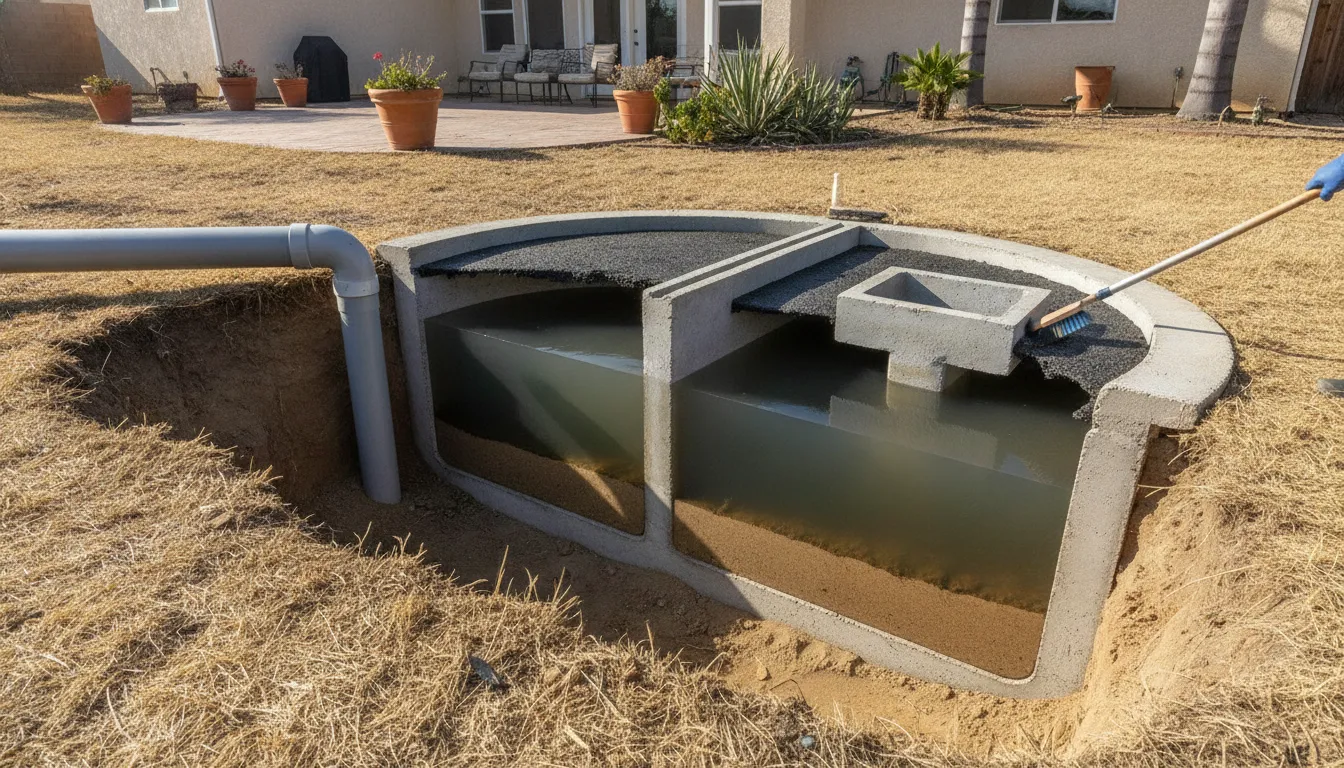
A septic tank baffle is a T-shaped fitting at the tank inlet or outlet. The inlet directs wastewater downward so it does not disturb settled solids. The outlet blocks floating scum and sludge from reaching the drain field. Cracks, corrosion, movement, or clogs can make either baffle fail.
Because baffles sit inside the tank, damage often remains hidden until an inspection or pumping visit. This guide explains the differences between inlet and outlet baffles, common failure symptoms, what an inspection finds, and when repair or replacement makes sense.
What does a septic tank baffle do?
A septic tank baffle is a small but vital part of your home waste system. Most tanks have two of these T-shaped pipes. One sits at the inlet where waste enters the tank. The other sits at the outlet where water leaves. Their main job is to guide the flow of water and keep solids where they belong. Without them, your tank would not be able to separate waste well.
How the inlet baffle guides waste
When you flush a toilet or run a sink, water flows into your tank through the inlet pipe. The inlet baffle catches this fast water and directs it down. This helps stop the water from stirring up the tank. By slowing the flow, it lets solids sink to the bottom and grease float to the top. This simple move is a key part of septic system components working to clean your waste water.
Protecting the drain field
The outlet baffle is the last line of defense for your yard. It sits near the top of the tank but reaches down into the clear water zone. This spot keeps floating scum and heavy sludge inside the tank. If this part fails, solids can escape and clog the pipes in your yard. This often leads to a flooded lawn or backups in your home. According to the Environmental Protection Agency (EPA), keeping solids out of the drain field is needed to stop system failure. You can learn more about how to recognize drain field warning signs to avoid these messy and costly issues.
Why flow control matters
Septic tanks need time to process waste. Baffles make sure that water stays in the tank long enough for gravity to do its work. They create a calm space where heavy waste sinks and light waste floats. This split lets only the clean liquid move on to the next stage. A regular routine septic maintenance check is the best way to make sure these parts are not broken. Finding a small crack now can save you from a full system change later.
Inlet vs. outlet baffles: what is the difference?
Every septic tank needs a way to control how water moves. A septic tank baffle is a simple part that does a big job. These T-shaped pipes sit at the start and end of your tank. They help sort waste so only clean liquid leaves. Without them, your system would fail fast.
Most tanks have two of these parts. One is the inlet and the other is the outlet. Both are needed for the tank to work well. They keep the layers of waste in the right place. This stops solid trash from moving into areas where it does not belong.
How the inlet baffle works
The inlet baffle is where waste first enters the tank. It sits at the pipe coming from your house. Its main goal is to direct raw waste down into the liquid. This keeps the top layer of grease and oil from moving too much. If waste splashes, it can mix things up. You want the solids to sink and the light stuff to float.
A good inlet baffle keeps the tank calm. It slows down the speed of the water as it comes in. This helps the tank process waste the right way. If this part breaks, you may need a understand septic repair costs to fix the flow. It is a key part of your home plumbing.
The role of the outlet baffle
The outlet baffle sits on the other side of the tank. It is the last gate before liquid goes to the drain field. This part is vital because it stops floating scum from leaving. It pulls liquid from the middle of the tank where it is cleanest. This keeps the rest of the system safe from clogs.
If the outlet baffle fails, solids will flow out. This trash can plug the pipes in your yard. When the soil gets clogged, water has nowhere to go. This often leads to sewage backups or wet spots in your lawn. You must keep solids out of the drain field by checking this part often.
Key differences at a glance
While both parts look alike, they do other jobs. One handles how waste comes in. The other controls how it leaves. Both must be made of strong stuff like PVC to last in the tank. The Environmental Protection Agency says these parts are vital for flow control.
The table below shows the main traits of each baffle.
| Feature | Inlet Baffle | Outlet Baffle |
|---|---|---|
| Location | Where waste enters | Where liquid leaves |
| Main Goal | Direct waste down | Block solids and scum |
| System Job | Stop splashing | Protect the drain field |
| Failure Sign | Backups in the house | Wet spots in the yard |
| Risk Level | Medium | High |
Steady care is the best way to keep these parts working. Most pros check them when they pump the tank. If they find a crack or a clog, they can fix it before it costs you a lot of money. Keeping your baffles in good shape helps your whole septic system live longer.
Why do septic tank baffles fail?
A septic tank baffle is a small but vital part of your waste system. It keeps solids in the tank so they do not clog your pipes. If this part breaks, your whole system could fail. Many things can cause a septic tank baffle to stop working. Knowing these causes helps you find problems early and avoid big repair bills. It is one of the most important parts for keeping your yard clean and safe.
Rust and material age
Older tanks often have parts made of concrete or steel. Over time, the gases inside the tank can eat away at these parts. Acidic liquids and waste gases like hydrogen sulfide cause concrete to crumble into dust. Steel parts may rust until they fall off into the sludge. When this happens, the part can no longer stop scum from leaving the tank and moving to the yard.
Modern systems use parts like PVC or strong plastic. These parts resist rust and acid much better than concrete. According to the EPA, modern baffles use plastic to handle the harsh air inside the tank. If your home is older, your parts might be at the end of their life. You should check them during every inspection of the tank components to stay safe.
Physical damage and blocks
Sometimes, the damage comes from the outside. During a tank pump-out, a heavy hose might hit the baffle. If the hose hits a weak part, it can crack or break it off. High-pressure water from cleaning tools can also cause issues. If a tech is not careful, they might move a loose part without knowing it. This is why regular checks are so important after every service.
Large items or grease can also cause a block. If you flush things that do not break down, they can get stuck in the pipe. This builds up pressure and can force the part to move or break. Keeping grease out of your drains is a key way to spot drain field problems early from these blocks. A blocked part can cause sewage to back up into your home pipes.
Movement and poor setup
The ground around your tank can shift over time. If the tank settles or the soil moves, the pipes might pull away. This movement can snap the seals that hold the part in place. In some cases, the whole pipe might fall into the tank. This leaves the outlet open, which lets solids flow into your yard soil.
Poor work during the first build is another cause. If the tech did not set the part at the right height, it will not work. A part that is too high or too low cannot catch the scum layer. Using the wrong size pipe for your tank can also lead to a loose fit. Getting an expert plan for a baffle repair ensures the new part is set for your specific system.
What are the signs of a failed septic tank baffle?
A failed septic tank baffle often stays hidden until it causes big problems. These parts are inside your tank, so you cannot see them. But you can look for signs that the system is not working right. It is vital to find these signs early to save your drain field. A broken baffle lets solids leave the tank and clog your yard pipes.
Slow drains and plumbing backups
One common sign of a baffle issue is slow drains in sinks and showers. You might also see prevent septic tank backups in your toilets. These issues happen when the inlet or outlet baffle fails to move waste. If the inlet part breaks, waste may pile up near the entry pipe. This blockage stops water from leaving your home with ease.
When the outlet baffle fails, it stops holding back scum and solids. These solids flow into the drain field and clog the soil pores. This can cause water to back up into your home fixtures. If your sink drains slowly, you should call a plumber to check the tank. Fixing a small part is much cheaper than a new septic system.
Odors and soggy yard areas
Strange smells in your yard can point to a failing septic system. If you smell sewage near the tank or drain field, a baffle may be broken. The EPA states that failing systems often cause strong odors. These smells happen when sewage comes up on the ground or pipes leak. A missing baffle allows raw waste to flow where it should not go.
You may also see wet spots or bright green grass over your drain field. This happens when the soil is too wet from too many solids. A broken septic tank baffle sends sludge into the pipes. This sludge stops the soil from soaking up the water. Do not ignore these soggy areas, as they show a major risk to your home.
High tank levels and escaping solids
A plumber can find baffle failure by checking the water level in the tank. If the level is too high, the outlet pipe might be blocked. This often happens when solids go past a broken baffle. Plumbers will look for a septic maintenance checklist during a pump out. They can see if the T-pipe is loose, cracked, or missing.
If the baffle is missing, the tank acts as a bypass for raw sewage. This sends grease and scum directly into your yard. You cannot see this from the surface, but it quickly ruins the system. Regular checks help find these hidden cracks before they cause a total failure. If your tank has not been pumped in years, a bad baffle might be why your system is slow.
How is a septic tank baffle inspected?
An expert septic tank baffle check is a key part of keeping your system healthy. These parts are often out of sight, so it is easy to forget about them. But if they fail, your drain field could suffer big damage. A skilled plumber checks these parts to make sure they still work as they should.
The main goal of the check is to see if the baffles are in place and solid. Baffles are usually T-shaped pipes. They keep floating scum and settled solids from leaving the tank. You can learn more about this in our septic system inspection guide. This work helps prevent messy and costly backups in your home.
Safe access and safety steps
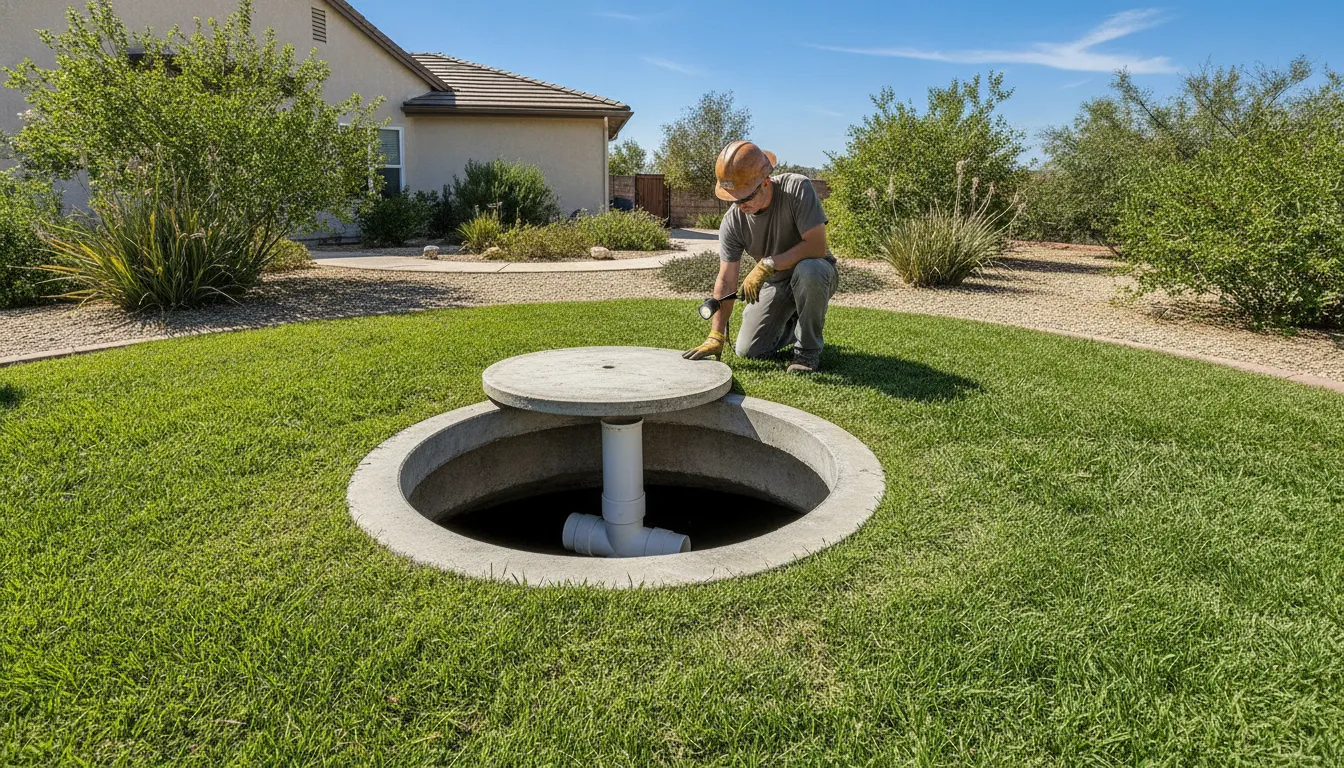
The first step in any check is to find the tank lids. These lids are often buried under a few inches of dirt. A pro will use a probe or a map to find the exact spot. Once they find the lids, they must open them with care. This is a task for pros only because of the risks involved.
Safety is the main goal during this work. Septic tanks hold toxic gases that can be fatal in seconds. Because of this, homeowners should never enter a septic tank for any reason. A pro has the right tools and gear to stay safe. They use mirrors or long tools to see inside the tank without getting too close.
Visual checks and flow testing
Once the tank is open, the pro looks at the water level. This tells them a lot about the health of the system. If the water is too high, it might mean there is a clog or a leak. They also look at the scum layer. The septic tank baffle must sit the right way in this layer to block solids.
Testing the flow from the home is also a part of the job. The pro might ask you to flush a toilet or run a sink. This shows them how the water enters the tank. If the water splashes too much, it can stir up the sludge at the bottom. The inlet baffle should stop this from happening by sending the flow down.
- The pro opens the access lids to get a clear view of the inlet and outlet areas.
- They check the water level to see if the tank is overfull or leaking into the soil.
- A flow test is done to see how water moves from the home into the tank through the inlet baffle.
- The plumber looks for cracks, clogs, or wear on the T-shaped pipes and joints.
- If your tank has a filter in the outlet, they pull it out to check for clogs and clean it.
- Last, the pro records all data to help plan for any work that your system might need soon.
After the steps are done, the pro will talk to you about what they found. They might suggest a pumping service if the sludge is too deep. They will also tell you if any parts need a compare repair considerations. Keeping a good record of these checks is a smart way to track the health of your system over time.
Use our septic system inspection guide, then schedule service if you notice warning signs.
Can a failed baffle be repaired, or must it be replaced?
The choice to fix or swap a septic tank baffle depends on how bad the damage is. These parts are vital for your system because they keep solids in the tank. If a baffle breaks, it can let scum flow out and clog your pipes. This often leads to a full system failure. Most pros can tell if a fix will work after a quick look inside the tank.
Signs that a repair can work
A repair often works if the damage is small and the tank wall is strong. Like when a PVC pipe has a minor crack, a pro can often swap just that part. Older tanks might use concrete baffles that chip over time. If the main structure is good, a tech can bolt on a new plastic T-pipe to restore the flow. This step helps save on septic tank baffle repair costs compared to a full tank swap. A good repair also depends on how much space the tech has. If the tank is buried deep, it might be hard to reach the outlet line. In these cases, simple fixes are best to avoid digging up the whole yard. Proper septic tank maintenance includes checking these parts every three to five years to catch minor wear before it gets worse.
When a new part is needed
You must replace the baffle if it is missing or has fully fallen apart. In older homes, baffles made of steel or thin concrete can rot away due to sewer gases. Once the baffle is gone, the tank acts as a bypass. This sends raw waste into the soil which can ruin your drain field. If the tank wall where the baffle attaches is crumbling, a simple repair will not hold. In many cases, a pro will suggest a full swap with modern PVC parts. These plastic pipes resist rot and last much longer than old metal ones. If the outlet line is also clogged with sludge, the job might grow to include pipe cleaning. Swapping a dead baffle is much cheaper than fixing a failed drain field later.
Factors that change the repair work
The type of tank material plays a big role in what a pro can do. Concrete tanks are easy to drill into for new pipe hangers. But fiberglass or plastic tanks need special care. If the concrete around the outlet is soft or sandy, it shows that the tank is at the end of its life. In that case, fixing just the baffle might only be a short-term fix. Access to the tank lids also matters for the work. If your lids are buried deep, the cost of digging can make a simple repair cost more. Many owners choose to install risers at the same time to make future checks easier. This makes sure that the next time you need a check, the tech can get to the baffle and tank check point without a backhoe.
How to protect baffles and the drain field
To keep your septic tank working well, you must protect its parts. The septic tank baffle plays a big role in this process. It keeps solids in the tank and lets only liquid move to the soil. If this part fails, your system can break down fast. You can avoid big repair costs by taking a few simple steps.
Schedule expert checkups and pumping
Routine care is the best way to keep your system safe. You should have a pro check your tank every few years. During this visit, they will look at the inlet and outlet baffles. These parts are often out of sight, so it is hard to see damage on your own. A septic tank baffle inspection can find cracks or clogs before they cause a flood.
Pumping is also a key part of care. As you use your pipes, sludge builds up at the bottom of the tank. If the sludge gets too high, it can flow past the baffle and into your yard. This can clog the pipes and ruin the soil’s power to filter waste. Based on the Environmental Protection Agency, regular pumping stops system failure and helps your tank last longer. Most tanks need pumping every three to five years.
Manage water use and keep access clear
How you use water at home affects your septic tank. Too much water at once can cause a surge. This flow can stir up the solids and push them through the outlet. To protect your drain field, try to spread out when you wash clothes. Also, do not pour grease or harsh soaps down the drain. These items can damage the baffles and kill the good bugs in the tank.
You also need to protect the area around your tank and field. Never drive cars or heavy tools over the pipes. This can crush the T-shaped pipes and pack down the soil. Keep a map of where your system is buried. This helps plumbing experts find the lids fast during a crisis. If your tank has a small filter, make sure it gets cleaned during each service visit.
Watch for signs of damage or clogs
It is vital to know when your system is struggling. You might notice slow drains in your sinks or toilets. Some home owners also smell sewage in the yard or near the tank. These signs often mean a baffle is missing or blocked. If you see these issues, call for help right away. A missing outlet baffle lets raw waste go straight to the field. This can cause bad damage to your land in a short time.
Always leave the fixes to the pros. You should never enter a septic tank. The gases inside are very toxic and can kill you in seconds. A trained expert has the right tools and gear to fix the parts safely. They can replace a broken tee and check the flow to make sure all is back to normal.
Request expert septic service before a damaged baffle puts the drain field at risk.
Frequently Asked Questions
How much does it cost to replace baffles in a septic tank?
The cost to replace a baffle often ranges from 300 to 900 dollars. This price changes based on how deep the tank sits and if the lid is easy to find. If a pro must dig to reach the tank, the labor fees will go up. According to the EPA, the total price also depends on the type of part used. Modern plastic tees are often cheaper and last longer than old concrete or steel parts.
What does a septic tank baffle look like?
A baffle looks like a large T-shaped pipe that sits at the top of your septic tank. These parts are most often made from thick white or black PVC plastic to resist rot. Some older tanks may have concrete or steel baffles built into the wall. A standard baffle is made to fit onto a 3-inch or 4-inch pipe. It reaches down into the tank liquid to catch floating scum and keeps waste from flowing out too fast.
What material should a replacement septic tank baffle be made of?
Modern septic baffles should be made of heavy-duty PVC or plastic. These materials are best because they do not rust or rot in the wet tank area. According to the EPA, these parts must resist the harsh gases and acids that form as waste breaks down. While some older tanks used steel or concrete, these parts can fail over time. High-density plastic is now the top choice for most pros because it lasts for many years.
Can I replace a septic tank baffle myself?
You should not try to fix or swap a baffle on your own. Septic tanks hold toxic gases that can be fatal in just a few seconds. For your safety, the EPA warns that you must never enter a tank for any reason. A pro has the right gear to work near these fumes and can reach deep parts without risk. It is best to have a tech check and fix the parts during each pump service.
Is a baffle necessary in a septic tank?
Yes, a baffle is a must-have part for any working septic system. These pipes keep the floating scum and heavy solids inside your tank so they can break down. According to the EPA, a tank with no baffle will send raw waste into the soil. This can clog your yard pipes in a very short time and lead to a total loss of the system. Having two strong baffles is the best way to keep your home waste system safe.
Ready to schedule a septic system inspection?
A small crack in a septic tank baffle might not seem like a big deal. But it can lead to a total system failure if you wait too long. When a baffle fails, solid waste flows straight into your drain field and clogs the soil. This damage can last forever and is very costly to fix. By acting now, you can request a check to catch minor issues before they turn into a messy crisis in your yard. A quick check today ensures your pipes stay clear and your home remains safe. Choosing to wait only grows the risk of slow drains and bad smells that disrupt your life. Our team can find these hidden problems in just one visit, saving you time and stress. Do not let a simple part ruin your whole plumbing system.
Ready to schedule a septic system inspection? Visit our services page to request your inspection.

Leave a Reply