
Most septic systems in the Inland Empire require manual digging for routine inspection. A septic tank riser installation eliminates the need to break ground every time you need service. This solution makes maintenance fast and keeps your yard intact.
Request a professional septic tank riser installation assessment.
Septic tank riser installation is the process of adding a vertical pipe that goes from the tank lid to the ground surface. This portal allows for fast checks and pumping without the need to dig up your lawn or yard. For homeowners in the Inland Empire, this upgrade helps your system stay in good health while meeting local safety rules. Routine care costs far less than a full system replacement, making this a great way to save money on your property. According to the Michigan State University Extension, these risers make work easier for plumbing pros and can even pay for themselves by cutting future labor costs. By giving a clear and safe access point, you keep your water clean and help your septic system last for many years.
Learning about your waste system is the first step toward better home care. You might want to know the parts used for these portals. To see if this is right for your yard, we will start with what is a septic tank riser? The first step is understanding the practical benefits.
Benefits of septic tank riser installation
In short: Septic tank risers create a secure, surface-level access point that reduces digging during inspections and pumping. They can protect landscaping, simplify routine care, and help a septic professional spot developing issues sooner. A correctly fitted, bolted lid also improves safety around the tank.
A septic tank riser is a vertical pipe made of plastic, fiberglass, or concrete. It creates a path from the top of your tank to the surface of your yard. This setup offers many perks for homeowners in the Inland Empire. By choosing septic tank riser installation, you can keep your system in top shape without much stress.
Easier access for care
The main goal of a riser is to provide easier access for maintenance. Most tanks are buried deep in the ground. Without a riser, you must dig up your lawn every time you need an inspection or a pump out. Digging is hard work and takes a lot of time for you or a pro to finish. Septic tank risers remove this chore by keeping the lid at or just below the grass level.
Regular care is key for your system to last. Experts suggest that you should inspect and pump your tank every three to five years. If you have a riser, your professional septic system services team can find the tank in seconds. They can start work right away without ruining your yard or garden.
Save money and time
Setting up a riser can save you a lot of cash in the long run. High repair bills often come from a lack of care. Fixing or replacing a broken septic system can cost between $5,000 and $15,000. Keeping up with pump outs usually costs far less than a full system fix. Since a riser makes care simple, you are more likely to stay on track with your schedule.
Risers also help to protect your property value. A system in good repair is a big plus when you want to sell your home. On the other hand, a broken tank can lead to legal issues or lower your home’s worth. According to the EPA, a well kept septic system is a wise way to guard your land and your bank account.
Safety and protection
Modern risers come with secure lids that keep your family and pets safe. These lids use heavy bolts so that children or animals cannot open them by mistake. This feature helps prevent accidents and keeps dirt or pests out of your tank. A strong seal also stops sewer smells from leaking into your yard. This keeps your outdoor space fresh and pleasant for your guests.
A good riser also guards against leaks that can hurt the ground. In places like Riverside and San Bernardino, we must keep our water clean. A riser helps pros find early signs of cracks or leaks before they grow into big problems. This quick action protects the local soil and water from waste. It is a simple tool that helps you be a good owner and a good neighbor.
When is a septic riser worth adding?
Direct answer: A riser is usually worth considering when a tank lid is difficult to locate, sits well below grade, or must be uncovered for each service visit. It is especially practical during pumping, tank repair, landscape work, or replacement of a damaged access lid.
Most people in the Inland Empire do not think about their septic tank until a problem starts. Often, the tank lid is buried deep under the grass. Finding and digging up the lid for easier access for maintenance takes time and effort. A septic tank riser installation brings the access point closer to the surface. It is a smart move for many, but you should know when it is most helpful for your home.
Better access for care
If your septic tank lid is more than six inches deep, a riser is a great choice. Pumping your tank every three to five years is vital to keep the system healthy. Digging up your yard each time is hard work. It can also cost more if you pay a pro to do it. A riser creates an upright tube that lets a plumber reach the tank fast. This saves time and makes it easy to check for issues before they turn into big repairs.
In Riverside or San Bernardino County, some tanks are buried three feet deep. A riser is a must in these cases. It allows for quick checks of the tank and its parts. This is key if you want to find small leaks early. Catching these problems fast can save you from a big mess, which avoids a costly yard repair.
Long term cost savings
While a riser has a cost to start, it often pays for itself over time. Every time you hire a pro to pump the tank, they may charge more for the labor of digging. By removing this step, you lower the cost of each visit. Also, a well-kept system lasts much longer. Fixing or swapping a broken septic system can cost between $5,000 and $15,000. Proper care helps you avoid these big repair bills while saving your home value.
Safety and yard work needs
New risers are made of strong plastic or fiberglass. They have lids that bolt shut. This keeps children and pets safe from falling into the tank. You can also hide the riser with a thin layer of soil or grass. This keeps your lawn looking good. It also makes sure the tank stays easy to reach. A septic tank riser helps stop water leaks. This stops your tank from filling up too fast.
You might want to think about adding a riser in these cases:
- Your tank lid is buried deep and is hard to find.
- You want to avoid the mess of digging in your yard every few years.
- You are planning new yard work and want to keep the tank easy to reach.
- Your current lid is cracked or does not seal well.
- You want to improve the safety of your land with a locking lid.
If you are ready to ease your yard work, we can help. We can find your tank and set up a new riser that meets local codes. This small change makes a big difference in how you care for your home over the years.
How professional septic tank riser installation works
Direct answer: Professional installation involves locating and exposing the tank opening, inspecting the access area, selecting a correctly sized riser, creating a watertight connection, and fastening a secure lid. The installer then checks grade, stability, and safe access before restoring the surrounding soil.
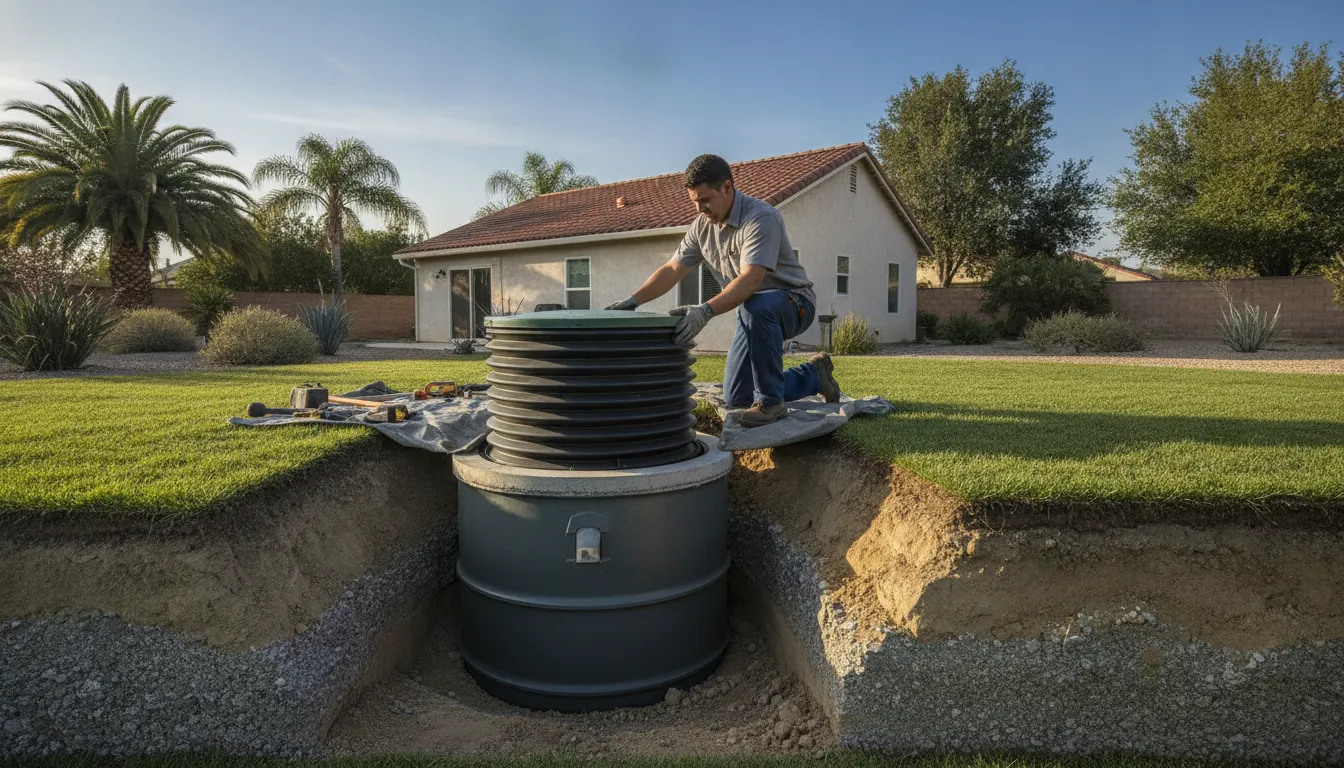
A septic tank riser installation starts with a clear plan and the right tools. Most experts begin by finding the exact spot of your tank. This tank is mostly about 10 feet from your home. If you do not know where it is, we can use property records or deeds to find it. Finding the tank fast saves time and keeps your lawn neat.
Preparing for a safe install
Safety is the most vital part of the job. Before we dig, we must call a utility search group like 811. This group helps us find any power lines or water pipes in the yard. Checking for these lines prevents accidents and avoids damage to your home. It is a key step for every professional septic system service in the Inland Empire.
Once the area is safe, an expert will dig a small hole to reach the tank lid. They remove the old concrete or plastic cover to see the tank opening. The goal is to keep the hole as small as possible to protect your grass. Special tools help us dig with care and speed. Experts also check the local plumbing rules to ensure the work is safe and legal.
Choosing the best riser kit
Choosing the right parts ensures your system lasts for a long time. Most pros use PVC or plastic kits because they are light and strong. These kits are often better than concrete because they stay watertight. A good seal keeps ground water out of your tank and stops leaks. You can find PVC risers in many sizes to fit any tank brand.
The height of the riser is also a key choice. Some owners want the lid to sit on top of the grass for fast access. Others prefer to hide the lid under a thin layer of soil and grass. An expert will measure the depth of the tank and cut the riser to the right size. This custom fit makes sure the lid sits level with the ground. It also creates easier access for care later on.
The step-by-step process
A smooth septic tank riser installation follows a set path. Each step builds a strong, safe portal to your system. Here is how a team sets up a new riser.
- Clean the tank surface. The expert cleans the area around the tank opening. They must remove all dirt and loose bits of concrete. A clean surface helps the new seal stick to the tank.
- Apply a watertight seal. We use a strong sealant or a gasket on the base of the riser. This seal stops water and roots from getting into the tank. A good seal is the best way to prevent system failure.
- Fasten the riser base. The crew sets the base on the sealant and uses bolts to hold it in place. These bolts keep the riser from moving when the ground shifts. A firm base is key for a long-lasting portal.
- Stack the riser pipes. If the tank is deep, we stack more pipe sections. Each piece must lock into the one below it. This adds height until the top reaches the ground level.
- Secure the safety lid. The last step is to add a heavy lid on top. We use safety bolts so only a pro can open the tank. This keeps kids and pets safe from falling in.
After the lid is on, the expert fills the hole with soil. They pack the dirt tight so the ground does not sink later. A final check ensures the lid is level and the site is clean. This simple upgrade makes your septic care much easier for years to come.
What affects septic tank riser installation cost?
Direct answer: Septic tank riser installation cost depends on tank depth, opening size, riser and lid materials, soil conditions, access for tools, and the condition of the existing tank lid. Permitting needs and combining the work with pumping or inspection can also affect the final estimate.
The total price for a septic tank riser installation depends on several site points. Most home owners find that the long-term savings from easier access for maintenance far outweigh the first setup cost. By removing the need to dig each time the tank needs care, you protect your lawn and save on work. According to the Environmental Protection Agency, regular care protects your home value. This small upgrade ensures your waste system keeps working for many years.
Each home has needs that can shift the bill. Age of the tank and soil type play a role in the time the job takes. It is vital to look at both the part costs and the work needed for a safe build.
Tank depth and digging needs
The depth of your septic tank is a major cost driver. If the tank lid is buried deep, you will need a tall riser or several stacked parts to reach the ground. This also means more digging to reach the lid and set the base. Rocky or hard soil makes digging slow and tough. Deep tanks need more skill to ensure the riser sits level and stays firm under the weight of the dirt.
Work costs often rise when the dig is hard. Before work begins, you must call line finding services to avoid hitting power or water lines during the dig. This safety step is key for every project. A deep dig might also need extra gear to protect the crew. These steps add to the time but ensure the work follows local safety rules and laws.
Parts and size of the riser
Risers come in many sizes and items like plastic, fiberglass, or concrete. Plastic is liked because it is light and does not rust or rot in damp soil. Concrete is very strong but heavy and often needs machines to move it into place. Large tanks often need wide openings, which needs more parts and a larger lid. A bigger riser will cost more but gives better access for pumping tools and check cameras.
The lid type also changes the price. High-quality lids with bolts keep the system safe. These lids prevent bad smells and keep rain from leaking into your tank. Fiberglass types are strong but light, though they cost more. Picking the right part will help the riser last for ten years or more.
| Factor | Plastic Risers | Concrete Risers |
|---|---|---|
| Weight | Light and easy to move by hand | Heavy and needs machines to lift |
| Strength | Resists water and soil salts | Strong but can crack over time |
| Install Speed | Fast and simple for most crews | Slower due to heavy lifting needs |
| Seal Quality | Often use tight rubber seals | Usually needs mortar to stay dry |
| Cost | Mid-range for parts and work | Lower part cost but high labor |
See Diamond House Plumbing’s completed septic and sewer projects.
Site access and bundled services
How easy it is to get tools and parts to your tank will affect the price. If the tank is in a tight spot behind a fence or under a deck, the work will take more time. Slow access means higher fees for the crew. If the septic tank lid is in poor shape, it might need a repair or a new one before the riser can be set. Fixing these small issues early prevents big problems with your system later.
Often, it is best to add a riser during a pump-out or a full system check. This bundled service can save you money on travel fees and setup costs. Local rules may also need permits for this type of work in some areas. Expert septic system services will handle these details to ensure the job meets all codes. Investing in a proper setup now prevents costly breaks that can run thousands of dollars later.
Key installation and safety considerations
Direct answer: A safe riser needs a watertight connection, compatible materials, stable placement, and a secure lid designed for the expected load. The access point must remain visible and reachable, while vehicles and other heavy loads should stay away unless the system is specifically engineered for them.
Planning for a septic tank riser installation starts with a full check of your tank. You must look at the tank opening to see its size and shape. Most tanks use a round hole that is 20 or 24 inches wide. You also need to check the state of the concrete or plastic lid. A riser must have a flat and firm spot to sit to keep the system safe and tight. If the tank is too deep, you may need a kit that stacks pieces to reach the surface. Using the right parts helps you get easier access for maintenance and keeps your yard in good shape.
Choosing durable materials
Pick materials that can last for ten years or more in the wet ground. Heavy plastic or fiberglass are top choices because they do not rust or rot. These materials are also light enough to work with but strong enough to hold up against the weight of the soil. A good riser will have thick walls and a solid base. This helps it stay in place as the ground shifts. According to the Michigan State University Extension, some areas now require these risers for all new septic work to ensure the system is easy to check.
Watertight seals and load ratings
Keeping water and dirt out of the tank is a main goal for any riser. You should use a thick bead of sealant or a rubber gasket where the riser meets the tank. This seal stops rain from getting into the tank, which could flood the drain field. You also need to look at the load rating of the lid. If the tank is in a spot where people walk, the lid must be strong enough to hold that weight. Never set a riser where cars or trucks will drive over it. Heavy vehicles can crush the pipe and damage the tank below. For help with these choices, you can find professional septic system services in your area.
Safety lids and child locks
Safety is the most vital part of the job. A septic tank is a deep pit that can be very dangerous if a lid is loose or missing. You must use a lid that fastens with heavy bolts or a locking kit. These locks stop children or pets from opening the tank by mistake. The University of Rhode Island notes that you must secure lids with bolts so they cannot be moved without the right tools. Always double-check that the lid is flat and tight after every inspection. This simple step keeps your family safe and keeps the system working as it should.
Caring for a septic riser after installation
Direct answer: Keep the riser lid visible, secure, and free from soil or plant overgrowth. Check for cracks, loose bolts, odors, standing water, or settling after service and heavy rain. Keep vehicles off the tank area, and ask a septic professional to evaluate any damage promptly.
After your septic tank riser installation is set up, your system will be much easier to maintain. This upright pipe brings your tank lid up to the level of the grass. It stops the need for a crew to dig up your yard for a simple check. While this saves you time and work, the area still needs some basic care. Good care helps the riser stay safe and keeps your whole system running well for a long time.
Keep the ground clear and safe
You should always keep the space around your septic lid clear. Do not let grass, weeds, or thick brush grow over the top. When the lid is clear, your pump pro can find it fast when they visit. Keeping the lid clear also stops dirt from falling into the tank when someone opens it. You should also make sure the lid is shut tight and all bolts are in place.
A loose or broken lid is a big risk for kids and pets. It can also let rain or dirt wash into your tank. Too much extra water can flood your leach field and lead to system failure. The MSU Extension group notes that a safe lid protects your home and yard. Check the seal once a year to stay safe.
Protect the area from heavy weight
Never park cars or drive heavy trucks over the riser or the tank. Even though risers are made of strong plastic or concrete, they can still crack under a heavy load. This weight can shift the pipe or break the seal where the riser meets the tank. If you use a riding mower, be very careful not to bump or hit the lid. It is best to use a hand tool to trim the grass near the riser pipe.
You should also watch how water moves across your yard after a storm. Do not let rain pool on top of the riser. You may need to change the slope of the dirt around the lid to push water away. If water stays near the seal, it could leak inside and cause the tank to fill up too soon. This simple step ensures easier access for maintenance and helps your system last longer.
Look for signs of damage or leaks
It is a good idea to check your riser and its lid twice a year. Look for any new cracks or gaps in the pipe walls. You should also check for strong smells coming from the area. While a faint scent is normal, a strong odor might mean the seal is loose or the tank is full. Catching these small signs early can help you avoid a mess in your yard.
Fixing a small crack now is far less than a major repair later. Per the U.S. EPA, big repairs can cost up to $15,000. In contrast, standard care and pumping usually cost much less. If you spot a problem, you should talk to a pro about professional septic system services. They can fix seals or bolts to keep your yard safe and clean.
Frequently Asked Questions
Quick answers: Homeowners commonly ask about locating a buried tank, local riser requirements, health protection, and mowing near the lid. The answers below cover those basics, but site conditions and local rules vary. A professional assessment provides guidance for your specific property.
How do I find my septic tank spot?
You can often find your septic tank by looking at your land records or building plans. If you do not have these files, you can try to probe the soil about 10 feet away from your home. A pro can also use tools to find the tank fast without any guessing. Once found, septic tank riser installation ensures you never have to search for the buried lid again.
Do local rules require septic tank risers?
Some local counties and cities now require risers for all new septic system setups. Even if your current system is old, you may need to add one if you make big changes or repairs to the tank. It is wise to check with a pro who knows the local plumbing codes in your area. These rules help keep your yard safe and ensure the system meets health standards.
Can a septic tank riser help protect my health?
Yes, a riser makes it much easier to pump and check your tank on a set plan. Regular care prevents the tank from failing and leaking waste into the soil. According to the EPA, a broken system can release harmful germs into the local water. By using a riser to stay on top of care, you help keep your drinking water and the land clean and safe.
Is it safe to mow over a septic tank riser lid?
Most modern riser lids are made of strong plastic and sit level with your grass. As long as the lid is bolted tight and set at the right height, you can mow right over it without any risk. This allows you to keep your lawn neat while maintaining easy access for care. The lid blends into your yard so you will not even notice it while doing your work.
Ready to request a septic system assessment?
Next step: Diamond House Plumbing can assess the tank access point, explain suitable riser and lid options, and provide a site-specific estimate. Professional planning helps ensure the installation fits the existing tank, protects the yard, and supports safer routine septic service.
If you wait to add a riser, you must dig up your yard every time your tank needs a pump or a check. This work takes a lot of time and can ruin your nice grass. It also makes it hard to see leaks or cracks before they turn into big and costly issues. If you skip these checks, you may face a system break that costs a lot of money to fix. By acting now, you can get fast access to your tank for many years to come. You will save money on work costs and keep your lawn looking good. Our team can help you pick the right parts for your home today. We know the local codes in the Inland Empire and can get the work done fast.
Ready to book? Request a septic system assessment to set up your appointment.

Leave a Reply