
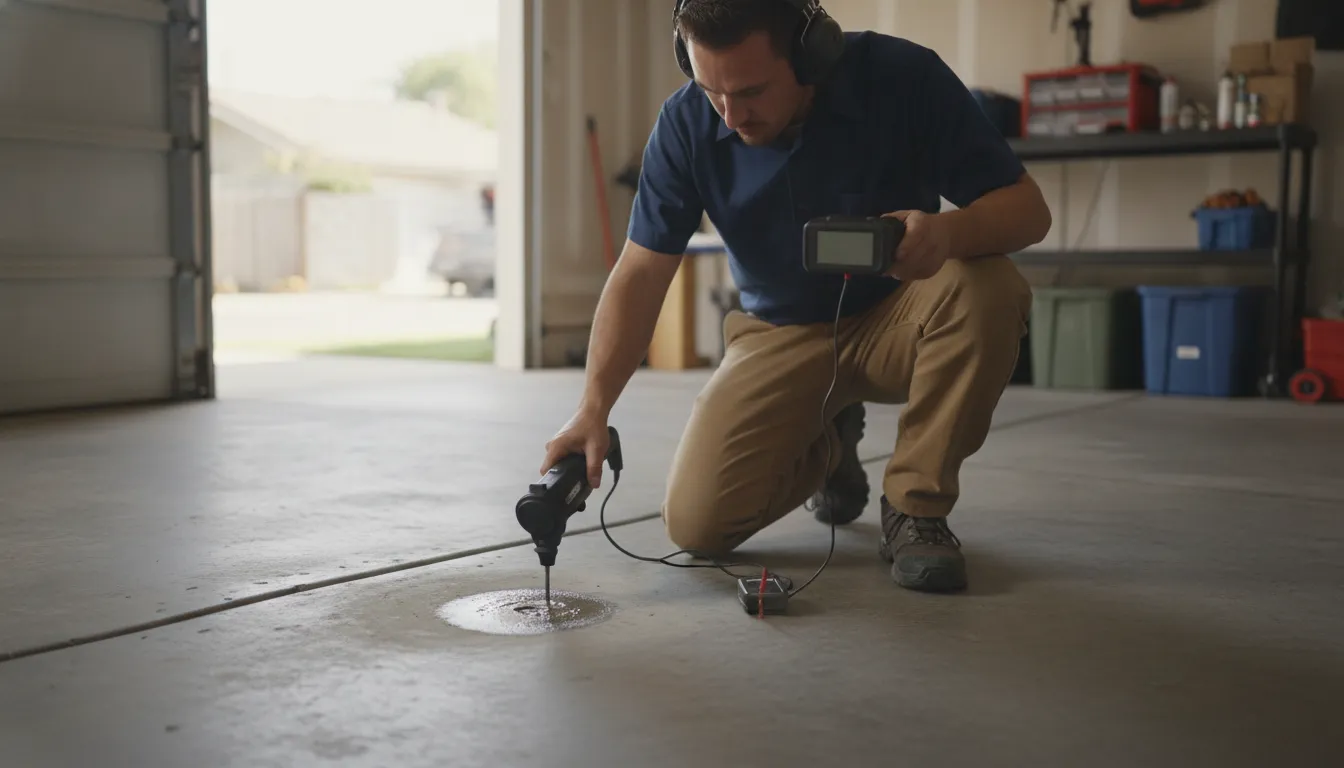
Plumbers slab leak repair calls start with a simple problem: water is leaving the house and nobody has marked the line yet. You need questions that separate a detection visit from a repair plan. Diamond House Plumbing finds leaks and repairs pipe for homes across Riverside and San Bernardino County. The first conversation should locate the problem before anyone opens the slab.
Call Diamond House Plumbing at 800-674-9440
Price ranges and what changes an estimate live on the slab leak plumbers page. Use this article to decide what to ask before that call. Hiring checklists and warranty comparisons already live on the repair-options page, so they are not repeated here.
What plumbers slab leak repair should confirm first
Ask whether water is leaving the system at all. The U.S. Environmental Protection Agency’s WaterSense leak check is a useful starting point. Turn off fixtures, read the meter, wait about two hours, and read it again. If the meter moves, water is going somewhere.
That test does not prove the leak is under the slab. A toilet, a hose bib, or a yard line can move the meter too. A useful plumber will say which of those they will rule out before they talk about the foundation. Diamond House Plumbing gives free estimates after an on-site evaluation, so the visit is how the scope gets defined.
If water is spreading now, shut off the house valve if you can do it safely and use the emergency slab leak repair path. A scheduled question-and-answer call is for a suspected leak that is not actively flooding the house.
Write down what you have already seen: a warm floor, a bill that jumped, or the sound of water when fixtures are off. Give every plumber the same notes. That is how you compare answers instead of stories.
Mention the rooms that sit on the slab you care about. A kitchen, a bathroom, or a laundry line gives the plumber a place to start. Also say if the warm spot is only sometimes there, which can point to a hot line rather than a constant cold-line loss. None of that is a diagnosis. It keeps the visit from starting at zero.
If you share the house with tenants or run a home office, say how long the water can be off. A diagnosis visit may need a short shutoff for the meter test. Knowing that window before the truck arrives keeps the appointment realistic.
Questions about the diagnosis visit
Keep the first questions on evidence. You are not asking for a phone diagnosis. You are asking how the visit will test what you already noticed.
What will you check before opening anything?
A clear answer starts with the meter, the shutoffs, and the fixtures you can see. If a visible fixture explains the loss, the job may stay a regular residential plumbing repair. If it does not, the search moves to lines under or beside the slab.
How will you narrow the area?
Ask how the visit will tighten the search to a line and an area. Listening and line-tracing tools can follow water a visual check cannot see. The goal is a tight area, not a whole-room guess. Diamond House Plumbing does not publish one equipment list for every house, because access and pipe material change the work.
Could this be a wall or yard leak instead?
Not every hidden leak is a slab leak. Ask the plumber to say what would send the search to a wall line or a yard line. The Riverside leak detection guide covers those other locations. This call should still answer the slab question directly.
Will you leave a note of the finding?
Ask for a note you can keep: the area checked, what was ruled out, and whether a repair visit is even the next step. If you cannot repeat where the water is going, the diagnosis is not finished.
Questions about access before any repair
Access is the part of plumbers slab leak repair that surprises people. The diagnosis should name the likely opening before you approve one.
- Will any opening happen on the diagnosis visit, or only after you approve a repair?
- Is the likely access through the floor, a wall, a cabinet, or another route?
- What finishes are near that spot, and who protects them?
- What would change the access plan if the line is not where the first test suggested?
Opening concrete on a guess costs more and disrupts more of the house than a located repair. A good answer separates “we need to look here” from “we are ready to open it.” Diamond House Plumbing explains the finding before you approve repair work.
Ask what you should move before the visit. A blocked meter, a shutoff behind storage, or a car on the slab all slow the location step. Clearing those keeps the appointment on the line.
Ask who will be in the house during the test and who can approve the next step that day. If the decision maker will not be home, the visit can still locate the line, but the repair should wait. Diamond House Plumbing treats the finding as the handoff, not as permission to open the floor.
Pets, rugs, and stored boxes matter more than they sound. Listening for a line under a slab is harder when the work area is blocked. A clear garage slab or utility closet often tells the technician more than another phone description.
How the estimate conversation should work
Once a line is located, the estimate should follow the finding. It should not be a single number with no scope. Diamond House Plumbing prices the work after the on-site evaluation.
| Ask this | A useful answer names | Why it matters |
|---|---|---|
| What does this visit include? | Meter check, location work, and the written finding. | You can compare the same starting scope. |
| What is not included yet? | Floor opening, pipe repair, and finish work. | Diagnosis and repair stay separate decisions. |
| What could change the number? | A longer line, poor access, or a different pipe material. | You hear the assumptions before you approve. |
| Who handles the finishes? | Concrete patch, flooring, or drying, if any of those apply. | Plumbing work and restoration are not the same job. |
| How is extra work approved? | A reason, a revised scope, and a yes before more work. | Active water damage is the exception, not the rule. |
Read the cost page after you have a location. It explains what changes a repair estimate. It is not a substitute for the finding.
If the finding points to a repair method, the slab leak repair guide covers options in that context. Ask the plumber to connect the method to the line they found, not to a generic package.
What to have ready when you call
A short list makes the first call more useful. You do not need to open the floor or buy equipment.
- Say whether water is spreading now or the signs are a bill and a warm spot.
- Have recent bills and both readings if you ran the two-hour meter check.
- Know where the meter and the main shutoff are, or say if you do not.
- Note a remodel, a new irrigation timer, or a pressure problem from the last few months.
- Ask the plumber to repeat the finding before anyone talks about opening the floor.
Diamond House Plumbing is locally owned, with more than 20 years of experience diagnosing plumbing, sewer, and septic problems. The company is licensed, bonded, and insured, and it serves Riverside, San Bernardino, and nearby Inland Empire cities. Local access matters because the technician has to reach the meter and the slab in one trip.
Older houses in these counties often have supply lines that have been in service for decades. Age does not prove a slab leak. It does mean the plumber should know local pipe materials before recommending access. The causes of a slab leak page is useful context after you know you have one.
California’s Contractors State License Board describes a C-36 plumbing contractor as the license that covers water supply piping and its maintenance. You can look up a business name on the CSLB license check before you approve repair work that follows the visit.
How to compare two answers without repeating a hiring guide
Use the same five questions with each plumber and write the answers in the same order. You are comparing the finding, not a slogan.
- Did they confirm loss the fixtures do not explain?
- Did they name a line, or say the line is still unclear?
- Did they name an area for any later opening?
- Did they say what is excluded from the first visit?
- Did they explain how extra work would be approved?
A vague answer that jumps straight to breaking concrete is a reason to pause. A useful answer names a meter reading, a sound, a temperature change, or a traced line. Keep those notes with your bills so a later estimate is built on the same finding.
Put the two answers side by side the same day, while the wording is still fresh. If both plumbers name the same area, you can move to a repair conversation with more confidence. If they name different lines, ask each one what evidence would change their view. Do not average the two stories into a third guess.
Local scheduling is part of the comparison too. Diamond House Plumbing works across Riverside County and San Bernardino County, so the technician can reach the meter, the shutoff, and the slab in one trip. A company that does not regularly work these houses may spend the visit learning the property. That time should go to the line.
After you choose who returns, keep the original finding with the estimate. The repair conversation should start from that note: which line, which area, and what was ruled out. If the new scope ignores the note, stop and ask why before you approve access.
If one answer is only a price and the other is a location plus a scope, they are not the same offer. The slab leak repair options page is where method and specialist comparisons belong. Stay on the visit and the estimate in this conversation.
Frequently asked questions
What should I ask plumbers about slab leak repair on the first call?
Ask how they will confirm water loss, how they will narrow it to a line, and whether the first visit opens the floor. Ask what the visit includes and what is saved for a later estimate.
Should the first visit open my floor?
Opening the floor is a repair step. The first visit should locate the line and explain access. Concrete is opened only after you approve a scope based on that finding.
Does Diamond House Plumbing charge before the evaluation?
Diamond House Plumbing provides free estimates after an on-site evaluation. The company does not publish a separate detection fee. Ask what the scheduled visit includes when you call.
How is this different from the cost page?
The cost page covers what changes a repair estimate. This page covers the questions to ask so that estimate is tied to a located line. Read the cost page after the finding, and link to it as slab leak plumbers when you are ready for numbers.
What if water is spreading right now?
Shut off the water at the house valve if you can do it safely, keep people off wet flooring, and call for emergency service. A question list is for a suspected leak that is not actively spreading.
Call with the finding, not a guess
Plumbers slab leak repair goes better when the first call confirms the loss, names the line, and keeps the floor closed until you approve a scope. Diamond House Plumbing serves homeowners across Riverside and San Bernardino County and explains the finding before you approve a repair. Bring the meter readings and the rooms you already checked so the call starts from evidence, not a guess.

Leave a Reply