
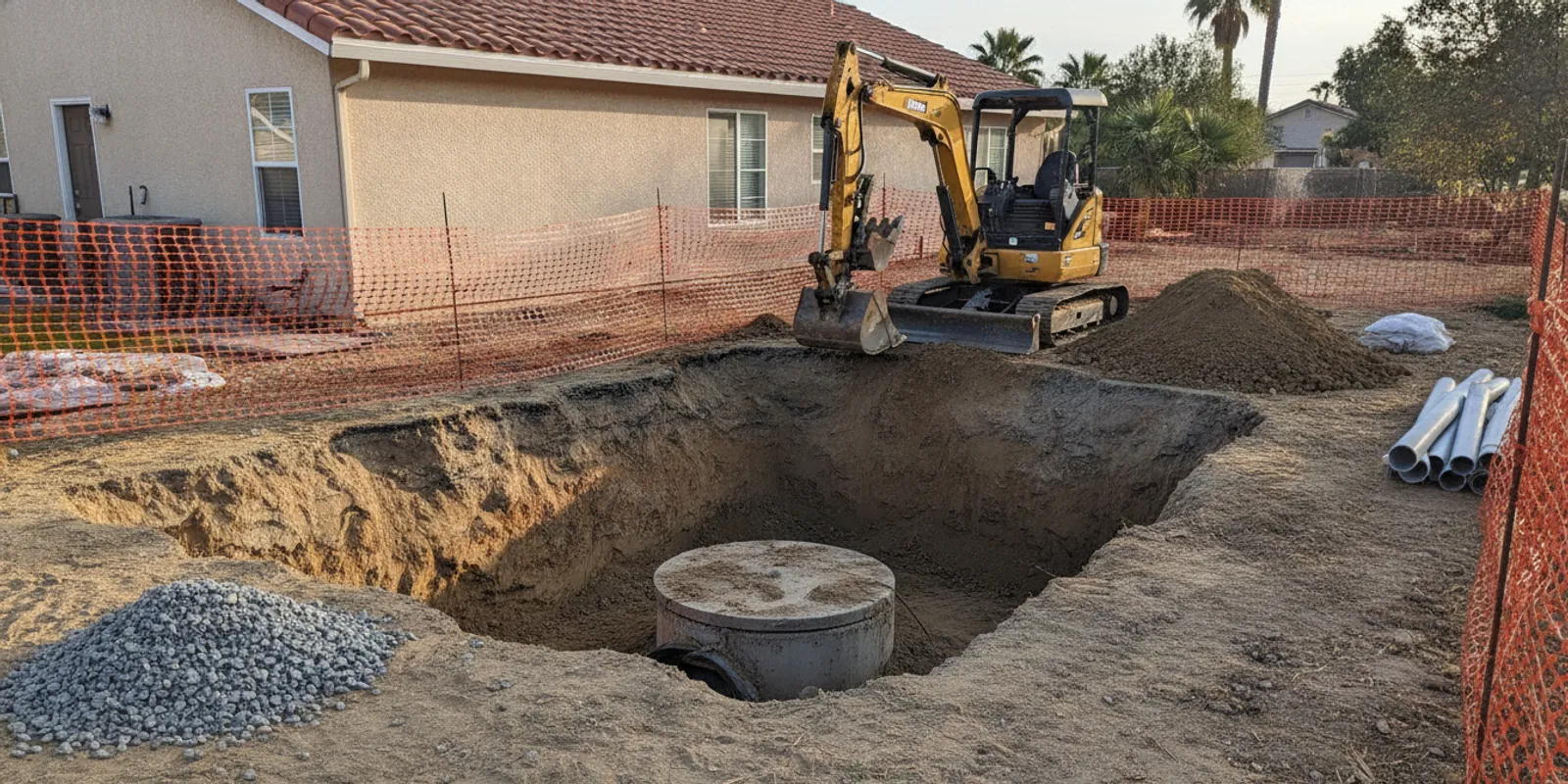
Septic tank removal cost depends on more than the tank itself. Property owners in the Inland Empire should consider access, tank size and condition, pumping, permits, disposal, what will replace the system, and how the yard or hardscape must be restored. The right estimate starts with an evaluation of the site and the intended next step.
Request a property-specific estimate
What does septic tank removal include?
“Removal” can describe different scopes of work. A project may involve locating and exposing the tank, pumping it, disconnecting it from the plumbing, removing or otherwise addressing the tank, managing excavated material, and restoring the surface. Requirements depend on local rules, system configuration, and the property’s plans.
Some owners are removing a failed or unused tank. Others are preparing for a new septic system or a sewer connection. Those goals change the work substantially. Clarify whether the estimate covers only taking the existing tank out of service, or also a replacement system, sewer lateral, connections, and finish work. Diamond House Plumbing’s septic services page provides a starting point for discussing septic work.
It also helps to distinguish physical removal from abandonment in place. Those are not interchangeable descriptions. The allowed approach and preparation can depend on jurisdiction, property conditions, and the future use of the site. An estimate should name the specific outcome rather than use “removal” as a catch-all.
Which factors affect septic tank removal cost?
1. Access to the tank
A tank that is easy to reach from an open yard presents a different job from one beneath a driveway, patio, landscaping, or a narrow side yard. The crew may need to protect nearby structures and utilities, work around fences or trees, or use different equipment. Limited access can add time and affect excavation and restoration requirements.
Before an estimate, point out gates, overhead obstructions, retaining walls, paving, and other features near the tank. Share any plans or records showing where the tank and access points are located. If its location is uncertain, explain that upfront; locating and confirming the system may be part of the evaluation. Photos from several angles can help show approach routes, tight turns, slopes, and nearby improvements.
Think through the route from the street to the work area. A large truck may have room to park but not to turn or reach the tank. A smaller machine may fit through a gate but require a different excavation plan. Tell the estimator about fragile paving, irrigation lines, low branches, and areas where equipment cannot travel. Marking these constraints in advance makes the proposed access plan easier to understand and gives both sides a chance to discuss protection measures.
2. Tank size, material, and condition
Tank capacity and construction affect how the work is planned. The tank’s condition matters too: a sound, accessible structure may be handled differently from a damaged, collapsed, or partly buried one. The contractor needs to understand the tank’s location, material, condition, and relationship to inlet and outlet pipes before defining the scope.
Do not assume that a visible lid tells the full story. Existing plans, inspection information, service records, and an on-site assessment can help establish what is present. If records are unavailable, an estimate may need to account for uncertainty until the tank is exposed. A septic system inspection can help clarify system components and condition when that information is needed for planning.
Two tanks that look similar from the surface may differ in capacity, material, depth, or connections. Those differences can affect how the crew exposes and handles the structure, how much excavation is needed, and how the work area is secured. If a lid is damaged or the tank appears to have shifted, mention it rather than approaching or opening it yourself. The estimate should reflect known conditions and explain what remains uncertain until excavation provides a clearer view.
3. Pumping and preparation
Depending on the tank’s condition and applicable requirements, contents may need to be pumped before removal or abandonment work. The estimate should say whether pumping is included, who performs it, and how the contents will be handled. Ask whether access to the lids is clear and whether the tank’s condition could affect safe preparation.
Pumping is one step, not a complete removal plan. It does not by itself address disconnection, excavation, disposal, inspection or permit requirements, or restoration. For background on this separate service, see the company’s septic tank pumping guide. The written proposal should identify whether pumping is performed before the main work or scheduled separately.
Ask how the pumping appointment fits into the larger sequence. If the tank is difficult to access, the access work may need to happen first. If a permit or inspection is required, the timing may affect when the tank can be exposed or taken out of service. A coordinated schedule can help avoid paying for repeated mobilization or leaving the property in an unclear intermediate state. Confirm who will communicate the timing and what needs to be available at each visit.
4. Permits and local requirements
Permit, inspection, and notification requirements can vary by jurisdiction and by project. Removing a tank, abandoning it in place, replacing a septic system, or connecting to a public sewer may not follow identical approval steps. The estimate should identify which approvals are anticipated and who is responsible for obtaining them. Confirm requirements with the relevant local authority rather than relying on a general assumption.
Ask whether fees are included or listed separately, and whether the proposed schedule depends on agency review or inspection. If the property is part of a sewer-conversion program, confirm the required scope and documentation for that specific parcel. Keep copies of approvals and inspection records with the property documents after work is complete.
It can help to make a short approval checklist before signing: which agency must be contacted, what application or notice is needed, whether an inspection is expected, and who will schedule it. Do not assume the same process applies across county or city boundaries. The property owner can ask the local authority what documentation is required for the chosen outcome, then compare that answer with the contractor’s proposal. If the project changes from removal to replacement or sewer connection, revisit the checklist because the approval path may change too.
5. Disposal and handling
Removal can involve more than lifting a tank out of the ground. The tank material and condition, excavated soil, and any material requiring separate handling can affect disposal planning. Ask what the estimate includes for hauling and disposal, and whether it assumes ordinary site conditions. Any unusual material or unexpected condition should be discussed before additional work proceeds.
Clarify whether the quote includes loading, transport, and disposal or only the work at the excavation. Ask how the contractor will document any unexpected finding and whether you will be asked to approve a scope change before it affects the project total. Clear handling terms make proposals easier to compare and reduce misunderstandings.
Look for a description of what happens to each part of the job: the tank, removed piping if applicable, and excavated material. The estimate need not speculate about unknown conditions, but it should state its assumptions and explain how an exception will be handled. For example, ask whether the quoted disposal plan assumes the tank is intact and accessible, and how the contractor will pause and explain options if the tank is found damaged or conditions differ. That procedure is as important as the initial line item because it establishes how decisions are made at the site.
6. Replacement system or sewer connection
Tank removal may be one part of a larger project. If the property will continue using septic, the plan may include a new tank or other system components. If it will connect to public sewer, work may also involve a sewer lateral and connections. These are distinct scopes, and the removal estimate should make clear whether they are included, excluded, or priced separately.
Ask what must be functioning when the project is finished. A removal-only proposal may leave replacement work for another phase. If sewer connection is planned, confirm how the existing plumbing will connect and what happens to the tank and related components. The company’s sewer lateral replacement guide explains why lateral work should be treated as its own project scope.
For a septic replacement, ask whether the proposal includes design or other required approvals, the new tank, connected components, testing, and final inspection. Do not presume these are part of the old tank’s removal price. Diamond House Plumbing specializes in septic systems and sewer lateral services in the Inland Empire; its septic service information can help you frame questions about the planned work.
When comparing a removal-only plan with a combined project, focus on the endpoint and sequence. One proposal might stop after the old tank is removed and the excavation filled. Another might include new system components or coordinate a sewer connection. Neither label alone tells you whether the home will have a usable wastewater arrangement at the end. Ask which plumbing fixtures or systems will be unavailable during each phase, whether temporary arrangements are needed, and what event marks completion. Keep the answer in writing so that a later handoff between phases does not leave responsibilities unclear.
7. Surface restoration
After excavation, the property may need backfill, grading, soil compaction, landscaping, or replacement of concrete, pavers, or other surfaces. Restoration can be a significant part of the overall project, especially if access required disturbing finished areas. Ask precisely what will be restored and to what condition. A scope that says only “backfill” may not include replacing a driveway or replanting landscaping.
List the surfaces that matter before work begins: lawn, planting beds, irrigation, walls, paving, or decorative features. Ask whether restoration is limited to filling and rough grading, whether finish landscaping is included, and who handles any specialty paving. Take dated photos of the area before work. This creates a practical record of the starting condition and helps make the agreed restoration scope specific.
Use concrete examples when discussing finish expectations. “Restore the lawn” could mean rough soil ready for later work, or it could mean replacing sod and reconnecting affected irrigation. “Repair the driveway” could mean filling an opening or matching the existing surface. Write down the agreed boundary, including any adjacent area that equipment could disturb. If another trade will complete finish work, identify who coordinates it and when that work can begin. A clearly described restoration plan helps prevent a low initial estimate from appearing comparable to one that includes more complete finish work.
How can you compare estimates?
Compare scope line by line, not just the total. An estimate that includes pumping, permits, hauling, and surface repair is not directly comparable to one that excludes those items. Ask each provider to describe assumptions, exclusions, and how changes will be approved if hidden conditions appear. A written proposal should make it possible to identify the project’s endpoint and which party handles each step.
| Estimate item | What to confirm | Why it matters |
|---|---|---|
| Access and excavation | Equipment, work area, and protection of nearby features | Restricted access or finished surfaces can change the work plan |
| Tank preparation | Whether pumping and disconnection are included | These are separate steps from excavation and removal |
| Permits and inspections | Expected approvals, responsible party, and fee treatment | Requirements depend on location and project scope |
| Hauling and disposal | Materials covered and handling assumptions | Disposal can differ by tank and site conditions |
| Replacement or sewer work | Included connections, new system, or lateral work | A removal-only scope may not deliver a functioning replacement arrangement |
| Restoration | Backfill, grading, landscaping, paving, and finish standard | Surface repair may be excluded unless stated |
When reviewing proposals, mark each line as included, excluded, or uncertain. Then ask focused questions about the uncertain items rather than assuming they are covered. Confirm whether the estimate is based on a site visit, records supplied by the owner, or a preliminary description. If two bids describe different endpoints, request clarification before comparing totals.
A useful comparison can also separate fixed scope from conditional work. For example, note whether excavation and backfill are specified, while disposal assumptions or restoration details remain subject to what is found. Ask whether the contractor will stop at a defined decision point if a hidden condition changes the plan. You can then compare not only the listed tasks but the process for handling a change, including how it will be explained, documented, and approved. Avoid treating a shorter proposal as less expensive in practical terms until you know what work it leaves for you to arrange.
Questions to ask before approval
- What exact work will be completed, and what will remain afterward?
- Are pumping, disconnection, permits, inspections, hauling, and disposal included?
- What assumptions are made about access, tank condition, soil, and existing pipes?
- Which surfaces will be restored, and to what finish standard?
- Who coordinates approvals and communicates inspection timing?
- How will unexpected conditions be documented and priced?
- Will additional work begin only after I approve the change?
What information should you have ready?
Providing basic property information helps make a consultation more useful. Gather what you can, but do not delay asking for guidance if you lack records. A concise project summary can help the contractor understand whether the request is for removal alone, replacement, or transition to sewer.
- The property address and whether it is in Riverside or San Bernardino County.
- Any septic plans, permits, inspection reports, pumping records, or prior repair details.
- Your understanding of tank location, access, size, and condition.
- Photos of the tank access area, nearby paving, structures, gates, and landscaping.
- The reason for removal and whether you plan a replacement septic system or sewer connection.
- Any known deadlines, agency instructions, or sewer-conversion requirements.
- Which surfaces or landscaping you expect to be restored.
EPA guidance explains why ongoing septic maintenance matters and how maintenance can help avoid system problems. It is useful background, but does not establish the price or permit requirements for a specific removal project: U.S. Environmental Protection Agency guidance on septic maintenance.
You can also review the septic tank replacement guide if the goal is a new tank rather than a removal-only project. Replacement and removal can overlap, but the estimate still needs to show which work and approvals are covered.
To make the first conversation efficient, write a brief timeline: when you hope to start, whether a sale, remodel, or agency notice is driving the project, and any dates that cannot move. Separate confirmed facts from guesses. For example, label a tank location as “shown on an old plan” rather than presenting it as verified. That helps the contractor decide what needs confirmation during the site evaluation and keeps assumptions from being mistaken for established conditions.
How do you get a reliable estimate?
A reliable estimate is based on the actual property and a clearly defined outcome. A contractor may need to review records, inspect access, identify the tank and connected components, and clarify whether the project ends with removal, replacement, or a sewer connection. Consultation-based estimates are more useful when they state the work included, assumptions, exclusions, permits, disposal, and restoration in plain language.
Diamond House Plumbing provides estimates after evaluating the property rather than publishing unsupported universal price ranges. When you speak with a contractor, ask how changes will be handled if excavation reveals a damaged tank, unexpected piping, or different site conditions. Request approval before any additional scope is performed. The company’s contact page is available to start that conversation.
Before the appointment, decide what a successful outcome means for your property: a cleared area, a replacement septic system ready for use, or a sewer connection coordinated with the tank work. That definition helps keep the estimate focused. If there is more than one phase, request a description of the order and dependencies so you can plan access, inspections, and restoration.
A walkthrough is also a chance to confirm practical details that are easy to overlook in a short phone description. Point out outdoor faucets, fences, gates, pets, parking constraints, and the areas you want left undisturbed. Ask the contractor to identify the proposed work footprint and access path, then review where spoil or equipment may be staged. If you have a survey, utility information, or old system drawing, make it available but note its date and limitations. These details do not guarantee that conditions underground will match the records; they help establish a more realistic starting scope.
After the evaluation, use the proposal as a working plan rather than only a price sheet. Check that the location and intended outcome are described, that the order of pumping, excavation, inspection, and restoration is understandable, and that the person responsible for each approval is named. If the schedule depends on a permit or an inspection window, ask what happens if that date shifts. For a project with several phases, request clear handoff points, for instance, when the old system is considered out of service and when a replacement or sewer connection can be used. This makes it easier to coordinate the household or business around temporary limits and reduces confusion about which work is still outstanding.
Keep one copy of the signed scope, any revisions, approval records, and before-and-after site photos together. If a field condition changes the work, record the date, what was found, the proposed response, and the updated cost or schedule before authorizing the change. A simple written record helps everyone refer to the same decision later. It is especially useful when the property owner, contractor, inspector, and a separate restoration trade are involved at different times. Closeout documents can also help future owners understand what was done and where the work occurred.
Once you receive the proposal, read the exclusions as carefully as the included work. Check whether the quoted outcome depends on separate approvals, another contractor, or a later phase. Ask for unclear terms to be explained in plain language and request a written revision if an important assumption changes. This final review makes it easier to plan the work, coordinate access, and understand what completion means before excavation begins.
Frequently asked questions
Can a septic tank be left in place instead of removed?
In some situations, an owner may consider abandonment in place, but whether that is allowed and what preparation is required depends on local rules and the project. Confirm the approved approach with the local authority and contractor. Do not assume that pumping alone makes an unused tank safe or compliant.
Does a removal estimate include a new septic system?
Not necessarily. Removal and installation are separate scopes unless the estimate explicitly combines them. Ask whether the proposal includes a replacement tank, other system components, connections, permits, and restoration.
Does connecting to sewer eliminate all septic-related work?
No. A sewer connection may involve separate lateral and property connection work, and the existing tank still needs an approved plan for decommissioning or removal. Verify the required scope for your parcel with the local authority and contractor.
Why can an estimate change after excavation starts?
Conditions below ground may differ from records or visible clues. A damaged tank, unexpected piping, difficult access, or unsuitable soil conditions can change the work. A clear proposal should explain how the contractor will document unexpected conditions and obtain approval for added work.
Discuss septic system removal and next steps
For a useful comparison, ask for a property-specific scope that separates tank work, approvals, disposal, any replacement or sewer connection, and surface restoration before deciding how to proceed.

Leave a Reply