
When several fixtures drain slowly, gurgle, or back up at once, the problem may be farther downstream than a single sink or toilet. For property owners in Riverside and San Bernardino County, understanding the building’s sewer connection can make the next step more focused, regardless of whether the property uses a municipal sewer or a septic system.
The main sewer line is the primary pipe that carries wastewater from a building’s branch drains toward a public sewer connection or septic tank. Symptoms can suggest a concern, but an inspection is needed to identify whether the cause is a blockage, root intrusion, a damaged section, or another issue.
Contact Diamond House Plumbing to discuss a focused evaluation and practical next steps.
Before deciding whether cleaning, repair, or maintenance is appropriate, it helps to separate the main sewer line from the smaller drains inside the building and from the public sewer main outside it.
What Is a Main Sewer Line?
Answer: A main sewer line is the larger drain pipe that carries wastewater away from a building after water from individual fixtures joins together. It connects the building’s plumbing to either a public sewer connection or a private septic destination. The main line is different from the public sewer main, which serves the broader sewer system.
How the building’s drainage system fits together
Water first leaves a fixture through a local drain. Those smaller pipes are often called branch drains because they serve individual fixtures or plumbing areas. The branches join a larger interior pipe called the main drain. The main drain collects wastewater from the branch pipes, such as those serving sinks, toilets, showers, and tubs.
From there, the building’s main sewer line carries the combined flow beyond the structure. In many residential systems, this connection is near the lowest point of the plumbing layout. A commercial property may have a more extensive internal drainage network, but the basic idea is the same: smaller drains feed a building line before wastewater moves toward its final destination.
Main line, public main, lateral, and septic system
These terms describe connected but separate parts of the system:
- Building main sewer line: The privately located pipe that carries wastewater away from the building.
- Sewer lateral: The pipe connecting a home or business to a public sewer main. The U.S. Environmental Protection Agency describes laterals as pipes that convey sewage from properties toward main, trunk, and interceptor lines.
- Public sewer main: The larger municipal pipe that receives flow from multiple property connections and transports it through the public wastewater network.
- Septic destination: A private septic system receives and treats wastewater when the property is not connected to a municipal sewer. The septic tank and related components are not the same thing as the building’s main sewer line. Learn more about septic system services when that distinction applies.
Knowing which section is involved matters because a symptom may begin in a branch drain, the building line, the lateral, or a septic component. A single backup does not identify the cause by itself. Inspection is the practical way to establish where the issue is and what next step fits.
Where Is the Main Sewer Line and Cleanout?
The main sewer line usually leaves the building near the lowest point of its plumbing system, then runs toward a municipal sewer connection or septic system. The exact route varies by construction, additions, grading, and the property’s age, so there is no universal location. In a home, the indoor main drain may be in a basement, crawl space, utility area, or garage. A plumber can help distinguish the building line from public sewer infrastructure or septic components.
Common places to look
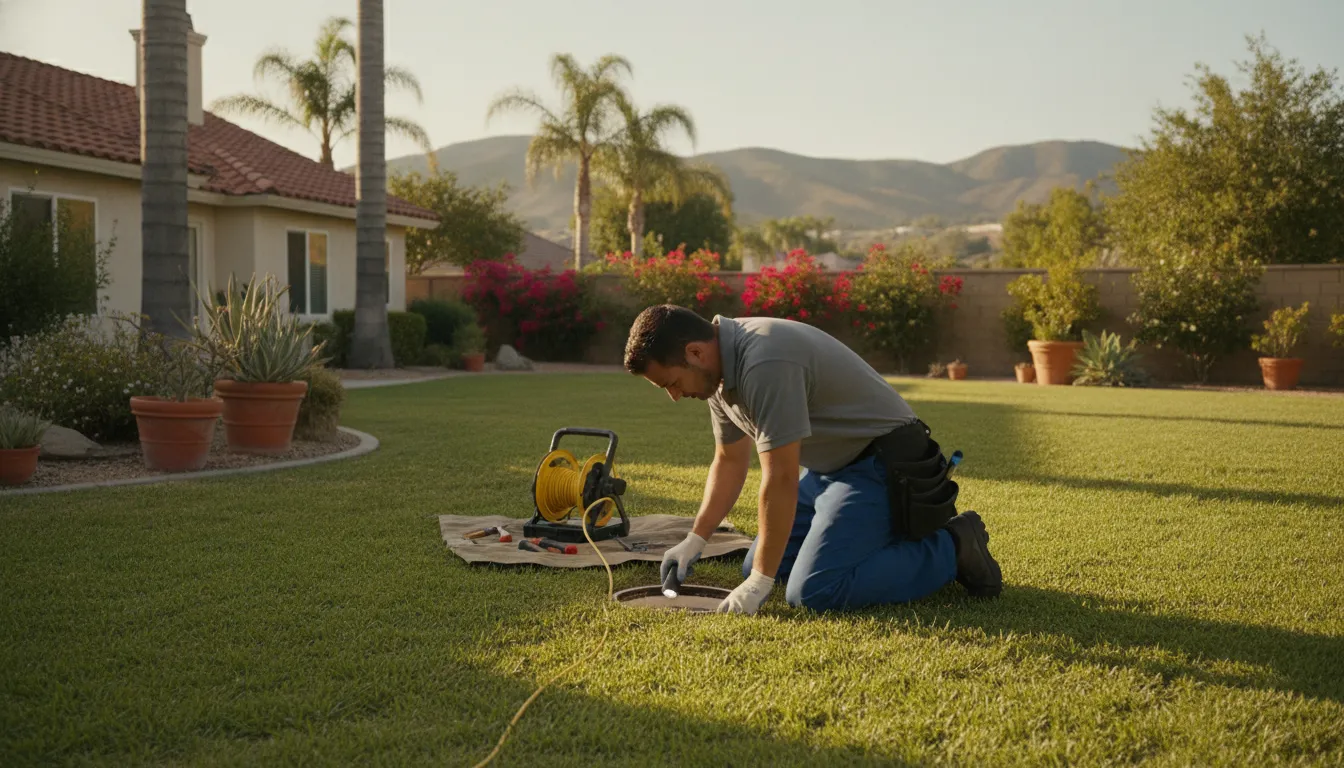
Outside, a cleanout may be near the foundation or in the front yard, generally along the route of the main sewer line. It often appears as a short, vertical, capped pipe approximately three to four inches wide. Some properties have more than one access point, while others have a cleanout that is buried, obscured by landscaping, or difficult to identify. Indoor cleanouts may be found near other utility connections or at a lower level of the building.
Owners can observe these areas from a safe position and note visible caps, standing water, sewage odors, or recent backups. Do not assume an unfamiliar capped pipe is a sewer cleanout, and do not force a buried, damaged, or stuck cap. If wastewater is present around the access point, opening it can release contaminated material under pressure and worsen the mess. Keep people and pets away and arrange a professional assessment instead.
When access is uncertain
Finding the access point does not establish whether the main sewer line is blocked, damaged, or functioning normally. Inspection scope and available access affect the evaluation. For context on what can influence an inspection, review these sewer camera inspection details. A professional can identify the appropriate entry point and use the findings to separate a branch-drain concern from a main-line issue.
What Are Signs of a Main Sewer Line Problem?
A problem in the main sewer line often affects more than one fixture because that line receives flow from multiple branch drains. Toilets, sinks, tubs, and showers may drain slowly or back up at about the same time. That pattern is more concerning than one isolated slow sink, although it still does not identify the exact cause by itself.
Warning signs that deserve attention
- Several fixtures change at once: Water may rise in a shower when a toilet is flushed, or a floor drain may become slow while other fixtures are also affected.
- Gurgling or unusual drain sounds: Bubbling and gurgling can indicate trapped air or restricted flow. Treat them as clues, not proof of a broken pipe.
- Persistent odors: A sewage smell indoors or near a cleanout may signal a drainage problem, a damaged connection, or another issue that needs evaluation.
- Water at a cleanout or low fixture: Sewage or dirty water emerging from a cleanout, or standing around it, warrants prompt professional assessment. A basement or lowest-level fixture may show trouble before higher fixtures do.
- Recurring stoppages: If the same backup returns after a line has been cleared, the underlying restriction may remain. Repetition can point toward buildup, pipe damage, settling, or roots rather than a one-time obstruction.
Could a broken main sewer line cause these symptoms?
It can, but symptoms alone cannot confirm a break. A broken or separated section may produce repeated backups, wet areas, foul odors, unusual depressions in the ground, or poor drainage. Root intrusion is another possibility, especially when stoppages and overflows recur. Roots can enter at pipe joints and cause damage as they grow. A professional sewer cleaning guidance resource can help explain cleaning as one possible response, but cleaning does not prove that the pipe is structurally sound.
Inspection is the step that separates a warning sign from a diagnosis. A camera report can document root problems and help assess their extent, rather than relying on a single symptom. Until the cause is known, limit water use if wastewater is backing up and avoid assuming that replacement is necessary. A qualified assessment can identify whether the issue is in the building line, private lateral, or another part of the system.
How Is a Main Sewer Line Inspected and Cleared?
A professional evaluation separates a temporary obstruction from a damaged or root-affected pipe. The exact approach depends on the symptoms, available access, pipe condition, and whether the property connects to a municipal sewer or a septic system. A cleanout, when present, gives a plumber direct access to the main sewer line instead of relying only on interior fixtures.
- Review the symptoms. The plumber first asks which fixtures are affected, when the problem began, whether backups recur, and whether wastewater is appearing near a cleanout. Symptoms help establish a pattern, but they do not prove where the restriction is or whether the pipe needs repair. One slow drain can involve a branch line, while several affected fixtures may point farther downstream.
- Identify safe access. The inspection may use an exterior or interior cleanout, depending on the property’s layout. Access conditions, pipe location, and the amount of wastewater present affect how the work is planned. A sewer camera inspection discussion should account for these scope and access factors, as explained in sewer camera inspection details.
- Use a camera when indicated. A camera can show whether the concern involves buildup, a displaced joint, roots, a crack, sagging, or another condition. Root growth can enter joints and contribute to pipe damage as it expands. Video documentation helps assess the extent of root intrusion rather than treating a symptom as a diagnosis. Not every visit requires a camera, but it can be valuable when a stoppage recurs or the cause is unclear.
- Choose an appropriate clearing method. If the evaluation supports a blockage, the plumber selects a clearing approach suited to the pipe and obstruction. This is a high-level decision, not a reason to force equipment through an unknown line. For a broader explanation of service approaches and planning, see this guide to professional sewer cleaning guidance.
- Check flow and explain the next step. After clearing, the plumber verifies that wastewater moves through the line as expected and discusses what the findings mean. If the camera or flow check indicates structural damage, recurring roots, or another persistent issue, the next step may be monitoring, further evaluation, or repair planning. The goal is to match the recommendation to the documented cause and scope, not to assume that every backup requires replacement.
For properties in Riverside and San Bernardino County, a clear inspection record can help owners make a measured decision about cleaning, repair, or follow-up maintenance.
Main Sewer Line Cleaning vs. Repair: Which Fits?
Cleaning and repair solve different problems, even when the first symptom looks the same. Cleaning is intended to restore flow through an obstructed pipe. Repair addresses a damaged, displaced, or persistently leaking section that may continue to cause trouble after the immediate restriction is cleared. Because symptoms alone do not prove the cause or scope, an inspection should guide the decision.
How to compare main sewer line cleaning and repair
| Decision point | Cleaning | Repair |
|---|---|---|
| Purpose | Remove a blockage or buildup so wastewater can move through the existing pipe. | Correct a damaged, separated, collapsed, or persistently leaking section of pipe. |
| Clues | A stoppage or slow flow may be the issue, especially when the pipe remains structurally sound. | Repeated stoppages, visible damage, root-related intrusion, or evidence of leakage can point toward a larger problem. |
| Inspection role | Access and inspection help identify where the restriction is and whether flow improves after clearing. | Inspection helps locate the affected section and determine whether the damage is limited or extends along the line. |
| Likely outcome | Improved flow when the underlying pipe is serviceable and the obstruction is the main issue. | A lasting correction requires addressing the failed section, not only opening a temporary path through it. |
| Limits | Clearing does not rebuild a cracked or collapsed pipe, and recurring symptoms warrant further evaluation. | Repair is not automatically indicated by one backup. The observed condition, access, and affected section should support the recommendation. |
Why water intrusion changes the conversation
Sanitary sewers are designed to carry domestic, industrial, and commercial wastewater, not storm water. The EPA notes that storm water can still enter through cracks, particularly in older lines, and through roof or basement drains. A cleaning may restore flow, but it does not correct a pathway that allows unwanted water into the system. Read the EPA primer on sanitary sewer systems for that distinction.
Laterals can also matter. The University of Wisconsin-Milwaukee notes that leaky sewer laterals remain significant contributors to inflow and infiltration. Its infrastructure brief provides additional context. If the affected portion is a private lateral rather than the building’s main line, the appropriate scope may be different. Review sewer line repair options and the sewer lateral replacement process before deciding what work applies. Cleaning can be a sensible first step for a confirmed obstruction, while repair deserves consideration when inspection shows structural failure or recurring leakage.
Who Is Responsible for the Main Sewer Line?
Responsibility for a sewer problem is not determined by the phrase “main sewer line” alone. The answer depends on which section failed, where the property connects to the system, whether an easement is involved, and the rules of the local sewer utility. Before arranging major work, identify the affected section and confirm the applicable property and utility requirements.
Private building lines and sewer laterals
A private building line carries wastewater away from the structure and receives flow from branch drains inside the property. A sewer lateral is the connecting pipe that conveys sewage from a home or business toward a public main, trunk, or interceptor line. The U.S. Environmental Protection Agency describes laterals as small pipes serving homes and businesses before wastewater reaches larger sewer infrastructure. That distinction matters because a failure on private property may be handled differently from a failure in the public main.
Property boundaries do not always provide the full answer. A lateral may cross an easement, connect at a shared point, or be governed by local requirements that differ between communities in Riverside and San Bernardino County. Ask the utility or a qualified plumbing professional where the failed section begins and ends, then review any available site plans, easement documents, or prior inspection records.
Public sewer mains and septic systems
The public sewer main is part of the community collection system, not the same component as the building’s private line or lateral. A property served by a septic system follows a different arrangement: wastewater flows to a private septic tank and related components rather than a municipal sewer main. These systems should not be treated as interchangeable. Diamond House Plumbing outlines the distinction through its septic system services information.
Commercial properties need a disruption plan
For a business, determining the responsible section is only part of the decision. Access, operating hours, tenant needs, and the effect of restricted plumbing service can shape the work plan. Commercial owners can review commercial sewer line repair options with a focus on coordinating evaluation and maintenance to limit avoidable business disruption.
How Can Property Owners Prevent Main Sewer Line Problems?
Prevention starts with knowing the condition and layout of the property’s main sewer line. Keep cleanouts, access points, and the likely pipe route visible and free from landscaping, stored materials, or permanent coverings. Clear access makes it easier to investigate a recurring symptom before a small concern becomes a larger disruption.
Track patterns instead of isolated symptoms
Keep a simple record of slow drains, gurgling, odors, backups, prior clearing work, and any camera findings. A single symptom does not prove that the main line is blocked or damaged, but repeated problems in multiple fixtures deserve attention. If an inspection documents roots, cracks, or another recurring condition, retain the video report and notes so future service decisions are based on the pipe’s history. For older properties or sites with mature trees, inspection timing may need to be more frequent than a routine interval. The right schedule depends on the property’s age, pipe condition, access, and prior problems, not a fixed calendar promise.
Manage trees and respond early
Tree placement and installation quality both affect root risk. Properly sealed joints and thoughtful planting choices can reduce opportunities for roots to enter sewer piping. Do not assume that removing a visible tree addresses the entire issue. If roots are suspected, a camera assessment can help document their location and extent before an owner chooses cleaning, repair, or a sewer lateral replacement process.
Plan commercial maintenance around operations
For a business, schedule evaluations and maintenance during a lower-impact operating period when practical. Coordinate access, tenant communication, and temporary service needs with the contractor. Diamond House Plumbing provides sewer-lateral services for residential and commercial properties, with planning that can help limit business disruption. Owners in Riverside and San Bernardino County can contact Diamond House Plumbing before deciding what work is appropriate.
Contact Diamond House Plumbing to discuss a main sewer line concern.
Frequently Asked Questions
What is the main sewer line?
The main sewer line is the larger drain serving a property. It collects wastewater from branch drains and carries it toward a municipal sewer connection or, where applicable, a septic tank. A private sewer lateral may then connect the property to public sewer infrastructure. These components are related, but they are not the same section of pipe.
How do you find the main sewer line in a home?
Start by tracing where several fixtures drain, then look near the lowest point of the plumbing system. A capped cleanout may be near the foundation or in a front yard, while some homes have an indoor access point in a basement, garage, or utility area. Locations vary, so a plumber can confirm the route and access safely.
How can you tell if the main sewer line is broken?
Repeated backups in multiple fixtures, sewage near a cleanout, foul odors, or recurring stoppages can indicate a main-line problem, but symptoms do not prove a break. A camera inspection can document root intrusion and help assess its extent, as described by the CDC archive: sewer video documentation helps evaluate root problems.
How do you clear the main sewer line?
A professional typically reviews the symptoms, accesses the line through a cleanout when available, and selects a clearing method suited to the obstruction. If the issue returns or damage is suspected, a camera inspection helps identify the cause before further work. Clearing may restore flow, but it does not automatically correct a cracked, shifted, or root-affected pipe.
Who is responsible for the main sewer line?
Responsibility depends on the failed section, the property connection, local utility rules, and any easements. The private building line, sewer lateral, public main, and septic components have different roles. Confirming the exact location of the problem is the practical first step, especially for commercial properties where service planning can help limit disruption.
Contact Us to Discuss Your Main Sewer Line
If you are seeing repeated drainage issues or want a clearer understanding of what may be happening in your property’s main sewer line, a focused evaluation can help identify practical next steps. Diamond House Plumbing serves property owners across Riverside and San Bernardino County with service-focused guidance for residential and commercial plumbing needs. Contact us through the live contact page to discuss your situation and arrange the appropriate evaluation.

Leave a Reply