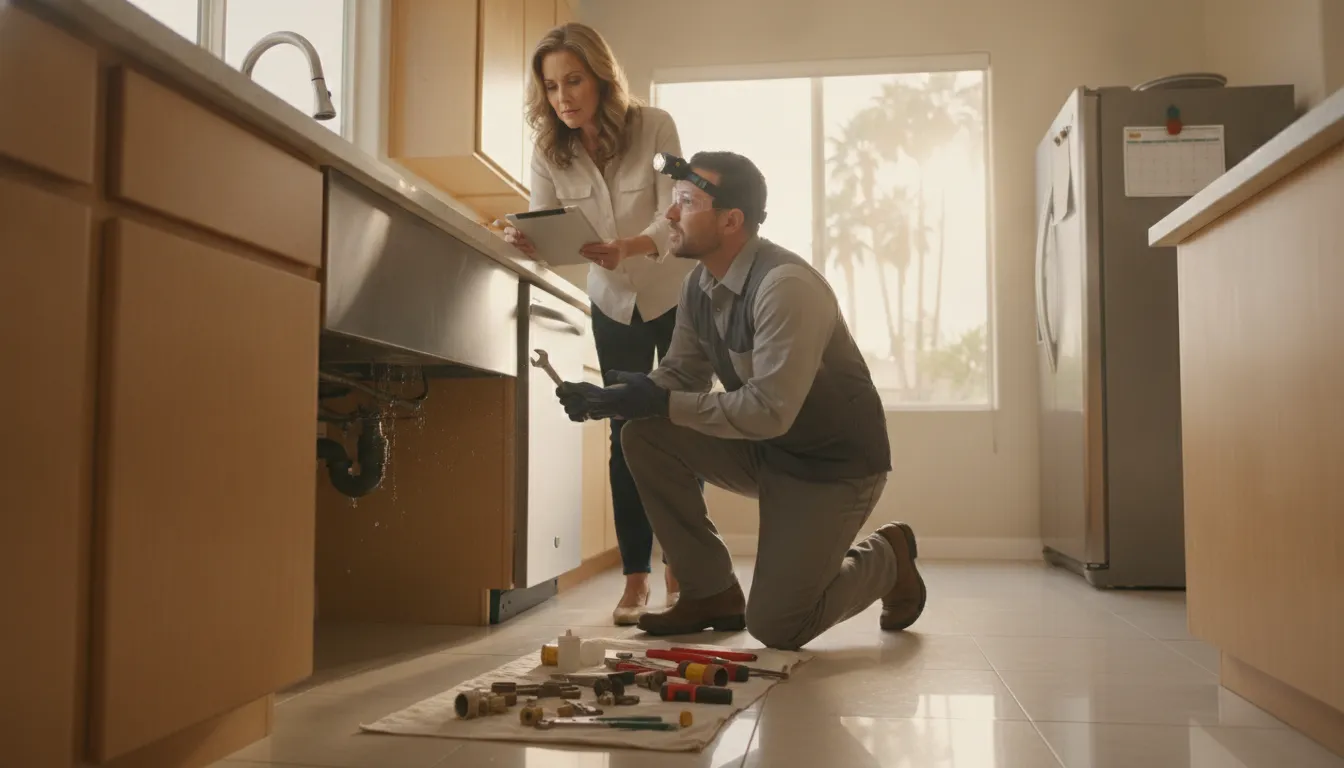
When a leak, clogged drain, failing fixture, or water heater problem interrupts your day. Affordable plumbing repair Riverside property owners can rely on should start with a clear diagnosis. The goal is not simply to choose the lowest number on a quote. It is to understand what failed, what work is actually needed, and which repair plan protects the property without adding unnecessary work.
This guide explains how to evaluate repair options, recognize problems that should not wait, and compare plumbing providers in Riverside. It also covers questions that can help homeowners and commercial property owners keep the scope focused. A qualified evaluation is especially important when symptoms could point to a hidden leak, sewer lateral issue, or septic system failure.
Diamond House Plumbing serves residential and commercial properties throughout Riverside and San Bernardino County. Its work includes general plumbing repairs along with specialized septic and sewer services. The practical approach is simple: identify the cause, explain the scope, and recommend a solution that fits the condition of the system and the needs of the property.
What Does Affordable Plumbing Repair in Riverside Actually Mean?
Affordable plumbing repair in Riverside means receiving a repair plan that is appropriate to the problem, clearly explained, and priced from the actual scope of work. It does not mean selecting a provider based only on a low initial claim. A quote can be difficult to evaluate when the cause of the problem has not been identified or when the proposed work is not explained.
Start with the diagnosis
The first useful question is what is causing the symptom. A wet cabinet, slow drain, low water pressure, or lack of hot water can have more than one possible cause. A professional evaluation helps separate a fixture issue from a supply-pipe problem. A local clog from a larger drain concern, or a water-heater symptom from a broader plumbing issue. That distinction matters because a repair aimed at the wrong cause may not solve the problem.
Match the work to the system
A fair repair plan should identify the affected component, the work required, and any conditions that could change the scope. For a residential property, that may involve a fixture, drain, water line, pipe, or water heater. For a commercial property, the plan may also need to consider operating hours, access, customer areas, and how work can be organized to limit disruption. In Riverside, older homes, commercial facilities, and properties with septic or sewer laterals may present very different repair conditions.
Compare clarity, not just totals
When reviewing estimates, compare the diagnosis, materials or components identified, labor scope, access requirements, and restoration responsibilities. Ask which items are required now and which are maintenance recommendations. If replacement is proposed, ask why a repair is not suitable. If a repair is proposed, ask what condition would make replacement more appropriate. These questions help property owners make an informed decision without relying on a vague promise.
Diamond House Plumbing uses a consultation-based process in which an evaluation informs the estimate and the scope is explained. The company emphasizes fair pricing and quality workmanship rather than an unsupported lowest-price claim. That distinction is useful for any Riverside property owner trying to control costs while still addressing the underlying plumbing problem.
Which Plumbing Problems Can Be Repaired?
Plumbing repair can involve a single fixture, a section of pipe, a drain, or a larger system. The right response depends on the symptom, the source of the failure, the condition of surrounding components. And whether the property is connected to a municipal sewer or uses a septic system. A professional assessment can establish the boundary of the repair before work begins.
Leaks, pipes, and fixtures
General plumbing repairs may include leak detection, pipe repairs, fixture repairs, water-line work, and system upgrades. A visible leak is not always located at the point where water appears. A technician may need to assess nearby connections, supply lines, valves, walls, ceilings, or flooring before recommending a repair. Fixture issues can include faucets, toilets, and other components that affect daily use.
Homeowners can review residential plumbing services when they need help with a household repair or want to understand the broader service scope. Commercial properties may need a plan that accounts for multiple fixtures, tenant areas, restrooms, equipment, or scheduled access.
Drains and sewer lines
Slow drainage, recurring clogs, foul odors, or backups can indicate a localized drain concern or a problem farther along the sewer system. Drain cleaning may address buildup or an obstruction, while a damaged sewer line or lateral may require a different repair approach. The important distinction is whether cleaning restores flow or whether the pipe itself needs attention. The drains and sewer services page is a relevant next step for property owners with persistent drainage or sewer symptoms.
Water heaters, septic systems, and upgrades
Water-heater service may address a loss of hot water, leaks, unusual operation, or a component that is no longer working as expected. See the water heater service page for a focused service path. Diamond House Plumbing also specializes in septic systems and sewer laterals. Septic owners can review septic system services when symptoms involve sewage, backups, drainage fields, or system performance. These situations need a system-level assessment rather than a quick assumption about the source.
When Should a Riverside Property Owner Call a Plumber?
Some plumbing symptoms can wait for a scheduled evaluation, while others can cause property damage or interrupt a business if they continue. Calling early gives a professional more information to work with and may make it easier to define a focused repair scope. It also helps distinguish a minor fixture issue from a leak, sewer, or septic concern that needs faster attention.
Signs that deserve prompt attention
- Water is pooling under a sink, around a water heater, near a toilet, or along a wall or ceiling.
- A drain remains slow after normal use patterns change or several fixtures begin draining poorly.
- Water pressure changes, pipes make unusual sounds, or a supply line shows visible damage.
- Hot water is inconsistent, unavailable, discolored, or accompanied by signs of a leak.
- There is a sewage odor, a backup, wastewater near a drain, or repeated toilet overflow.
- A septic property develops drainage problems, wet areas, odors, or other changes in system performance.
Consider the property and the consequences
For a home, a small leak can affect cabinets, flooring, walls, or personal belongings. For a commercial property, a plumbing failure may affect restrooms, customers, employees, equipment, or operating hours. The repair plan should account for access and timing, not just the component that failed. Diamond House Plumbing describes commercial service around repair, emergency response, scheduled maintenance, and minimizing disruption.
Know when cleaning is not enough
Drain symptoms can be caused by buildup, an obstruction, a damaged pipe, or a sewer lateral problem. If the same issue keeps returning, a provider should evaluate why instead of treating each recurrence as an isolated clog. The drains and sewer service path can help owners start that conversation. Septic-related symptoms also warrant qualified evaluation because the tank, lines, distribution components, and surrounding soil may affect system performance.
Do not rely on a quick workaround when water is actively escaping, sewage is backing up, or a system may be unsafe to use. Document what you see, limit avoidable water use when appropriate, and contact a qualified plumbing provider for direction.
How Can You Keep Plumbing Repair Costs Manageable?
Property owners can make repair spending easier to manage by improving the information available before work begins and by keeping the scope tied to the actual problem. The following steps do not replace a professional evaluation. They help homeowners and commercial operators ask better questions, protect the property, and avoid decisions based on incomplete information.
If you are unsure where to start, request an estimate from Diamond House Plumbing and describe the symptoms you have observed. A clear starting point can help the service discussion stay focused on diagnosis and practical next steps.
- Act when the symptom is first noticed. A small leak, recurring clog, damp cabinet, unusual water sound, or water-heater problem can become more disruptive when ignored. Contacting a provider early gives the technician a better chance to assess the issue before additional components, flooring, walls, or finishes are affected. If water is actively escaping, limit access to the affected area and follow appropriate shutoff procedures if you know how to do so safely.
- Document the pattern. Note when the problem started, where it appears, whether it is constant, and what makes it better or worse. Photos of visible water, damaged fittings, staining, or affected areas can help explain the issue. For a business, record which rooms, fixtures, tenants, or operating periods are affected. These details can make the evaluation more focused and provide a useful reference after service.
- Request a diagnosis and written scope. Ask the provider to explain the likely cause, what was inspected, the proposed repair, access requirements, included work, and excluded restoration. Estimates follow an evaluation, so a written scope is more useful than a broad verbal description. It also gives you a basis for confirming that the proposed work addresses the diagnosed problem. If more investigation is needed, ask what question the additional inspection is intended to answer.
- Ask why repair or replacement is being recommended. A repair may be appropriate when the affected component can be restored and the surrounding system is in reasonable condition. Replacement may be considered when the component is severely damaged, repeatedly failing, outdated, or connected to a wider system concern. Ask what evidence supports the recommendation, whether there are urgent and long-term options, and how each option affects future maintenance.
- Plan maintenance around the system. Preventive maintenance can help identify developing concerns, but the plan should fit the property. Homes, commercial facilities, sewer laterals, and septic systems do not have identical needs. Ask which inspections, cleaning, or operating practices are relevant and what signs should prompt another evaluation. Keep service notes and maintenance recommendations together so future decisions are based on the system’s history.
These steps make it easier to compare providers on communication, diagnosis, and scope instead of comparing incomplete numbers. A clear plan can support responsible plumbing decisions for Riverside properties while keeping attention on the work the building actually needs.
How Do You Choose a Riverside Plumbing Repair Provider?
The best provider for a Riverside repair should be able to explain the problem, match the response to the property, and communicate what happens next. A useful screening conversation does not need to be complicated. Ask questions that reveal whether the company understands the scope and can work within the conditions of a home or business.
| Decision factor | Question to ask | Why it matters |
|---|---|---|
| Service area | Do you serve my Riverside property and nearby jurisdiction? | Local access and familiarity can make scheduling and planning clearer. |
| Diagnosis | How will you identify the source of the problem? | The repair should address the cause, not only the visible symptom. |
| Scope | What work is required now, and what is optional maintenance? | A defined scope helps prevent confusion as the work progresses. |
| Communication | Will you explain repair and replacement options? | Clear explanations support an informed property decision. |
| Property care | How will access, cleanup, or business disruption be handled? | The work plan should account for occupied homes and operating businesses. |
| Specialization | Can you evaluate sewer lateral or septic concerns if needed? | Specialized systems may require more than general fixture repair. |
Look for a service fit
Diamond House Plumbing serves residential and commercial properties across Riverside and San Bernardino County. Its service profile includes general plumbing repair, leak detection, pipe work, system upgrades, septic systems, and sewer laterals. That combination can be useful when an initial symptom turns out to involve a larger system boundary.
Use a clear communication standard
A provider should be willing to explain what was observed, what remains uncertain, and what the next step is. The team should not need to make an unsupported promise to show value. For more background on the company and its local service approach, visit Diamond House Plumbing. Then compare the proposed scope with the condition of the property and the urgency of the problem.
FAQs: Affordable Plumbing Repair Riverside
How can I save money on plumbing repairs?
Act when a problem first appears, document the symptoms, request a diagnosis, and ask for a clearly defined scope. Compare what each provider observed and what work is required. A consultation-based estimate can help you understand the repair before deciding.
How much does plumbing repair cost in Riverside?
There is no responsible single price for every Riverside repair. The scope can change based on the component, access, damage, property type, and whether the issue involves a sewer lateral or septic system. A provider should evaluate the condition and explain the estimate instead of offering an unsupported number.
How do I avoid paying for work I do not need?
Ask which findings are urgent, which recommendations are preventive, and why repair or replacement is being proposed. Request a written scope and ask what areas require access. Clear communication makes it easier to separate the current repair from future maintenance.
How long does plumbing repair take?
Timing depends on the source of the problem, the affected component, access, parts, and whether the work involves a larger sewer or septic system. A plumber can provide a more useful time estimate after evaluating the property and identifying the repair scope.
What should I ask a plumbing provider before scheduling?
Ask how the provider will diagnose the problem, what work is included, whether repair or replacement is recommended, and how access or cleanup will be handled. Riverside homeowners and commercial property owners should also ask whether the company can evaluate sewer or septic concerns when those systems may be involved.
Plan Your Riverside Plumbing Repair
A clear diagnosis is the first step toward a repair plan that fits your property and priorities. Diamond House Plumbing serves Riverside and surrounding Inland Empire communities with residential, commercial, septic, sewer, and general plumbing services.
Contact Diamond House Plumbing to request an estimate or call 800-674-9440 to discuss your plumbing repair needs.

Leave a Reply