
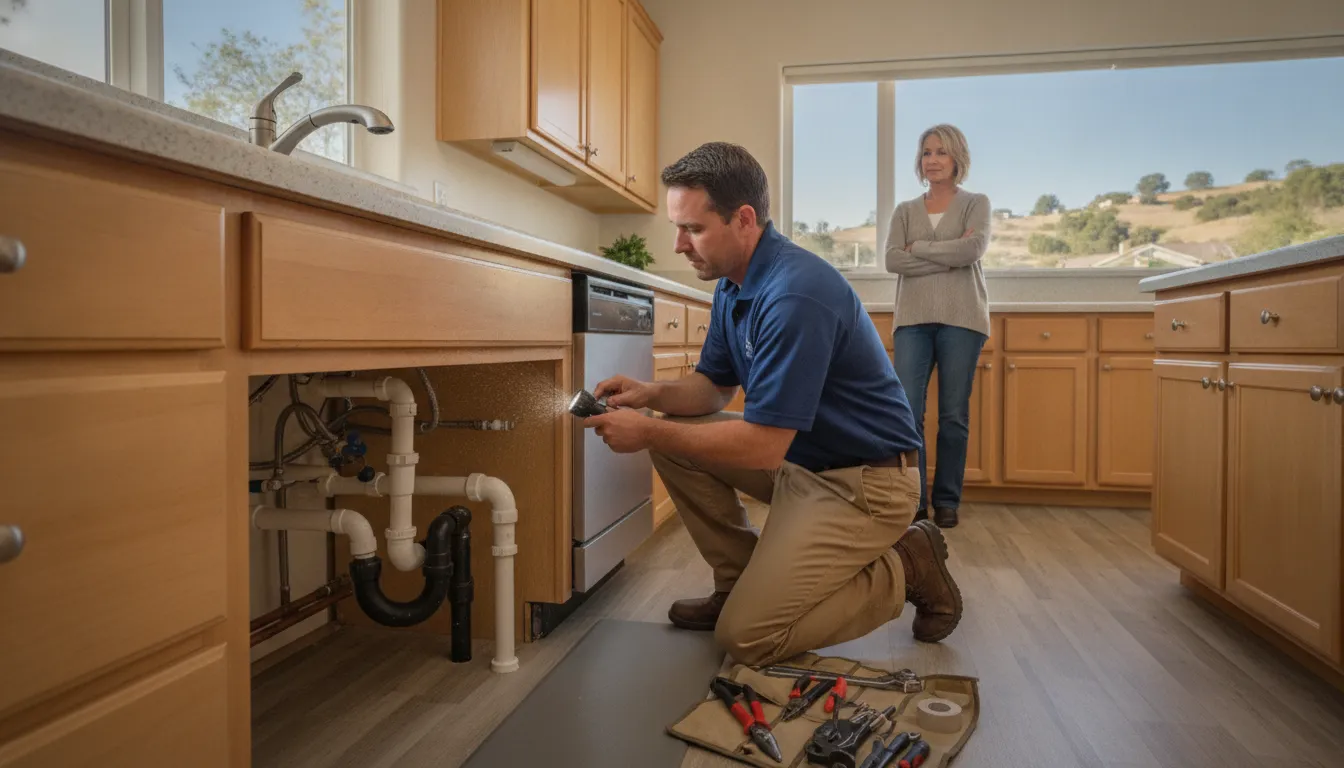
When a leak, recurring drain problem, or water heater concern disrupts daily routines, choosing the right kind of plumbing help starts with knowing which system is involved. For Yucaipa homeowners, residential plumbing services can range from fixture and pipe repairs to drain, water-line, water-heater, septic, or sewer-line assessment, depending on the property and the symptoms.
Contact Diamond House Plumbing to discuss a residential plumbing concern.
Residential plumbing services cover the assessment, repair, replacement, installation, and maintenance of the water and wastewater systems in a home. In Yucaipa, the right service depends on what is affected, whether the problem is isolated or recurring, and whether the property uses a private septic system. A qualified plumber can inspect the issue and explain appropriate next steps; symptoms alone do not confirm the cause.
Some Yucaipa and nearby Mentone properties rely on private wells or septic systems, while others use municipal connections. This guide explains common service categories, warning signs worth noting, what to ask during an assessment, and maintenance considerations for homes with onsite wastewater systems.
Choosing Residential Plumbing Services in Yucaipa
Residential plumbing covers the pipes, fixtures, and equipment that bring water into a home and carry wastewater away. The right service depends on what is affected and whether the problem is limited to one fixture or involves a larger part of the system. A plumber can inspect the issue and clarify its source before recommending work.
Common service categories include:
- Leaks and pipe repairs: locating visible or hidden leaks, repairing damaged piping, and addressing water-line concerns.
- Fixtures and upgrades: installing or replacing faucets, toilets, and other plumbing fixtures, or updating parts of a home plumbing system.
- Drains: investigating slow or blocked drains and other concerns involving wastewater flow. See drain and sewer services for related work.
- Water heaters: assessing water-heater concerns or planning a replacement; the appropriate work depends on the unit and the symptoms. Explore water-heater services.
- Maintenance: checking plumbing components as part of routine care, rather than waiting for a small concern to become more disruptive.
General plumbing work is distinct from septic and sewer specialties. A home connected to a municipal sewer typically relies on the public sewer connection. While a property with a private septic system has additional components that need appropriate assessment and care. Diamond House Plumbing provides residential sewer-line and sewer-lateral services, as well as septic installation, repair, and replacement.
Yucaipa and nearby Mentone include mountain-adjacent areas where well and septic systems are more prevalent, though that does not describe every property. If you are unsure whether a concern involves household plumbing, a sewer lateral. Or a private septic system, explain what you have noticed and what type of system serves the home. A professional can help determine which service scope fits; symptoms alone do not confirm the cause.
For homes with a private system, learn more about septic system services.
| Concern | What to note | Possible assessment focus |
|---|---|---|
| One fixture or connection | Which fixture is affected and when the symptom occurs | Fixture, valve, or nearby connection |
| Recurring or multiple slow drains | Whether more than one drain is affected or the issue returns | Drain pathway or a wider sewer concern |
| Water heater change | When hot water changed and whether there is visible leakage | Unit condition and suitable repair or replacement options |
| Private septic system concern | System type, service records, and changes around the property | Onsite system components and maintenance history |
This comparison is a way to organize observations, not a diagnosis. The appropriate inspection depends on the home and the findings.
What Signs Mean a Plumbing Problem Needs Attention?
Some plumbing concerns are visible, while others show up as a change in how water moves through the home. A damp area, a new stain, or moisture near a pipe or fixture is worth noting, even when the source is not obvious. A drain that repeatedly slows or a noticeable change in water pressure can also be useful information to share with a plumber. These signs do not identify a specific fault on their own; an inspection is needed to determine what is happening.
Pay attention to water use and billing, too. The U.S. Environmental Protection Agency recommends regularly checking for leaks and addressing any found as soon as possible. It also notes that a water bill significantly higher than the same month in the previous year may indicate an unidentified leak. The EPA’s home maintenance guidance explains why prompt attention matters: leaks can waste water and cause serious damage in a home.
A single symptom may have more than one possible explanation. For example, moisture could be coming from a plumbing connection, a fixture, or another source, so avoid treating an observation as a diagnosis. Instead, note where and when you see it, whether it returns, and which fixtures or areas are affected. If the concern involves recurring drainage, water pressure, or signs of a leak, share those details when arranging an assessment.
Do not wait for a problem to become more noticeable before seeking guidance if water is continuing to escape or damage is appearing. A qualified plumber can inspect the affected area, identify the source, and explain appropriate next steps. The goal is to respond to the evidence you can observe without guessing at the cause.
Which Home Plumbing Issues Need a Specialist?
A problem limited to one faucet, toilet, or fixture may be straightforward, but recurring symptoms or trouble affecting several areas of the home deserve a broader assessment. A plumber can check whether the concern is isolated or connected to a water line, drain, sewer, or another part of the plumbing system. The visible symptom alone does not confirm its cause.
Pay attention to patterns. If more than one drain is slow or backs up. Or the same drain problem keeps returning after it has been cleared, the issue may involve more than the fixture itself. A qualified plumber can assess the affected drains and determine whether the next step involves drain or sewer service. Learn more about drain and sewer services.
Water-line concerns also merit careful evaluation, particularly when a leak is difficult to locate, pipe trouble recurs, or water service changes across multiple fixtures. Do not assume that low pressure or dampness points to one specific failure; several conditions can produce similar signs. An on-site assessment helps establish what part of the system needs attention before repair options are discussed.
Water heaters are another case where repeated trouble or a change in operation is better assessed than guessed at. If the unit is leaking, not providing the expected hot water, or showing a recurring issue, a plumbing professional can inspect it and explain suitable next steps. See the company’s water-heater services for more information.
In parts of Yucaipa and nearby Mentone, some properties rely on private septic systems. If plumbing symptoms seem connected to the septic system, or if sewer-line concerns extend beyond an indoor fixture, seek an assessment from a provider qualified for that system. Diamond House Plumbing offers septic and sewer-line services, but the right scope depends on the property and findings. Describe what is happening, which fixtures are affected, and whether the issue has returned. That context can help guide an appropriate inspection without treating a symptom as a diagnosis.
What Should You Expect During a Professional Plumbing Assessment?
A useful assessment starts with what you have observed, then works toward identifying the source and scope of the problem. Symptoms can have more than one cause, so avoid treating a single sign as a diagnosis. Before scheduling or when the plumber arrives, these steps can help you prepare and understand the work being considered:
- Describe the symptoms and when they occur. Note what changed, when it began, whether it is constant or intermittent, and whether it gets worse after using a particular fixture or appliance. Share any recent plumbing work or changes you know about.
- Identify affected fixtures and areas. Tell the plumber which sinks, toilets, showers, drains, or other areas are involved, and whether the issue appears limited to one fixture or affects several. Point out visible dampness or water damage without opening walls or disturbing equipment.
- Make the area accessible, if it is safe. Clear personal items from around the affected fixture or accessible plumbing equipment. If water is actively escaping, use a shutoff only if you know where it is and can reach it safely. Do not enter standing water near electrical equipment, touch exposed wiring, or approach sewage or a suspected sewage backup. Keep people and pets away from those hazards and tell the plumber what you observed.
- Ask what inspection or testing is appropriate. Ask what the plumber plans to examine, whether testing is needed, and what each test can help establish. You can also ask whether the initial findings are conclusive or whether further inspection may be needed.
- Request a clear written scope and options. Before authorizing work, ask what needs attention, what is included, and whether there are reasonable repair options. Confirm any estimate, exclusions, and what could change the scope if new information emerges.
- Clarify timing and property protection. Ask how long the proposed work may take, whether water or a fixture will need to be unavailable, and how the work area and home will be protected. The answers depend on the problem and the work involved.
These are practical questions for evaluating an assessment, not a guaranteed sequence followed by every plumbing company. Clear observations and a written explanation make it easier to decide on an appropriate next step.
How Should Yucaipa Homeowners Maintain Septic Plumbing?
Some homes in Yucaipa and nearby Mentone rely on private wells and septic systems, but that does not describe every property. If your home has an onsite wastewater system, its maintenance needs depend on the system design and how the household uses it. Keep the system’s records and confirm its type before setting a service schedule.
The U.S. Environmental Protection Agency says an average household septic system should be inspected by a septic service professional at least every three years. Household tanks are typically pumped every three to five years, but that is a general range, not a fixed schedule for every home. Household size, wastewater volume, solids accumulation, and tank size all affect pumping frequency. Systems with pumps, electrical float switches, or other mechanical components generally need yearly inspections. See the EPA’s guidance on caring for a septic system for details.
Keep dated records of inspections, pumping, repairs, and other work. These records help a service professional understand the system’s history and make maintenance recommendations based on its condition, rather than guesswork. The EPA notes that providers can inspect for leaks and assess the scum and sludge layers in the tank. Homeowners should not open or enter a tank to check these conditions.
Thoughtful water use can also reduce the amount of wastewater entering the system. Address plumbing leaks and avoid sending unusually large amounts of water into the system at once where possible. A plumbing symptom alone does not confirm a septic failure, so ask a qualified professional to assess recurring issues or changes around the system.
If sewage backs up into the home, avoid contact with it because it may contain harmful pathogens. Follow the EPA’s septic malfunction guidance and contact an appropriate service provider. For help with installation, repair, or maintenance questions, review Diamond House Plumbing’s septic system services.
How Do You Choose a Residential Plumber in Yucaipa?
Start by confirming that the plumber handles the type of work your home may need and serves your part of Yucaipa. A company may offer broad residential plumbing repairs while assigning septic, sewer lateral, or well-related concerns to a specialist. Describe what you have noticed, then ask whether the service scope fits the property and whether an inspection is needed before the cause can be confirmed.
Before booking, ask a few direct questions:
- Do you serve my address, and can you take on this type of plumbing or private-system issue?
- What will the initial visit include, and how will you determine which fixtures or systems are affected?
- Will I receive a written estimate or scope that explains the proposed work before it begins?
- What scheduling window is currently available, and how will changes or delays be communicated?
- Which contractor license applies to this work, and how can I verify its status?
For California contractor work, check applicable license details through the Contractors State License Board (CSLB) rather than relying on a number repeated in an advertisement. Confirm that the listed business and license classification match the work being discussed. Ask who will perform the work and whether any permits or inspections may be relevant to the project.
A clear written scope should identify the issue being addressed, the work proposed, and any important limits or follow-up steps. If the plumber has not inspected the system, ask what remains uncertain instead of treating a symptom as a confirmed diagnosis. For warranties or other assurances, request the terms in writing and read what they cover before agreeing.
Availability can vary, so confirm the schedule for your address and the next step if the situation changes while you wait. Diamond House Plumbing serves residential customers across the Inland Empire, but homeowners should verify that the specific service and timing fit their property. To discuss the concern and confirm service scope, contact Diamond House Plumbing.
Frequently Asked Questions
Which plumbing problems should I treat as urgent?
Act promptly if water is actively escaping, a pipe has failed, or wastewater is backing up. If a safe, accessible shutoff is familiar to you, turning it off may limit further water flow. Keep clear of sewage and electrical hazards. Contact a qualified plumber to describe what is happening and confirm next steps.
What information should I have ready when requesting an assessment?
Note when the problem began, which fixtures or areas are affected, whether it happens continuously or intermittently, and any recent changes you have noticed. Mention prior repairs or relevant system details, such as a private well or septic system. These observations help explain the scope, but an inspection is needed to identify the cause.
How often should a household septic system be inspected or pumped?
The EPA recommends that an average household septic system be inspected at least every three years; pumping is typically recommended every three to five years. Actual timing depends on household size, water use, solids, tank size, and system type. Keep maintenance records, and follow a qualified service provider’s guidance for your system. EPA septic system care guidance.
What residential plumbing work can a plumber assess?
An assessment may cover concerns such as leaks, pipes, drains, water lines, fixtures, water heaters, and plumbing maintenance. Septic or sewer-line concerns may call for specific system expertise. Explain the symptoms and ask which parts of the system will be evaluated. What the proposed work includes, and whether any additional inspection is needed before a repair is recommended.
Contact Us About Your Home Plumbing Needs
Plumbing concerns can involve a single fixture or a larger part of the system, and the right next step depends on what you are noticing. A clear description of the issue can help start a useful conversation about your home and the service you may need. To discuss a residential plumbing concern, contact Diamond House Plumbing through the verified contact page.

Leave a Reply