
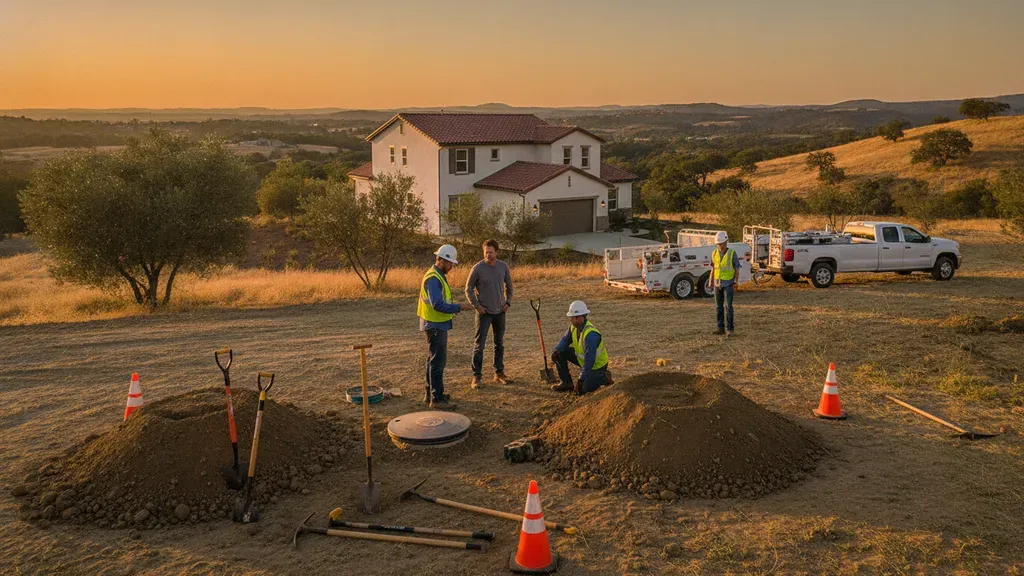
Affordable septic system installation is not about choosing the lowest proposal without understanding what it includes. For property owners in Riverside and San Bernardino County, an affordable project starts with a clear site evaluation, a system design that fits the property, and a written scope that accounts for the work required from planning through final surface restoration.
Planning a new septic system? Review Diamond House Plumbing septic services and contact the team about your property.
An affordable septic system installation matches the system design and project scope to the property’s actual conditions. Compare proposals by included services, site requirements, permits, materials, excavation, restoration, and long-term maintenance rather than by one headline number. A local evaluation helps identify the appropriate next step.
Diamond House Plumbing provides septic services for residential and commercial properties, including inspections, repairs, complete septic system installations, leach line replacement, hydro jetting, and camera inspections. The goal of this guide is to help you ask better questions and avoid scope surprises. It does not replace an on-site assessment or promise a particular project price.
What makes a septic installation affordable?
An affordable septic installation is a properly planned project that controls avoidable changes while still meeting the property’s wastewater needs and applicable county requirements. It considers the site, household or business use, system design, access, excavation, materials, approvals, restoration, and maintenance before work begins.
Affordability is best understood as value over the life of the system. A proposal can look attractive at first and still become difficult to manage if it leaves out testing, design, access preparation, disposal, electrical work, restoration, or required approvals. Conversely, a more complete proposal may make the total scope easier to understand and compare.
That is why two properties in the same Inland Empire community can need different installation plans. Soil conditions, available space, grade, driveway location, existing plumbing, property use, and the number of people or occupants all affect the design discussion. A residential property and a commercial property may also have different flow expectations and operating considerations.
Diamond House Plumbing’s septic services page describes complete septic systems installed to county requirements, along with inspection, repair, leach line replacement, and related services. Those capabilities make a professional conversation more useful than selecting a system from a generic checklist.
Which site factors affect the project scope?
Site factors that can affect septic installation scope include soil and percolation conditions, available drain field area, property grade, setbacks, access for equipment, existing system layout, wastewater demand, and the need to protect or restore driveways and finished surfaces.
A responsible evaluation begins with the property rather than a standard package. Ask the installer to explain how each of the following factors affects the proposed design:
- Soil and percolation conditions: The way soil accepts and moves effluent helps determine whether a conventional or more engineered approach is appropriate.
- Available space: The location of the tank, drain field, or other subsurface components must fit the property and maintain applicable separation requirements.
- Grade and drainage: Slopes and surface water patterns can influence layout, excavation, and the need for additional design considerations.
- Property access: Equipment access affects excavation, material delivery, tank placement, and restoration planning.
- Existing plumbing: The connection from the building to the onsite system should be evaluated along with the tank and dispersal components.
- Expected wastewater demand: Household size, bedrooms, fixtures, occupancy, and commercial use can affect system sizing and design.
- Finished surfaces: A driveway, concrete area, landscaping, or other surface may require protection or restoration after installation.
In Riverside, Moreno Valley, Hemet, Perris, Beaumont, Banning, Palm Springs, and surrounding communities, the site conditions can vary considerably. The same is true across San Bernardino County, from San Bernardino and Rialto to Redlands, Fontana, Chino, Ontario, and Yucaipa. Local context is useful, but the property itself remains the deciding factor. For general background, the U.S. Environmental Protection Agency overview of septic system types explains why site conditions and use affect system design.
How can you compare septic installation proposals?
Compare septic installation proposals line by line. Confirm that each proposal addresses evaluation, design, permits or approvals, tank and dispersal components, excavation, connections, testing, cleanup, surface restoration, and warranty or maintenance information. A clear scope is more useful than comparing abbreviated totals that describe different projects.
Use a written comparison like the one below when reviewing proposals. The goal is not to force every contractor into identical wording. The goal is to identify where one scope includes work that another scope leaves unclear.
| Proposal item | Question to ask | Why it matters |
|---|---|---|
| Site evaluation and design | What property information was used to develop the recommendation? | Connects the proposed system to actual site conditions. |
| Approvals and requirements | Which county or local requirements apply, and who coordinates the needed steps? | Reduces the risk of a plan that cannot move forward as expected. |
| System components | Which tank, lines, drain field, seepage pit, or other components are included? | Shows exactly what the proposed system contains. |
| Excavation and access | How will equipment reach the work area, and what excavation is anticipated? | Surfaces property access and construction impacts early. |
| Connections and testing | Are building connections, inspections, tests, and commissioning included? | Clarifies how the installed system will be brought into service. |
| Restoration | What happens to soil, asphalt, concrete, landscaping, or other disturbed areas? | Prevents an important closeout item from remaining undefined. |
| Care after installation | What maintenance and inspection practices are recommended? | Helps protect system performance after the construction phase. |
Be cautious when a proposal uses broad phrases such as complete installation without defining the included work. Ask for clarification in writing. You should also ask which conditions would require a change in scope and how those changes would be communicated before additional work proceeds.
What steps are involved in a new septic system installation?
A new septic installation generally moves from property evaluation to system design, approvals, site preparation, component installation, building connections, inspection or testing, and restoration. The exact sequence depends on the property, the selected system, applicable requirements, and the condition of any existing infrastructure.
- Evaluate the property: Review the building, existing plumbing, available installation areas, access, grade, soil information, and expected wastewater demand.
- Define the system design: Identify the tank, dispersal area, lines, pumps or other components that the property may require. The design should be explained in terms a property owner can understand.
- Confirm approvals and scheduling: Establish which county or local steps apply, what documentation is needed, and when work can proceed.
- Prepare the site: Plan equipment access, protect the work area where practical, mark utilities, and coordinate excavation and material delivery.
- Install the system: Place the tank and other components, complete the required connections, and construct the dispersal or leach system according to the approved scope.
- Inspect and close out: Complete applicable inspections or tests, explain the system to the owner, clean the area, and address the agreed restoration work.
Every project should have a clear point of contact. If questions arise after excavation exposes different conditions than expected, the owner should know who explains the issue, documents the change, and confirms the next decision.
Need help understanding the right starting point? Contact Diamond House Plumbing to discuss an evaluation and next steps.
How can property owners control avoidable installation costs?
Property owners can control avoidable installation costs by gathering existing system records, identifying access and surface constraints early, requesting a detailed written scope, confirming approvals, asking about change-order conditions, and planning maintenance before construction starts. These steps improve clarity without cutting necessary design or installation work.
There are several practical ways to make the project easier to plan:
- Collect what you already know: Keep prior inspection reports, pumping records, permits, site plans, and information about recurring backups available for the evaluation.
- Describe the property accurately: Share occupancy, bedrooms, business use, additions, irrigation, driveways, and any areas where heavy equipment may be difficult to use.
- Point out access constraints: Mention gates, narrow driveways, slopes, landscaping, retaining walls, pools, concrete, and other features that could affect equipment movement.
- Ask for a complete scope: Confirm what is included and what is excluded before comparing proposals.
- Clarify possible changes: Ask how unexpected soil, utility, structural, or access conditions will be documented and approved.
- Plan for the finished property: Discuss how disturbed soil, asphalt, concrete, landscaping, and drainage will be handled.
- Schedule maintenance: Learn the recommended inspection and pumping practices so the new system is protected after installation.
These actions do not guarantee a specific outcome or eliminate the need for professional judgment. They give the property owner better information before committing to a scope.
What should Inland Empire property owners ask an installer?
Ask an installer how the system was selected, which site conditions were reviewed, what approvals apply, what the proposal includes, what can change the scope, how access and restoration will be handled, and what maintenance the completed system will need.
Use these questions during a consultation:
- What problem is the proposed installation intended to solve?
- Which parts of the existing system, if any, can remain in service?
- What site information supports the recommended layout and system type?
- What county requirements or approvals should be confirmed before construction?
- Does the proposal include the tank, dispersal components, connections, excavation, testing, cleanup, and restoration?
- What property access or surface protection issues should be planned before the crew arrives?
- What conditions could change the scope after excavation begins?
- What maintenance practices will help protect the new system?
- Who should the owner contact if a question comes up during or after installation?
Clear answers are especially important for commercial properties, additions, older homes, and sites with limited space. Diamond House Plumbing serves residential and commercial customers and specializes in septic systems and sewer laterals, so the consultation can account for both routine property needs and more involved site conditions.
How does maintenance protect the installation?
Maintenance protects a septic installation by helping identify developing problems before they become backups, drain field damage, or larger repairs. Follow the service recommendations for the installed system, use inspections and pumping as advised, and address slow drains, odors, wet areas, or sewage symptoms promptly.
A new system still needs responsible use and ongoing care. Avoid treating the tank or drain field as an unlimited disposal system. Ask what should not enter the system, how water use affects performance, and when the system should be inspected. Keep records of service visits and note any changes in drainage, odors, surface moisture, or backup behavior.
Diamond House Plumbing’s septic services page identifies preventive maintenance as a way to help prevent sewage backups, reduce emergency repairs, protect the drain field, and catch small issues before they become larger ones. The right maintenance schedule depends on the property and installed system, so use a professional recommendation rather than a universal calendar.
For additional background, review the septic system inspection guide and the septic tank installation cost guide. The cost guide can help explain why site conditions matter, while this article focuses on evaluating installation scope and value without relying on an unsupported price promise.
Frequently asked questions
What is the first step in an affordable septic system installation?
The first step is a property-specific evaluation. The installer should review the building, existing plumbing, soil and site information, available space, access, expected wastewater demand, and applicable county requirements before recommending a system or scope.
Can an affordable septic installation use the smallest possible system?
Not necessarily. The system must fit the property’s wastewater needs and site requirements. Selecting components only because they appear smaller can create an unsuitable design. Ask the installer to explain how capacity and layout were determined for the property.
Should I compare septic proposals by the total alone?
No. Compare the included scope, materials, excavation, connections, inspections or testing, restoration, and post-installation guidance. Two totals may describe different amounts of work, so a line-by-line comparison provides better information.
Does every property need the same septic installation process?
No. Soil, grade, available space, access, existing infrastructure, property use, and local requirements can change the design and sequence. A residential property and a commercial property may have different wastewater demands and planning needs.
What should I do if the proposed scope changes during excavation?
Ask the installer to pause and explain the condition, document the change, describe the options, and confirm any revised scope before additional work proceeds. Written communication helps the owner understand why the change is needed.
How can I prepare my property for septic installation?
Gather available records, identify gates and access limits, disclose utilities and finished surfaces, clear the agreed work area, and discuss equipment movement and restoration before scheduling. The installer can confirm any additional preparation specific to the site.
Ready to discuss a septic project in Riverside or San Bernardino County? Contact Diamond House Plumbing about septic installation, inspection, repair, and related services.
An affordable septic system installation is built on clear scope, appropriate design, and informed decisions. By evaluating the property first and comparing complete proposals, owners can protect their project goals without confusing a low headline number with long-term value.

Leave a Reply