
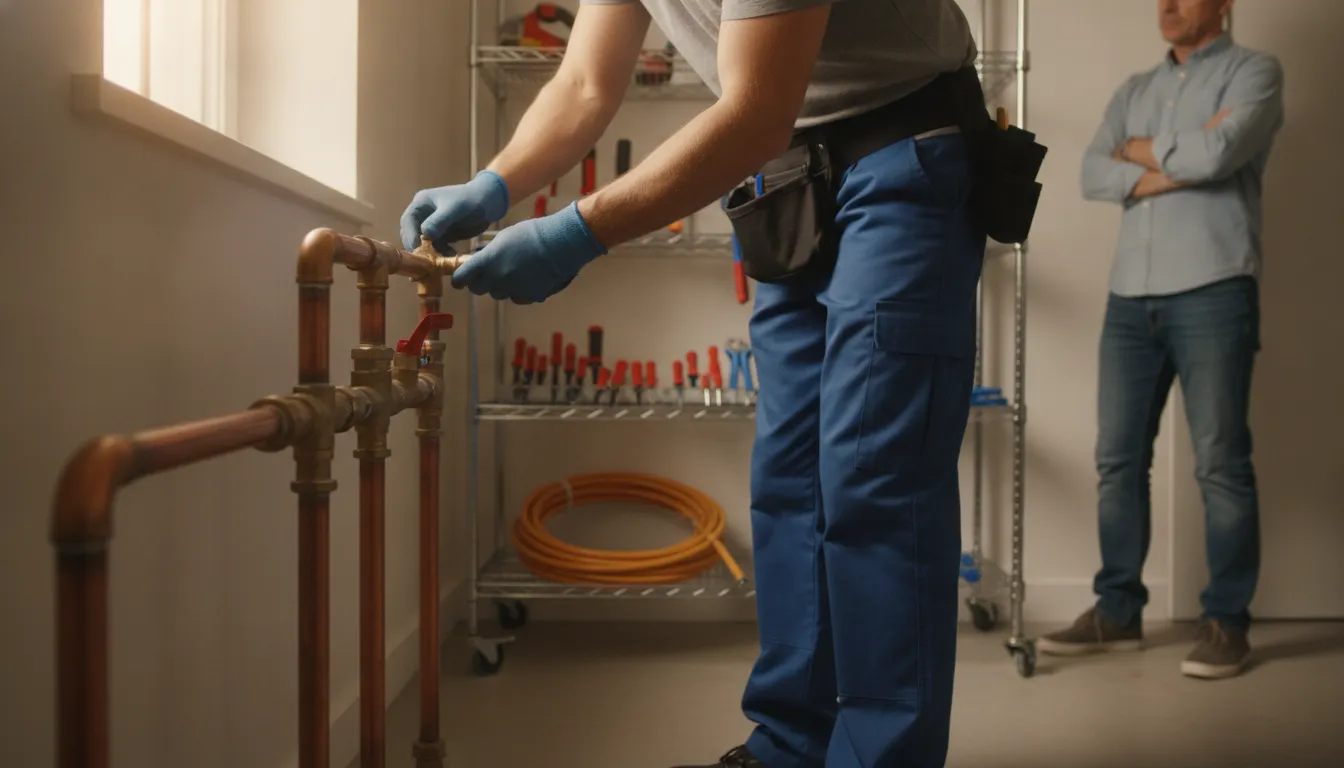
Plumbing repair covers the diagnosis and correction of problems affecting a property’s water supply, drainage, fixtures, water heaters, sewer connections, or related equipment. For homes and businesses in Riverside and San Bernardino County, recognizing the warning signs early can help protect the building and clarify when a focused repair, inspection, or larger service plan is needed.
Contact Diamond House Plumbing to discuss a plumbing repair need.
Quick answer: Plumbing repair restores a damaged, leaking, blocked, or malfunctioning part of a plumbing system after the cause has been identified. A professional repair visit typically involves assessing the symptoms, locating the source, explaining the available next steps, completing the appropriate repair, and checking the system afterward. The right method depends on the affected component and the property’s condition.
A dripping faucet may need a targeted fixture repair, while low pressure across a property, repeated backups, or water appearing near a foundation can point to a problem farther inside the system. Treating every symptom as a simple clog or leak can delay the diagnosis. The sections below explain what to watch for and what information helps a plumbing professional evaluate the problem.
What does plumbing repair include?
Plumbing repair includes work that restores the safe, reliable operation of water, drainage, sewer, and fixture systems. It may involve replacing a failed component, correcting a leak, clearing a blockage, repairing a water line, addressing a water heater issue, or evaluating a sewer or septic connection. The scope is determined by the source and condition of the problem.
Depending on the property and the symptoms, a plumbing repair visit may address:
- Leaking or damaged supply pipes, valves, and connections
- Clogged or slow drains, toilets, and branch lines
- Fixtures such as faucets, toilets, and other plumbing equipment
- Water heater problems that affect hot-water delivery
- Water-line leaks, pressure changes, or damaged buried supply lines
- Sewer lines and building laterals with recurring backups or drainage problems
- Septic components and related wastewater problems where a property uses a septic system
- Plumbing changes connected with remodels, additions, or new construction
These categories can overlap. For example, a recurring toilet backup may be a fixture-level obstruction, a branch-drain problem, or a main sewer issue. A plumber should evaluate the pattern of symptoms before recommending a repair method. Diamond House Plumbing serves both residential and commercial property owners and also specializes in septic systems and sewer laterals when a problem extends beyond an interior fixture.
Which signs mean you may need plumbing repair?
Several signs can indicate a plumbing repair need, including visible leaks, unexplained moisture, persistent low pressure, unusual odors, repeated clogs, sewage returning through a drain, or a water heater that no longer performs normally. One symptom does not identify the cause by itself, but a change that persists or affects more than one fixture deserves a closer evaluation.
Look for these common warning signs:
| Warning sign | What it may indicate | Helpful next step |
|---|---|---|
| Water under a sink, around a fixture, or near a wall | A leaking connection, supply line, drain, or concealed pipe | Limit water use in the area and arrange an inspection |
| Several slow drains at the same time | A restriction farther down the drainage system | Note which fixtures are affected and request a diagnosis |
| Low pressure across the property | A supply-side issue, valve problem, leak, or system condition | Check whether the change affects multiple fixtures |
| Water meter movement when fixtures are off | A possible concealed or underground leak | Stop water use and have the system checked |
| Foul odors or wastewater at a drain | A drainage, sewer, or septic concern | Keep people away from affected areas and seek prompt help |
| Repeated failure after a temporary fix | A source that has not been corrected | Ask for the underlying cause to be evaluated |
Pay attention to timing and location. A problem that appears only when one fixture runs may be localized. A change that appears throughout the building, follows heavy water use, or returns after a recent clearing may need a broader inspection. Recording which fixtures are affected, when the issue started, and what makes it better or worse can help the professional narrow the diagnosis.
Which plumbing problems need prompt attention?
Plumbing problems need prompt attention when they involve uncontrolled water, sewage exposure, a sudden loss of service, significant water damage, or a condition that makes a space unsafe to use. Acting quickly does not mean choosing a repair before the cause is known. It means limiting additional damage, protecting people from affected areas, and getting the right evaluation underway.
- Uncontrolled water: If a pipe or connection is actively releasing water, use the appropriate shutoff if it is safe to do so and move belongings away from the affected area.
- Sewage or wastewater: Keep people and pets away from contaminated areas, avoid using connected fixtures when practical, and arrange professional assistance.
- Multiple fixtures backing up: Several affected drains can point to a main line or larger drainage problem rather than one isolated fixture.
- Loss of water service: A sudden pressure or supply change across the property should be assessed, especially when it occurs with wet soil or visible damage.
- Water near electrical equipment: Do not enter an unsafe area. Keep clear and contact the appropriate emergency professionals before attempting access.
For commercial properties, a plumbing failure can also interrupt restrooms, cleaning, food service, tenant operations, or customer access. Diamond House Plumbing’s commercial plumbing repair guide covers the business-property considerations that differ from a single-family home.
What happens during a professional plumbing repair?
A professional plumbing repair usually begins with a review of the symptoms and an inspection of the accessible system. The plumber then identifies the likely source, explains what the findings mean, and recommends a repair path based on the condition, access, and use of the property. After the work, the system should be checked to confirm that the intended problem has been addressed.
- Describe the symptoms: Share when the problem began, which fixtures are affected, and whether the issue is constant, recurring, or tied to a particular activity.
- Inspect the system: The plumber examines visible connections, fixtures, shutoffs, drains, equipment, and other accessible components relevant to the complaint.
- Locate the source: Additional diagnostic work may be needed when the problem is concealed, underground, or farther down a sewer or water line.
- Discuss the repair path: The recommended work should be connected to the observed condition, the property’s use, and the access required to complete it.
- Complete and check the work: After the repair, the affected system is operated or inspected as appropriate to confirm the result and identify any remaining concern.
The visible symptom and the actual source are not always in the same place. A wet cabinet may reflect a supply connection, while water near a foundation may involve a buried line or another source. A slow drain may be limited to one fixture, or it may reflect a larger sewer problem. This is why a clear diagnosis is an important part of the repair process.
How can property owners prepare for a plumbing repair visit?
Property owners can prepare by documenting the symptoms, protecting the affected area, and identifying any recent changes to the plumbing system. Good information helps the plumber focus the inspection, while basic precautions can reduce additional water damage or exposure before the visit.
- Write down when the problem started and whether it has happened before.
- Note every affected fixture, room, drain, or area of the property.
- Photograph visible water, staining, standing water, or damaged materials when it is safe.
- Tell the plumber about recent remodeling, excavation, fixture changes, or prior repairs.
- Keep access paths clear to the affected fixture, cleanout, water heater, or shutoff.
- Stop using fixtures connected to a backup or leak when continued use could worsen the condition.
- Do not combine chemical products in an attempt to clear a plumbing problem.
For a commercial building, also record how the issue affects restrooms, tenants, equipment, customer areas, or operating hours. That context can help the plumbing team plan access and prioritize the most important parts of the system without assuming that every issue requires the same response.
When is a repair different from a larger replacement?
A repair addresses a specific failed part or localized condition, while replacement or a broader project may be appropriate when the affected system is extensively damaged, repeatedly failing, difficult to access, or no longer suited to the property’s needs. The distinction should come from inspection findings and the condition of the system, not from the name of the symptom alone.
| Situation | Question to ask |
|---|---|
| One accessible connection is leaking | Can the failed connection or component be restored without disturbing the wider system? |
| The same blockage or leak keeps returning | What condition is causing the recurrence, and has the source been inspected? |
| A buried water or sewer line is affected | Where is the damaged section, and what access or restoration will the work require? |
| Older or heavily worn piping is involved | Would a limited repair solve the issue, or should the remaining system condition be evaluated? |
| A business cannot operate normally | How can the work be planned to protect safety and reduce disruption while addressing the source? |
When the issue involves a buried sewer line, a sewer line inspection can help clarify the condition and location of the problem. For a main supply-line concern, the main water line repair guide explains why property-wide pressure changes and meter movement deserve careful diagnosis. If the property uses a septic system, Diamond House Plumbing’s septic services page is the relevant starting point.
How does local context affect plumbing repair in the Inland Empire?
Plumbing repair in Riverside and San Bernardino County may involve a mix of older homes, commercial properties, buried utility lines, septic systems, sewer laterals, and newer construction. The property’s age, layout, access, water use, and connection to municipal sewer or septic service can all affect how a plumbing problem is evaluated.
Local context does not replace an inspection, but it makes the service conversation more useful. Tell the plumber whether the property is residential or commercial, whether it uses septic or a municipal sewer connection, and whether the problem appears inside, outside, or between the building and the street. Diamond House Plumbing serves communities across the Inland Empire, including Riverside, San Bernardino, Corona, Moreno Valley, Redlands, Fontana, Ontario, Temecula, Hemet, and nearby areas.
The most useful repair plan is the one that matches the actual property and the source of the problem. A focused fixture repair, a water-line evaluation, a sewer inspection, or a septic service visit may each be appropriate in different circumstances.
Frequently asked questions about plumbing repair
What is the first step in plumbing repair?
The first step is to identify the symptoms and determine where the problem originates. Note which fixtures or areas are affected, limit water use if needed, and arrange an inspection so the repair addresses the source rather than only the visible symptom.
How do I know if a plumbing problem is serious?
Uncontrolled water, sewage exposure, several fixtures backing up, a sudden loss of water service, or water near an unsafe area deserves prompt attention. If the condition is not clearly isolated or keeps returning, a professional evaluation can help determine the appropriate next step.
Can a recurring clog indicate a larger plumbing problem?
Yes. A recurring clog may reflect a restriction farther down the line, a damaged pipe, or another condition that a temporary clearing does not correct. If multiple fixtures are affected or the problem returns, ask for the drainage system and likely source to be evaluated.
Does plumbing repair include sewer or septic problems?
Plumbing repair can include sewer or septic-related work when those systems serve the property, but the evaluation and equipment depend on the system involved. A sewer lateral, buried sewer line, or septic component may require a more specialized inspection than an interior fixture repair.
Should I repair or replace a damaged plumbing line?
The answer depends on the location, extent, accessibility, and condition of the damage, along with the history of repeat failures. A qualified plumber can compare a localized repair with broader options after identifying the affected section and the reason it failed.
What is the next step when you need plumbing repair?
Start by documenting the symptoms, limiting additional water or wastewater exposure, and contacting a qualified plumbing professional. Diamond House Plumbing provides residential and commercial plumbing services across Riverside and San Bernardino County, with additional expertise in septic systems and sewer laterals. A clear description of the problem helps the team determine whether the next step is a focused repair, a line inspection, or a broader system evaluation.
Contact Diamond House Plumbing to request the next step for your plumbing repair concern.

Leave a Reply