
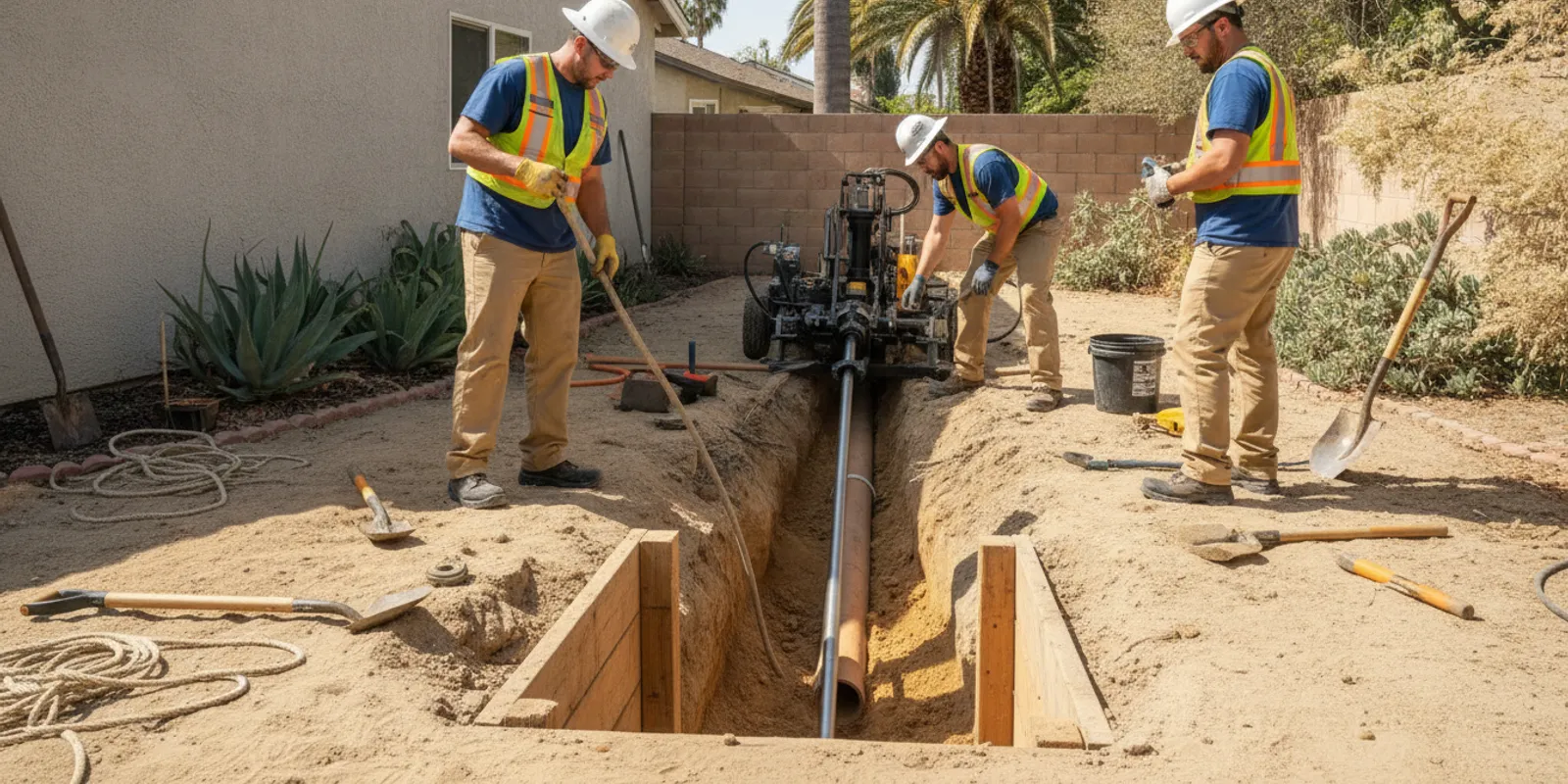
Pipe bursting sewer line replacement is a trenchless method that breaks an old pipe apart while pulling a new pipe through its path. It can reduce the need for a continuous open trench, but it is not suitable for every sewer line or property. The pipe material, route, depth, connections, soil, and access all matter.
Request a sewer line assessment
What is pipe bursting sewer line replacement?
Pipe bursting replaces a buried pipe by drawing a bursting head through the existing line. The head fractures or displaces the old pipe into the surrounding soil. A replacement pipe attached behind the head follows through the opened path. The work usually needs access points at the ends of the section, rather than exposing the whole line from end to end.
That description is the basic idea, not a promise about a specific property. A contractor has to confirm that the old pipe, route, depth, connections, and surrounding conditions can support the method. In some projects, traditional excavation or another repair approach may be more appropriate.
The U.S. Environmental Protection Agency’s Pipe Bursting fact sheet describes the method as an alternative to constructing a replacement or parallel line by digging along the full route. That distinction helps explain why it is called trenchless, though access excavations are still part of the work.
When might pipe bursting be considered?
A sewer line may be evaluated for replacement when repeated backups, persistent drainage problems, or an inspection indicate a damaged or deteriorated section. Those symptoms do not prove that pipe bursting is the answer. A blockage, a localized defect, or a problem elsewhere in the plumbing system can produce similar signs.
Pipe bursting may be considered when the existing pipe has a usable route and the replacement can follow it without unacceptable risk to nearby utilities, structures, or connected branches. The method may also be discussed when reducing continuous surface excavation is important. It does not eliminate digging, and it may not avoid all landscape or hardscape disruption.
For an initial look at common sewer concerns and service options, see Diamond House Plumbing’s drain and sewer services. A sewer camera inspection guide can also help homeowners understand how a line is examined before choosing a repair.
What conditions affect whether the method fits?
Every property is different. An assessment should consider the condition and layout of the existing line, the proposed replacement material, access, and the work needed to reconnect the line. Ask the contractor to explain the evidence behind the recommendation and any limits they identify.
| Condition to review | Why it matters | Question to ask |
|---|---|---|
| Pipe condition and material | The bursting equipment must be able to travel through the existing line and displace its material as intended. | What did the inspection show about the pipe and the damaged section? |
| Route and alignment | Sharp bends, offsets, or changes in direction may affect the path of the head and new pipe. | Can the replacement follow the current route, or is another route proposed? |
| Nearby utilities and structures | Displaced soil and excavation work need to be considered near other buried services, foundations, and site features. | How will nearby utilities and structures be identified and protected? |
| Access and connections | Entry and exit pits, branches, and reconnections influence the scope of work. | Where will access pits go, and which connections must be restored? |
| Permits and local requirements | Applicable rules and approvals can depend on the location and project scope. | Who confirms required permits and inspections for this property? |
These are discussion points, not a universal checklist for approval. In Riverside and San Bernardino counties, property layouts vary widely, from established neighborhoods to larger lots. Local requirements and utility locations should be confirmed for the actual address rather than assumed from a neighboring project.
How does a pipe bursting project usually proceed?
1. Diagnose the problem
The contractor gathers information about the symptoms and evaluates the sewer line. Depending on the problem, this may include a camera inspection or other diagnostic work. The purpose is to identify the affected section and distinguish a replacement need from a blockage or a smaller repair.
2. Check feasibility and plan access
If replacement is under consideration, the route and site need review. The contractor should identify likely access locations, connections, obstacles, and any conditions that could change the method. Ask whether the proposal accounts for landscaping, paving, fences, utilities, and restoration of disturbed areas.
3. Confirm scope and approvals
Before work begins, clarify which section will be replaced, what pipe will be installed, how branches will be handled, and how the finished line will be checked. Confirm who is responsible for permits or inspections where they apply. The written scope should distinguish the pipe work from excavation, reconnections, testing, and surface restoration.
4. Open access points and install the replacement
The crew excavates access pits at planned locations. A pulling system draws the bursting head through the old pipe, with the new pipe attached behind it. The old pipe is fractured or displaced into the surrounding ground as the new pipe advances. Site conditions and equipment setup determine the exact sequence.
5. Reconnect, check, and restore
Connections are made to the remaining sewer system, and the completed work is checked according to the agreed scope and applicable requirements. Access pits are then backfilled, and surface restoration is handled as specified. Ask what inspection or testing documentation you will receive and what restoration is included.
How does pipe bursting compare with open-trench replacement?
Neither method is best in every case. The right comparison is about the complete project scope and site impact, not just the label of a technique. The table below outlines general differences to discuss; actual work varies by property.
| Factor | Pipe bursting | Open-trench replacement |
|---|---|---|
| Excavation pattern | Typically uses access pits at selected locations, with the new pipe pulled along the existing route. | Requires excavation along the pipe route to expose and replace the line. |
| Surface disruption | May reduce continuous excavation, but pits and equipment access still disturb the site. | Surface disruption generally follows the route being exposed. |
| Route flexibility | Often follows the existing path, so route and alignment constraints matter. | Can expose the line and allow a replacement route to be assessed as excavation progresses, subject to site limits. |
| Connections and obstacles | Branches, utilities, and nearby structures require specific planning. | Open access can make the line and surrounding conditions visible, but obstacles still affect the work. |
| Best comparison question | Can the existing route and site support pulling a replacement pipe? | Would full access make the repair or a route change more practical? |
Request an explanation of why the proposed method fits your line. If alternatives are presented, compare the same items in each scope: length and depth, pipe material, access and reconnections, permitting, testing, restoration, and what happens if hidden conditions change.
What should you ask before approving the work?
- What specific evidence shows that replacement is needed, and which section is affected?
- Why is pipe bursting recommended over a localized repair or open-trench replacement?
- What inspection information supports the proposed route and access locations?
- Which branches, cleanouts, or connections are included in the scope?
- How will nearby utilities, foundations, and surface features be addressed?
- Are permits or inspections required, and who will confirm them?
- What testing or documentation is included after installation?
- Which surfaces will be restored, and what work is excluded?
- How will changes in scope be explained and approved if unexpected conditions are found?
Clear answers help you understand what is being replaced and what the finished project includes. If you need a contractor to review a sewer concern, you can learn about Diamond House Plumbing’s sewer and septic service capabilities or contact the company to discuss the property.
What can homeowners do while planning?
Gather any available records about past sewer work, repairs, or recurring backups. Note when symptoms occur, which fixtures are affected, and whether the problem is continuous or intermittent. This information can help a contractor narrow down what to inspect.
Before an on-site assessment, identify access points such as cleanouts and mention any known utility work or recent landscaping. Avoid making assumptions about what lies underground. If sewage is backing up into the home, limit use of affected plumbing and seek prompt professional guidance rather than treating the issue as a routine replacement-planning question.
For broader background on how a lateral connects a property to the public sewer, review what a sewer lateral line is and how responsibility can be determined. The property boundary, local rules, and utility arrangements affect who is responsible, so confirm the situation for your address.
What does a useful written proposal include?
A proposal should let you tell what problem the work addresses and how the contractor plans to complete it. Look for a description of the affected segment, the proposed method, and any inspection findings that support replacement. If the diagnosis is uncertain, ask what further evaluation is needed before committing to a specific scope.
Next, check how the work area and connections are described. A clear document identifies planned access pits, how existing branches or cleanouts will be handled, and what happens at the tie-in points. It should explain what testing or inspection will verify the completed line. If there are alternatives, ask for each to be described on the same basis so you can compare scope rather than just terminology.
Surface work deserves its own attention. Ask which paving, planting, irrigation, walls, or other features may be affected, and what restoration is included or excluded. Clarify responsibility for permits and inspections where applicable, and how the contractor will discuss unexpected conditions before changing the scope. A written record of these details can prevent misunderstandings about what the project includes.
For homeowners in Riverside and San Bernardino counties, do not assume that access, utility coordination, or approval steps will be identical from one property to another. Ask which local authority or utility needs to be consulted for your address and who will make those inquiries. If work may affect a shared or public connection, confirm the applicable limits before scheduling.
What can affect the work schedule?
There is no single schedule that applies to every pipe bursting project. The time needed depends on the section being replaced, access, equipment setup, connection work, and site conditions discovered along the way. The initial assessment, approvals, and coordination may also take time before the crew begins installation.
Ask what milestones are expected: diagnosis, site preparation, excavation of access points, pipe installation, reconnections, inspection or testing, and restoration. A realistic plan should explain what can affect the sequence. For example, finding an unrecorded utility or a connection that differs from the available information may require a pause to review safe next steps.
Also ask how the property can be used while work is underway. The answer depends on the work plan and which plumbing connections are temporarily affected. Confirm what access the crew needs, whether vehicles or outdoor areas must be moved, and how the contractor will communicate changes. This is more useful than relying on a generic duration that may not reflect the actual site.
How should you compare methods for a specific property?
Start with the diagnosis, not a preference for one technique. Ask the contractor to point out the location and type of defect, explain whether a repair can address it, and describe why a full replacement is being considered. A camera view or written findings can make the discussion concrete, though the contractor should explain any limits of what the inspection can show.
Then compare the proposed methods against the same priorities. These may include how much of the line is affected, whether the existing route is appropriate, the number and placement of access excavations, nearby features, reconnections, testing, restoration, and the responsibilities of each party. For some sites, minimizing a long trench may matter; for others, access to the full line or a route adjustment may be more important.
Ask what assumptions each proposal makes. Are utility locations verified? Are branches shown accurately? What happens if the pipe condition differs from inspection findings? A useful comparison identifies what is known, what remains uncertain, and how changes would be reviewed and approved. This keeps the decision focused on the property’s actual conditions instead of broad claims about a method.
Talk with a plumbing professional about your sewer line
Frequently asked questions
Does pipe bursting mean there is no digging?
No. It is trenchless in the sense that it usually avoids a continuous trench along the full pipe route, but access pits are needed and surface disturbance can still occur.
Can every damaged sewer pipe be replaced by pipe bursting?
No. Pipe condition, material, alignment, route, connections, nearby utilities, access, and site conditions affect feasibility. An inspection and site assessment are needed before selecting a method.
Will pipe bursting fix a sewer backup?
It can replace a pipe section when replacement is appropriate, but a backup may have other causes. Diagnosis should identify the source before work is selected.
How do I compare proposals?
Compare the same project details in writing: the affected length, pipe material, access pits, connections, permits, testing, restoration, exclusions, and how changes are handled. Ask what findings led to the recommended method.
Pipe bursting can be a useful option for some sewer replacement projects, but the right choice depends on the line and the property. A careful assessment and a clear written scope make the next step easier to evaluate.

Leave a Reply