
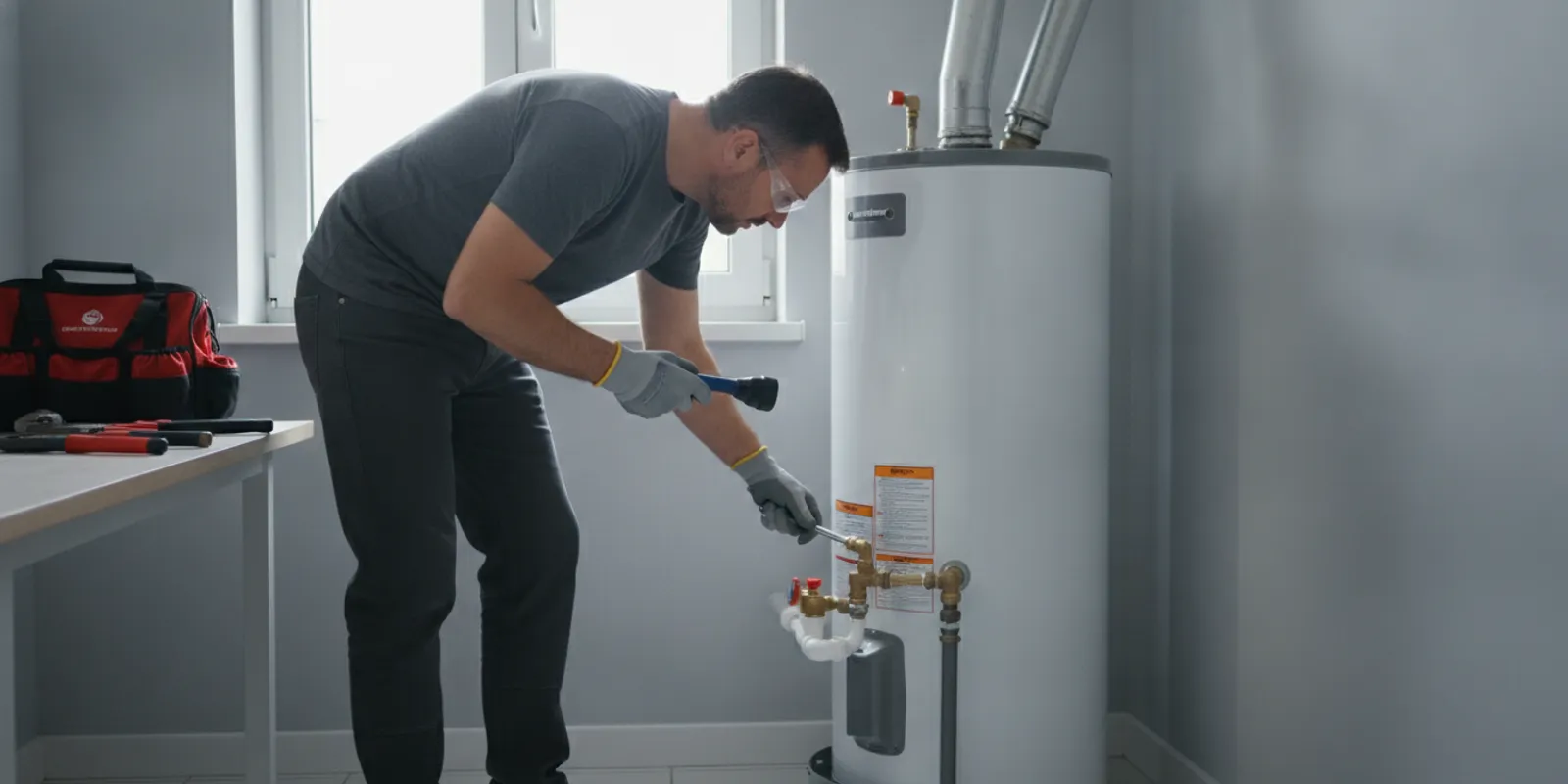
When a gas water heater stops working as expected, the right next step depends on the symptom and whether there are signs of danger. Gas water heater repair may be needed for no hot water, fluctuating temperatures, visible moisture, or a pilot that will not stay lit. Homeowners can note what is happening, but should leave gas, combustion, and venting work to a qualified professional.
Which gas water heater symptoms need attention?
A change in performance is useful information, even if it does not reveal the cause. Consider whether the symptom is new, whether it is getting worse, and whether it affects every hot-water fixture or only one. A problem at one faucet may involve that fixture or its supply. A change throughout the home may involve the heater or another part of the hot-water system.
- No hot water: The burner may not be operating, or a control, supply, or other component may be involved.
- Hot water runs out sooner than usual: The heater may not be recovering normally, or household demand may exceed the available stored hot water.
- Temperature changes during use: The heater, controls, plumbing conditions, or use pattern may be contributing. Record which fixtures are affected and when.
- Moisture near the tank: Water could be coming from a connection, discharge pipe, condensation, or the tank. The source needs to be identified.
- Unusual sound: Popping or rumbling merits attention, but sound alone does not establish a specific fault.
- Pilot will not stay lit: Repeated failure can have several causes. Avoid repeated attempts to relight it.
For an overview, see the company’s water heater repair page. A wider issue may involve its residential plumbing services.
What should you do if you smell gas?
Treat a gas odor as an urgent safety concern, not a repair problem to investigate. Do not operate switches, use a flame, or try to locate the source. Leave the building and move away from it. From a safe location, contact your gas utility or emergency services according to local guidance. Do not return until appropriate responders say it is safe.
If you suspect exhaust, see soot or scorching, or hear a carbon monoxide alarm, get everyone outside and seek emergency assistance. Carbon monoxide cannot be reliably identified by smell. The Consumer Product Safety Commission provides general household carbon monoxide safety information at CPSC.gov. Do not use the heater again until a qualified professional has evaluated it.
What can you check safely before arranging service?
Limit checks to observations requiring no tools, disassembly, or contact with gas and vent components. If you notice an odor or immediate danger, skip the checks and leave. The purpose is to describe what is happening, not to identify a failed part.
- Confirm the scope. Check whether hot water is missing throughout the property or at one fixture. If it is safe, compare an additional faucet or shower and note the pattern.
- Look for visible water from a safe distance. Note where it appears and whether it is spreading. Do not touch water near electrical equipment, stand in a pool, or approach a hazard to trace it.
- Read visible status information. Record an indicator or display message only if it can be seen without removing a panel or reaching behind the appliance.
- Note timing. Record when the issue began, whether it comes and goes, and whether it follows a particular use pattern, such as several showers in a short period.
- Recall recent changes. Plumbing work, a power interruption, or a change in household use may help explain when the symptom appeared.
Do not repeatedly relight a pilot, change the thermostat or gas valve, disconnect venting, or clean internal components. Follow only simple external checks described in the manufacturer’s user instructions, and stop if anything is unclear. The goal is to collect observations, not diagnose or repair a combustion appliance.
How urgent is the problem?
Urgency depends first on safety, then on the amount of water and whether the heater still provides dependable hot water. This comparison can help organize a response; it is not a diagnosis or a guarantee that a situation can wait.
| Situation | Priority | Next step |
|---|---|---|
| Gas odor, suspected exhaust, or carbon monoxide alarm | Immediate | Leave and contact emergency services or the gas utility from a safe location. |
| Active leak or water spreading near equipment | Prompt | Keep clear of electrical hazards and seek plumbing help. |
| No hot water, recurring pilot failure, or unreliable temperature | Arrange service | Record symptoms and visible model information, then request an evaluation. |
| Minor change with no safety signs or leak | Schedule assessment | Track when it occurs and which fixtures are affected. |
If you are unsure whether a situation is safe, keep your distance and ask the appropriate emergency resource for guidance. Do not step into standing water around the heater or approach an unsafe shutoff. When there is no immediate danger but the symptom is worsening, state that clearly when you request service so the issue can be assessed in context.
How can you distinguish a heater issue from a fixture issue?
Compare several hot-water outlets without changing heater settings. If one sink is affected while a nearby shower and another faucet provide normal hot water, record that difference. The issue may be local to the fixture or its supply rather than the heater. If every outlet has the same change, report that too, while recognizing it does not prove which component failed.
Note whether cold water behaves normally at affected fixtures. For example, if a single bathroom faucet has weak flow on both hot and cold sides, that observation differs from a home where cold flow is ordinary but hot water is absent everywhere. Neither pattern confirms a cause; it gives the professional a more useful starting point. Avoid taking apart a faucet or heater to test a theory.
Also describe whether the problem is about temperature, flow, or both. A sudden change across multiple fixtures is different information from a slow change at one tap. Explain whether the water starts hot and cools quickly, never becomes hot, or varies from one use to the next. Simple descriptions help avoid anchoring the service conversation on an unverified diagnosis.
What may a plumber inspect?
A service professional will ask what changed, when it started, and whether the issue is constant or intermittent. Depending on the concern, an inspection may include visible water and gas connections, controls, burner operation, and venting. The aim is to identify the cause before recommending work. The particular checks depend on the symptom and the appliance.
Some problems may be straightforward to address; others require further investigation or parts. Ask what was found, what work is proposed, and whether the heater can be operated safely. A symptom alone does not prove that the entire heater needs replacement or that a simple adjustment will solve it. Condition, parts availability, installation, and inspection findings all matter.
It is reasonable to ask the professional to connect the recommendation to the observed problem. For instance, ask which inspection finding explains an intermittent loss of hot water, or what evidence points to a leak source. If additional work is suggested, ask whether it is necessary to address the immediate issue, whether the appliance should remain off meanwhile, and whether a follow-up evaluation is needed.
If the concern involves a drain or sewer rather than the heater, see the company’s drain and sewer service information. For other home plumbing needs, consult the plumbing service overview.
What information should you have ready?
If it is safe, gather details before contacting a plumber. Accurate observations are more useful than a guess. A short, clear description may include the following:
- The make and model from an exterior label, if visible without moving the appliance.
- The approximate age, if known, and any prior service or recurring issue.
- The exact symptom, when it began, and whether it is worsening or intermittent.
- Whether the issue affects all hot-water fixtures or only one.
- Visible water, indicator patterns, or displayed codes that can be read safely.
- Any odor, alarm, soot, scorching, or unusual vent appearance.
- Recent plumbing work, power interruption, or change in household use.
Separate direct observations from interpretations. “The display showed these characters at 8 a.m.” is more helpful than “the control is broken” unless a professional has confirmed that. Likewise, report where moisture is visible and whether it is growing rather than assuming the tank has failed. Do not delay leaving or contacting emergency responders to collect information. Take a photo only from a safe position; do not move panels or objects for a better view.
How can a symptom timeline improve the service call?
For a problem that comes and goes, a brief timeline can show whether the pattern is tied to use or has changed over time. Record the date and approximate time, which fixtures were used, what the water felt like, and how long the symptom lasted. Keep entries factual and concise. There is no need to run the heater deliberately or recreate a concerning condition.
Consider two examples. In one, hot water works at all outlets in the morning but becomes lukewarm after several people shower in sequence; the caller can report the order, duration, and whether the issue happens every day. In another, only one sink has inconsistent hot water while other outlets seem unchanged; the caller should identify that sink and compare cold flow there. These patterns differ, but neither is enough to name the failed part without an assessment.
If a code appears intermittently, note the exact characters and whether the display changes afterward. Do not clear a warning or repeatedly restart the appliance just to see if it returns. If the concern is accompanied by an odor, alarm, or suspected exhaust, stop documenting and follow the urgent safety steps instead.
How can you prepare for a service visit?
If there is no immediate danger, make the area accessible without touching or moving the heater. Keep children and pets away. Do not move stored items if doing so could disturb gas lines or venting. Arrange access to a locked room or gate, and tell the service provider about stairs, parking, or other access details that may affect arrival.
Write down questions before the visit so you can compare the explanation with what was observed. Ask: What did the inspection find? Which repair is recommended, and why? Are parts or follow-up checks involved? Can the heater be used while waiting, or should it remain off? What signs would require urgent attention? If you are considering more than one option, ask what each option addresses and what remains uncertain.
Homeowners in Riverside and San Bernardino County can contact Diamond House Plumbing to discuss a water heater concern and arrange an appropriate next step.
Call to discuss your water heater issue
Why should you avoid adjusting gas or vent components?
A gas water heater depends on components working together to burn fuel and direct combustion products outdoors. Seeing a burner light does not confirm safe operation. Removing covers, altering gas controls, or changing vent connections can create hazards or obscure the condition a technician needs to evaluate.
Repeated attempts to relight a pilot do not find why it goes out. Changing a temperature setting may not address a failed control and can make symptoms harder to describe. Leave these components as they are, keep people away from an appliance with a suspected safety fault, and follow emergency guidance when appropriate.
Frequently asked questions
Can I keep using a gas water heater that is acting up?
It depends on the symptom. Do not use it if you suspect a gas leak, exhaust problem, or carbon monoxide exposure. Leave and seek emergency guidance. For other problems, ask a qualified professional whether the heater should remain off until inspected.
Does a pilot light going out mean the heater must be replaced?
No. A pilot that will not stay lit can have different causes, and the symptom alone does not determine whether repair or replacement is appropriate. Avoid repeated relighting and arrange an evaluation.
Is water at the base of the heater always a tank leak?
No. Water may come from a connection, discharge pipe, condensation, or the tank itself. Avoid wet areas near electrical equipment and get the source assessed, especially if water is spreading.
What should I do if the heater displays an error code?
Record the code if visible without opening the unit, then consult the manufacturer’s user information if available. Do not change gas settings or remove a panel. Share the code when arranging service.
Plan a safe next step
Clear notes can help a plumber assess a gas water heater, but they cannot replace an inspection. If you notice a safety warning, leave and contact the appropriate emergency resource; otherwise, arrange professional service for persistent or worsening symptoms.

Leave a Reply