
A sewer problem rarely arrives with a complete explanation. A slow drain, recurring backup, or camera finding may show that the line needs attention. But the project price depends on what is underground and how the work must be completed. For homeowners in Riverside, San Bernardino, and nearby Inland Empire communities, getting the line evaluated before planning around a number is essential.
The sewer line replacement cost for a professional residential project commonly falls between $1,388 and $5,323, according to Angi data. But your quote may differ based on pipe material, total length, depth, access, replacement method, inspection findings, and restoration needs. Treat a published range as planning context, not a guaranteed price.
The most useful estimate is one that explains each factor instead of presenting a single unexplained total. Understanding how those details affect the work can help you compare options, prepare your property, and make a sound decision about the next step.
What Factors Determine Sewer Line Replacement Cost?
A sewer line replacement quote reflects the conditions of your property, not just the price of a length of pipe. Professional replacement projects commonly range from $1,388 to $5,323, although the final amount can move outside that range when access, excavation, or site restoration is unusually complex. Diamond House Plumbing regularly handles technical sewer lateral work and older infrastructure. So the estimate should account for how the existing system is built and how the work will affect your property.
Pipe length, depth, and access
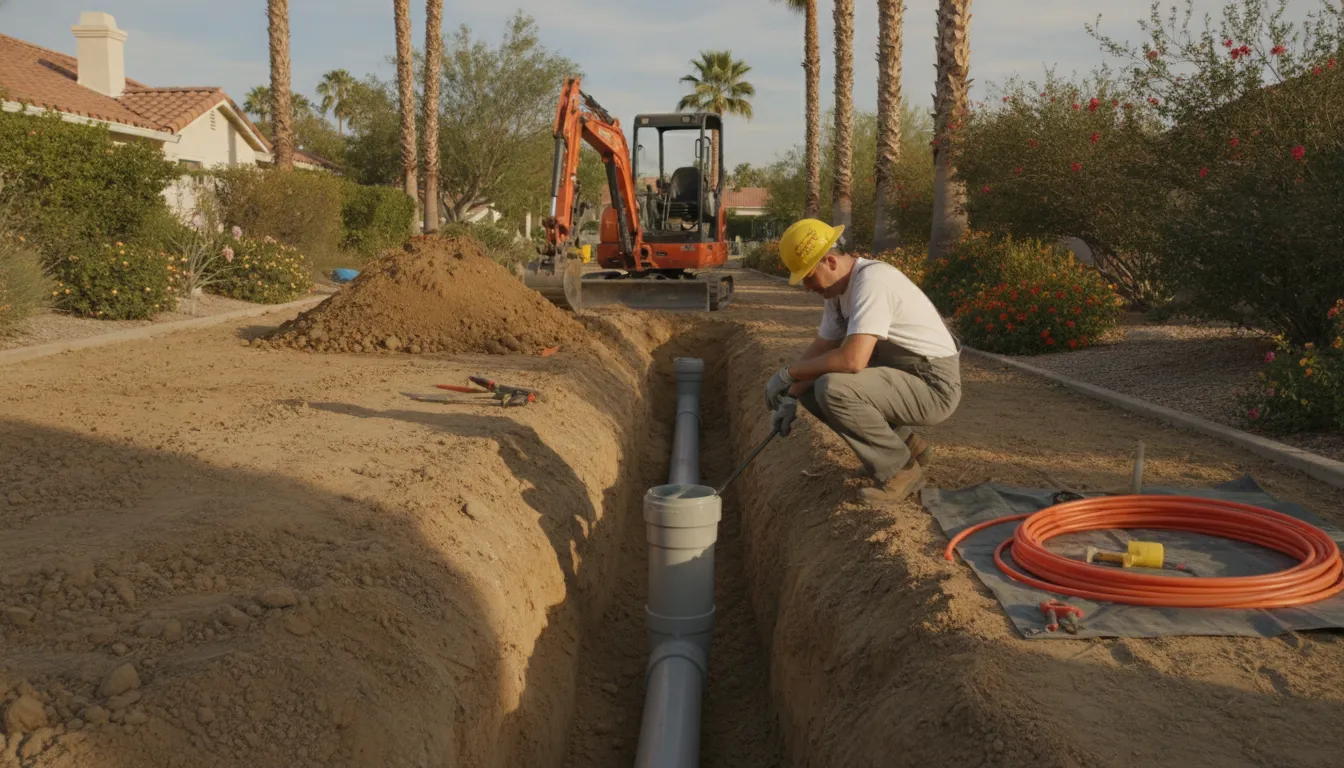
Length is one of the most direct cost drivers. Residential runs are often about 50 to 150 feet, with a 100-foot run being common. A longer run requires more material, labor, and time. A deeper line can also increase excavation, shoring, equipment, and safety requirements. The route matters as well. A line beneath a lawn may be more accessible than one beneath a driveway, patio, foundation area, mature landscaping, or other hard-to-replace surface.
Installation method affects the total too. Traditional excavation may require more digging and restoration, while a trenchless approach may reduce disruption when the pipe condition, alignment, and access points make it suitable. A qualified inspection is needed before assuming either method will work for a particular property.
Material and installed cost
Pipe material changes both the product cost and the long-term project considerations. Published material estimates place PVC at about $4.50 per linear foot, cast iron at approximately $50 per foot, and copper at about $85 per foot. These are material figures, not a complete replacement quote. A new sewer pipe averages about $150 per linear foot installed, including materials and labor, with actual pricing varying by site and method. See the source cost data for the published ranges and assumptions.
Labor, permits, and upfront investigation
Local labor rates in Riverside and San Bernardino counties, crew requirements, soil conditions, utility conflicts. And the complexity of connecting to the existing system can all affect the labor portion. Permit requirements and inspection charges vary by jurisdiction. So they should be confirmed with the contractor and the applicable local authority rather than estimated from a generic national figure.
Finally, budget for diagnosis before replacement begins. A sewer video inspection may cost approximately $100 to $500, and it can identify the location, depth, breaks, roots, or collapses that shape the recommended scope. Yard, driveway, or hardscape restoration may be an additional project cost. A careful estimate separates these items so you can compare proposals based on the same scope.
Sewer Line Replacement vs. Repair: Which Is Right for Your Home?
The right solution depends on the condition, location, and extent of the damage. A localized problem may respond well to a targeted repair, while a failing pipe throughout the run can make replacement the more practical long-term choice. A sewer camera inspection is the starting point. It lets a plumber see breaks, root intrusion, corrosion, bellies, and connection problems instead of choosing a method based only on symptoms.
| Option | May be sufficient when | What to consider |
|---|---|---|
| Spot repair | The inspection identifies one accessible crack, separated joint, or limited damaged section. | It can address the immediate defect without replacing unaffected pipe. The remaining line still needs evaluation. |
| Hydro jetting | Recurring backups result from grease, sludge, or manageable root growth inside an otherwise sound pipe. | Jetting cleans the pipe but does not rebuild a collapsed, badly cracked, or structurally unstable line. |
| Pipe lining | The existing pipe has adequate shape and access, but its walls have cracks or deterioration that can be rehabilitated in place. | A liner may reduce excavation. Suitability depends on the pipe’s diameter, alignment, connections, and condition. |
| Full replacement | The line is collapsed, has extensive root damage, contains a belly, or has widespread deterioration. | Replacement is also more likely for 50-plus-year-old clay or Orangeburg systems when the inspection shows aging across the run. |
Age alone does not determine the answer, and a newer pipe can still fail because of shifting soil, poor installation, or root intrusion. Conversely, an older line may be serviceable if the damage is limited. Diamond House specializes in complex sewer lateral replacements, including work involving systems more than 50 years old. Their team can use the inspection findings to explain the available options and the factors that affect sewer line replacement cost. Rather than recommending a larger project without evidence. For a focused evaluation, start with professional sewer line repair and ask which approach fits the condition of your line.
Trenchless vs. Traditional Sewer Replacement: Pros and Cons
The right replacement method depends on the pipe’s condition, location, access, and the surfaces above it. Trenchless work can preserve a driveway or established landscaping, while traditional excavation may be the better choice when the entire line needs to be exposed and replaced. Comparing the disruption and restoration requirements alongside the initial estimate gives you a more realistic view of your sewer line replacement cost.
| Method | Advantages | Considerations |
|---|---|---|
| Trenchless, including CIPP or pipe bursting | Requires less surface disruption, can avoid cutting through driveways, sidewalks, and landscaping, and may reduce restoration work. CIPP creates a new pipe within the damaged line, while pipe bursting replaces the line through a guided underground installation. The CDC describes CIPP as a method that avoids open-trench excavation and roadway shutdowns. See the CDC overview of CIPP. | The initial price per linear foot is often higher, and the method is not suitable for every pipe layout or condition. The line must be evaluated to confirm that the available access points, alignment, and structural condition support trenchless work. |
| Traditional open-trench excavation | Provides direct access to the entire line. The crew can inspect the exposed trench, remove severely damaged sections, adjust the installation, and complete a full replacement when rehabilitation is not appropriate. | Excavation can disturb soil, landscaping, sidewalks, and driveways. Restoration may add approximately $3,000 to $8,000 to the project, according to the research used for this guide. The work can also create more visible disruption while the line is exposed. |
Trenchless does not mean there is no cost or preparation. It shifts more of the investment toward specialized installation and less toward surface reconstruction. The CDC reports that CIPP is used for approximately 50% of damaged pipe repairs in the United States. But that figure does not mean it is automatically the best option for a particular property. A camera inspection and site assessment should guide the decision.
Diamond House Plumbing offers trenchless sewer options when the site and pipe qualify. To compare methods for your property, review this guide to trenchless sewer replacement and request an estimate that separates installation, access, and restoration costs.
How to Budget for a Sewer Line Replacement Project
A realistic project budget starts with information, not a guess based only on the length of the pipe. A new sewer pipe averages about $150 per linear foot installed. Although the final sewer line replacement cost depends on access, materials, depth, connection points, and the replacement method. Use these steps to prepare for a more useful conversation with a qualified plumber.
-
Get a video inspection
Before approving major work, request a sewer camera inspection when conditions allow. It can help identify the location and extent of damage, as well as whether repair or full replacement is more appropriate. Budget approximately $100 to $500 for the inspection, based on published cost guidance from Angi. Ask for a copy of the findings or clear explanation of what the camera showed.
-
Get multiple written estimates
Request written estimates that describe the affected length, pipe material, excavation or trenchless method, permits, labor, connections, cleanup, and warranty terms. Comparing matching scopes is more useful than comparing bottom-line numbers alone. A transparent estimate should make clear which costs are included and which conditions could change the price.
-
Factor in restoration costs
Traditional excavation can leave you paying to restore landscaping, concrete, asphalt, or other surfaces. Set aside roughly $3,000 to $8,000 for restoration when extensive digging is required. Trenchless work may keep restoration minimal, but it is not suitable for every line or site. Have the contractor explain the access requirements and expected surface impacts before choosing a method.
-
Check your insurance coverage
Review your policy and call your insurer before work begins. Homeowners insurance typically does not cover replacing an aging or deteriorated sewer line, though coverage may apply in limited circumstances involving sudden, accidental damage. Confirm your deductible, exclusions, and documentation requirements in writing.
-
Explore financing options
If replacement is necessary but the full project cost does not fit your current budget, ask about available financing or payment options. Diamond House Plumbing provides transparent, honest estimates so homeowners can understand the scope, compare choices, and plan the work responsibly before making a decision.
Sewer Line Replacement Costs in the Inland Empire
Inland Empire homes do not all face the same sewer project. In Riverside and San Bernardino counties, many neighborhoods were built during the 1980s and 1990s. As these systems age, more homeowners are entering the years when sewer laterals, connections, and buried piping may need significant evaluation or replacement. That local housing context can affect both the condition of the line and the scope of the work behind your estimate.
The region’s septic-to-sewer transition adds another layer. An initiative affecting more than 22,000 parcels is creating new sewer connection needs across the Inland Empire. Property owners moving from septic systems to municipal service may need more than a simple pipe repair. The project can involve the connection route, access, existing private lines, permitting requirements, and restoration. Diamond House Plumbing’s septic services experience is relevant when a property sits at that intersection.
Local soil and landscaping can change the scope
Sandy and clay soils are common in parts of the Inland Empire, and each can affect excavation, trench stability, drainage, and restoration planning. Mature landscaping is also common in established Riverside and San Bernardino neighborhoods. Tree and shrub roots can enter weakened joints or cracks, particularly where older lines run near established plantings. A camera inspection and site assessment help identify whether the problem is localized or extends along the lateral.
Trenchless replacement is popular in neighborhoods with mature landscaping because it can reduce the need for open-trench excavation when the pipe condition, access, and layout are suitable. It is not automatically the right method for every property, so the installation plan should account for cleanouts, bends, connections, soil conditions, and municipal requirements.
Diamond House Plumbing brings local experience across more than 30 Inland Empire cities. That familiarity helps keep the discussion practical: the goal is not to quote a generic regional number. But to identify the actual length, method, access conditions, and restoration needs that shape your sewer line replacement cost.
Frequently Asked Questions
How much does it cost to replace a sewer line?
Professional sewer line replacement commonly ranges from $1,388 to $5,323, but your estimate depends on pipe length, material, access, site conditions, and the replacement method. Angi reports an average of about $150 per linear foot for a new sewer pipe, including labor and materials. Treat these figures as planning ranges, not a guaranteed quote. Source.
What factors influence the cost of sewer line replacement?
The biggest factors are the total length of pipe, pipe material, depth, soil and access conditions, permitting, and whether the work requires excavation. Your budget may also need to include a video inspection, which Angi places at approximately $100 to $500, plus restoration for landscaping, paving, or other surfaces. Source.
How do you know if you need a sewer line replacement?
Recurring backups, slow drains throughout the home, sewage odors, unusually lush patches of lawn, or repeated drain-clearing visits can point to a damaged sewer line. A video inspection helps identify cracks, root intrusion, collapse, or separated joints so a plumber can determine whether a targeted repair or full replacement is appropriate.
Can trenchless methods reduce disruption during replacement?
Often, yes. Cured-in-place pipe, or CIPP, creates a new pipe inside the damaged line and can avoid open-trench excavation and some surface disruption. The method is not suitable for every condition, so the inspection findings, pipe layout, and access points should guide the recommendation. CDC.
How long does a sewer line replacement take?
There is no reliable one-size-fits-all timeline. A short, accessible project may move faster than a deep line beneath concrete, landscaping, or a roadway. The plumber should confirm the expected schedule after reviewing the inspection, required permits, replacement method, and restoration work.
Schedule an Honest Sewer Line Replacement Estimate
Your property’s layout, pipe condition, replacement method, and restoration needs can all affect the project scope. A conversation with an experienced plumbing professional can help you understand which factors apply before work begins. To discuss your sewer line replacement project and request an honest estimate, contact Diamond House Plumbing through the website. Share what you have observed, and the team can help outline a practical next step for your home.

Leave a Reply