
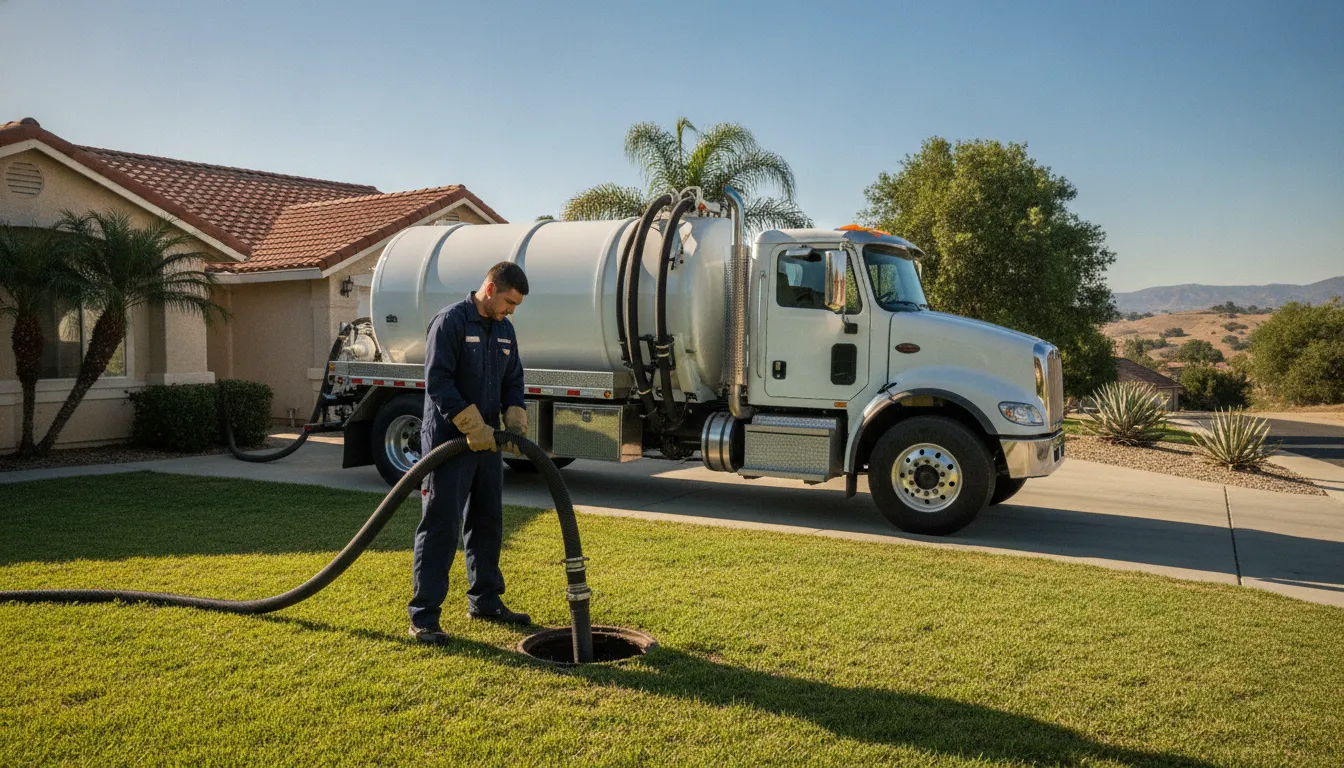
A septic system can work quietly for years, which makes routine maintenance easy to overlook until a slow drain, sewage odor, or backup signals a larger problem. For Inland Empire homeowners, staying ahead of maintenance helps protect the home, the drainfield, and the surrounding property.
In most homes, septic tank pumping should be scheduled every three to five years on average, according to the U.S. Environmental Protection Agency. The right interval can vary with household size and tank capacity, so a qualified inspection may support a more precise schedule.
Waiting until wastewater backs up can lead to system failure, property damage, groundwater contamination, and avoidable health risks. Understanding how household and system factors affect timing is the first step toward maintaining dependable septic service in Riverside and San Bernardino counties.
How Often Should You Pump Your Septic Tank?
For most homes, the EPA recommends having the septic tank inspected and pumped every three to five years on average. That range is a practical starting point, not a universal rule. The right schedule depends on how quickly solids accumulate in your particular system and whether the tank and drainfield are receiving more wastewater than they were designed to handle.
Use the three-to-five-year range as your baseline
If you do not know when the tank was last serviced. Schedule an inspection and ask the technician to document the tank size, sludge level, access points, and overall condition. The EPA’s septic maintenance guidance identifies three to five years as the average pumping interval. Keeping a service record makes it easier to plan the next appointment instead of waiting for a slow drain, odor, or backup.
Adjust the interval for your household and system
The EPA notes that pumping frequency depends heavily on the number of people living in the home and the size of the septic system. A larger household generally sends more water and solids into the tank each day. A smaller tank may also need service sooner than a larger tank serving a similar number of residents. Water usage matters as well. Frequent laundry, long showers, plumbing leaks, or other high-volume use can increase the system’s workload and shorten the interval.
Households that have recently grown, added bedrooms, or changed how the property is used should not assume the old schedule still fits. A professional can help compare current use with the system’s capacity and recommend a maintenance plan based on observed conditions.
Plan by county, not by a generic calendar.
Homeowners in both Riverside County and San Bernardino County can use the same EPA baseline, but local property conditions and the age of the plumbing system still matter. This broader Inland Empire guidance complements our Riverside County septic tank pumping guide by helping San Bernardino County homeowners evaluate the same maintenance question for their own household and tank.
Regular pumping is preventative maintenance, even when the tank is not visibly full. Scheduling service before solids reach a problematic level helps protect the system and gives you a chance to address changing water usage or an aging tank early.
Factors That Affect How Often You Need Septic Tank Pumping
A calendar estimate is useful, but your household’s actual schedule depends on how much wastewater and solid material enter the tank. Use this checklist when planning maintenance:
- Count the people using the system. More residents generally means more showers, laundry, toilet flushing, and wastewater entering the tank. The EPA notes that pumping frequency depends heavily on both household size and system size (F015). A home that regularly hosts guests may also need a closer review of its usual schedule.
- Confirm the tank’s capacity. A smaller tank has less room for incoming solids and wastewater. So it can reach its service limit sooner than a larger tank serving the same number of people. If you are unsure of the tank size, check installation records or have a qualified professional identify it during an inspection.
- Account for total wastewater. High water use from frequent laundry, long showers, multiple bathrooms, or plumbing fixtures can increase the flow through the system. Spread out laundry loads when practical, repair leaks promptly, and avoid sending more water into the tank than the drainfield can absorb.
- Note garbage disposal use. A garbage disposal sends additional food solids into the septic tank. That extra solid load can make pumping necessary more often. Even with a disposal, keep grease, fats, and food waste out of the drain whenever possible.
- Review what goes down the drain. Chemicals, grease, excessive toilet paper, and non-biodegradable materials can contribute to blockages or interfere with normal system operation. Diamond House Plumbing recommends avoiding these materials as part of routine septic care (F008).
- Measure the scum and sludge layers. An inspection can determine whether the tank is approaching its service threshold instead of relying only on symptoms. EPA guidance commonly used for septic maintenance calls for pumping when the scum layer is within 3 inches of the outlet baffle or when the sludge layer is within 12 inches of the outlet baffle. These measurements require safe access and proper equipment, so they should be handled by a trained professional.
Because these factors vary from home to home, keep a record of pumping dates, household changes, and inspection findings. That history helps a septic professional recommend a schedule suited to your tank rather than applying a one-size-fits-all interval.
What Happens When You Skip Septic Tank Pumping?
Skipping scheduled septic tank pumping can turn routine maintenance into a system failure. As solids accumulate inside the tank, less working capacity remains for incoming wastewater. The excess solids can move toward the drainfield, interfere with treatment, and eventually contribute to sewage backups and property damage. In practical terms, a neglected system may show up as slow drains, foul odors, backed-up toilets, or wastewater surfacing outdoors. These warning signs deserve prompt attention rather than another deferred maintenance cycle.
Small maintenance costs can become major repairs
The financial difference between prevention and failure can be substantial. The U.S. Environmental Protection Agency reports that regular septic system maintenance may cost about $250 to $500 every three to five years. While repairing or replacing a malfunctioning conventional system can cost between $5,000 and $15,000. Actual costs depend on the system, site conditions, and scope of work, but the comparison illustrates why pumping is a practical investment in the property.
Once a drainfield or other major component is damaged, pumping alone may not resolve the problem. A qualified evaluation can help determine whether the next step is routine service, a targeted repair, or replacement. Learn more about the differences in septic system repair and replacement.
Backups create health and environmental risks
A failing septic system is more than an inconvenience. The EPA explains that insufficiently treated sewage can contaminate groundwater and spread disease among people and animals. Improperly treated sewage may also contaminate nearby surface water, with risks that include acute gastrointestinal illness and hepatitis. In addition, malfunctioning systems can release bacteria, viruses, and chemicals into local waterways, harming plants, fish, and other wildlife. Keeping solids under control helps reduce the chance that untreated wastewater will move beyond the system.
Property value and legal responsibility
An unusable or deteriorating septic system can lower a home’s value and create legal liability for the property owner. Problems may become especially difficult during a sale, inspection, or transfer when the system’s condition must be disclosed or corrected. Homeowners are responsible for the system’s operation, maintenance, and upkeep. So keeping service records and addressing concerns early can protect both the property and the people who rely on it.
For homeowners in Riverside and San Bernardino County, careful maintenance is a sensible way to protect an aging home. Limit avoidable damage, and keep a septic system working as intended.
Septic Tank Pumping Costs in the Inland Empire
For Inland Empire homeowners, the cost of routine septic tank pumping is usually far more manageable than the cost of recovering from a failed system. The exact price depends on tank size, access, site conditions, and the scope of service. But planning ahead makes the expense easier to manage and helps protect the rest of the system.
| Service or outcome | Typical cost | What it covers |
|---|---|---|
| Routine pumping, EPA reference | $250-$500 every 3-5 years | Preventive removal of accumulated solids before they interfere with system operation. |
| Pump-out in the Riverside area | $300-$550 typically. | Local pricing context for a standard pumping visit; the property and tank determine the final quote. |
| Repair or replacement of a conventional system | $5,000-$15,000 | Correction or replacement after a malfunction, which may involve more extensive work than pumping. |
The U.S. Environmental Protection Agency identifies regular septic maintenance fees of $250 to $500 every three to five years. That is a comparatively small investment next to the $5,000 to $15,000 cost of repairing or replacing a malfunctioning conventional system. The EPA explains the maintenance and cost comparison.
Why the final pumping quote can vary
A local estimate may change based on whether the tank is easy to locate and access. How much material must be removed, the distance for equipment to reach the property, and whether the technician identifies a separate maintenance concern. A pump-out addresses accumulated solids, but it does not automatically correct damaged components, drainage issues, or a failing drainfield.
Regular pumping is preventive maintenance, not a guarantee that every septic problem has been avoided. If you notice slow drains, sewage odors, unusually lush grass over the drainfield, or backed-up toilets, arrange an evaluation rather than relying on price alone. A timely inspection can clarify whether the property needs routine pumping or a broader repair plan.
Inland Empire-Specific Septic Considerations
Septic maintenance in the Inland Empire requires more than following a generic calendar. Many homes built during the region’s 1980s and 1990s construction boom are now entering critical maintenance years. Tanks, distribution components, drainfields, and connecting lines may be aging at the same time, making a consistent inspection and septic system maintenance plan especially important.
Soil and drainfield performance
Local soil characteristics can affect how efficiently a drainfield accepts and disperses treated wastewater. Changes in soil absorption, compaction, drainage, or saturation can increase stress on a system, particularly when an older drainfield is already operating near its limits. Diamond House Plumbing’s customer guidance identifies Inland Empire soil conditions and aging home infrastructure as factors that increase the risk of septic issues. A routine evaluation can help identify changes before they become backups, standing water, or broader property damage. Diamond House Plumbing serves homeowners and businesses throughout Riverside and San Bernardino Counties.
Property transfers and local planning
Riverside County requires septic inspections during property transfers. If you are buying or selling a home with an onsite wastewater system, allow time to locate available records and arrange the required inspection. The system’s condition can affect the transaction, maintenance planning, and the information a new owner needs to manage the property responsibly.
The region is also responding to long-term infrastructure concerns through a mandate to convert approximately 22,000 septic parcels to sewer service. That does not mean every property will convert immediately, but it does make it important to understand your parcel’s status, applicable timelines, and local requirements. Until a property is connected to sewer, the septic system still needs proper care.
Why local experience matters
Septic systems are part of a much larger wastewater picture. The U.S. Environmental Protection Agency reports that more than four billion gallons of wastewater are dispersed below the ground each day. Which underscores the importance of properly functioning systems and responsible maintenance. EPA septic guidance explains the environmental role of system upkeep. Diamond House Plumbing brings local experience with septic systems and sewer laterals across both Inland Empire counties. Helping property owners plan service around site conditions, records, and local code requirements.
Frequently Asked Questions
How often should a septic tank be pumped?
Most septic systems should be inspected and pumped every three to five years on average. The right interval depends on household size, tank capacity, water use, and whether the home uses a garbage disposal. A professional can recommend a schedule based on your system rather than relying on a calendar alone. (Source: EPA.)
What are the signs that a septic tank needs pumping?
Watch for slow drains, sewage odors indoors or outdoors, backed-up toilets, and unusually lush or wet grass over the drainfield. These signs can indicate that solids are accumulating or that another part of the system needs attention. Arrange an inspection promptly instead of waiting for wastewater to back up into the home.
Does a septic tank need pumping if it is not full?
Yes. Routine pumping is preventative maintenance, even when the tank has not reached capacity. Removing accumulated solids helps reduce the chance of a blockage, drainfield stress, or sewage backup. Waiting for obvious symptoms can allow a manageable maintenance issue to become a more disruptive repair.
How long does septic tank pumping take?
Pumping usually takes about one to two hours, depending on the tank size and how accessible the tank is. The appointment may take longer if the access covers are difficult to locate, the tank requires inspection, or the technician finds a condition that needs further evaluation. (Source: Diamond House Plumbing.)
What should I avoid putting in my septic system?
Do not flush chemicals, grease, excessive toilet paper, or non-biodegradable items. These materials can interfere with treatment, accumulate in the tank, or contribute to blockages. Keep hazardous products and solid waste out of drains, and follow your service professional’s guidance for protecting the tank and drainfield.
Ready to schedule septic tank pumping?
Regular septic tank pumping can help keep your system maintained and give you a clearer plan for ongoing care. When you are ready to discuss the right next step for your Inland Empire home, contact Diamond House Plumbing to schedule your septic tank pumping service. Their team can help you arrange an appointment and answer questions about your septic system.

Leave a Reply