
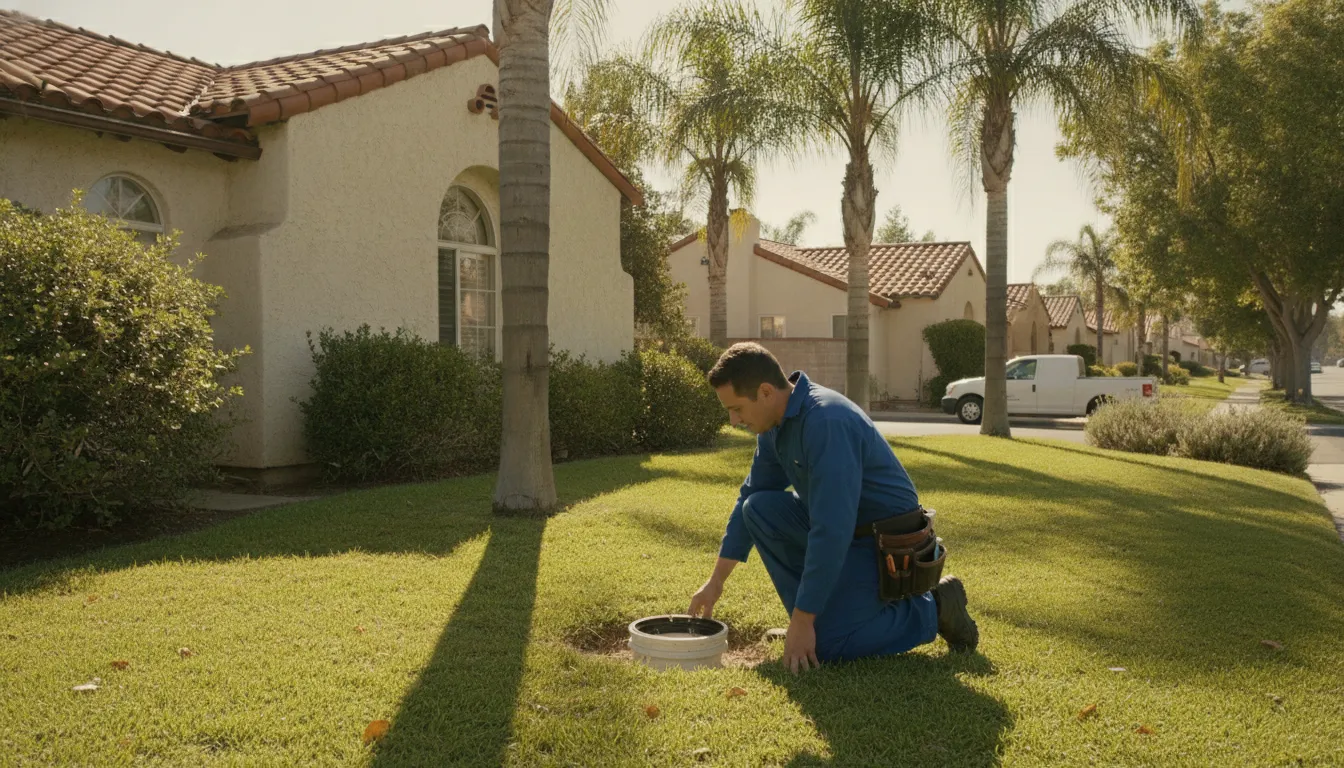
A sewer clog in an older Inland Empire home is not always caused by something that went down a drain today. Many houses in Riverside and San Bernardino counties have sewer laterals built with aging materials. And decades of root growth, shifting soil, or buildup can gradually reduce the line’s capacity.
To prevent sewer line clogs older homes need consistent drain habits, careful tree planning, and periodic professional inspections. Drain screens can keep hair and debris out, while a camera inspection can reveal root intrusion, damaged joints, or other problems before they become a backup.
The right maintenance plan depends on what is actually below the property. Understanding the pipe materials and local conditions is the first step toward preventing recurring trouble and choosing service at the right time.
Prevent Sewer Line Clogs Older Homes: Why Older Inland Empire Homes Are Prone to Sewer Line Clogs
Many homes built in Riverside and San Bernardino counties between the 1950s and 1980s still rely on sewer laterals made from clay tile, cast iron, or Orangeburg pipe. These materials can perform for decades, but lines installed during that era are now roughly 50 to 70 years old. In many cases, they are at or beyond their expected design life, so ordinary waste flow can expose weaknesses that were not visible when the home was new.
Aging pipe materials create openings for trouble
Clay tile is rigid and vulnerable when surrounding soil shifts. Cast iron can corrode from the inside, leaving rough surfaces where paper, grease, and other debris catch. Orangeburg, a tar-paper-based pipe used in many older installations, is especially vulnerable to deformation and collapse under soil pressure. It was common in older construction and may fail after decades underground.
| Pipe Material | Common Era | Typical Lifespan | Primary Failure Mode |
|---|---|---|---|
| Clay tile (vitrified) | Pre-1960s | 50-70 years | Cracks at joints from soil movement; root intrusion at separated bell joints |
| Cast iron | 1950s-1980s | 45-65 years | Internal corrosion and scaling that narrows pipe; pinhole leaks |
| Orangeburg (tar paper) | 1940s-1960s | 30-40 years | Softening, deformation, and total collapse under soil weight |
Joints that separate, cracked sections, and sagging or misshapen pipe create places where wastewater slows down. They also provide entry points for roots. A recurring clog in an older home is not always a problem that can be solved by clearing the immediate blockage. It may be a symptom of a lateral that needs closer evaluation.
Inland Empire soil movement stresses rigid lines
Parts of the Inland Empire have expansive clay soils. These soils swell during wet winter conditions and contract during the dry summer months. Repeated movement can place stress on rigid clay and cast-iron pipes, cracking sections or pulling joints apart. Once a gap develops, soil can enter the line and tree roots can follow moisture toward the opening.
Hard water and warm-weather roots add pressure
Hard water deposits calcium and magnesium inside plumbing. Over time, mineral scale reduces the usable opening in a sewer line and gives other material a rough surface to cling to. Even a partial narrowing can make a line less tolerant of normal household use.
The region’s warm climate also supports tree growth throughout much of the year. Eucalyptus, pepper trees, and citrus can develop extensive root systems. Roots seek moisture and may enter deteriorated joints or cracks, where they grow into a larger obstruction. If you notice recurring blockages or other signs of lateral damage, review these early sewer lateral problems and consider a professional assessment before a small restriction becomes a major backup.
Daily Habits That Prevent Sewer Line Clogs
Older sewer laterals benefit from small, consistent habits. In homes with aging clay, cast iron, or other vulnerable pipe materials, what goes down each drain can affect the main line over time. Use this simple routine to reduce avoidable buildup and protect your plumbing system.
- Catch hair and debris at the fixture. Place drain screens in kitchen sinks, bathroom sinks, tubs, and showers. Empty them regularly instead of allowing hair, food particles, and other debris to travel into the branch drains and eventually toward the sewer lateral.
- Keep grease, oil, and coffee grounds out of every drain. Let cooking grease cool, then scrape it into the trash. Wipe oily pans with a paper towel before washing them. Coffee grounds can collect with grease and other material, forming dense buildup inside older lines. A few seconds at the sink can prevent a recurring maintenance problem.
- Choose a gentler monthly maintenance routine. An enzyme-based drain cleaner can help break down organic residue when used according to its label. Avoid relying on harsh chemical products, especially if your home has aging or fragile pipes. These products are not a substitute for professional cleaning when a line is already slow or repeatedly backing up.
- Plan landscaping around the sewer route. Find out where the sewer line runs before planting trees or large shrubs. Keep aggressive, moisture-seeking species such as willows, poplars, and silver maples away from the lateral. Their roots can enter deteriorated joints and create restrictions that household habits alone cannot resolve.
- Flush only toilet paper and human waste. Wipes, feminine hygiene products, paper towels, cotton items, and similar products belong in the trash, even when packaging says they are flushable. If a clog has already developed or routine maintenance is no longer enough, see our guide to clear stubborn clogs with hydro-jetting and learn when professional cleaning may be appropriate.
Warning Signs of a Developing Sewer Line Clog
Older sewer lines rarely fail without warning. Paying attention to small changes in how drains, toilets, and the yard behave can help you address a developing blockage before wastewater backs up into the home.
Several drains slow down at once
A single slow sink may have a local obstruction. When the kitchen sink, bathroom drains, tub, or shower begin draining slowly around the same time, the restriction is more likely farther downstream in the main sewer line. This pattern deserves prompt attention, especially in an older home with aging clay, cast iron, or Orangeburg piping.
Toilets or drains gurgle when water runs elsewhere
Listen for bubbling or gurgling after a toilet flushes, a washing machine drains, or another fixture releases water. These sounds can occur when air is trapped by a partial blockage. The line may still be passing wastewater, but its reduced capacity can turn a minor clog into a backup when the household uses more water.
The yard develops sewage odors or unusually green patches
A persistent sewage smell outdoors can point to a cracked or leaking sewer lateral. You may also notice one unusually lush or green area of lawn above the buried pipe. Wastewater can add nutrients and moisture to the soil when a damaged line is leaking. These signs should not be dismissed as normal lawn variation.
Clogs keep returning after snaking
If a drain service clears the line but the same clog returns, the equipment may have opened a temporary path without addressing the underlying problem. Root intrusion, mineral buildup, separated joints, or deteriorated pipe walls can continue to restrict flow. Repeated service calls are a reason to request a camera inspection rather than waiting for the next failure.
Early evaluation gives you more options and can reduce the disruption of an emergency backup. If wastewater has already entered the house, review our guide to avoid emergency sewer backups and contact a qualified plumbing professional promptly.
Hydro-Jetting: Professional Cleaning for Aging Sewer Lines
For older Inland Empire homes, routine professional cleaning can help keep an aging sewer lateral working before buildup becomes a backup. Hydro-jetting uses a specialized nozzle and high-pressure water, often up to 4,000 PSI, to remove grease, sludge, mineral scale, and small root growth from inside the line. The treatment is especially useful when recurring blockages point to buildup along more of the pipe than a single obstruction.
Hydro-jetting is different from mechanical snaking. A snake typically punches a passage through the blockage, which may leave grease, scale, and other material attached to the pipe walls. Hydro-jetting washes that material away and can restore the pipe to a near-original interior diameter when the pipe itself remains structurally sound. You can learn more about the process in Diamond House Plumbing’s guide to clearing stubborn clogs with hydro-jetting.
How often should older sewer lines be cleaned?
A professional hydro-jetting service is commonly recommended every one to two years for older homes. Although the right schedule depends on pipe material, tree roots, prior blockages, and the condition of the lateral. A home with a history of recurring clogs may need a more tailored maintenance plan. Preventive cleaning should support the pipe, not replace a proper diagnosis.
Why inspection comes first
High-pressure cleaning is not appropriate for every aging line. On fragile clay, cast iron, or other older pipes. A camera inspection should precede hydro-jetting so a technician can look for cracks, separated joints, severe corrosion, or a partial collapse. Cleaning a structurally damaged pipe without understanding its condition can worsen an existing problem. The inspection gives the technician a basis for selecting the right pressure and nozzle, or recommending repair instead.
Diamond House Plumbing provides hydro-jetting and sewer-line service for homes across Riverside and San Bernardino Counties. If your older home has recurring clogs, schedule an evaluation so a trained professional can determine whether preventive cleaning is appropriate.
When to Consider Trenchless Pipe Relining
Recurring clogs are not always a cleaning problem. If a camera inspection shows cracked joints, root intrusion, or a deteriorating sewer lateral, trenchless pipe relining may provide a longer-term solution than repeatedly clearing the same blockage. It is especially worth discussing for older Inland Empire homes with clay, cast iron, or Orangeburg laterals.
How CIPP relining works
Cured-in-place pipe (CIPP) lining installs a resin-saturated liner inside the existing host pipe. Once cured, the liner forms a jointless epoxy pipe within the old lateral. The new interior surface seals gaps and creates a continuous passage for wastewater, rather than leaving the original joints exposed to soil movement and root growth.
According to the supplied technical reference, CIPP lining has a 50-year design life under ASTM F1216 guidance. Because the liner seals the joints, it eliminates the entry points that allow roots to grow into a damaged lateral. It is also designed to restore the pipe’s full interior diameter after installation, helping address both structural deterioration and recurring obstructions. The liner can bond to clay, cast iron, or Orangeburg, so the host material does not automatically rule out the approach.
Relining compared with full replacement
Full sewer lateral replacement removes the failed pipe and installs a new one. That can be the right choice when the line has collapsed, has severe grade problems, or cannot be rehabilitated. It also usually requires excavation across parts of a yard, driveway, walkway, or other finished surface. Relining is intended to rehabilitate a suitable existing route with substantially less disruption. But a professional must confirm that the pipe can accept a liner and that access points are adequate.
For a typical 50- to 80-foot residential lateral. The supplied reference places CIPP relining in the range of $6,000 to $13,000, depending on the host material and project conditions. Treat that as planning context, not a quote. Access, pipe condition, length, cleanouts, and required preparation can change the final scope.
The decision should follow a sewer camera inspection, not a guess based only on the home’s age. Diamond House Plumbing brings sewer-line experience to evaluating older laterals and explaining whether cleaning, spot repair, relining, or full replacement best fits the condition. Review the sewer line inspection guide to understand what a camera inspection can reveal before choosing a repair path.
Technical reference: Wooley Trenchless, as cited in the research brief for CIPP design life, cost context, and material compatibility.
How Often Should You Inspect Your Sewer Line?
For homeowners in the Inland Empire. A sewer camera inspection every two to three years is a practical schedule when the home was built before 1980 and has mature trees nearby. Older properties may have clay, cast iron, or Orangeburg laterals that have spent decades exposed to soil movement, roots, and mineral buildup. A routine inspection helps you prevent sewer line clogs before a small defect becomes a backup.
What a Sewer Camera Inspection Can Reveal
A professional camera provides a view inside the pipe without guessing from symptoms alone. The inspection can identify:
- Cracks or separated joints that allow soil and roots to enter
- Root intrusion that is narrowing the passage
- Scale buildup that reduces the pipe’s usable diameter
- Bellied sections where the line has settled and holds wastewater
- Orangeburg deterioration, including softening, deformation, or collapse
These findings help a plumber recommend the right next step, whether that means monitoring the line, cleaning it, repairing a damaged section, or considering a longer-term solution. The result is a clearer plan based on the condition of your lateral rather than a temporary response to a recurring clog.
Why Proactive Inspections Protect Your Budget
An emergency backup can affect floors, walls, landscaping, and daily routines. It may also require urgent cleaning before the underlying pipe problem is addressed. Finding root intrusion, a developing collapse, or a deteriorating Orangeburg line during planned maintenance gives you time to compare repair options and schedule work before damage spreads. That is usually far less expensive and disruptive than responding after sewage backs up into the home.
Diamond House Plumbing serves Riverside and San Bernardino County with local sewer camera inspection experience. If your older home has mature trees or recurring drainage issues, schedule an evaluation before the next emergency.
Frequently Asked Questions
How can I prevent sewer line clogs in an older home?
Use drain screens in sinks, tubs, and showers, keep grease, oil, and coffee grounds out of drains. And avoid flushing anything that is not designed to break down in a sewer system. Learn where the lateral runs before planting trees, and arrange periodic professional cleaning or inspection if the home has aging pipes or mature trees.
How often should sewer lines in older homes be cleaned?
Many older homes benefit from professional sewer cleaning every one to two years, depending on pipe condition, root activity, and prior clog history. A camera inspection should guide the schedule, especially before high-pressure cleaning on fragile older pipe. eDrains recommends this one-to-two-year interval for older homes.
What are common signs of a sewer line clog?
Watch for several drains slowing at the same time, toilets that gurgle when another fixture runs. Sewage odors around the yard, unusually lush patches of grass, or clogs that return soon after clearing. Multiple symptoms usually point beyond a single sink or toilet and warrant a sewer-line evaluation.
Why are older Inland Empire homes more prone to sewer clogs?
Homes built decades ago may still have clay tile, cast iron, or Orangeburg laterals that have aged substantially. Expansive soils can shift pipe joints, mineral scale can narrow the interior, and mature trees can send roots through deteriorated connections in search of moisture.
Should I replace the sewer line in an older house?
Not automatically. A camera inspection can show whether the line has buildup that can be cleaned. Localized damage that can be repaired, or widespread cracking, collapse, and root intrusion that may require replacement or trenchless relining. Recurring clogs after professional cleaning are a strong reason to investigate the pipe itself.
Schedule a Sewer Line Inspection
Regular professional service can help identify buildup, root intrusion, or aging pipe concerns before they disrupt your home. To schedule a sewer camera inspection or hydro-jetting service, contact Diamond House Plumbing and discuss the right next step for your Inland Empire property.

Leave a Reply