Septic System Maintenance Checklist for Inland Empire Homes
Soggy patches, sewage odors, or slow drains can signal that a septic system is under stress. This septic system maintenance checklist gives Inland Empire homeowners a clear schedule for inspections, pumping, smart water use, safe landscaping, and early warning signs. A few consistent habits can help prevent messy backups and protect the drainfield.
Request expert septic system service from Diamond House Plumbing.
A practical maintenance plan includes professional inspections at least every three years, pumping based on measured sludge and scum levels, monthly leak checks, careful waste disposal, and seasonal drainfield walks. Systems with pumps or mechanical parts generally need annual inspections. Home size, tank capacity, and daily water use can shorten or extend the pumping interval.
Use the at-a-glance schedule below, then review each section for the details that apply to your property. Keep service records so your plumber can compare conditions over time and recommend work based on evidence rather than guesswork.
Your septic system maintenance checklist at a glance
Keeping your home’s waste system in good shape does not have to be hard. A clear plan helps you avoid big costs and messy backups. Most systems need a mix of quick checks and pro help to run well for years. Using a septic system maintenance checklist keeps your property safe and clean.
Key tasks and timing
Your plan should focus on regular checks, smart water use, waste control, and care for the yard area. Doing these tasks on time keeps the system safe.
- Review service records and confirm the next inspection date.
- Check faucets and toilets for leaks every month.
- Spread high-water-use tasks across the week.
- Keep grease, wipes, harsh chemicals, and excess food waste out of drains.
- Walk the drainfield each season and after heavy rain.
| Care task. | How often. | Goal. |
|---|---|---|
| Pro checkup. | Every 3 years. | Find leaks or cracks early. |
| Tank pumping. | Every 3 to 5 years. | Remove solid waste build up. |
| Special system check. | Once per year. | Test pumps and floats. |
| Water use review. | Monthly. | Stop leaks and save water. |
| Drainfield check. | Every season. | Look for wet spots or smells. |
Most homes need a pro septic check at least every three years. During this visit, a pro checks for leaks and looks at the waste layers. They also make sure the tank pipe works to keep solids out of your drainfield. This small step helps prevent big breaks later.
Factors that change your schedule
Not every home follows the same clock. The size of your house and the number of people in it play a big role. If you have a large family, you may need to pump your tank more often than every five years. The total amount of water your home uses each day will also change your needs.
The kind of waste you put down the drain also matters. Using a sink grinder can raise the amount of solids in your tank. This makes frequent septic and sewer line maintenance a smart move for busy homes. High water use can also flood your yard and cause the whole system to fail fast.
Protecting your home value
Keeping your system in good shape is more than a chore. It is a way to protect the value of your home. A broken system can lower the price of your house and may even be a legal risk. Regular care costs much less than a full system rebuild, which can cost many thousands of dollars.
Taking care of your system also helps your local area. Well-kept tanks stop germs from getting into the groundwater. This keeps the water supply safe for you and your neighbors in the Inland Empire. Staying on top of your list ensures your home stays clean and your yard stays dry.
Schedule an annual septic system inspection
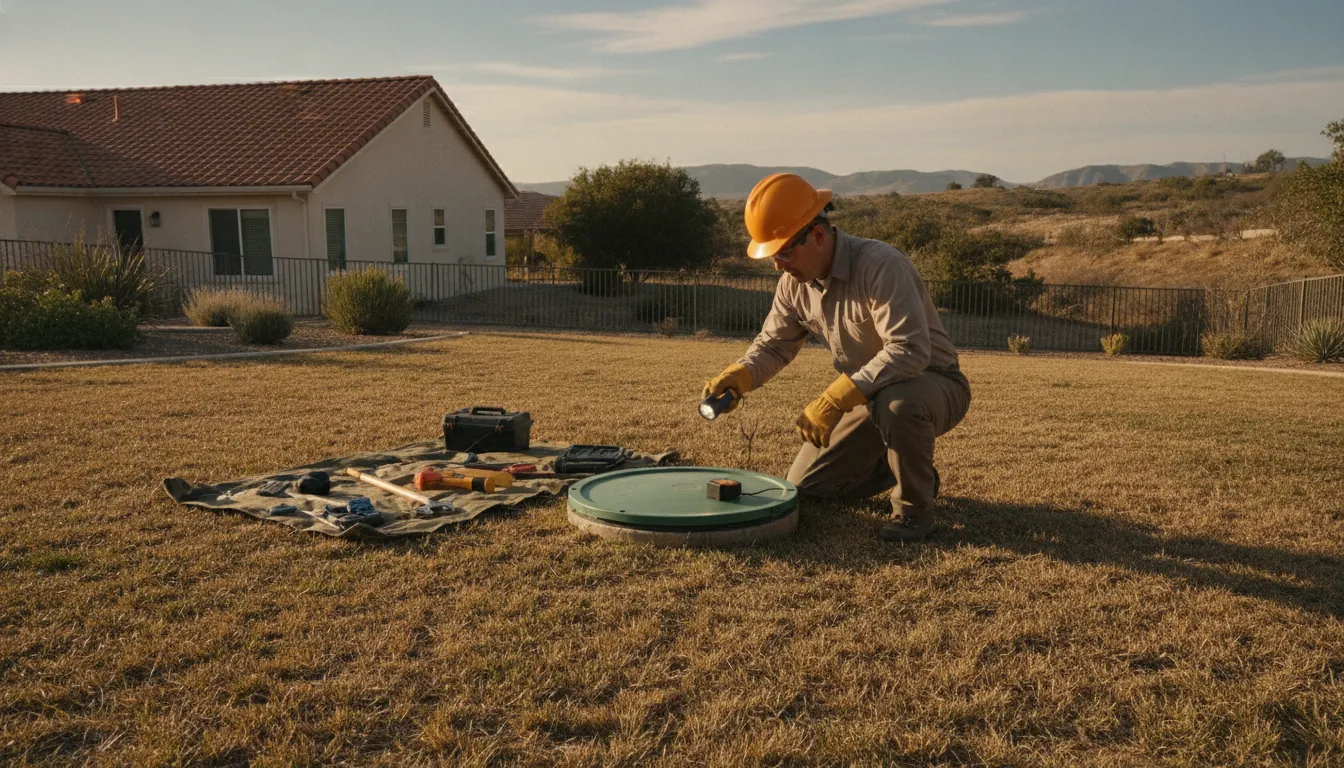
A septic system works hard every day to process waste from your home. To keep it running well, you need an expert to look at it often. While some tanks only need a check every three years, many Inland Empire homes do better with a yearly visit. This is vital for systems that use pumps or moving parts. A quick visit from a pro can save you from a big repair bill later. It also gives you peace of mind that your yard is safe and clean.
What a service visit includes
When a plumber visits, they follow a full septic system maintenance checklist. They check the tank for leaks and look at the scum and sludge layers. If the bottom sludge is too deep, they will tell you to pump the tank. They also look at the baffles and filters. These parts are key to stopping solids from moving into the drain field. If the filter is full of grease or hair, the water cannot flow out well. This leads to slow drains inside your home. A pro will also test any power parts, like pumps or alarms. Getting expert septic system services ensures that every part of your system stays in good shape.
Keep a record of your system health
One of the best ways to care for your system is to keep good records. Every time you have a service visit, write down what was done. Note the date, the name of the pro, and what they found. You should also record when the tank was last pumped. This record helps you know when to call for the next checkup. The EPA says most tanks need pumping every three to five years. Having these facts ready helps a plumber fix the issue if a problem starts. It also helps your home value when you decide to sell.
Monitor your yard for warning signs
You can also do your part by watching your yard for small changes. Walk over the area where your tank and drain field are buried. Look for water that pools on the grass or spots that stay soggy even when it is dry. You should also look for grass that is much greener or taller than the rest of the yard. This often means the system is leaking. While you should never open the tank lids, you can check for slow drains or gurgling sounds in your pipes. When you check your yard, look for any smells that seem out of place. A healthy system should not have a strong odor outside. If you smell sewage near the tank, call for a check right away. These are early signs that your septic and sewer line maintenance plan needs an update.
When should you pump your septic tank?
Most experts agree that a standard home needs to pump its septic tank every three to five years. This window is a good rule of thumb, but it is not a hard law for every house. Your actual needs depend on how you use your water and the size of your system. Regular care is the best way to keep your home safe and avoid the high cost of a total system failure.
Factors that change your schedule
A few main things decide how fast your tank fills up with waste. First, the number of people in your home matters most. A large family will create more wastewater than a single person. More water means the tank must work harder to settle solids. The size of your tank also plays a big role. A small tank will reach its limit much faster than a large one. You can find these details on your expert septic system services paperwork or home records.
The type of waste you flush also affects your schedule. Using a garbage disposal can add many solids to your tank. This can lead to more frequent pumping needs. If you want to keep your system healthy, you should follow a septic system maintenance checklist to track your usage. High water use from many loads of laundry in one day can also stress the system. It is better to space out your water use over the week.
Checking sludge and scum levels
You do not have to guess when your tank is full. A pro can measure the layers of waste inside the tank during an inspection. The EPA notes that you should have your system inspected at least every three years. The pro will check the scum and sludge levels. Scum is the top layer of oil and grease. Sludge is the heavy waste that sinks to the bottom. If the sludge takes up too much room, the tank can no longer clean the water well.
Inside your tank, a T-shaped outlet pipe helps keep solids in place. This part stops waste from moving into your drainfield. If the waste levels get too high, they can flow past this pipe. This leads to clogs in your yard and can ruin your soil. In some cases, you might need septic and sewer line maintenance to clear out these pipes. Catching these levels early saves you from a messy and costly backup in your home.
The value of service records
One of the best tools for a homeowner is a simple folder of service records. When you keep a log of every pump and check, you learn the rhythm of your system. You will know exactly how many years your tank can go before it needs help. These records also help you see if your needs change. For example, if you add a new bathroom or more people move in, your schedule might shift from five years to three.
Good records are also a big plus if you ever sell your home. They show buyers that you took care of the property. They prove that the septic system is in good shape. This can help protect your home’s value and make the sale go fast. In the Inland Empire, where soil types can vary, knowing your system’s history is very helpful. A clear record takes the stress out of owning a septic system.
Manage water use to protect the system
Every drop of water that goes down your drains ends up in your septic tank. If too much water enters the tank at once, the waste does not have time to settle. This causes “hydraulic overload.” When this happens, wastewater pushes solids out of the tank and into your leach field. These solids can clog the soil and cause your system to fail. Good water care is a vital part of your expert septic system services plan. In the Inland Empire, hot days often lead to more water use. This makes it even more vital to watch your daily flow.
Fix leaks and running toilets
Even a small leak can put a heavy load on your system. One leaky toilet can add as many as 200 gallons of water to your tank each day. This constant flow stops the tank from working the right way. It keeps the waste from settling at the bottom. Over time, this extra water floods the drainfield. This can lead to messy backups and bad smells in your yard.
To keep your system safe, check your faucets and toilets for leaks often. Fixing a small drip now can save you from a big repair later. In our local area, every gallon of water is key. Keeping your home leak-free is a top step in any septic system maintenance checklist. For more help with your lines, you can learn about septic and sewer line maintenance to keep things clear.
Spread out laundry and cleaning tasks
Many people try to do all their laundry in one day. This is a bad habit for your septic tank. Large surges of water can stir up the sludge in the tank. This makes it easy for solids to escape into the soil. Instead of a “laundry day,” try to spread your loads out through the week. This keeps the water level in the tank steady and safe.
The same rule applies to other tasks that use a lot of water. Do not run the dishwasher and the washing machine at the same time. This simple change helps your tank process waste at a slow and steady pace. The EPA says that using water well is a key way to care for your system.
Use water-saving fixtures
Older homes in Riverside and San Bernardino County often have old toilets and sinks. These use much more water than new models. Most people in a house use about 70 gallons of water every day. You can cut that number down. Switch to toilets and faucets that save water. This lowers the stress on your tank and helps it last longer.
Using less water inside is helpful in the Inland Empire. During the summer, yard watering puts a strain on local water needs. Saving water inside ensures the ground around your leach field does not get too wet. This helps prevent soil issues and stops groundwater harm. It is a smart way to protect your home and your wallet.
Keep harmful waste out of drains
Your pipes and tank work together to process waste. If you put the wrong things in them, the whole system can fail. Proper waste disposal is a key part of your septic and sewer line maintenance. When you watch what goes down your drains, you help your system last longer and work better.
Watch what goes down the toilet
You should only flush human waste and toilet paper. Many wipes sold as “flushable” do not break down well in water and can clog your pipes. Other items like paper towels and dental floss also cause big problems. They can catch on pipe walls and lead to messy backups in your home.
Chemicals can also harm your system. Do not flush paints, thinners, or harsh cleaners. These liquids can kill the good bacteria that break down solids in your tank. This leads to more pumping and higher costs.
You should also avoid using too much bleach or strong lye. These harsh things can stop your system from working right. Keeping toxins out of your drains is a vital step in any septic system maintenance checklist.
Manage your kitchen sink habits
The kitchen sink is another common spot for harmful waste. Fats, oils, and grease (FOG) are the biggest threats. They turn solid when they cool down and can coat your pipes. Instead of pouring grease down the drain, let it cool and throw it in the trash.
Be careful with your garbage disposal too. These tools are helpful, but they add extra solids and water to your tank. Most experts suggest you limit how much food waste you put down the drain. If you use a disposal often, you may need to pump your tank more.
For complex issues, you can always call for expert septic system services in the Inland Empire. Our team knows how to handle tough clogs and system care. This helps ensure your home stays safe and clean.
The limits of tank additives
Many people use additives to keep their tanks clean. You might see products that claim to break down waste so you never have to pump. However, these do not replace real care. Most tanks do not need extra chemicals to work well.
In fact, some additives can move solids out of the tank and into your drainfield. This can cause lasting damage to your soil and pipes. It may even lead to a total system failure.
The best way to care for your system is to schedule timely service. No product can replace a professional checkup. Following a simple habit of waste control will save you money and stress. By choosing what enters your drains, you protect your home and your health for years to come.

Protect your drainfield through every season
Your drainfield is a key part of your home plumbing. It treats and filters waste water after it leaves the tank. If the field stops working, sewage can back up into your yard or home. In the Inland Empire, our dry heat and sudden storms make drainfield care even more urgent. Caring for this area is a smart way to protect your home’s worth. A failing system can lower your property value or lead to legal issues. You must protect the soil so it stays loose and healthy for years to come.
Keep heavy weight off the soil
The soil over your leach field must stay light and porous to work well. Never drive cars, trucks, or heavy lawn gear over this area. The weight can crush the pipes buried below the surface. It also packs the dirt down so tight that water cannot flow through it. Even parking a car there for a short time during yard work can do damage. Do not build sheds, decks, or brick paths on top of the field. These structures block the air and sun that the soil needs to treat waste.
Control water flow and plants
Trees and large shrubs are a major threat to your septic lines. Their roots seek out water and can grow right into your pipes. This causes clogs and breaks that lead to big repair bills. Only plant grass or small plants with shallow roots over your drainfield. Also, make sure rain runoff does not flood the area. Point your roof gutters and yard drains away from the field. Our local soil often has clay or rock that makes drainage a challenge. If the ground gets too wet from rain, it cannot take in the waste water from your home.
A septic system maintenance checklist
Proper care follows a simple routine through the year. Use this list to stay ahead of common drainfield issues in San Bernardino and Riverside. A full septic system maintenance checklist includes these key steps:
- Walk your yard after heavy rain to find pools of water or soggy soil.
- Ensure your roof drains and sump pumps point far away from the leach field.
- Clear any brush or weeds that grow near your septic tank access lids.
- Keep all vehicles and heavy lawn tools off the drainfield at all times.
- Avoid planting anything with deep roots within fifteen feet of the system.
- Look for grass that is much greener or taller over the field than elsewhere.
- Ask a pro to check the area when you get your expert septic system services done.
Caring for this area is one of the best ways to save money over time. The EPA says that drainfield care is a core part of keeping your system healthy. If you see signs of a fail, like slow drains or bad smells, you should act fast. Small checks today prevent the need for a full system replacement later. We bring care and precision to every job to help your home stay safe. A routine septic and sewer line maintenance check keeps your yard clean and your system strong.
What warning signs should you act on?
A healthy septic system runs quietly beneath your yard. But when things go wrong, your home will give you clear signals. Catching these signs early is part of any good septic and sewer line maintenance plan. If you notice these red flags, your system likely needs expert care to avoid a full failure.
Indoor plumbing issues
Slow drains are often the first sign of trouble. If sinks or tubs take longer to empty than usual, a blockage may be forming. You might also hear gurgling sounds coming from your pipes after you flush the toilet or run the wash. These noises mean air is trapped in the system due to a backup.
Bad smells are another major warning. If you smell sewage near your drains or in your yard, the tank may be full or leaking. Household septic tanks are typically pumped every three to five years to prevent these odors and messy backups. Ignoring these signs can lead to wastewater surfacing in your home.
Yard and drainfield changes
The area above your septic tank and drainfield should look like the rest of your lawn. If you see patches of bright green, lush grass, it may mean your system is leaking. While green grass looks nice, it often shows that wastewater is rising to the surface and fertilizing the soil. This is a sign that your drainfield is failing to filter water properly.
Standing water or soggy mud in your yard is a more urgent problem. Wet spots mean the soil can no longer soak up the liquid from your tank. This can lead to groundwater pollution and high repair costs. Keeping up with expert septic system services helps you find these issues before they ruin your yard.
Alarms and backups
Some modern systems have a septic alarm. If the light flashes or the buzzer sounds, your tank level is too high. This could be due to a pump failure or a clogged pipe. You should call for help right away if your alarm goes off. It is the last line of defense before a major sewage backup occurs in your home.
A total backup is the most serious sign. If sewage comes up through your lowest drains, stop using water immediately. This happens when the tank or the pipes are fully blocked. Fast action can save your home from water damage and keep your family safe from germs.
Schedule an inspection before warning signs turn into a backup.
Frequently Asked Questions
What maintenance is needed on a septic system?
Caring for your septic tank has four main steps. You should have it checked and pumped often. You also need to use water in a smart way. Make sure you get rid of waste the right way and keep your yard clear. The EPA says these steps are the best way to keep your home safe. Following this plan will help your tank last for a long time.
What is the worst thing for a septic tank?
The worst thing for your system is flushing items that do not break down. This includes grease, oils, wipes, and plastic products. These things can clog your pipes or fill your tank with solid waste. Large amounts of harsh chemicals can also kill the good bacteria that help clean the waste. To keep your system safe, only flush toilet paper and human waste into the tank.
Is Dawn dish soap safe for septic systems?
Yes, most normal dish soaps like Dawn are safe to use in your home. You should only use them in small amounts as you wash your dishes. Avoid using too much soap at one time. Large suds can create a thick layer in your tank. This layer can slow down the way waste settles in the water. It is always best to pick soap that is safe for septic use.
Should I use septic additives like Rid-X?
You do not need to use additives to keep your system healthy. Your waste has all the bacteria needed to break down the solids in your tank. Some of these products can even harm your system by stirring up sludge. This waste can then flow into your yard and cause a clog. The EPA says it is better to have a pro check your system every three years.
How much does it cost to pump a septic tank?
In most Inland Empire cities, you can expect to pay between $250 and $500 for a pump job. This is a small price to pay to keep your system in good shape. The EPA notes that a full repair can cost between $5,000 and $15,000 if the system fails. Spending a little bit now will save you from a large bill later.
Ready to book your septic system maintenance service?
A broken septic tank can cause waste to pool in your yard and create a mess. This is hard to clean and can cost a lot of money for you to fix. If you wait for a leak it may be too late to save your tank. You should act now to avoid the stress of a bad drain line for your home. A quick check today keeps your system running well for a very long time. It also helps protect the value of your property here in the Inland Empire. Our team knows how to handle the local soil and the local weather patterns. We are here to give the care your tank needs to stay in good shape.
Ready to request septic system service? You can book your next visit when you go to our expert septic system services page to request septic system service today.

Leave a Reply