
Landscaping around septic system components requires a different plan than landscaping the rest of a Southern California yard. The safest design keeps tank lids accessible, protects the drain field from excess water and weight, and uses shallow-rooted plants that will not seek out pipes. A thoughtful layout can look attractive while helping the underground system continue treating wastewater as designed.
Planning a yard project? Schedule a professional septic inspection before you plant, grade, pave, or install irrigation near the system.
The key is to treat the tank, distribution lines, and drain field as working infrastructure rather than unused open space. This guide explains what belongs in that area, what should stay away, and which yard changes may signal a developing problem.
Landscaping around septic system areas starts with a map
Before changing the yard, locate the tank, access lids, distribution box, pipes, and full drain field. A septic-safe plan begins with knowing where every component sits. Guessing from a visible lid alone can put a tree, retaining wall, or irrigation trench directly above a buried line.
Start with available property records, an as-built drawing, or a previous inspection report. Then ask a septic professional to confirm the layout when records are incomplete or the yard has changed. Marking the boundaries gives a landscaper a clear no-build zone and helps prevent accidental digging damage.
Keep access routes open
Service technicians need a practical route to tank lids and other inspection points. Keep those areas visible and reachable without moving heavy planters, cutting through concrete, or dismantling a structure. A light, removable cover can disguise an access point, but it should never make routine pumping or emergency service difficult.
Protect the drain field as a working soil system
The drain field depends on unsaturated soil to receive and treat wastewater. Plants can help reduce erosion, but deep excavation, added fill, and heavy traffic may compact the soil or change how water moves. Preserve the original grade whenever possible and discuss major yard changes with a qualified professional first.
Set boundaries before work begins
Use flags or temporary markers to show contractors the protected area. This simple step matters during tree delivery, fence installation, and hardscape work because trucks and material pallets can be damaging even when the final design stays outside the drain field.
Which plants are safe above a septic drain field?
Low-growing grasses, shallow-rooted groundcovers, and selected herbaceous plants are usually the safest choices above a drain field. Their roots help hold soil without creating the same intrusion risk as woody trees and large shrubs. Plant selection should also fit Inland Empire heat, sun exposure, and the site’s existing soil conditions.
Good candidates are plants that tolerate the available rainfall and need little supplemental irrigation once established. Native and drought-tolerant choices can support that goal, but the label alone does not make a plant septic-safe. Some drought-tolerant shrubs and trees still develop extensive woody root systems.
| Landscape choice | General fit near a drain field | Main concern |
|---|---|---|
| Shallow-rooted grass or groundcover | Usually suitable | Avoid frequent overwatering |
| Small herbaceous flowers | Often suitable | Minimize digging and soil disturbance |
| Woody shrubs | Keep outside the protected area | Expanding roots may reach components |
| Large or water-seeking trees | Plant well away | Roots can travel far toward moisture |
| Vegetable garden | Choose another location | Food-safety and soil-disturbance concerns |
Avoid edible gardens above the field
Do not use the drain field for vegetables, herbs, or other edible crops. Gardening typically involves repeated digging, irrigation, soil amendments, and direct contact with soil above wastewater treatment components. Set aside a separate garden area beyond the septic zone.
Use mulch sparingly
A thin layer around appropriate plants may help with erosion, but thick mulch, plastic sheeting, and other heavy covers can interfere with air movement and hold moisture. Keep the area lightly covered and follow professional guidance for the specific system.
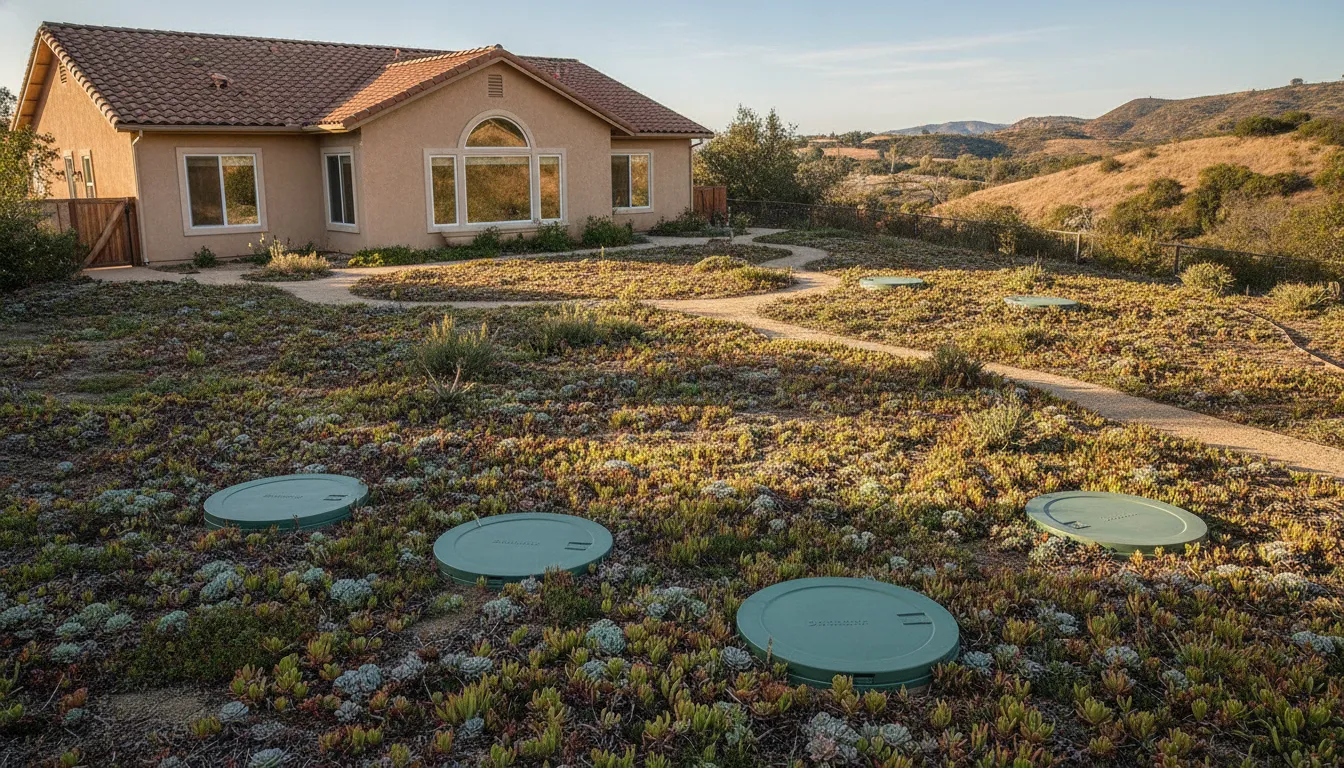
Keep tree roots and hardscape away from septic components
Trees, large shrubs, walls, patios, and permanent structures belong outside the tank and drain-field footprint. Roots naturally grow toward moisture, while hardscape can block access, add weight, and redirect runoff. A design that looks harmless at installation may create service and performance problems years later.
Choose tree placement by mature size
Plan for the tree a decade from now, not the sapling in the nursery pot. Root behavior varies by species and site conditions, so there is no single setback that works for every property. Keep water-seeking and large-canopy trees especially far away, and ask a septic professional and qualified arborist to review uncertain placements.
Tree roots do not usually break a sound pipe simply because one is nearby. However, they can exploit joints, cracks, or persistent moisture and make an existing weakness worse. That is why both proper placement and timely system maintenance matter.
Do not pave over lids or the drain field
Concrete patios, driveways, sheds, and retaining walls can make inspection or repair far more disruptive. They may also compact soil, trap moisture, or direct water into the treatment area. Keep permanent hardscape out of the protected zone and preserve direct access to every lid.
Coordinate trenches and utility work
Landscape lighting, fencing, irrigation, and drainage projects often require trenching. Even a narrow trench can strike a septic line. Give contractors the confirmed system map and require hand digging near marked boundaries when appropriate.
How should irrigation and grading work near a septic system?
Keep irrigation modest and direct roof runoff, stormwater, and hillside drainage away from the drain field. The system already sends household wastewater into this soil. Adding avoidable surface water may saturate the area and reduce its ability to accept effluent.
Water plants according to need
Choose low-water plants and avoid automatic schedules that keep the ground continuously damp. Watch for broken sprinkler heads, overspray, and lines that leak below the surface. Drip irrigation can reduce overspray, but it still needs careful placement and monitoring near septic components.
Preserve positive drainage without burying the field
Yard grading should move stormwater away without adding a deep layer of soil above the drain field. Added fill changes the distance between the surface and system components, while aggressive regrading may damage lines. A drainage professional should coordinate with a septic specialist before significant changes.
Keep gutters and drains separate
Downspouts, French drains, sump discharges, and pool drainage should not empty onto the septic area. Route clean water to an appropriate location that complies with local requirements. After a major storm, check the protected zone for standing water, erosion, and new depressions.
Not sure whether recent grading or irrigation has affected the system? Review the signs of septic drain field failure, then request a professional evaluation before making more yard changes.
Why vehicles and heavy structures do not belong over the system
Cars, trucks, equipment, storage containers, and permanent structures can compact drain-field soil or damage buried components. The risk applies during construction as well as after the landscape is complete. A one-time delivery truck can create damage even if the finished yard contains no driveway.
Create a clear traffic plan
Show crews where they may park, turn, unload, and stage materials. Place temporary barriers along the septic boundary before work starts. Do not store pallets of stone, soil, or pavers over the tank or field.
Keep recreation features elsewhere
Put pools, hot tubs, sport courts, decks, fire pits, and play structures outside the protected area. Besides adding weight, these features can complicate service access and introduce drainage that was never part of the septic design.
Plan for future repairs
A septic system will eventually require service, and some components may need repair or replacement. An open, accessible yard reduces the amount of landscaping that must be removed and helps technicians work safely. Keeping the septic zone simple now can prevent an expensive landscape rebuild later.
What warning signs suggest landscaping has affected the septic system?
Unusually lush growth, persistent wet soil, sewage odors, settling ground, slow drains, or backups warrant prompt attention. These signs do not prove landscaping caused the problem, but they can indicate the system or surrounding soil is no longer working normally.
Changes visible in the yard
- A bright green or fast-growing patch above part of the drain field
- Standing water or spongy soil during otherwise dry conditions
- New depressions, erosion, or soil settlement near a tank or line
- Sewage odors around the septic area
- Roots, cracked paving, or irrigation leaks near marked components
Changes visible inside the property
Slow fixtures, gurgling drains, and wastewater backing up can indicate a problem that needs professional diagnosis. Stop adding unnecessary water and avoid opening a tank or attempting a repair. Septic gases, unstable lids, and untreated wastewater present serious hazards.
Document changes before the inspection
Photograph the affected area, note recent landscaping or storms, and identify when symptoms began. Tell the technician about new trees, irrigation work, grading, vehicle traffic, or hardscape. That context can make the inspection more focused.
For a closer look at outdoor symptoms and next steps, see Diamond House Plumbing’s guide to recognizing drain field trouble.
Plan a septic-safe Southern California landscape
The safest yard keeps the septic footprint simple, accessible, lightly planted, and protected from added water and weight. Build the rest of the landscape around that working zone rather than forcing patios, trees, and irrigation into it.
- Locate and mark every septic component.
- Preserve tank-lid and service access.
- Select shallow-rooted, low-water plants.
- Route irrigation and runoff away from the field.
- Keep vehicles, structures, hardscape, and large trees outside the protected area.
- Inspect unusual wetness, growth, odors, or drainage changes promptly.
This approach suits Inland Empire properties where heat and water conservation already influence landscape decisions. It also leaves flexibility for future system service. To learn more about the team and its work, visit the Diamond House Plumbing home page or view the company’s project portfolio.
Frequently asked questions
Can I plant a vegetable garden on my septic drain field?
No. Choose a different location for edible plants. A vegetable garden encourages digging, soil amendments, irrigation, and direct contact with soil above wastewater treatment components.
How far should trees be from a septic system?
The right distance depends on mature tree size, root behavior, soil, and the system layout. Keep trees outside the protected area, place large or water-seeking species substantially farther away, and get site-specific guidance before planting.
Is gravel a good cover for a septic drain field?
Not automatically. A heavy gravel layer can add weight and change surface conditions. Low-growing, shallow-rooted vegetation is generally a better default unless a septic professional recommends another treatment for the specific site.
Can I install irrigation near a septic tank?
Irrigation should not saturate the tank or drain-field area, and installation trenches must avoid buried components. Confirm the system map, use low-water planting, and have the layout reviewed before installation.
Protect the yard and the system with a professional inspection
A beautiful landscape should not come at the expense of the infrastructure below it. Diamond House Plumbing serves residential and commercial property owners across Riverside and San Bernardino County with septic and plumbing expertise grounded in careful workmanship.
Schedule a professional septic inspection before your next landscape project, or request service if you have noticed wet soil, odors, settling, or drainage changes.

Leave a Reply