
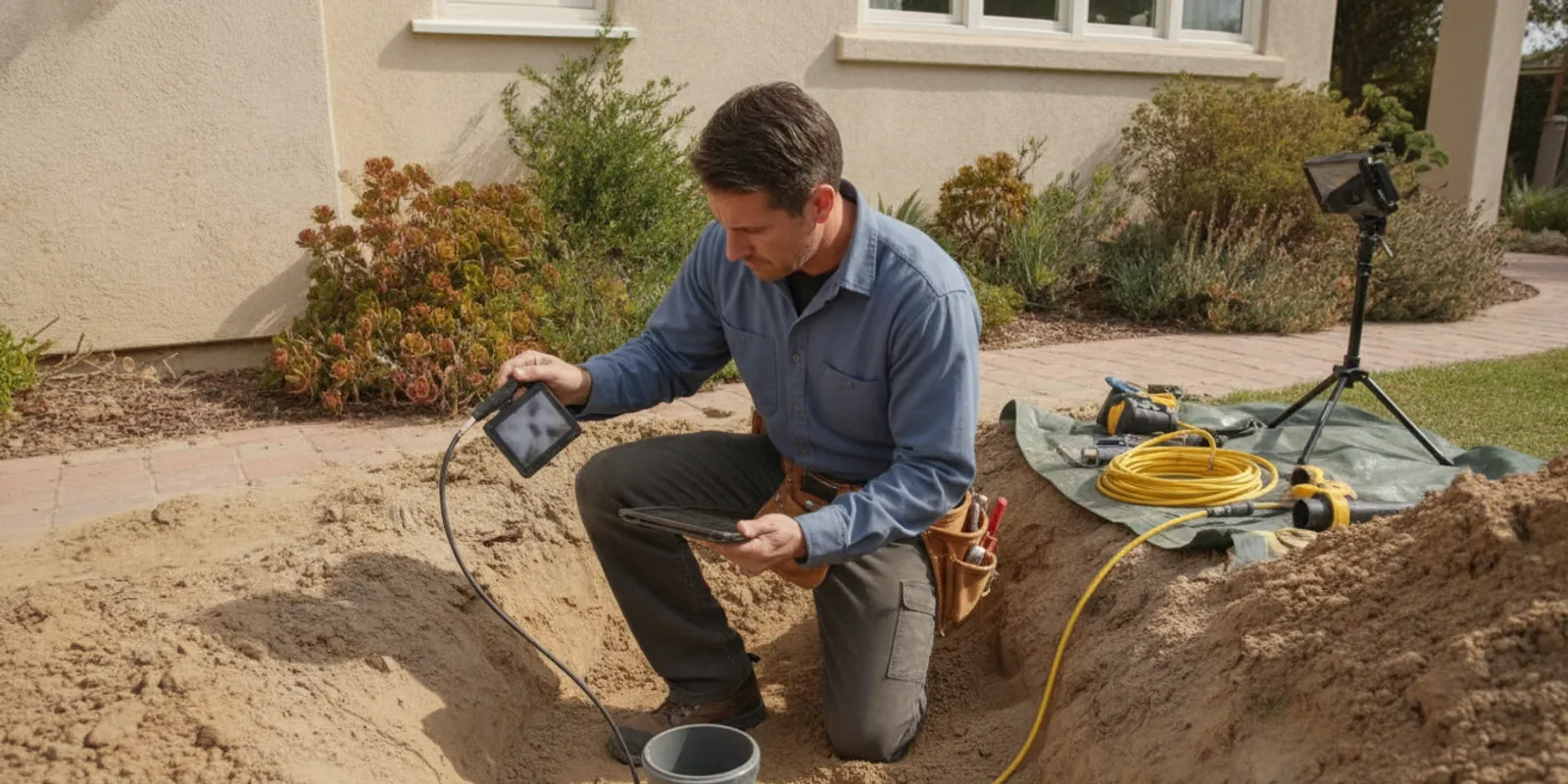
Main sewer line replacement is a major property decision, but a backup or recurring drain problem does not automatically mean the whole line must be replaced. A careful assessment helps identify where the problem is, whether repair or replacement makes sense, and what details need to be settled before work begins.
Request a sewer line assessment
What does a main sewer line replacement involve?
The main sewer line carries wastewater from a building’s drain system toward the public sewer connection or, for some properties, a private onsite system. The exact route and arrangement vary by property. A replacement project removes and installs some or all of the pipe that is failing; the extent depends on the condition, location, and layout of the line.
It helps to distinguish the main line from a branch drain. A branch usually serves one fixture or a smaller group of fixtures. A problem in the main line can affect several fixtures or the entire building. The terms “main line,” “building sewer,” and “sewer lateral” may also be used differently by owners, contractors, and local agencies. Confirm which section a proposal covers instead of relying on a label alone.
For an overview of common line components and warning signs, see this main sewer line guide. If the property is connected to a septic system rather than a municipal sewer, the destination and system layout differ; Diamond House Plumbing also describes its septic services.
Which symptoms suggest a main-line problem?
One slow sink or a single toilet that will not flush can point to a local fixture or branch issue. Concern about the main line grows when several fixtures have trouble at once, when wastewater backs up at a low drain, or when problems keep returning after routine clearing. Gurgling, unusual odors, or damp and unusually lush areas along a suspected route can add useful context, but none of these clues confirms that replacement is needed.
- More than one affected fixture: Note which sinks, tubs, toilets, or floor drains are involved and whether they act up at the same time.
- Backups at low points: Record where water or waste appears, especially if it occurs when another fixture is used.
- Recurring trouble: Write down when the issue began, how often it returns, and what work has already been done.
- Changes outdoors: Mention standing water, soil movement, or persistent wet areas near the likely pipe route without digging to investigate.
- Recent changes: Share details about renovations, new fixtures, landscaping, or heavy equipment near the line.
These observations help a plumber choose a sensible inspection. They are not a diagnosis: a blockage, a localized defect, a belly in the pipe, roots, a damaged connection, or another condition may produce overlapping symptoms. A sewer line belly, for example, is one possible condition to assess, not proof that an entire line must be replaced.
What should an inspection establish before replacement?
Before comparing replacement plans, establish what is known about the defect and where it is. A professional may review the complaint history, identify accessible cleanouts, and use an appropriate inspection method. A sewer camera inspection can help show the interior of an accessible pipe, but the usefulness of the view depends on access, pipe conditions, and whether the camera can pass the relevant section.
Ask the plumber to explain what the inspection showed in plain language. Where is the issue? Is the observed condition limited to one point or present along a longer section? Is the pipe obstructed, cracked, offset, deformed, or otherwise impaired? What part of the line could not be viewed? A clear answer should separate direct observations from assumptions about hidden areas.
A camera recording or written notes can make the discussion easier to follow. Ask whether the inspection findings can be documented, including the access point, distance or location of the defect when known, and any limitations. For more on this step, review the sewer camera inspection guide. An inspection is useful for making a decision; it is not a promise that every part of a buried pipe can be evaluated from one access point.
Does the line need repair, partial replacement, or full replacement?
The right scope depends on the evidence and the condition of the pipe beyond the immediate symptom. A localized defect may be manageable with a targeted repair. A longer section with multiple defects, widespread deterioration, or a layout that makes repeated repairs impractical may lead a professional to discuss replacement of more of the line. The decision should be based on the actual condition, not on a single symptom or a general rule that every older pipe needs replacement.
Ask what alternatives were considered and why they do or do not fit. If a proposal recommends replacing the full run, ask which findings support that scope. If only part of the line is proposed, ask what is known about the remaining section and what uncertainty remains. That conversation lets you compare approaches without treating a repair as a guaranteed long-term solution or replacement as the only possible response.
Keep the distinction between clearing a blockage and correcting a pipe defect in mind. Clearing may restore flow without resolving a structural problem. Conversely, a backup by itself does not establish that the pipe has failed. A drain and sewer professional can assess how the observed condition relates to the reported symptoms.
How do access and property layout affect the work?
The route of the pipe matters because it determines where the crew may need to reach the line. A sewer run can pass beneath landscaping, paving, a driveway, a building addition, or other features. The location of cleanouts, nearby utilities, grade, and the connection point can all affect the sequence and access plan. Do not assume a replacement method or excavation footprint before the route and site conditions are reviewed.
Before scheduling, walk through the property with the contractor and identify practical constraints. Point out gates, narrow access, pets, irrigation, planted areas, parking needs, and areas that should be protected. Mention any known utility locations or past work. A property owner should not locate buried utilities by digging independently; ask the contractor how required utility locating and site preparation will be coordinated.
Also ask how the work area will be separated from household or business activity. Find out which entrances or parking spaces may be affected, whether access to plumbing fixtures will be limited, and how the crew will communicate changes. For a business, agree on the work window and any operational constraints in advance. Do not assume a specific duration until the contractor has reviewed the job conditions.
What belongs in a useful replacement proposal?
A proposal should make it possible to understand the work being offered and compare it with another plan. It should describe the section of line included, the intended work, and any exclusions or unresolved conditions. If the route or endpoint is uncertain, ask how that uncertainty will be handled and what would prompt a change in scope.
| Planning item | What to clarify | Why it matters |
|---|---|---|
| Observed condition | Inspection findings, defect location, and limits of the inspection | Connects the proposed work to evidence rather than assumptions |
| Work scope | Which pipe section is included and whether the plan is repair, partial replacement, or a larger replacement | Shows what the proposal does and does not address |
| Access and site work | Expected access points, areas affected, and restoration included or excluded | Helps prepare the property and understand site impacts |
| Approvals and coordination | Who checks whether permits, inspections, or utility coordination apply | Clarifies responsibilities before the project is scheduled |
| Schedule and use | Expected work sequence, access restrictions, and how updates will be provided | Helps residents or businesses plan around service interruptions |
| Changes to scope | How concealed conditions or newly discovered issues will be explained and approved | Reduces confusion if field conditions differ from what was visible |
Do not compare proposals by a headline total alone. For a related discussion of project cost, see this guide to sewer line replacement. Check whether proposals cover the same pipe length, access, restoration, approvals, and inspection steps. If one quote includes work that another excludes, ask each contractor to explain the difference. Ask how any extra work would be described and approved before it proceeds.
What permits, inspections, or local requirements should you ask about?
Requirements can depend on the property, the work location, and the authority responsible for the sewer connection. A private property repair and work that affects a public connection may involve different coordination. Rather than assuming one rule applies everywhere in Riverside or San Bernardino County, ask which city, sewer district, or other agency has jurisdiction and whether this project needs a permit, inspection, or other approval.
Ask who will confirm applicable requirements and whether the proposal includes the related coordination. If a permit or inspection is required, clarify what documents or access the property owner must provide. Keep any approval records and final project documents with the property file. The U.S. Environmental Protection Agency is a starting point for general environmental information, but local agencies determine project-specific requirements.
How can you prepare the property and your questions?
A little preparation can make the assessment more useful. Gather details about the plumbing symptoms and previous service, and locate any plans or records that show additions or past sewer work. If you have a maintenance or inspection report, share it. Note when the problem occurs and which fixtures are affected rather than relying on memory during the visit.
- Make a simple timeline of symptoms, backups, and prior clearing or repair work.
- List the fixtures and drains affected, including whether multiple areas fail together.
- Show the plumber any known cleanouts and available property or plumbing plans.
- Identify landscaping, hardscape, access restrictions, and nearby activity that may affect the work area.
- Ask for the inspection findings and proposed scope in writing.
- Confirm the expected service interruption, site access needs, and how updates will be shared.
- Ask what approval or decision is needed from you before work starts or if conditions change.
If wastewater is actively backing up into the building, avoid using fixtures that may add to the backup and contact a plumbing professional promptly. Keep people away from contaminated water. Do not enter a tank, sewer space, or excavation, and do not attempt to handle sewage or buried pipe components yourself.
What should you expect during planning and the work?
Once you decide to proceed, confirm the work area, access arrangements, and the person who will answer questions during the project. Ask how the crew will verify the planned section and how you will be informed if the site reveals a condition that changes the approach. Agree on how changes are documented and approved before additional work is performed.
After the work, request the records relevant to the completed project, such as the final scope, inspection or approval documents when applicable, and any available notes about the replaced section. Ask what the crew observed outside the replaced portion and whether any follow-up is recommended. Keep those records with property documents; they can help a future owner or plumber understand the line’s history.
Diamond House Plumbing provides sewer and plumbing services in the Inland Empire. You can learn more about sewer lateral replacement planning or see its broader residential plumbing services. For commercial service questions, use the contact page.
Request a quote for your sewer line project
Frequently asked questions
Does one backed-up toilet mean the main sewer line needs replacement?
No. A single fixture issue can have several causes, including a local blockage. When multiple fixtures are affected or the trouble recurs, a professional assessment can help determine whether the main line is involved.
Can a camera inspection show whether the whole line should be replaced?
A camera can provide useful evidence about accessible pipe interiors, but the view may have limits. Ask what sections were inspected, what conditions were visible, and what could not be confirmed. The findings should be explained alongside the symptoms and property layout.
Will replacement always require digging?
Not necessarily. The work method depends on the pipe, its route, access, and site conditions. Ask the contractor to explain the approach being proposed and the access or restoration it requires for your property.
How long will the project take?
There is no single schedule that fits every property. Scope, access, approvals, conditions underground, and restoration needs can affect timing. Request a project-specific sequence and ask how schedule changes will be communicated.
Plan the next step from the inspection findings
A sound replacement plan starts with a clear diagnosis, a defined scope, and realistic expectations about access and approvals. Gather your symptom history, ask what the inspection established, and compare proposals that describe the same work before deciding how to move forward.

Leave a Reply