
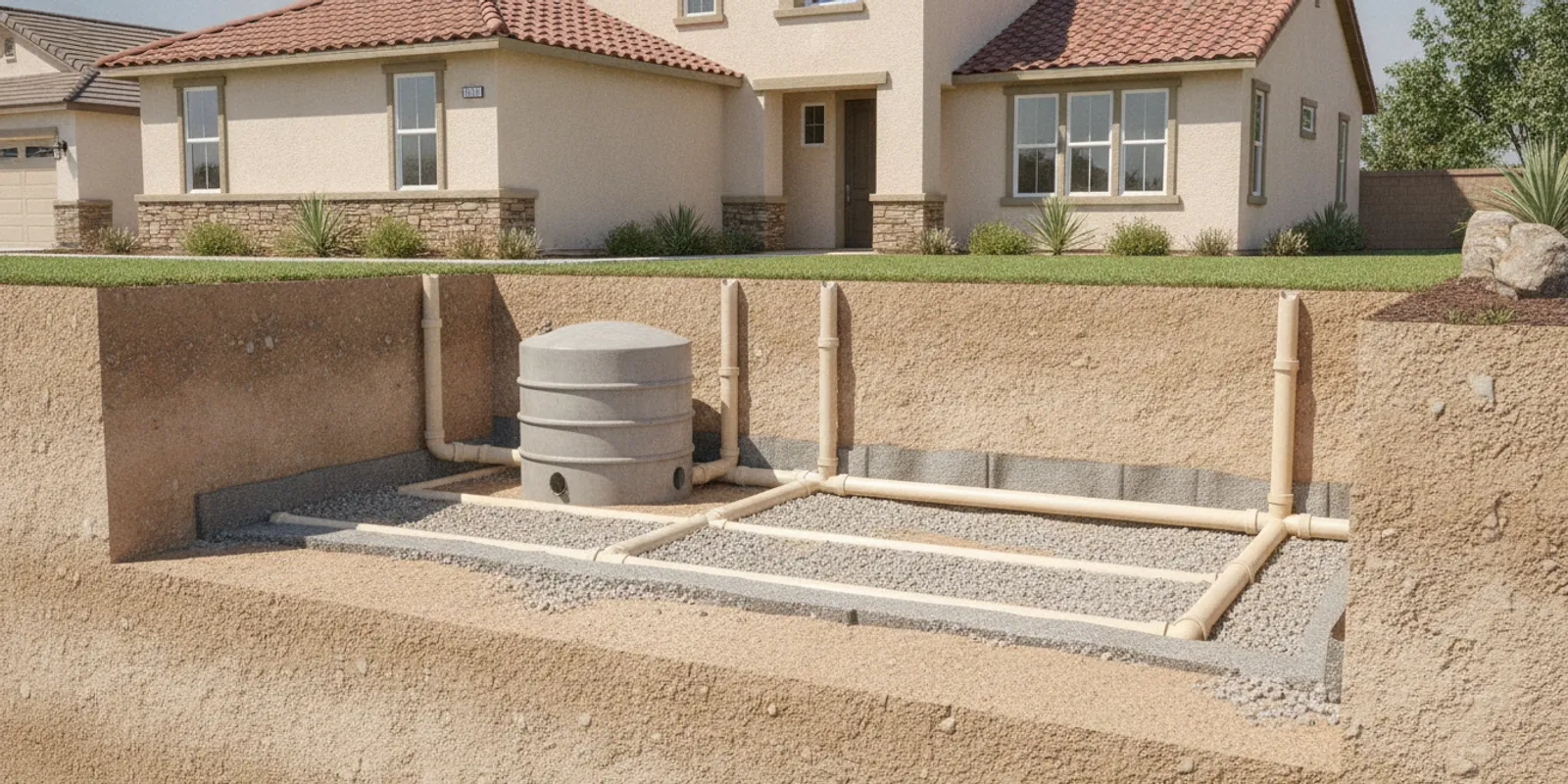
A septic system treats wastewater on your property instead of sending it to a municipal sewer. If you are asking how does septic tank work, the short answer is that the tank slows wastewater so solids can settle or float, while liquid effluent travels onward for treatment in soil. The tank is one stage in a larger system, and each part has a role.
Ask about septic system service
What happens as wastewater enters the tank?
Water from toilets, sinks, showers, laundry, and other household drains moves through the building drain and a pipe to the septic tank. The tank provides a relatively calm holding space. It does not make wastewater disappear or complete every part of treatment by itself.
Inside the tank, heavier solids settle to the bottom and form a sludge layer. Oils, grease, and other lighter materials float and form a scum layer. The liquid between them is effluent. Baffles or related inlet and outlet structures help direct the flow and reduce the chance that floating or settled material will pass toward the outlet. Designs vary, so the details depend on the system installed at the property.
Some organic material breaks down through naturally occurring processes while wastewater is in the tank. However, solids still accumulate. Periodic inspection and pumping are therefore part of ownership; timing depends on tank capacity, use, household size, and condition. A tank is not a disposal point for wipes, hygiene products, cooking grease, or other materials that do not belong in household wastewater.
Where does the effluent go after the tank?
Effluent leaves the tank and travels to a soil treatment area. A conventional system often uses a drain field, while another property may have a different approved dispersal arrangement. Pipes or other distribution components spread the liquid through the treatment area. Soil helps filter and treat wastewater as it moves through the ground.
This downstream stage is essential. If wastewater arrives faster than the area can accept it, or if the soil is saturated or damaged, liquid may rise to the surface or back up toward the building. A tank in good condition cannot compensate for a failing dispersal area. To see how these parts connect, review this guide to septic system parts.
Protect the area from avoidable stress. Do not drive or park heavy vehicles over buried components, and avoid construction or major landscaping there unless a qualified professional confirms it is appropriate. Keep roof drains and other surface water from being directed onto the treatment area when possible. Excess water can limit how well soil accepts effluent.
Which parts make up the complete system?
A common system includes building drains, a pipe to the tank, the tank, an outlet route, and a soil treatment area. Some designs also include an effluent filter, pump, alarm, or control. These components screen, move, or distribute wastewater according to the system design. The following comparison describes typical roles, not a diagnosis of any specific property.
| Component | Typical role | What a property owner may notice |
|---|---|---|
| Building drain and pipe to tank | Carry wastewater from fixtures to the tank | Slow drains or recurring backups may have several causes |
| Septic tank | Separate and hold solids, scum, and effluent | Maintenance history and access information help guide service |
| Baffles or effluent filter | Help limit solids moving toward the outlet | Clogging or damage can affect flow and requires safe assessment |
| Drain field or other dispersal area | Distribute effluent for additional treatment in soil | Persistent wetness, unusual lush growth, or odor warrants investigation |
| Pump and alarm, if installed | Move wastewater or signal a condition needing attention | Follow the system-specific response guidance; do not assume the cause |
Some components are buried and not visible during ordinary use. A property record, permit, prior inspection, or service record may help identify the design. If records are missing, a professional can help determine what is installed. A septic service assessment can clarify what kind of system help may be appropriate.
How do the tank and the rest of the system differ?
People sometimes use “septic tank” to refer to the entire onsite wastewater system. In practice, the tank is one component. It separates and holds material; the soil treatment area provides another important part of treatment and dispersal. Pipes, filters, pumps, and controls connect those stages.
This difference matters when a problem appears. A backup might involve an interior drain, the pipe to the tank, a tank that needs service, a blocked component, or the dispersal area. A wet patch over a field does not by itself prove that the tank has failed. A qualified inspection helps identify the affected component before repair decisions are made. For more on system behavior, see this overview of how a septic tank works.
Federal consumer guidance also emphasizes that a septic system includes more than the tank and should be inspected and maintained as a system. The U.S. Environmental Protection Agency’s septic systems guidance provides general information on system care and homeowner responsibilities. Local requirements and the appropriate service schedule can differ, so property owners should use applicable county or local guidance for site-specific questions.
What affects how well a septic system works?
- Water use: Large or repeated flows can send more wastewater into the tank and treatment area in a short time. Spacing out laundry loads and promptly addressing running fixtures can help avoid unnecessary surges.
- Material entering drains: Wipes, hygiene products, grease, and other unsuitable items can add to blockages or solids accumulation. Toilets and sinks should carry wastewater appropriate for the system, not household trash.
- Maintenance history: Missed inspections or pumping can allow solids to build up. A record of prior service helps a professional consider whether the tank needs attention.
- Component condition: A damaged pipe, baffle, filter, pump, or control can interrupt the intended flow. Symptoms alone rarely identify which component is responsible.
- Soil and site conditions: Saturated ground, altered drainage, or damage to the dispersal area can limit its ability to accept effluent.
- Surface loads and access: Vehicles, structures, or excavation over buried components can cause damage or make future inspection harder.
Practical habits can reduce avoidable strain. Fix leaking fixtures, avoid sending fats and oils into drains, and spread heavy water use through the day where feasible. Keep a simple record of inspections, pumping, repairs, and unusual symptoms. This history gives a service professional useful context and helps you track changes over time.
How can you recognize a possible septic problem?
Repeated slow drains, gurgling, sewage odors, or wastewater backing up into a fixture may indicate a plumbing or septic concern. Outside, persistent wet ground or unusually lush growth over a treatment area can warrant investigation, especially when there is an odor. These clues are not conclusive by themselves and can have more than one cause.
If wastewater backs up, reduce water use and avoid contact with it. Keep children and pets away from affected areas. Do not lift a tank lid or enter a tank; septic tanks can contain hazardous gases and other serious hazards. A qualified professional can inspect the plumbing and system safely. If the issue may involve the building drain or sewer connection, learn about drain and sewer service.
An alarm on a system with a pump should also be taken seriously. The alarm indicates a condition requiring attention, but it does not identify the cause on its own. Check the instructions for the installed system, limit water use if advised, and arrange a professional assessment. This septic tank alarm guide explains why the response depends on the system design.
How should inspection and pumping be planned?
There is no single schedule that fits every tank and property. Capacity, number of occupants, water use, solids entering the system, and past maintenance all affect planning. Use service records and inspection findings rather than relying only on a generic calendar estimate. If you recently moved into a home and cannot find records, ask about an inspection to establish the system’s condition and maintenance history.
Inspection and pumping are related but distinct. An inspection evaluates the condition and function of accessible components. Pumping removes accumulated solids and scum from the tank. A technician may recommend pumping based on observed conditions and system needs, but pumping alone does not repair a damaged pipe or restore a failing soil treatment area. Ask what was examined, what was removed, and whether any follow-up is advised. For further background, see the guide to planning septic tank pumping.
How do pumping, repair, and replacement differ?
These services address different conditions, so an observed symptom should not automatically lead to a particular remedy. Pumping removes accumulated material from the tank. Repair addresses a component that can be restored, such as a damaged or obstructed part, depending on findings and system design. Replacement may be considered when a component or system cannot be suitably restored. Site conditions and applicable approvals can affect the available options.
Before authorizing work, ask the professional to explain the finding, the component involved, and why the proposed work fits that finding. Request a clear description of what is included and whether permits, access, or additional evaluation may be needed. If the issue is beyond the tank, ask how the rest of the system was assessed. This keeps the decision tied to evidence rather than to a symptom alone.
What information should you share when requesting help?
Useful details help a service team understand the concern and prepare for a visit. Gather what is readily available; do not delay urgent help just to locate every record.
- Property address and whether the site is residential or commercial.
- Any septic plan, permit, inspection report, or prior pumping receipt.
- Approximate location of the tank and dispersal area, if known.
- When symptoms began, which fixtures are affected, and whether the condition is worsening.
- Whether the system has a pump, alarm, or filter, and whether an alarm is active.
- Recent high water use, power interruption, excavation, or change in occupancy.
Describe what you see without opening the tank or disturbing buried equipment. If several fixtures are affected at once, mention that. If only one fixture is slow, say so as well. These distinctions may help a professional decide whether to begin with the building plumbing or investigate the septic components. To discuss a concern, use the contact page.
Frequently asked questions
Does a septic tank treat all wastewater by itself?
No. The tank separates and holds material, while the downstream soil treatment area provides an important part of treatment. Pipes and other components must also carry and distribute wastewater as intended.
Does every septic system need electricity?
No. Some systems rely mainly on gravity, while others use a pump or controls. Check property records or ask a professional to identify the design rather than assuming every system operates the same way.
Why might wastewater back up into the home?
Possible causes include a plumbing blockage, a tank condition, a blocked or damaged component, or a problem with the dispersal area. The symptom alone does not reveal the cause, so inspection is the safer next step.
Can I open the tank to check its level?
No. Do not open or enter a septic tank to investigate. The opening and tank environment present serious hazards; have a qualified professional inspect it using appropriate procedures.
Plan a safe next step
A septic system works through connected stages: wastewater enters the tank, solids separate from liquid, and effluent moves to a soil treatment area. Keep maintenance records, watch for recurring symptoms, and seek a professional assessment when something changes. Diamond House Plumbing serves property owners across Riverside and San Bernardino Counties; contact the team to discuss a septic concern.

Leave a Reply