
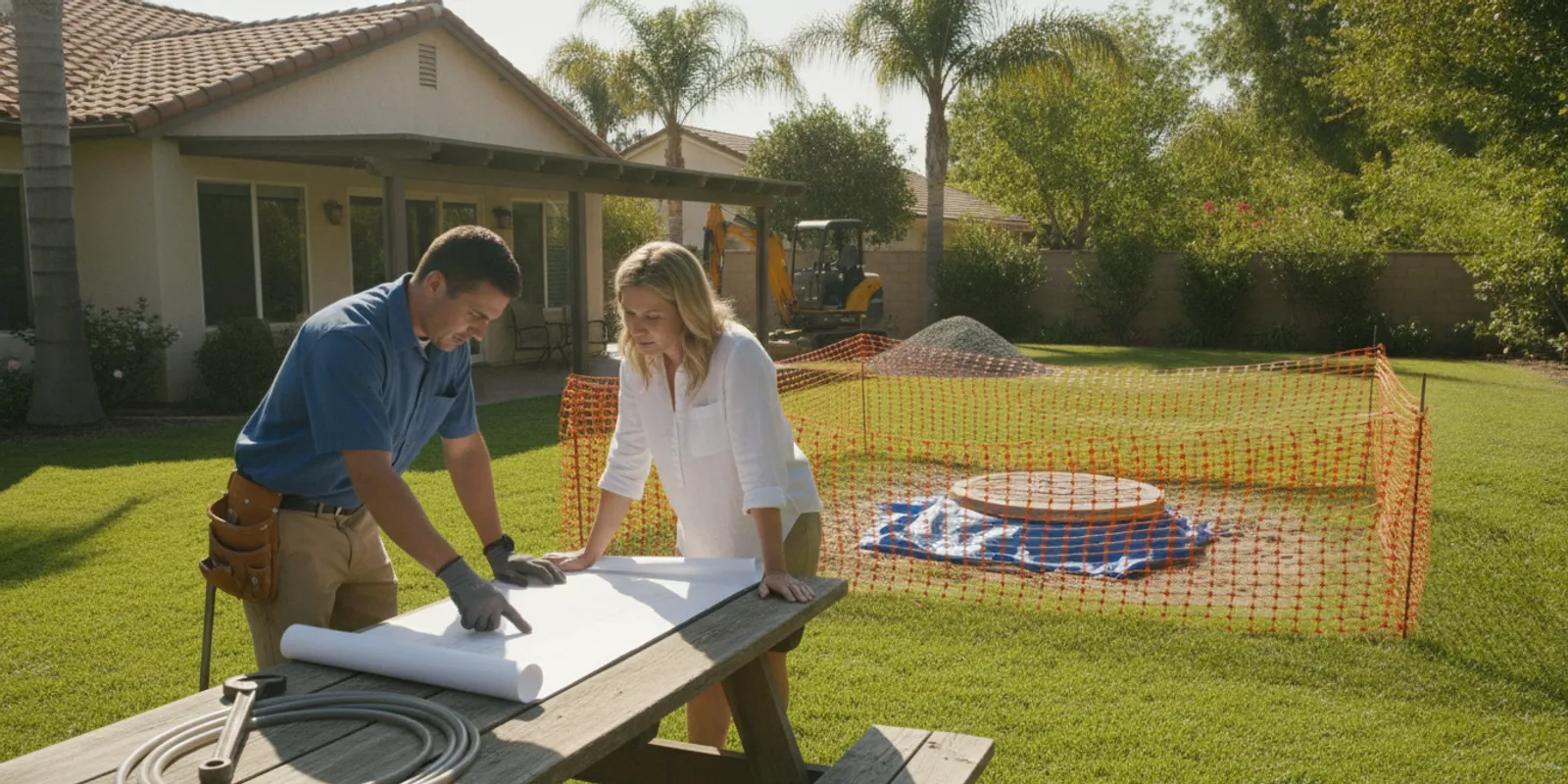
If you need to get a quote for septic tank installation, prepare a clear picture of the property, the intended use, and what is already known about the site. Property owners in Riverside and San Bernardino counties do not need to arrive with every technical answer. The useful first step is sharing accurate information and asking for a written proposal that separates confirmed work from assumptions.
Request a septic installation consultation
What information should you gather before requesting a quote?
A short, organized description helps the contractor understand the project and identify what needs to be checked. Gather what you have, but label unknowns rather than guessing. Start with the property address and whether it is a residence, rental, business, or new construction. Explain whether you are planning a new system, replacing an existing one, or investigating another project such as a septic-to-sewer conversion.
- Expected use: Share the number of occupants or the building’s expected use, plus any planned change such as an addition or change in occupancy.
- Existing system details: Note the tank location if known, approximate age, prior repairs, alarms, recurring backups, or other symptoms.
- Records: Look for property plans, permits, inspection reports, prior proposals, or septic documents. You can tell the contractor which records are missing.
- Access: Mention gates, narrow driveways, slopes, landscaping, overhead obstacles, and areas where equipment should not travel.
- Timing and operations: Describe any preferred work window, business hours, or access needs that could affect planning.
Photographs of visible conditions can help explain your concern, but they cannot establish what is underground or replace an assessment. Do not open a tank or enter a septic area to collect information. If wastewater is backing up or surfacing, explain where and when it happens and whether it is recurring. The service team can advise you on an appropriate next step.
If you do not know whether the property uses a septic system or a sewer connection, say so. The company’s septic services page is a relevant place to review the service scope as you prepare to ask questions. If you suspect the issue may instead involve a building drain or sewer lateral, describe the symptoms without assuming the cause.
What should a septic installation quote include?
A useful proposal describes the work, the basis for the proposed approach, and the conditions that could change it. Depending on the project, the scope may discuss evaluation, excavation, tank and component installation, connections, backfill, testing, and surface restoration. Not every project includes all of these items, so the proposal should say which ones apply rather than relying on a generic list.
Ask for the known scope and uncertain items to be shown separately. For example, a proposal may depend on confirming access, records, site findings, design details, or local approvals. It should identify exclusions and explain how changes would be documented and approved before additional work proceeds. Permit, design, inspection, or agency charges may be included, excluded, or not yet determined; ask the contractor to state which applies to each item.
| Quote area | What a clear proposal explains | Question to ask |
|---|---|---|
| System and scope | Proposed work, major components, and the intended project are identified. | What exactly will be installed, replaced, or connected? |
| Site preparation | Access, excavation, disposal, and restoration assumptions are described. | What site condition could change this part of the work? |
| Approvals and inspections | Known approval steps, responsibilities, and fees are addressed. | Who coordinates applications and inspection scheduling? |
| Price and exclusions | Included work, exclusions, payment milestones, and unresolved items are visible. | What is not included in this amount? |
| Schedule and changes | Timing assumptions and a process for handling new findings are stated. | How will added scope be explained and approved? |
Cost depends on the system and property; a number based on limited information may be preliminary. Factors can include capacity and design, excavation conditions, equipment access, connection distances, restoration, and agency requirements. Compare proposals only after checking whether they cover the same work and make similar assumptions. A lower total may reflect omitted tasks or unresolved items rather than a like-for-like offer.
How do site conditions affect an installation proposal?
Septic work is property-specific. The proposed installation area, soil and drainage characteristics, utilities, access, and relationship to buildings may all affect planning. Records, measurements, testing, design work, or coordination with a local authority may be needed before a final scope can be confirmed. A phone conversation can establish the broad purpose of the project, but it cannot verify every condition on the property.
In Riverside and San Bernardino counties, the property and applicable local process matter. Do not assume that a design or approval sequence used at another address applies to yours. Ask which evaluations and approvals are relevant, who is responsible for coordinating them, and what must be completed before construction begins. If you are considering a conversion rather than a new onsite system, explain that early; it is a different project question and may involve a different set of steps.
The University of Minnesota Extension provides general planning context in its discussion of calculating costs for an installation job bid, including the relationship between crew experience and job costs. This is general information, not a local requirement or a substitute for a site-specific proposal.
How can you compare septic installation quotes?
Compare the proposals line by line, starting with the description of the project. Check what each contractor assumes about the property, access, approvals, restoration, and testing. A task that is absent from a proposal may still be necessary; if so, the owner may face a later decision about scope and added charges. Ask the contractor to clarify ambiguous language before you compare totals.
- Confirm the same project. Check that each proposal addresses the same type of new installation or replacement and the same expected building use.
- Match the included work. Compare excavation, installation, connections, disposal, restoration, testing, and inspections where relevant. Mark each as included, excluded, or awaiting confirmation.
- Review the assumptions. Note whether access, utilities, existing system location, records, and site conditions have been verified or simply assumed.
- Clarify approvals. Ask who prepares any submissions, communicates with the relevant authority, schedules inspections, and pays fees.
- Understand change control. Find out how an unexpected condition will be documented, priced, and approved before work outside the original scope proceeds.
- Compare timing and communication. Ask what must happen before a start date is firm, what can delay the work, and who will provide updates.
A simple comparison worksheet can prevent important differences from getting lost. Put each contractor’s answer in a column and use “unknown” where it has not been confirmed. For example, if one proposal includes surface restoration and another says restoration is by owner, the totals are not directly comparable until you decide whether to include that work in both. The same applies to fees, testing, and application coordination: the point is not to assume a particular answer, but to make the difference visible.
Look for specific, understandable answers. A contractor should be able to explain why the scope is proposed, what remains uncertain, and what decision comes next. Learn more about Diamond House Plumbing’s background on its About Us page as you decide whom to contact.
What should you ask before approving the work?
Before you accept a proposal, ask questions about both the physical work and how the project will be managed. Written answers are useful when the proposal contains allowances, exclusions, or conditions that could change the scope.
- What records, observations, or evaluations support the proposed scope?
- Which permits, evaluations, or inspections are expected, and who coordinates each one?
- Which parts of the price are confirmed, and which depend on later findings?
- How will an unexpected utility, access issue, or other site condition be handled?
- What preparation or access does the property owner need to provide?
- How will the work area and nearby surfaces be protected and restored?
- What documentation will be provided when the work is complete?
For a replacement or repair, ask the contractor to distinguish immediate necessary work from optional or future improvements. If the symptoms may involve a building drain or sewer connection instead, the drain and sewer service information can help you describe that concern when arranging a conversation. Do not let a quote for one type of project silently stand in for a diagnosis of another.
How can you organize the quote process from first call to decision?
Breaking the process into stages makes it easier to see what you know and what remains open. Use a short project note and update it as information becomes available.
- Describe the goal. Write one sentence about the need: a new installation, a replacement, or a concern that still needs diagnosis. Include the property type and intended use.
- Collect existing information. Gather records and photos that are already available. Do not dig, uncover system components, or infer technical details from appearance.
- Identify constraints. List access limitations, operating hours, landscaping concerns, and areas that need to remain available during the work.
- Arrange an assessment. Ask what information the contractor needs, whether a site visit or further evaluation is necessary, and what the initial discussion can and cannot establish.
- Review the written proposal. Check scope, assumptions, exclusions, approvals, schedule, and change handling. Ask for unclear items to be explained in writing.
- Make a like-for-like decision. Compare proposals only after the same major tasks and responsibilities are understood. Keep a record of unresolved questions and get answers before authorizing work.
As a worked example, imagine a homeowner has an older system, incomplete records, and a sloped driveway. The homeowner can report the known symptoms, provide the address, note the slope and equipment constraint, and explain that the tank location is uncertain. The contractor can then identify which records or site checks may be needed. The owner should not treat a preliminary figure as final until the proposal states how the unknown location and access affect the plan.
A commercial property owner can use the same sequence but should add operating hours, customer or delivery access, and any areas that cannot be closed without planning. These details do not determine system design. They help the contractor understand how to plan a visit and discuss work sequencing. Diamond House Plumbing provides specialized septic and sewer services across the Inland Empire, including residential and commercial plumbing work; the residential plumbing page gives additional context for home service needs.
How should Inland Empire owners prepare for the next step?
Before reaching out, place the property address, available records, photos of visible conditions, and a concise account of the goal or symptoms in one folder or note. Make a separate list of questions about scope, approvals, schedule, exclusions, and possible changes. When you speak with a contractor, distinguish what you personally observed from what you were told or what you suspect. That distinction helps avoid treating an assumption as a verified site fact.
For a home, note gates, pets, landscaping, parking, and areas that must remain accessible. For a business, include hours, customer routes, deliveries, and any operational constraints. If a system problem is active, give a clear timeline: when it began, which fixtures or areas are affected, and whether the condition has changed. Do not enter a tank or attempt to expose buried components. You can review the company’s septic-to-sewer conversion guide if that is the project you are evaluating, while keeping the quote request focused on your property’s actual situation.
Explore septic service options
Frequently asked questions
Can I get a firm quote without a site visit?
A contractor may be able to discuss general factors from the information you provide, but a firm scope can depend on records, design needs, site conditions, and approvals. Ask whether any initial number is preliminary and what evaluation is needed to confirm the work.
Should I request more than one proposal?
Comparing proposals may help you understand the scope and assumptions. Give each contractor consistent project information, then compare included tasks, exclusions, approval responsibilities, and change procedures instead of relying on the total alone.
Do permits and inspections belong in the quote?
They should be addressed, even if the fees or process are not yet confirmed. Ask whether coordination and charges are included, excluded, or pending confirmation. Verify the applicable process for your property with the responsible authority.
What if I do not know where the existing tank is?
Tell the contractor the location is unknown and share any records or clues you already have. Avoid digging or opening system components yourself. A safe locating or evaluation step may be needed before the scope is finalized.
What if I am not sure whether I need installation or repair?
Describe the symptoms, any known history, and the project goal without choosing a diagnosis in advance. Ask what assessment is needed to determine whether the request concerns a new system, a replacement, or another form of service.
A clear quote starts with honest property information and a written scope that makes assumptions visible. Ask questions until you understand what is included, what remains uncertain, and what must happen before work can move forward.

Leave a Reply