
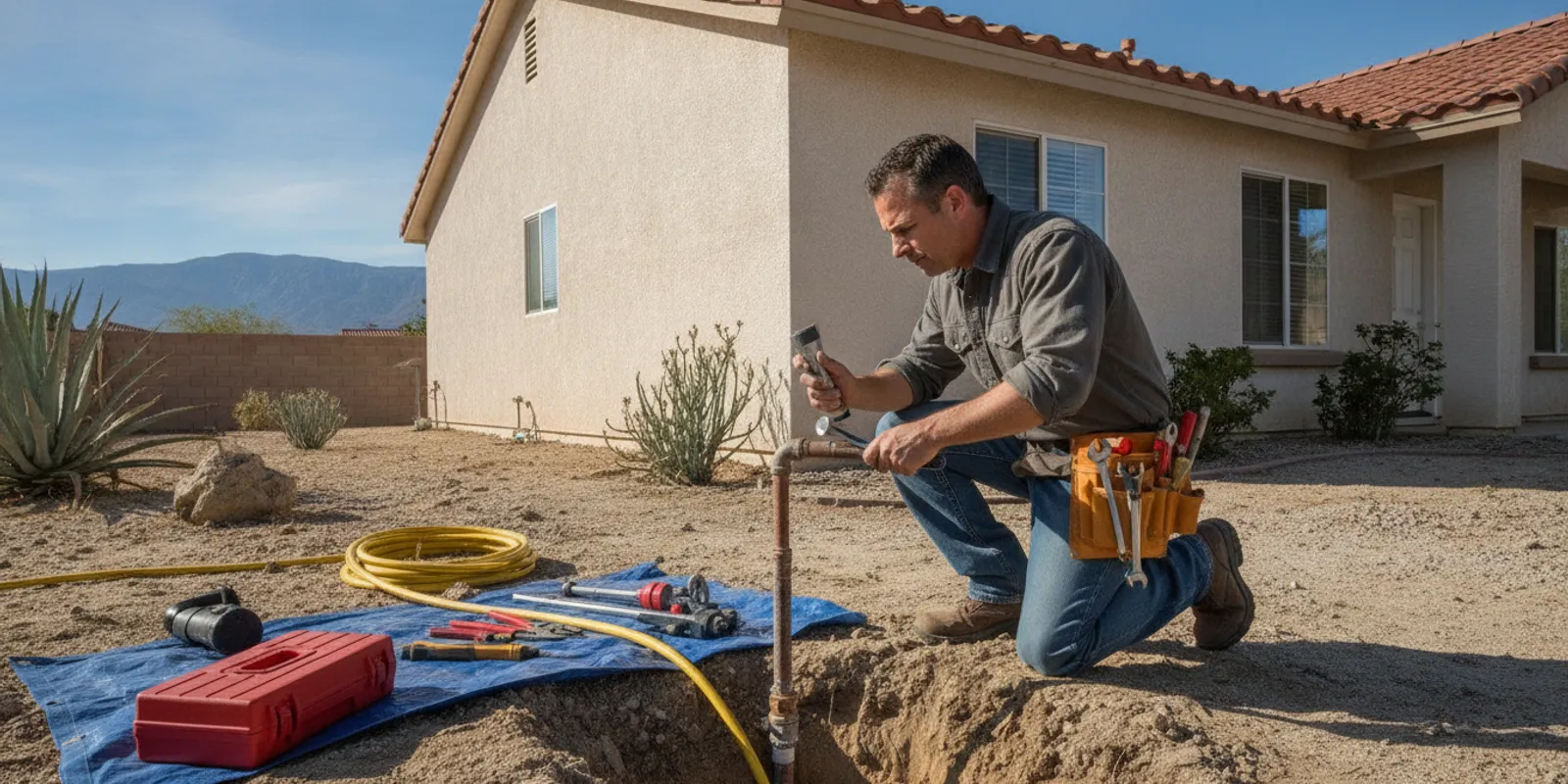
An emergency water line repair service may be needed when a leak disrupts water to your home or business, causes a sudden loss of pressure, or sends water pooling where it should not. For Inland Empire property owners, the first priorities are safety, limiting water flow when possible, and gathering clear information for a plumbing professional.
Contact a plumber about the water line
What counts as a water line emergency?
A water line brings water to a property or distributes it through the building. A sudden, active leak can waste water and damage flooring, walls, landscaping, stored items, or equipment. A complete interruption can also affect essential household or business activities. The urgency depends on the amount of water, its location, and whether people can use the property safely.
Not every pressure change is an emergency, and not every wet area is a supply-line leak. Several fixtures losing pressure at once may point to a broader supply issue, while one fixture may have a localized problem. A wet patch outside can come from irrigation, drainage, or a service line. Appearance alone does not confirm the source.
- Act promptly: Water is flowing continuously, pooling near the building, or entering a room.
- Arrange assessment: Pressure drops across several fixtures, or the property unexpectedly has no water.
- Protect people first: If water is near electrical equipment, stay clear and contact emergency services when there is immediate danger.
What should you do before the plumber arrives?
Keep people away from standing water and ground that may be saturated or unstable. If water is inside, move belongings only when it is safe to do so. Do not enter a flooded area if electrical hazards may be present. A calm, organized response helps prevent an additional injury while giving the plumber useful details.
- Locate the main shutoff only if safe. If you can reach and operate it without entering water or approaching a hazard, turning it off may limit flow. If you cannot find it or it will not move easily, do not force it.
- Note what changed. Record when the issue began, whether the pressure change was sudden or gradual, and which fixtures, rooms, or parts of the property are affected.
- Observe without digging. From a safe place, note visible pooling, damp ground, or water flow. Do not excavate or probe underground lines; buried utilities and the pipe itself could be damaged.
- Separate supply symptoms from drainage symptoms. If water is backing up through a drain, report that detail. A drain concern is not the same as a pressurized supply-line leak.
- Call with the basics. Share the address, whether water is shut off, where water is visible, whether service is fully interrupted, and whether the property is residential or commercial.
It can help to take photos or short videos from a safe distance. Include the area around the wet spot rather than approaching a hazard. A photo can document the condition at that moment, but it cannot identify a buried leak or establish responsibility for the pipe.
For a suspected service-line issue, utility procedures differ by location. The City of Milwaukee service-line guidance explains reporting and repair considerations in its own jurisdiction. Use your local water provider for local reporting instructions and responsibility rules.
How can you distinguish a water line issue from another problem?
Symptoms help narrow the possibilities, but they do not provide a definitive diagnosis. A sudden loss affecting multiple fixtures is different from one slow faucet. Likewise, a damp wall near a bathroom may involve a fixture connection, a pipe, or water traveling from another location. Describe what you see without deciding the cause in advance.
Use a simple observation checklist while you wait. Note whether the water supply is on or shut off, whether the meter or shutoff area appears wet, and whether the issue changes when fixtures are not being used. Do not manipulate utility equipment unless the provider or a qualified professional instructs you to do so. Avoid tests that require opening walls, lifting floors, or disturbing the yard.
For example, if pressure falls at every sink and shower at about the same time, mention the shared timing and broad effect. If only one faucet is affected while other fixtures work normally, say that too. If water appears outdoors after irrigation runs, include the irrigation schedule. These details help organize an assessment without treating a clue as proof.
Who is responsible for the leaking line?
Responsibility depends on the leak location, local water-provider rules, and the property arrangement. A utility may maintain part of the water system, while an owner may be responsible for piping serving the property. The boundary is not universal. Ask your provider how it handles suspected leaks and whether it needs to inspect or be notified before repair.
In a rental, shared building, or commercial property, contact the property manager or facilities representative as well as the plumber. The person approving work may need to coordinate access, utility communication, or restoration. Keep any prior repair notes or available building plans together. Diamond House Plumbing provides residential and commercial plumbing services in its service area.
Do not delay safety measures while trying to settle the boundary. If water is actively damaging the building, report the symptoms and ask the water provider and plumbing professional what should happen next. Keep records of whom you spoke with, the time of the call, and any instructions given.
How does a plumber assess a water line problem?
An assessment starts with the reported symptoms, visible conditions, and safe access. A plumber may ask when the problem began, whether a shutoff changed the flow, which fixtures are affected, and whether water is visible. The evaluation helps distinguish a supply-line concern from a fixture, drain, irrigation, or appliance issue.
Depending on location and conditions, inspection may include checking accessible piping and connections, observing pressure behavior, and identifying the likely route and affected section. If the line is underground or concealed, the repair plan should explain how its location will be confirmed and what access may be required. A wet spot alone does not establish the exact source.
Ask the plumber to separate confirmed observations from working assumptions. For instance, a visible leak at an exposed connection is different from a suspected underground leak inferred from damp ground. Find out what additional inspection is proposed if the evidence does not yet identify the failure. For related drainage or sewer symptoms, the company’s drain and sewer information covers a different plumbing system.
What repair options might be considered?
The right method depends on pipe material, location, condition, access, and whether damage is isolated or extends along a section. A plumber may recommend a localized repair or replacement of a larger portion if inspection indicates broader deterioration. There is no single method that suits every property.
| Situation | Possible response | What to clarify |
|---|---|---|
| Accessible, isolated leak | Repair or replace the affected fitting or pipe section | What evidence indicates the failure is localized? |
| Suspected underground leak | Locate and access the line, then repair the affected area or section | How will the location and access route be determined? |
| Repeated leaks or aging piping | Evaluate a broader replacement plan | What portion is included, and what is excluded? |
| Unclear source or mixed symptoms | Gather additional diagnostic information before selecting a repair | Which inspections are proposed, and what might change the scope? |
Ask for a written scope that separates diagnosis, repair, and restoration. It should describe the work area, labor and materials, excavation or opening work, testing, and who is responsible for patching or landscaping. Confirm whether permits or utility coordination may apply. When comparing estimates, check that each proposal addresses the same pipe length, access work, and restoration tasks.
How should you compare repair plans and estimates?
In an urgent situation, it is tempting to approve the first description that sounds complete. Take a moment to make sure you understand what will be done and what remains uncertain. A useful comparison is based on scope, not just a total figure. If two proposals cover different sections of pipe or different restoration work, their totals do not describe the same project.
- Diagnosis: What observations or tests support the suspected location?
- Work boundary: Which pipe section, connection, or access point is included?
- Access: Is excavation, a wall opening, or floor access expected? Who handles that work?
- Testing: How will the repaired line be checked before the work is considered complete?
- Restoration: Does the scope include backfill, patching, or surface repair, or should another contractor be arranged?
- Contingencies: What could cause the scope to change once the line is exposed?
For a practical example, imagine one proposal covers a short exposed section and another includes locating a buried line, excavation, repair, and surface restoration. A lower total may simply reflect fewer tasks. Ask both providers to explain their assumptions and list exclusions so you can judge the difference fairly.
How can businesses prepare for emergency water line work?
A leak can affect customer access, sanitation, equipment use, inventory, or normal operations. A business representative can identify the affected area, keep staff and visitors away, and share shutoff locations or building plans if available. Protect equipment and stock only when that can be done safely.
Ask how the proposed work may affect water availability, entrances, parking, deliveries, and business hours. For a larger property, identify who can approve work and who should receive updates. Tell the plumber about critical equipment or areas that cannot be accessed during normal operations. If a temporary operating plan is needed, discuss it before work starts rather than assuming water can remain on throughout the repair.
For example, a small office may be able to direct staff away from one room, while a retail or service site may need to manage customer routes and deliveries. The property representative should decide what areas to close based on the actual hazard and professional guidance. Keep one person responsible for relaying updates so instructions do not conflict.
What should you ask before approving a repair?
- Where do you believe the leak is, and what observations support that conclusion?
- Could the water provider need to inspect or be involved?
- What is included in the proposed repair, and what conditions could add work?
- Will excavation, wall or floor access, permits, or restoration be needed?
- How will the line be tested after the repair?
- What should we watch for if pressure loss or visible water returns?
- Who should receive updates if the property is shared or commercial?
These questions clarify the difference between diagnosing a problem, repairing it, and restoring the area. They also help compare proposals that appear similar but include different work. If the situation is active, share the immediate symptoms first and discuss detailed scope as soon as it is safe to do so.
What should you document during and after the repair?
Keep a simple record of the incident: when it started, what areas were affected, when water was shut off, and whom you contacted. Save photographs taken from a safe location and copies of the written scope, invoices, and any utility instructions. This record can help property managers coordinate follow-up and can make later conversations about the work more precise.
Before the work area is closed, ask what was found and what section was repaired or replaced. Request an explanation of any change from the initial plan. Confirm the testing performed and the conditions under which water service can return. If surfaces or landscaping need separate restoration, note who will arrange it and whether access should remain clear until that work is complete.
Afterward, pay attention to the original symptoms. If pressure remains unusual or water reappears, contact the plumbing professional and describe what changed, when it happened, and where. Do not assume a new wet area has the same cause without assessment.
Request help with a water line concern
Frequently asked questions
Should I shut off the water if I see a leak?
If you can reach the main shutoff safely, turning it off may limit further flow. Do not enter standing water or approach electrical hazards to reach it. If you cannot safely operate it, report what you can observe.
Can a wet patch in the yard confirm a water line leak?
No. Irrigation, drainage, and other sources can create wet ground. Share the location and timing with a plumber, and avoid digging until the source and buried utilities are considered.
Does low pressure always mean the main water line has failed?
No. A fixture issue, supply interruption, or another plumbing condition can cause pressure changes. Note whether one fixture or several are affected and whether the change started suddenly.
Does the utility or property owner repair the service line?
It depends on local rules and where the problem lies. Contact your water provider to ask how it defines the responsibility boundary and whether it needs to inspect or be notified.
Plan a safe next step
For an active leak, prioritize safety, limit water flow only when it is safe, and communicate the symptoms clearly. A careful assessment can help identify the likely source and give you a repair plan that fits the property.

Leave a Reply