
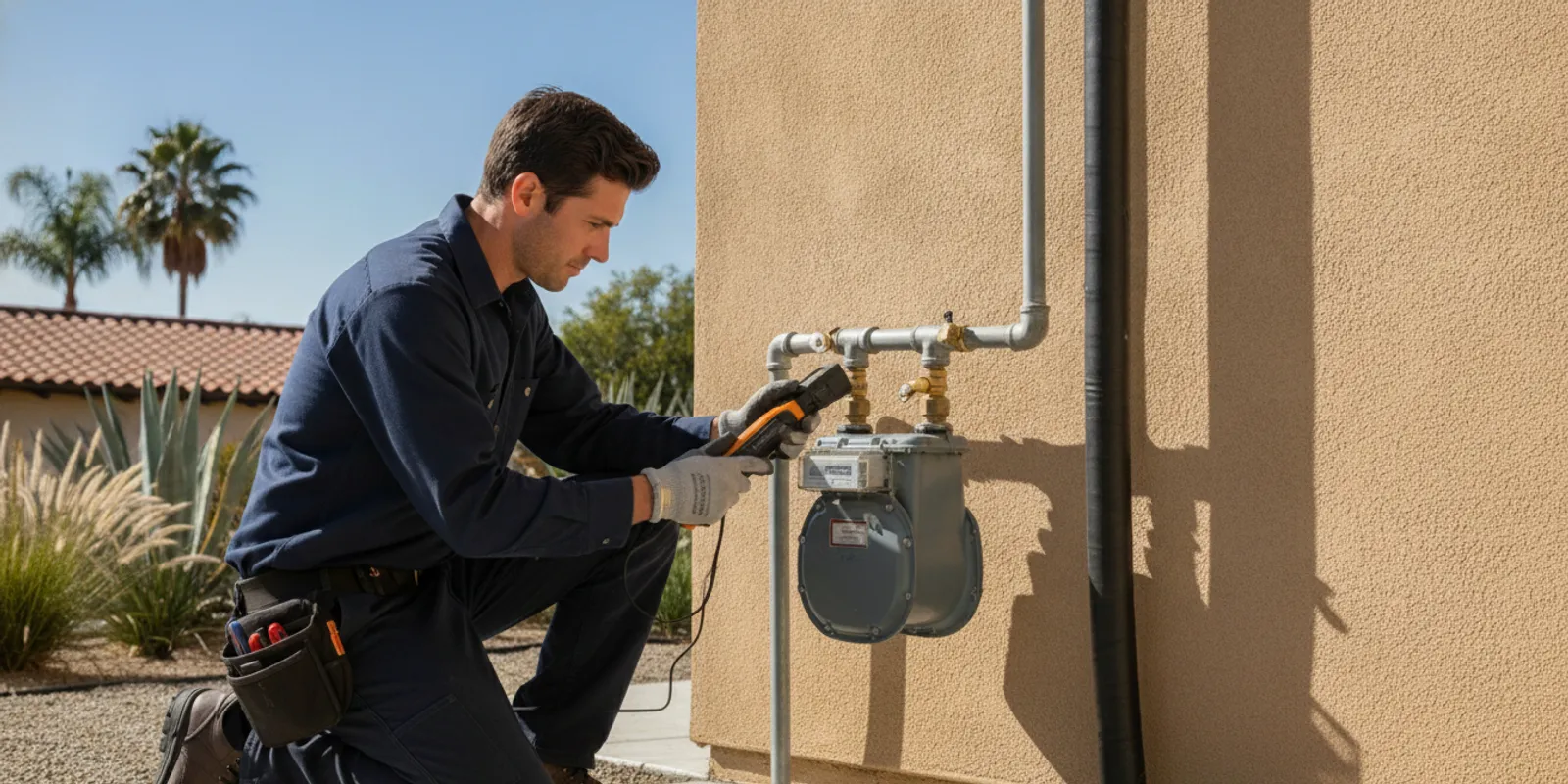
Gas line repair can involve an immediate safety concern, a suspected leak, or a damaged pipe that needs professional evaluation. If you smell gas, hear a hissing sound near a gas appliance or pipe, or suspect a leak, leave the area right away. Once you are safely away, contact your gas utility or emergency services for guidance. Do not operate switches, use a phone inside the affected area, light a flame, or try to locate or repair the leak yourself.
Contact a plumbing professional
What signs can point to a gas line problem?
Gas-related concerns should be treated cautiously. A sulfur or rotten-egg odor may be added to natural gas to help people notice a leak. Other possible clues include a hissing sound near a line or connection, visible damage to exposed piping, or an appliance that stops working as expected. These signs do not confirm the source or severity. A trained professional or utility representative must assess the situation.
Some symptoms can have other causes. For example, an appliance that will not ignite may have an appliance issue rather than a pipe problem. Do not test a suspected line by turning appliances on and off. If you notice an odor or sound that suggests escaping gas, prioritize evacuation and follow the utility or emergency responder’s instructions.
What should you do if you suspect a gas leak?
- Leave immediately. Alert other people nearby as you exit, without delaying to gather belongings.
- Avoid ignition sources. Do not smoke, use an open flame, or operate electrical switches or equipment in the area.
- Move a safe distance away. Do not re-enter to investigate, shut off equipment, or retrieve items.
- Call for help from outside. Contact your gas utility or emergency services and explain what you noticed and where.
- Wait for authorization. Stay away until responders or the utility say it is safe to return.
The U.S. Department of Transportation’s Pipeline and Hazardous Materials Safety Administration provides pipeline safety information at PHMSA. For an active suspected leak, use local emergency guidance rather than relying on an article.
When is gas line repair an emergency?
A suspected active leak is an emergency. Leave and call the utility or emergency services from a safe location. Do not wait for a routine appointment or ask a contractor to investigate while people remain inside the building.
Other issues may not involve an obvious odor, but still warrant prompt professional attention. Examples include exposed piping that appears bent or corroded, a line that may have been struck during work, or a gas appliance connection that appears loose. Do not touch or adjust it. Keep people away from the affected area and ask the utility or a qualified professional what action is appropriate.
What happens during a professional gas line evaluation?
The exact process depends on the reported condition, the piping involved, the property, and applicable local requirements. A professional may ask when the concern began, which appliances are affected, whether any digging or construction occurred, and whether the utility has already responded. Share observations, but do not conduct tests yourself.
An evaluation may include a visual review of accessible piping and connections, identification of the affected section, and appropriate testing by qualified personnel. The professional should explain whether the concern is with a building gas line, an appliance connector, or equipment on the utility’s side. Utility-owned infrastructure and customer-owned piping can have different responsible parties; confirm who must handle each portion before work begins.
Ask for a clear explanation of the findings and the proposed work before authorizing non-emergency repairs. A useful scope should identify the location and extent of the issue, what will be repaired or replaced, whether permits or inspections apply, and what testing or restoration is included. If a utility representative has tagged or shut off service, follow their instructions and clarify the steps required before service can resume.
Which factors affect gas line repair planning?
There is no reliable one-size-fits-all repair plan. Cost and timing depend on site conditions and the scope confirmed during evaluation. Factors may include:
- Location and access: An exposed line differs from piping concealed behind a wall, beneath a slab, or underground.
- Extent of damage: A localized connection concern may require a different scope than deterioration across a longer section.
- Materials and configuration: Existing pipe type, fittings, routing, and the condition of nearby components influence the work.
- Permits and inspections: Local rules and the nature of the work may determine required approvals or inspections. Confirm with the applicable building department.
- Utility coordination: A shutoff, meter issue, or utility-owned segment may require coordination with the gas provider.
- Access and restoration: Opening and restoring walls, paving, landscaping, or other surfaces can affect the project.
Ask for an itemized scope that separates repair work from related access, permit, inspection, and restoration items where applicable. Avoid relying on a rough estimate that has not accounted for the actual pipe location and condition.
How do common gas-line situations differ?
The table below is a planning aid, not a diagnostic tool. If you suspect gas is escaping, follow the emergency steps above rather than trying to identify the situation yourself.
| Situation | Priority | Appropriate next step | Who may need to be involved |
|---|---|---|---|
| Odor, hissing, or suspected active leak | Emergency | Leave, move away, and call for help from a safe location | Gas utility or emergency services first |
| Pipe appears damaged after digging or impact | Urgent; treat as a possible leak | Keep clear and report the damage; do not touch or test it | Utility and qualified contractor, as directed |
| Corrosion or visible deterioration without an active leak sign | Prompt evaluation | Keep the area undisturbed and arrange qualified assessment | Qualified contractor; utility if ownership is uncertain |
| Appliance does not operate normally, with no gas odor or hissing | Professional assessment | Stop using the appliance if concerned and seek appropriate service | Qualified appliance or gas-line professional |
Do not use this comparison to decide that an odor or hissing sound is harmless. The source may not be visible, and responsibility can depend on where the affected component sits in the system.
How do you choose the right professional?
For work involving fuel gas, verify that the contractor is appropriately licensed and qualified for the specific work. Ask who will perform the repair, how the affected section will be tested, whether the contractor will handle permit coordination, and what documentation you will receive. California license requirements and classifications can be checked through the Contractors State License Board.
Also confirm whether the utility must inspect, restore service, or approve a particular step. Do not assume one company controls every part of the system. If a property has multiple units or commercial operations, ask how the work area will be isolated and how occupants or staff should be notified.
How can Inland Empire owners prepare for service?
Whether the property is in Riverside County or San Bernardino County, preparation should never involve disturbing a suspected line. Once the area is safe and a professional has advised that it is appropriate, gather the property’s address, a description of what you observed, the time it began, and any relevant notes about recent excavation or remodeling. Keep utility notices or service shutoff information available.
For general plumbing needs, review plumbing services and the company’s about page. If the issue involves a different part of your property’s plumbing, the drain and sewer service information may help you identify the appropriate path. Do not treat those services as a substitute for emergency utility response when gas may be escaping.
Property owners can make a later appointment more efficient by keeping access routes clear after the area is deemed safe, identifying the appliance or room involved from a distance, and gathering any prior repair records. For a business, designate one person to communicate with the utility, contractor, and occupants so instructions are consistent. Do not ask staff or tenants to enter a restricted area to collect information.
What should you ask before repair work starts?
- What part of the system is affected, and is it utility-owned or property-owned?
- What evidence supports the proposed repair scope?
- Will any permit, inspection, or utility coordination be needed?
- How will the repair be tested, and who determines that service can resume?
- What surfaces or finishes may need to be opened and restored?
- What should occupants avoid until the work is complete?
- Who will communicate the status if the utility must restore or authorize service separately?
- What records, inspection results, or approvals should the owner retain?
Clear answers help you understand the work without attempting to diagnose or handle hazardous piping yourself. Keep written estimates, approvals, inspection records, and utility instructions with the property’s maintenance documents. If the proposed scope changes after access is opened, ask for the reason and any schedule or restoration implications before approving added non-emergency work.
What happens after the repair is complete?
Completion should include clear communication about what was addressed, what testing was performed, and whether any follow-up is required. Ask for a written record identifying the repaired area and any replaced components. Retain invoices, permit documents, inspection results, utility notices, and any instructions provided about restoring service or operating appliances. These records can help a future contractor understand the system and may be useful during property maintenance or a sale.
Do not assume that a contractor’s visit alone means the utility has restored or authorized service. The utility may have its own process for reconnecting service or confirming that its equipment is safe to operate. Follow the instructions from the responsible party and ask who will confirm each remaining step. If a concern returns, stop using the affected equipment and contact the appropriate utility or qualified professional instead of reopening or adjusting the repair.
How can owners reduce confusion during an urgent gas issue?
Preparation is about communication and access, not inspecting the gas system yourself. For a household, make sure residents know to leave immediately if they suspect a leak and to call from outside. For a business, identify a person who can communicate with responders and account for occupants without sending anyone back into a restricted area. Keep emergency contact information accessible away from the suspected leak area, not beside equipment that may be involved.
When responders say it is safe to proceed, give the professional a concise sequence of events: what was noticed, when it began, whether anyone heard or smelled anything, and whether excavation or impact recently occurred. Avoid guessing at the source. If the gas was shut off or a meter was tagged, share that information and follow the utility’s instructions. A clear timeline can help the responsible team understand the situation while leaving investigation and testing to qualified personnel.
How should owners compare repair proposals?
When there is no active emergency and it is appropriate to consider proposals, compare the scope rather than looking only at the bottom-line figure. One estimate may cover an accessible section of pipe, while another may include opening a finished surface, replacing additional fittings, testing, permits, or restoration. Ask each provider to state what is included and what is excluded so you can understand whether the proposals address the same condition.
For example, if a line is concealed, one proposal might describe exploratory access as a separate item because the exact location and condition are not yet visible. Another might include a defined allowance for opening and patching a specific area. Neither format automatically indicates a better solution; the important point is to know what assumptions each estimate uses and what decisions may be needed if hidden conditions differ from expectations.
Ask how changes will be communicated before additional non-emergency work proceeds. Clarify whether testing occurs before surfaces are closed, who is responsible for arranging any required inspection, and whether the utility has separate steps for service restoration. Written answers make it easier to compare timing, disruption, and documentation as well as the repair itself.
What should tenants and property managers coordinate?
In a rental or managed property, the person who first notices a concern may not be the person who can authorize repairs. Safety comes first regardless of ownership: anyone who suspects an active leak should leave and contact the utility or emergency services from a safe location. Do not wait for a manager’s approval before taking immediate protective action.
After the area is declared safe, the manager can coordinate access, communicate utility instructions, and identify who is authorized to approve non-emergency work. Share only confirmed information with tenants, such as which areas are unavailable and whom to contact for updates. Avoid asking residents to inspect equipment or provide photographs from a restricted location.
For multi-unit buildings, ask the professional how the work affects shared spaces, adjacent units, and access to appliances. A simple notice can explain that service is being assessed, identify any temporary restrictions, and tell occupants where updates will come from. Keep a written record of notices, utility directions, appointments, and repair approvals. Consistent communication helps prevent someone from unknowingly returning to an area that responders have restricted.
Frequently Asked Questions
Can I use an appliance if I suspect a gas leak?
No. Do not operate appliances or switches in the affected area. Leave, move to a safe location, and contact the gas utility or emergency services.
Should I try to find the exact leak location?
No. Do not search for a leak, touch piping, or use a flame or other test. Report what you noticed from a safe location and let qualified responders assess it.
Does a plumbing contractor repair every gas line?
Responsibility depends on the location and ownership of the affected equipment. Utility infrastructure may be handled by the gas provider, while customer-side piping may require a qualified contractor. Confirm the responsible party with the utility.
Will a repair require a permit?
Requirements depend on the type and scope of work and the local jurisdiction. Ask the contractor and the applicable building department to confirm current requirements before work proceeds.
Discuss your plumbing service needs
When gas may be escaping, safety comes first: leave the area, contact the utility or emergency services from a safe location, and wait for qualified guidance before returning.

Leave a Reply