
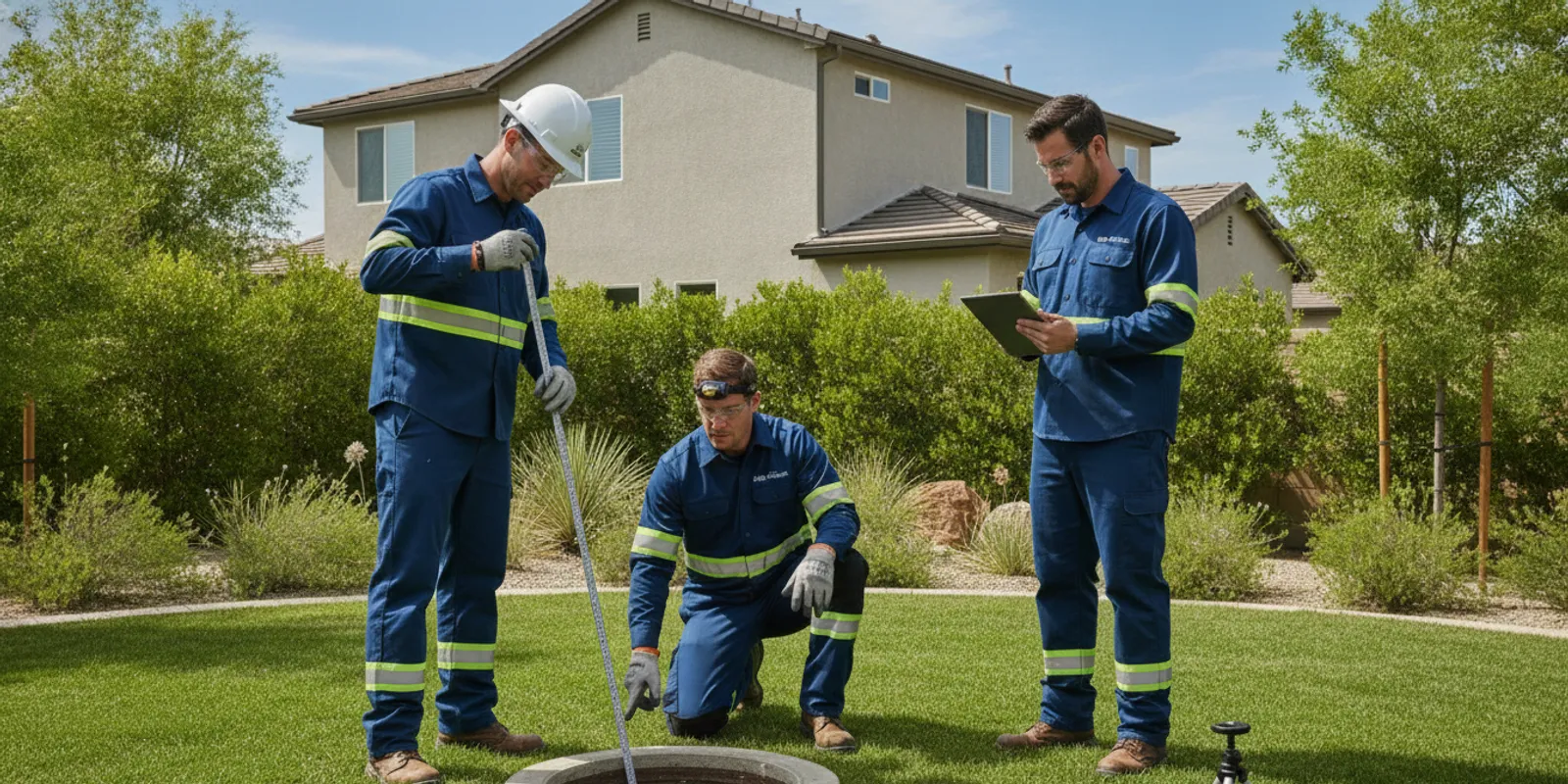
Septic tank removal is not simply a matter of digging up a tank and hauling it away. The right process starts with identifying the tank and drainfield, checking the condition and location, pumping the contents, reviewing local requirements, and deciding whether full removal or approved abandonment is the better option. For property owners in Riverside and San Bernardino Counties, the details can vary by jurisdiction and by the future use of the site.
Schedule a septic removal consultation
What does septic tank removal involve?
Septic tank removal is the controlled decommissioning of an onsite wastewater tank and, when required, related components such as inlet and outlet piping, distribution boxes, or portions of the drainfield. The work may be needed when a property connects to a public sewer, when an old tank conflicts with construction plans, when a failed system is being replaced, or when an unused tank creates a safety or compliance concern.
The work should be planned as a wastewater and excavation project, not as ordinary landscaping. A tank may contain wastewater, sludge, gases, and contaminated material before pumping. It may also be buried deeper than expected, surrounded by hardscape, or connected to a drainfield that is not obvious from the surface. A qualified contractor can help establish what is present before excavation begins.
The U.S. Environmental Protection Agency explains that abandoned septic tanks and drainfields may need to be properly removed depending on state or county rules. That is why a property owner should confirm the local process before covering, crushing, or filling any component. See the EPA septic systems regulations and guidance resources for broader background.
When should you consider septic tank removal?
Removal is usually connected to a larger property decision. Common situations include:
- Connection to a public sewer: A property may be required or encouraged to transition from onsite treatment to a sewer lateral and public sewer connection.
- Replacement of an aging system: A new septic layout may require the old tank or conflicting components to be decommissioned.
- Planned construction: An addition, driveway, pool, foundation, or utility project may overlap the tank or its setbacks.
- Known structural damage: A cracked, collapsed, or unstable tank may present a safety issue, especially if access covers are damaged.
- Property sale or due diligence: A buyer, lender, public agency, or inspector may request documentation about the onsite wastewater system.
- Long-term nonuse: An unused tank still needs a documented and safe disposition rather than being forgotten underground.
Removal is not automatically the best choice in every case. If a tank is sound, accessible, and outside the planned work area, an authority may allow it to be abandoned in place under specified conditions. The decision depends on the tank, the site, the proposed replacement or sewer connection, and the rules of the responsible agency.
What should you evaluate before removing a septic tank?
A careful evaluation reduces surprises and helps separate the tank work from other project costs. Before excavation, gather any records available for the property, including an as-built drawing, prior inspection report, pumping receipt, permit, repair invoice, or sewer connection notice. Older properties may have incomplete records, so documents are useful but should not be treated as proof of the current layout.
1. Locate the tank and related components
The tank location, access covers, cleanouts, inlet pipe, outlet pipe, distribution box, and drainfield should be identified. The visible plumbing route can provide clues, but it does not establish the full system. A contractor may use probing, access excavation, plans, or inspection equipment to confirm the layout. Marking the work area also helps protect nearby utilities, irrigation, trees, hardscape, and structures.
2. Check the condition and depth
Concrete, fiberglass, and plastic tanks can have different failure patterns. A tank may be intact but difficult to access, or it may have a damaged lid, settlement, corrosion, or structural deterioration. The depth affects excavation, equipment access, shoring needs, and restoration. Do not enter a tank or allow anyone to enter one. Confined-space hazards can be fatal even when the tank appears empty.
3. Understand the drainfield and soil area
Removing the tank does not necessarily remove the entire onsite wastewater system. The drainfield, seepage pit, dispersal area, and associated piping may remain subject to agency requirements. Keep heavy equipment and unnecessary excavation away from the area until the layout is understood. If a new system or sewer connection is planned, the old dispersal area may affect the design and site plan.
4. Identify the next wastewater arrangement
Before approving septic tank removal, determine what will handle wastewater afterward. Options may include a replacement septic system, a connection to public sewer, or another approved arrangement. A tank should not be removed before the replacement or connection plan is clear. For related planning, review the septic services and inspection information or the guide to sewer lateral replacement.
How is septic tank removal typically completed?
Each property is different, but a professional project commonly follows the sequence below.
- Site consultation: The contractor discusses why the tank is being removed, what records exist, what access is available, and what work will follow.
- System locating and assessment: The tank, piping, access points, drainfield, and nearby utilities are identified as far as practical. The proposed excavation and equipment path are reviewed.
- Agency and permit review: The property owner or contractor confirms which public health, environmental, building, sewer, or utility authority has jurisdiction. Required forms, inspections, notifications, and closure methods are discussed before work starts.
- Pumping and cleaning: The tank is pumped by an appropriate service provider. Remaining liquids or solids must be handled and transported according to applicable requirements. Pumping is a safety and environmental step, not an optional finishing detail.
- Exposure and disconnection: The tank is excavated carefully. Inlet and outlet piping is disconnected or modified as required by the approved plan. Utilities and nearby structures must be protected.
- Removal or approved abandonment: The tank is either excavated and transported away, or it is rendered safe in place using the method accepted by the responsible authority. The chosen method should be documented.
- Inspection and verification: An agency inspection or contractor record may be needed before the excavation is closed. Keep photographs, manifests, permits, and written confirmation with the property records.
- Backfill and restoration: The excavation is filled with suitable material and compacted as appropriate. Final grading, concrete, paving, irrigation, planting, or other surface work may be separate from the septic scope.
Timing can change when the tank is deep, access is narrow, groundwater is present, hardscape must be removed, or the work is coordinated with sewer construction. Ask how the contractor will protect the property and what restoration is included in the written scope.
Should a tank be removed or abandoned in place?
Full removal and approved abandonment are different outcomes. Full removal takes the tank out of the ground. Abandonment in place leaves the tank underground after it has been pumped, disconnected, and treated or filled according to the accepted method. The appropriate choice is not based only on convenience.
| Consideration | Full removal | Approved abandonment in place |
|---|---|---|
| What happens to the tank? | The tank is excavated, removed, and transported for lawful handling. | The tank remains underground after pumping and an approved closure process. |
| When may it fit? | Construction overlaps the tank, the tank is unstable, or an agency requires removal. | The tank is stable, out of the work area, and local rules allow closure in place. |
| Site disruption | Usually greater excavation, hauling, and surface restoration. | May reduce excavation, but access and closure work are still required. |
| Planning questions | Confirm hauling, disposal, utility protection, backfill, and final grading. | Confirm approved fill or treatment, documentation, inspection, and future marking. |
| Future property work | Leaves fewer underground tank-related constraints in the removed area. | The closed tank may still affect future excavation, records, or construction. |
Do not choose abandonment simply because it appears less disruptive. A local authority may require removal, may prescribe a closure method, or may require an inspection before the tank is filled. A contractor can explain construction implications, but the responsible agency determines what is permitted.
What permitting questions should Riverside and San Bernardino property owners ask?
Requirements can vary by county, city, sewer district, public health agency, and project type. Ask these questions before scheduling excavation:
- Which agency has jurisdiction over this property and its onsite wastewater system?
- Is a septic abandonment, tank removal, demolition, building, grading, or sewer connection permit required?
- Who must pump the tank, and what documentation is required?
- Is an inspection required before the tank is removed, filled, or covered?
- What closure materials and methods are accepted for this tank type?
- What must happen to the drainfield, seepage pit, distribution box, and abandoned piping?
- Are there setback, access, utility-locate, erosion-control, or restoration requirements?
- Will the agency issue a closure record or require an updated site plan?
- If the property will connect to sewer, are a lateral permit, cleanout, inspection, or sewer district approval also required?
Written answers matter. Rules can change, and a general statement from a neighbor or an old contractor invoice may not apply to the current project. The EPA research on environmental effects of septic tank systems provides useful general context, but it does not replace direction from the local authority. Idaho’s environmental agency similarly advises property owners to obtain a site evaluation from the public health district and a licensed installer before certain septic work; the same principle is useful here even though California requirements are different. Review the Idaho septic and septage guidance only as general reference, not as Riverside or San Bernardino permitting advice.
How does removal relate to septic replacement or sewer connection?
Septic tank removal often sits between two larger phases: ending the old wastewater arrangement and putting the new one into service. The sequence should be coordinated so the property has a lawful, functioning wastewater plan throughout the project.
For septic replacement, the contractor may need to assess whether the old tank, drainfield, and piping conflict with the proposed system. The replacement design may require different tank capacity, dispersal, access, setbacks, or inspection stages. Removal of the old tank should follow the approved replacement plan rather than happen independently.
For a sewer connection, the project may include a building sewer, sewer lateral, cleanout, connection point, abandonment of onsite components, trenching, traffic or hardscape restoration, and inspections. Ask who is responsible for each portion and whether the scope includes work on private property only or also work at the public right of way. A sewer camera inspection can help clarify the condition and route of existing private piping; see this sewer camera inspection guide for questions to discuss.
Property owners can also review the septic tank replacement guide when comparing removal with a broader system replacement. The correct order of operations depends on the approved plans and local inspection requirements.
What should be included in a septic tank removal estimate?
A useful estimate should describe more than excavation. Ask for a written scope that identifies:
- System locating and access excavation.
- Pumping, cleaning, and handling of tank contents.
- Disconnection or removal of inlet and outlet piping.
- Tank removal, hauling, and disposal, or the exact abandonment method.
- Permit coordination, agency fees, and inspection responsibilities.
- Utility locating and protection of nearby structures or hardscape.
- Backfill material, compaction, grading, and erosion control.
- Concrete, paving, irrigation, planting, or other finish restoration.
- Documentation supplied at completion, such as photographs or closure records.
- Items excluded from the scope, including sewer connection, replacement system design, engineering, or public-right-of-way work.
Costs are shaped by depth, access, tank material, site conditions, pumping needs, hauling, agency requirements, and restoration. A low initial number may not include permits, difficult excavation, or surface repairs. Comparing line items is more useful than comparing a single total.
How can you prepare the property for septic tank removal?
Clear the access route and identify gates, low branches, parked vehicles, irrigation lines, pets, and fragile landscaping. Tell the contractor about wells, propane equipment, electrical lines, additions, retaining walls, or previous repairs. Keep children and visitors away from excavation and equipment. If the project affects a driveway or parking area, plan for temporary access restrictions.
Gather property records and notify the contractor if the tank location is uncertain. Do not open or enter the tank. Do not pump wastewater into the yard, storm drain, or another unapproved location. If sewage has surfaced, keep people and animals away from the area and ask a qualified professional about containment and next steps.
What records should you keep after removal?
Keep the estimate, invoice, permit, inspection approval, pumping record, disposal or hauling documentation, photographs, site sketch, and written description of the final condition. Note the date, tank location, closure or removal method, and any remaining drainfield or piping. If the property connects to sewer or receives a replacement system, store those records together with the new plans.
Good records help with future construction, maintenance, insurance questions, and property sale disclosures. They also prevent a later contractor from having to rediscover a tank or assume that an old component was removed when it was actually abandoned in place.
Frequently asked questions
Can an old septic tank be left in the ground?
It may be possible when the responsible authority allows abandonment in place and the tank is pumped, disconnected, and closed using an approved method. Confirm the requirement before any work begins and keep the written record.
Does septic tank removal include the drainfield?
Not necessarily. Tank removal, drainfield decommissioning, seepage pit work, and piping removal can be separate tasks. The approved plan and local agency requirements determine which components must be addressed.
Can a property connect to sewer before removing the septic tank?
The sequence depends on the sewer authority, connection design, permits, and inspection steps. Coordinate the sewer lateral, wastewater transition, and septic closure so the work meets the approved requirements.
How long does septic tank removal take?
The excavation itself may be relatively short, but the full schedule depends on locating, pumping, access, permits, inspections, hauling, weather, and restoration. A site-specific estimate is more reliable than a standard time promise.
Who should perform septic tank removal?
Use a qualified contractor familiar with septic systems, excavation safety, pumping coordination, and local agency requirements. Ask who will obtain approvals, perform the pumping, document closure, and restore the site.
Plan septic tank removal around the whole property
Septic tank removal is safest and most predictable when it is planned with the wastewater replacement, sewer connection, permitting, access, and final restoration in mind. Diamond House Plumbing serves property owners across the Inland Empire with septic system and sewer lateral expertise; contact the team to discuss the conditions at your property and the next appropriate step.

Leave a Reply