
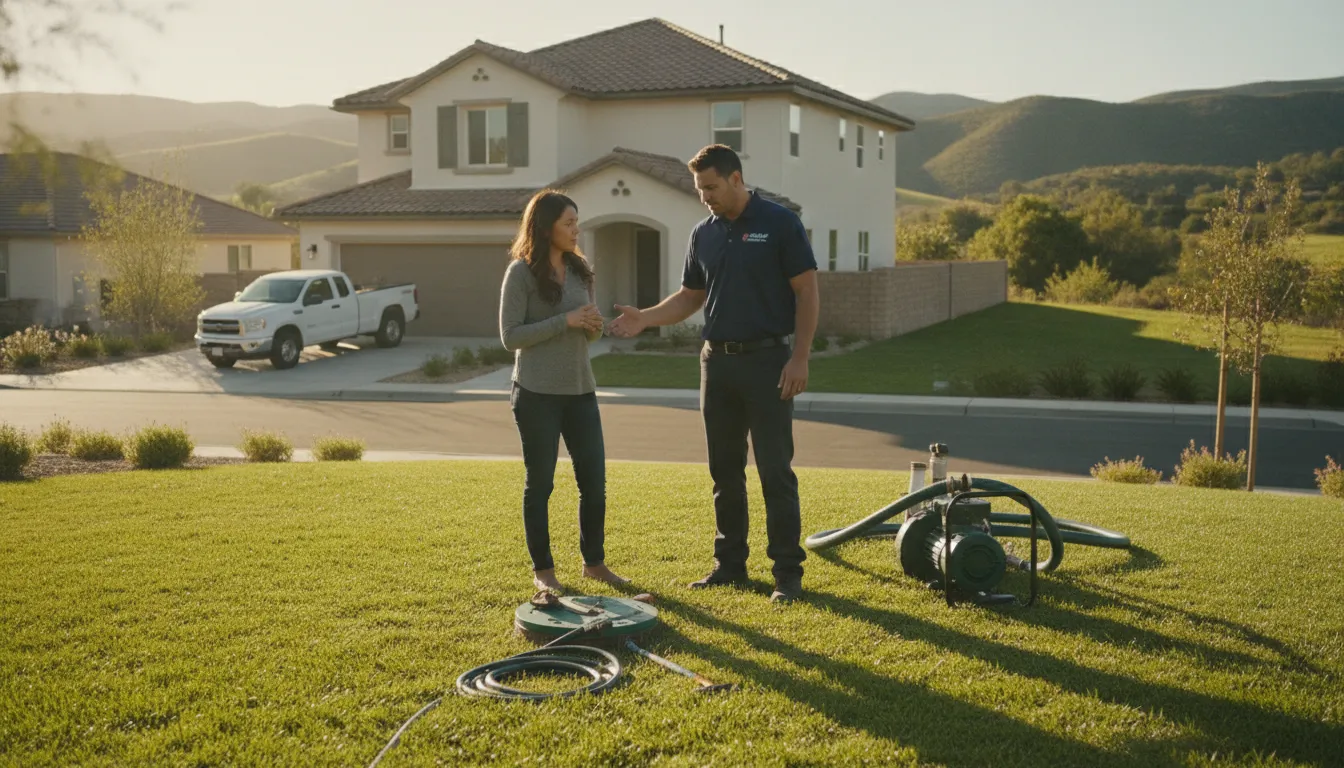
For a property owner in Riverside or San Bernardino County, a septic inspection estimate is most useful when it reflects the actual property rather than a generic package. Age, symptoms, access, records, and intended work can affect what needs to be assessed.
To get a septic inspection quote, share the property address or city, explain what you have noticed, provide any septic records you have. And ask what the proposed inspection covers, what it excludes, and whether an on-site assessment is needed before the scope can be confirmed.
Diamond House Plumbing uses a consultation-based approach, with estimates developed after understanding the property’s needs. That helps separate an inspection request from a repair or replacement proposal. You can make decisions based on documented conditions instead of assumptions. A few practical questions can make the first conversation more productive.
How to get a septic inspection quote without guessing at scope
To get a septic inspection quote, start by giving a plumbing professional the property location. The reason for the request, and any information you have about the existing system. That initial conversation helps identify the right next step. An accurate scope may still require an assessment of the property and septic system before the contractor can explain what the inspection involves and whether additional work should be considered.
This distinction matters for homeowners, landlords, and commercial property managers in Riverside and San Bernardino Counties. A request for an estimate is not automatically a repair or replacement proposal. The condition of the tank, drainfield, access points, visible symptoms, and available records can all affect what needs to be reviewed. If you are unsure where to begin, review the available septic system services and describe your concern as clearly as possible.
What to explain in the first conversation
Tell the contractor what prompted the request. For example, you may be preparing to buy or sell a property, noticing slow drainage or odors. Dealing with a recurring backup, or trying to understand the condition of an older system. Share the property address or city, whether it is residential or commercial, and any timing concerns. If you know the approximate system age, tank location, past service history, or previous repair work, mention that too.
It also helps to describe site conditions that could affect access. A tank or component may be near a driveway, enclosed area, landscaped space, or other location where equipment access requires planning. You do not need to diagnose the problem or specify the inspection method. Your role is to provide useful context so the contractor can determine what information is needed next.
Questions that keep the scope clear
Before scheduling, ask what the quoted service is intended to evaluate, what information the contractor needs from you. And whether an on-site assessment is recommended before the scope is finalized. Ask how inspection findings will be explained and how any separate repair or replacement recommendations would be handled. You can also ask which conditions might require additional evaluation, without assuming that pumping, excavation, camera work, permits, or a written report are included.
A clear conversation gives you something more useful than a vague number: an understanding of what is being assessed, what remains uncertain, and what decisions may follow. That approach supports practical planning whether the property is in Riverside, San Bernardino, or another Inland Empire community.
What can affect the scope of a septic inspection quote?
The work involved in reviewing a septic system can vary from one property to the next. A quote request may begin with the same concern, such as a slow drain or an upcoming property purchase. But the property itself helps determine what information and assessment may be relevant. The EPA explains that septic-system design and size can vary widely, even between nearby properties.
Property and site conditions
Household size is one consideration because it affects the amount of wastewater a system may be expected to handle. Soil type, site slope, and lot size can also influence how a septic system is designed and how its condition is evaluated. A smaller or steeply sloped lot may present different planning questions than a larger, relatively level property. The distance from sensitive water bodies and local weather conditions may matter as well. These are general factors, not a guaranteed checklist for every inspection quote.
The existing system also matters. A conventional system commonly includes a septic tank and an underground drainfield, while other systems may use different components or arrangements. Knowing whether the property serves a home, rental, or commercial use can help provide context, but an on-site assessment may still be needed before the scope is clear.
Local requirements in Riverside County
Local rules can affect the type of review or planning required, particularly when the concern involves modification, repair, or replacement rather than a condition assessment alone. California’s onsite wastewater policy addresses siting, design, operation, and maintenance, while local agencies may establish different design requirements, setbacks, or other controls. See the California State Water Resources Control Board’s OWTS guidance for the state-level framework.
For properties in unincorporated Riverside County or its contracted cities, the county says an OWTS Construction Application is required for septic-system installation, repair, or modification. Its process may involve plan review by an Environmental Health Specialist. And new-system applications can require items such as a percolation report and detailed plans signed by a registered professional. The Riverside County septic-system guidance explains these requirements. That does not mean every inspection quote includes permitting or design work. It means local requirements may affect the boundaries of a future project.
When you contact Diamond House Plumbing, sharing the property location, known system records, reported symptoms, and any access limitations can help frame the request. The final scope should distinguish an inspection from any separate repair, replacement, or permitting work that may be recommended afterward.
What information should you share when requesting an estimate?
A little preparation can help a contractor understand the situation before discussing the next step. You do not need to have every record or technical detail ready, and the information below is a helpful starting point rather than a fixed company requirement.
- Property address or city. Share the service address, or at least the city and general location, such as Riverside, Moreno Valley, or San Bernardino. Local conditions and authority requirements can vary, so location helps place the request in the right context.
- Any septic records you have. Gather permits, prior inspection notes, pumping receipts, maintenance records, site plans, or documents from a previous owner. The EPA notes that septic permits may include useful details such as the installation date and soil properties, and recommends keeping records of work performed on the system. Review the EPA’s septic-system record guidance if you are unsure where to look.
- The system’s age, if known. An exact installation date is helpful, but an approximate age or the date you purchased the property can still provide useful context. If you do not know the age, simply say so rather than guessing.
- What you have noticed. Describe the symptoms, when they began, and whether they are getting worse. Useful details might include slow drains, odors, unusually wet ground, backups, or changes after heavy use. Include any recent pumping, repair, construction, or plumbing work that may be relevant.
- Access constraints. Explain whether the tank or suspected work area may be beneath a driveway, behind a gate, near landscaping, or difficult for equipment to reach. Also mention pets, tenant access, shared commercial areas, or other conditions that could affect a site visit.
- How the property is used. Note whether the system serves a single home, rental property, multi-unit residence, business, or another commercial use. Household size, occupancy changes, and business operations can help frame the concern and any scheduling considerations.
- Your timing needs. Share whether the matter is routine, connected to a property transaction, or causing an active disruption. A preferred appointment window is useful, but the appropriate timing and next steps depend on the reported conditions and assessment.
Permits, plan review, and local authority involvement can vary by project and jurisdiction. The EPA explains that septic systems are typically permitted and inspected by a local permitting authority. While Riverside County has specific requirements for some work in unincorporated areas and contracted cities. That is another reason to provide the location and existing records when you contact Diamond House Plumbing to discuss an estimate.
How do you compare inspection quotes fairly?
When you review more than one septic inspection quote, compare what each provider plans to evaluate and explain, not just the headline figure. A septic system’s condition, access, age, layout, and reported symptoms can change the work needed to understand the problem. A consultation-based, site-specific scope gives you a more useful basis for deciding what happens next.
Ask each provider to clarify the assumptions behind the quote. If an estimate is based only on a brief description, it may be an initial range rather than a final scope. That is not necessarily a problem, but you should know what has been confirmed and what still depends on an on-site assessment.
| What to compare. | What a clear quote should explain. | Question to ask. |
|---|---|---|
| Scope clarity. | The concern being evaluated and the general purpose of the inspection, without implying that unconfirmed work is included. | What specific question is this inspection intended to answer? |
| Site conditions. | Whether access, buried components, terrain, property use, or other observed conditions could affect the assessment. | What site details could change the scope? |
| Deliverables. | What you will receive after the assessment, such as an explanation of findings or recommendations, only where confirmed. | How will the findings and next steps be communicated? |
| Follow-up. | Whether the provider can discuss repair, replacement, maintenance, or additional evaluation if the findings warrant it. | Who can explain the results and possible next steps? |
| Assumptions. | Any information the quote relies on, along with items that are outside the stated scope or require separate approval. | What is not included or still needs to be confirmed? |
Be cautious about comparing different scopes as though they were equivalent. One provider may be responding to a specific symptom, while another is discussing a broader property assessment. The clearer option is usually the one that connects the proposed work to your concern and identifies the limits of what can be known before a site visit.
For property owners in Riverside and San Bernardino Counties, local conditions and requirements may also affect planning. If you need help understanding the difference between an inspection estimate and a broader septic system service, ask for a plain-language explanation before approving work.
When an inspection points to repair, replacement, or maintenance
An inspection is a decision-making step, not automatically a repair proposal. It can help clarify whether a system appears suitable for routine maintenance, whether a specific issue needs repair, or whether replacement planning deserves discussion. The appropriate next step depends on the system’s condition, the observed concern, site conditions, and available records.
A septic tank is a buried, watertight tank that receives and partially treats domestic wastewater. In a conventional system, it works with an underground drainfield for treatment and dispersal. So an issue in one part of the system does not automatically establish that the entire system must be replaced. The EPA’s overview of septic system types explains these basic components and why systems can differ from property to property.
Maintenance may be the appropriate next step
If the system is functioning and the inspection does not identify a specific defect, the useful outcome may be a maintenance plan rather than immediate construction work. The EPA recommends that an average household septic system be inspected by a septic service professional at least every three years. Systems with electrical or mechanical components, such as pumps or float switches, generally need more frequent inspections, often annually.
Maintenance planning can also include reviewing pumping history and keeping records of work performed. The EPA notes that household tanks are typically pumped every three to five years. Although timing depends on factors such as household size, wastewater volume, solids, and tank size. Efficient water use matters as well because all household water entering the plumbing flows into the septic system, and efficient use can improve operation and reduce malfunction risk. These are general guidelines, not a substitute for evaluating the particular property.
Repair or replacement requires clearer scope
When an inspection identifies a concern, ask what was observed, which component may be involved, and what additional information is needed before selecting a solution. A repair proposal and a replacement proposal are different decisions. The scope may depend on access, the existing layout, soil and site conditions, system age, local requirements, and whether the problem is isolated or affects treatment and dispersal.
For property owners in Riverside and San Bernardino Counties, local requirements may also affect work that changes or replaces an onsite wastewater treatment system. In Riverside County, an OWTS Construction Application is required for installation, repair, or modification in unincorporated areas and contracted cities. That does not mean every inspection results in permitted construction. It means regulatory questions should be addressed when the recommended work goes beyond observation or routine care.
For a plain-language overview of the inspection process and considerations, review this professional septic system inspection guide. When you are ready to discuss the condition of a residential or commercial system, septic system services can be considered based on the property’s actual needs.
Questions to ask before scheduling a septic inspection
A clear conversation before the appointment helps you understand what the inspection is intended to evaluate and what information may be needed first. Whether you own a home, manage a rental, or oversee a commercial property in Riverside or San Bernardino County. Ask questions that define the scope without assuming every inspection follows the same checklist.
What will the inspection evaluate?
Ask whether the planned visit is focused on a reported symptom, general system condition, a property transaction, maintenance planning, or a possible repair. You can also ask which accessible components will be reviewed and whether any additional work would be discussed separately. A septic inspection is not automatically a repair or replacement proposal, so confirm how findings will be explained if the system needs attention.
What should I have ready?
Share the property address or city, the approximate system age if known, recent symptoms, access limitations, and any timing concerns. Ask whether existing permits, installation records, service invoices, or maintenance notes would help. The EPA advises septic owners to keep maintenance records, and it notes that permits may include information such as installation dates and soil properties: EPA guidance on septic records.
For a rental or commercial property, ask who needs to provide access and whether normal operations could affect the visit. Mention buried utilities, landscaping, gates, parking restrictions, or other site conditions that may affect access. These details help the contractor explain what can reasonably be assessed during the scheduled visit.
Are local agency or permit questions involved?
Ask who is responsible for confirming applicable local requirements if the inspection leads to proposed installation, repair, or modification. California local agencies may have different design, siting, setback, monitoring, or maintenance requirements under their Local Agency Management Programs. Riverside County states that an OWTS Construction Application is required for septic installation, repair, or modification in unincorporated areas and contracted cities. Its requirements can include plans and other supporting documents, depending on the project. Review the Riverside County septic-system guidance and confirm which agency applies to your property.
What happens after the findings?
Ask whether you will receive a verbal explanation, written observations, recommendations, or a separate estimate for repair or replacement. Also ask who will answer follow-up questions, what decisions require another assessment, and whether any next steps depend on records or agency approval. If you want to discuss an inspection or contact Diamond House Plumbing, provide the property details and your main concern so the conversation can start with a useful scope. You can also learn about the local plumbing team before scheduling.
Frequently Asked Questions
What information should I have ready to get a septic inspection quote?
Have the property address or city, the system age if known, recent symptoms, access limitations, property use, and your preferred timing ready. Existing permits and maintenance records can also help clarify the system’s history. EPA notes that septic records may include the installation date and soil properties, so share those details when available: EPA septic system guidance.
Does a septic inspection quote include repairs?
Not necessarily. An inspection quote addresses the proposed assessment, while repair or replacement work requires its own scope based on what the property and system condition reveal. Ask what the quoted visit covers, what findings will be discussed, and whether any additional work would be estimated separately. This keeps an inspection request distinct from a repair proposal.
Why might an on-site assessment be needed?
Septic systems can differ significantly between nearby properties. Household size, soil type, slope, lot size, sensitive water bodies, weather, and local regulations can all influence system design and scope, according to the EPA. An on-site assessment helps account for actual access, visible conditions, and the reported concern instead of relying only on general assumptions.
How often should a septic system be inspected?
For an average household system, the EPA recommends professional inspection at least every three years. Systems with electrical or mechanical components, such as pumps or float switches, generally need more frequent inspection, often annually. Maintenance history, system type, household use, and local guidance may affect the appropriate schedule: EPA septic maintenance guidance.
Contact Diamond House Plumbing about your septic inspection
A property-specific conversation can help connect your site conditions, reported concern, and intended use before next steps are planned. For practical guidance in Riverside or San Bernardino County, contact Diamond House Plumbing to discuss your property and request an estimate.

Leave a Reply