A slow floor drain during the lunch rush or a sewer odor before customers arrive can become a costly interruption. Commercial hydro jetting gives Inland Empire businesses a planned way to remove grease, sludge, and stubborn pipe-wall buildup before it contributes to a backup. When the process starts with a camera inspection, a plumber can assess line condition, select an appropriate cleaning approach, and schedule the work around business operations.
Request an inspection-led commercial plumbing plan from Diamond House Plumbing.
Commercial hydro jetting uses pressurized water and specialized nozzles to clean buildup from the inside of business drain and sewer lines. It can support preventive maintenance, but it should follow an inspection so the cleaning method matches the pipe’s condition and the facility’s needs.
Commercial hydro jetting cleans more than a narrow path
A mechanical cable can be useful when a technician needs to open a localized obstruction. Hydro jetting serves a different purpose. Its water streams move through the line and clean material from a broader portion of the pipe wall. That makes the method especially relevant where grease, sludge, soap residue, or recurring organic buildup reduces capacity over time.
The process is not simply a matter of applying maximum pressure. A commercial plumber considers pipe material, diameter, access, suspected debris, and inspection findings. The nozzle and cleaning pattern must suit the line. That condition-based approach is important in the Inland Empire, where a business property may have a mix of newer interior plumbing and an older sewer lateral.
Hydro jetting compared with mechanical snaking
| Factor. | Commercial hydro jetting. | Mechanical snaking. |
|---|---|---|
| Primary purpose. | Clean buildup from pipe walls. | Open a path through a localized clog. |
| Common use. | Grease, sludge, scale, and recurring buildup. | Immediate obstruction relief. |
| Planning need. | Inspection, access, water management, and downtime plan. | Access and clog-location assessment. |
| Best schedule. | Condition-based preventive maintenance. | As needed for a specific blockage. |
Neither method is automatically right for every problem. Camera findings help a qualified plumber choose whether cleaning, localized clearing, repair, or replacement is appropriate. Diamond House Plumbing also provides broader plumbing and sewer services when inspection reveals a problem that cleaning alone cannot resolve.
Which Inland Empire businesses benefit most?
Commercial hydro jetting is most useful for facilities with recurring grease, sludge, or high-volume drain use. Restaurants, multi-unit properties, retail centers, offices, and automotive facilities may benefit when inspection records show accumulating buildup or repeated slow drainage.
The strongest use case is not a specific industry label. It is a facility with repeatable risk. Frequent drain use, grease-bearing waste, a history of backups, or a long sewer run can make planned cleaning more valuable. A business should treat recurring symptoms as data instead of waiting for a complete stoppage.
Restaurants and food-service facilities
Kitchens generate fats, oils, food particles, and detergent residue. Grease controls help, but downstream lines may still accumulate material. Warning signs include several fixtures draining slowly, odors that return after basic cleaning, or repeat service calls affecting the same line. A maintenance plan should coordinate with kitchen shutdown periods and confirm how wastewater will be managed during service.
Property managers and multi-unit buildings
Shared lines serve many occupants, so one restriction can affect several units or common areas. Property managers benefit from records that identify access points, repeat trouble areas, and prior inspection findings. This history supports better decisions about whether to clean a section, monitor it, or plan a repair.
Retail, office, and automotive properties
Retail centers and offices may have lower daily waste loads than restaurants, yet a backup can still close restrooms or disrupt tenants. Automotive and dealership properties may have long laterals and site-specific drainage demands. Diamond House Plumbing has experience with commercial sewer service for Riverside-area businesses, including inspection-led work designed to limit disruption.
How often should commercial drains be hydro jetted?
Commercial drain-cleaning frequency should be based on use, pipe condition, waste type, and service history rather than a fixed calendar. A plumber can compare camera inspections and backup records to recommend a practical interval for each important line.
There is no single schedule that fits every Inland Empire business. A busy restaurant may need more frequent assessment than an office building. Even two restaurants can have different needs because menu, operating hours, pipe layout, grease-control practices, and line condition vary.
Factors that should set the maintenance interval
- Drain use: High fixture volume and long operating hours can accelerate buildup.
- Waste type: Grease, food solids, soap residue, and sediment behave differently inside a line.
- Pipe condition: Rough, offset, root-affected, or damaged areas may collect material more readily.
- Backup history: Repeat incidents can reveal a line that deserves closer monitoring.
- Operational risk: Facilities that cannot easily close may choose earlier preventive action.
A good plan begins with a baseline inspection. The next inspection can show whether buildup returned quickly, slowly, or mainly in one section. This record turns maintenance from a guess into a condition-based decision. It also helps avoid unnecessary service on lines that remain clear.
Ask Diamond House Plumbing about a sewer camera inspection before setting your maintenance schedule.
Inspection and safety come before cleaning
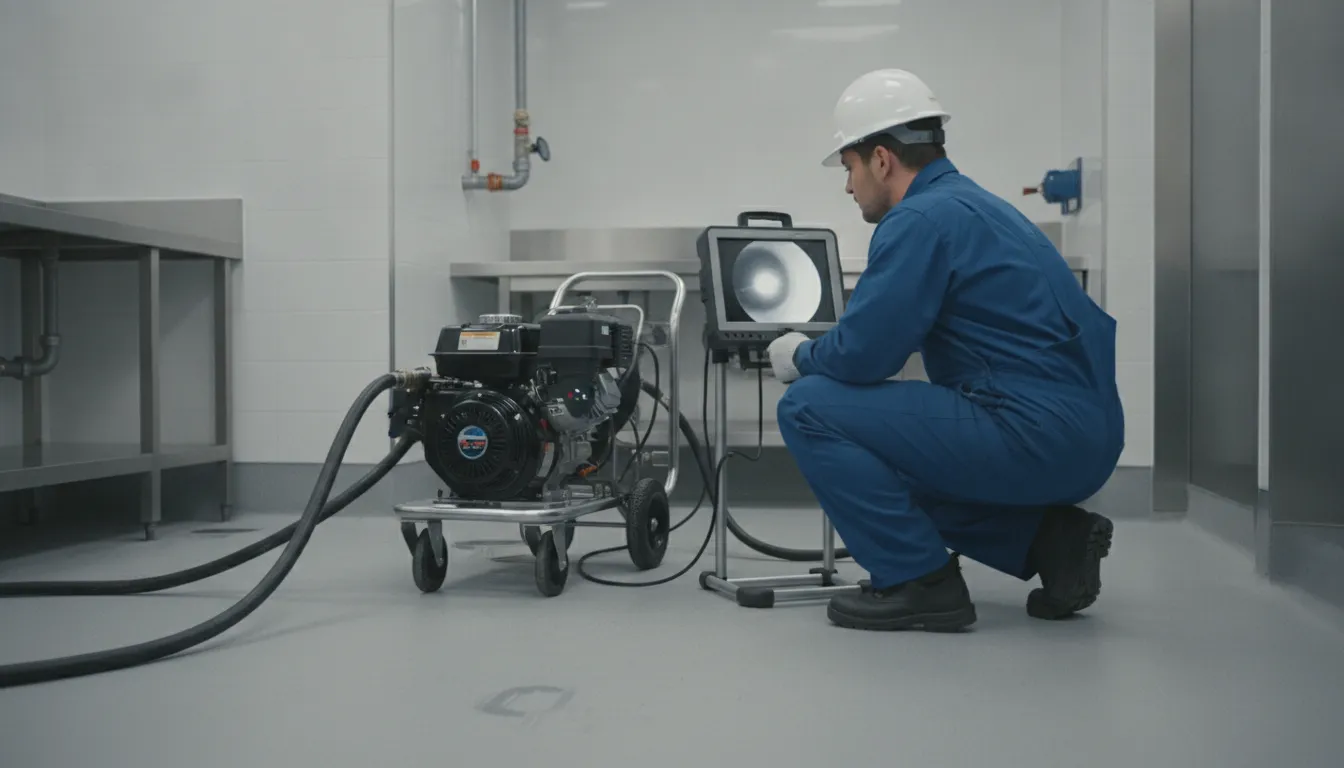
Hydro jetting equipment is powerful, so preparation matters. Before cleaning begins, a plumber should confirm access, locate the affected route, review the facility’s drainage layout, and inspect the pipe where practical. Camera inspection can reveal cracks, offsets, heavy root intrusion, collapsed sections, or other conditions that may change the recommendation.
A practical inspection-led workflow
- Document symptoms and history: Note slow fixtures, repeat clogs, odors, prior repairs, and areas affected.
- Confirm access and route: Identify cleanouts, downstream connections, work zones, and line direction.
- Inspect the pipe: Assess material, condition, obstructions, and areas that may need repair instead of cleaning.
- Select the method: Match equipment, nozzle, cleaning sequence, and precautions to the findings.
- Clean and verify: Complete the work, then inspect or test flow to document the result.
Inspection protects both the system and the business. If a line is structurally unsound, cleaning may not solve the actual issue. When a defect is discovered, the next step may involve targeted repair or a broader sewer line service. The goal is to address the cause rather than repeatedly treating the symptom.
How can a business reduce hydro jetting downtime?
Businesses can reduce downtime by scheduling hydro jetting during low-flow hours, clearing work areas, notifying affected teams, and agreeing on a staged service plan. Inspection findings help the plumber estimate access needs and isolate the most important line sections first.
Downtime planning should begin before equipment arrives. The facility contact and plumbing team need a shared understanding of which fixtures or areas may be unavailable, when the work will begin, and what will signal that normal use can resume. For a restaurant, this might mean work after closing. For a multi-tenant property, it may mean a scheduled window with advance notice.
Build a site-specific service window
- Choose a low-flow period: Schedule around customer traffic, production, tenant use, or kitchen operations.
- Clear access points: Remove vehicles, stored materials, or equipment that could delay setup.
- Notify affected people: Tell managers, tenants, staff, or vendors which areas will be unavailable.
- Plan for contingencies: Decide who can approve added work if inspection uncovers a defect.
- Confirm completion: Review findings and verification records before returning fixtures to normal use.
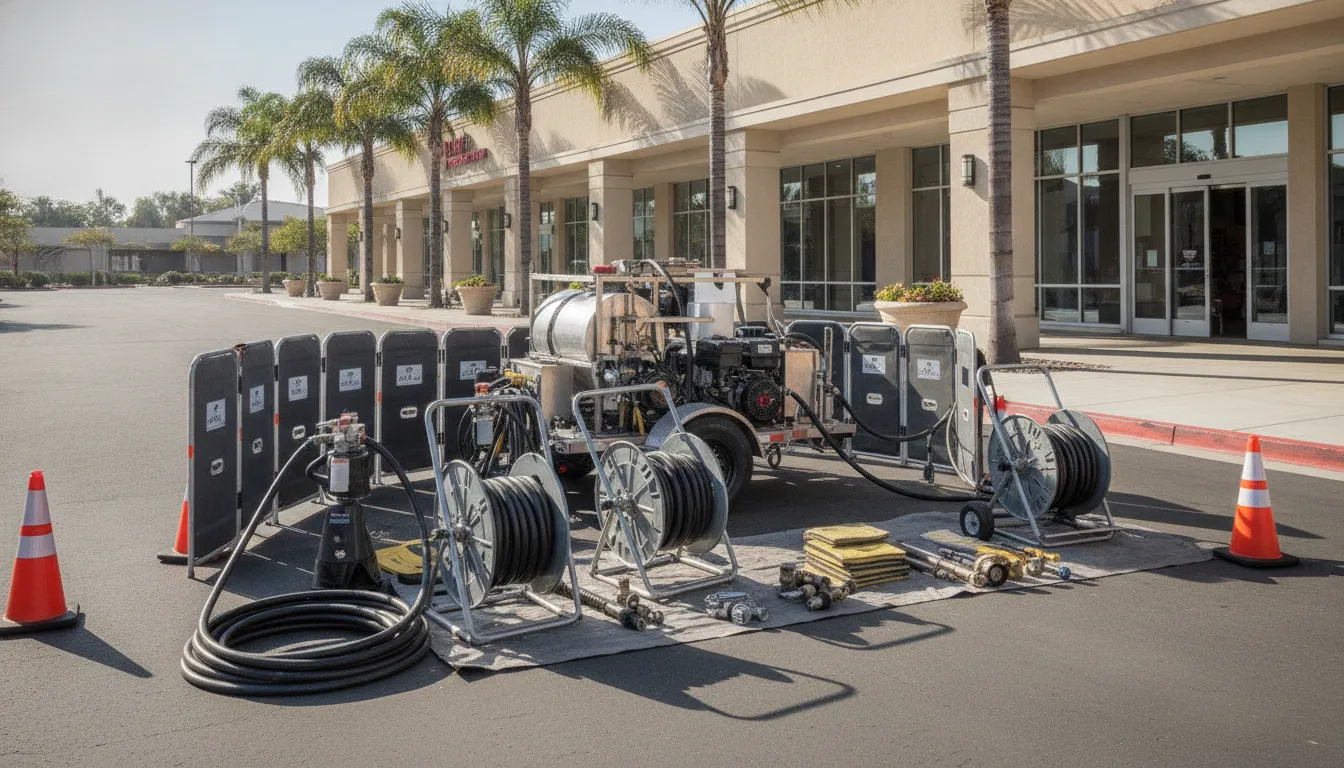
Phasing can help on larger properties. A team may clean the highest-risk section first and keep unrelated areas operating when the layout allows. Clear communication is just as important as the equipment because even well-planned work becomes disruptive when employees or tenants do not know what to expect.
Build a preventive drain maintenance record
A maintenance plan becomes more useful when each visit adds reliable information. Keep inspection video references, service dates, problem locations, cleaning methods, repairs, and recommendations together. Record which fixtures were affected and how quickly symptoms returned. Over time, the file can reveal whether the same section repeatedly needs attention.
Use records to separate buildup from structural problems
Recurring buildup may support a planned cleaning interval. Repeat trouble at one location may instead point to a belly, offset, root intrusion, damaged fitting, or deteriorated lateral. Cleaning can improve flow, but it does not rebuild damaged pipe. A record-backed discussion with a plumber helps a property manager budget for the right work.
The plan should also identify operational triggers. An unexpected odor, several slow fixtures, unusual gurgling, or a repeat backup may justify an earlier inspection. For a detailed overview of inspection-led cleaning, review Diamond House Plumbing’s hydro jetting plumbing guide.
What should you ask a commercial hydro jetting provider?
Ask how the provider inspects pipe condition, chooses equipment, protects the property, manages wastewater, verifies results, and plans around operating hours. The answers should show a condition-based process rather than a one-size-fits-all promise.
The right questions help a business compare more than availability. A qualified provider should be able to explain why hydro jetting is suitable for the specific line, what the inspection showed, and how the work will be verified. Be cautious about recommendations made without enough information about access or pipe condition.
- Will you inspect the line before cleaning? Ask what findings could change the method or reveal a repair need.
- How will you protect operations? Confirm the service window, affected areas, access needs, and communication plan.
- How is the cleaning approach selected? The provider should account for pipe material, condition, diameter, and debris.
- How will results be documented? Ask about post-service inspection, flow testing, and maintenance recommendations.
- What happens if damage is found? Understand who can authorize further diagnosis or repairs.
Diamond House Plumbing serves residential and commercial properties across Riverside and San Bernardino County. Its team brings sewer lateral expertise to inspection, cleaning, repair, and maintenance decisions.
Before approving service, ask for a clear scope that identifies the line to be cleaned, the planned access point, and the method for confirming the result. Share known trouble spots, prior repair records, and the hours when drain use is lowest. These details help the plumbing team prepare the site and avoid delays. They also make it easier for a manager to compare the final findings with the original concern. After service, keep the inspection notes with the property’s maintenance file so future decisions use the same history.
Frequently asked questions
How much does commercial hydro jetting cost for an Inland Empire business?
Cost depends on line diameter, access, buildup, inspection findings, and the length that needs cleaning. A responsible estimate follows an assessment because those factors vary substantially between facilities. Request a scope that explains inspection, cleaning, verification, and any separately recommended repair.
Is commercial hydro jetting safe for older pipes?
It can be suitable when the line is inspected first and the cleaning method matches its condition. A plumber may recommend a different approach when inspection finds severe deterioration, collapse, or another structural concern. This is why inspection should come before cleaning.
Does hydro jetting replace sewer line repair?
No. Hydro jetting removes buildup and can restore flow where pipe condition supports cleaning. It does not correct a broken, collapsed, badly offset, or deteriorated line. Inspection helps distinguish a cleaning need from a repair need.
How can a business reduce downtime?
Schedule the service during a low-flow period, clear access points, notify affected teams, and agree on a staged plan. Provide prior records when available. These steps give the plumbing team better information and reduce preventable setup delays.
Plan commercial hydro jetting around your business
Commercial hydro jetting works best as one part of an inspection-led sewer maintenance plan. Diamond House Plumbing can assess the line, explain the findings, and plan appropriate service around your Inland Empire operation. The result is a clearer path from recurring symptoms to a practical maintenance or repair decision.

Leave a Reply