
A water main leak between meter and house can quietly waste water beneath the yard before a homeowner sees an obvious puddle. An unexplained bill, a moving meter when every fixture is off, or one patch of soil that stays damp can be the first warning. For Inland Empire properties, acting early can limit soil saturation near walkways and foundations while giving a plumber a better chance to pinpoint the problem before recommending a repair.
Quick answer: To check for a leak, turn off faucets, appliances, irrigation, and other water users, then record the meter reading or leak-indicator position. Wait without using water and check it again. Continued movement suggests water is flowing somewhere after the meter. That test confirms a likely leak, but professional leak detection is often needed to determine whether it is in the buried main line, irrigation, or the home.
How do you confirm a water main leak between meter and house?
The water meter is the best starting point because it measures water delivered to the property. If the meter changes while the property is not intentionally using water, water is escaping or a device is still drawing it. The goal of a homeowner meter test is to establish that unexpected flow exists, not to excavate or decide on a repair.
Prepare the property for an accurate meter test
Choose a period when nobody needs water. Turn off every faucet and confirm toilets are not refilling. Pause the dishwasher, washing machine, water softener, pool equipment, evaporative cooler, and irrigation controller. Ask everyone in the building not to use water during the test. Do not close the main shutoff before the first reading because the meter needs to remain connected to the private plumbing system.
- Photograph or write down the meter reading and the position of its small flow indicator.
- Wait at least 30 minutes without using water. A longer observation can help reveal slow leaks.
- Check the meter again and compare both the numeric reading and flow indicator.
- Repeat the test after confirming toilets, irrigation, and appliances are fully off if the result is uncertain.
If the reading changes, the test indicates unwanted flow somewhere after the meter. It does not prove that the buried service line is the source. A running toilet, irrigation valve, slab leak, or appliance can also move the meter. The EPA WaterSense home maintenance guidance provides additional household leak-checking basics.
Know when to stop
Stop the test and call for help if water is surfacing quickly, pressure has dropped sharply, or moisture is approaching electrical equipment. Avoid opening utility boxes other than the water meter box, and do not dig along the suspected route. Buried utilities may share the same area, and a wet excavation can collapse.
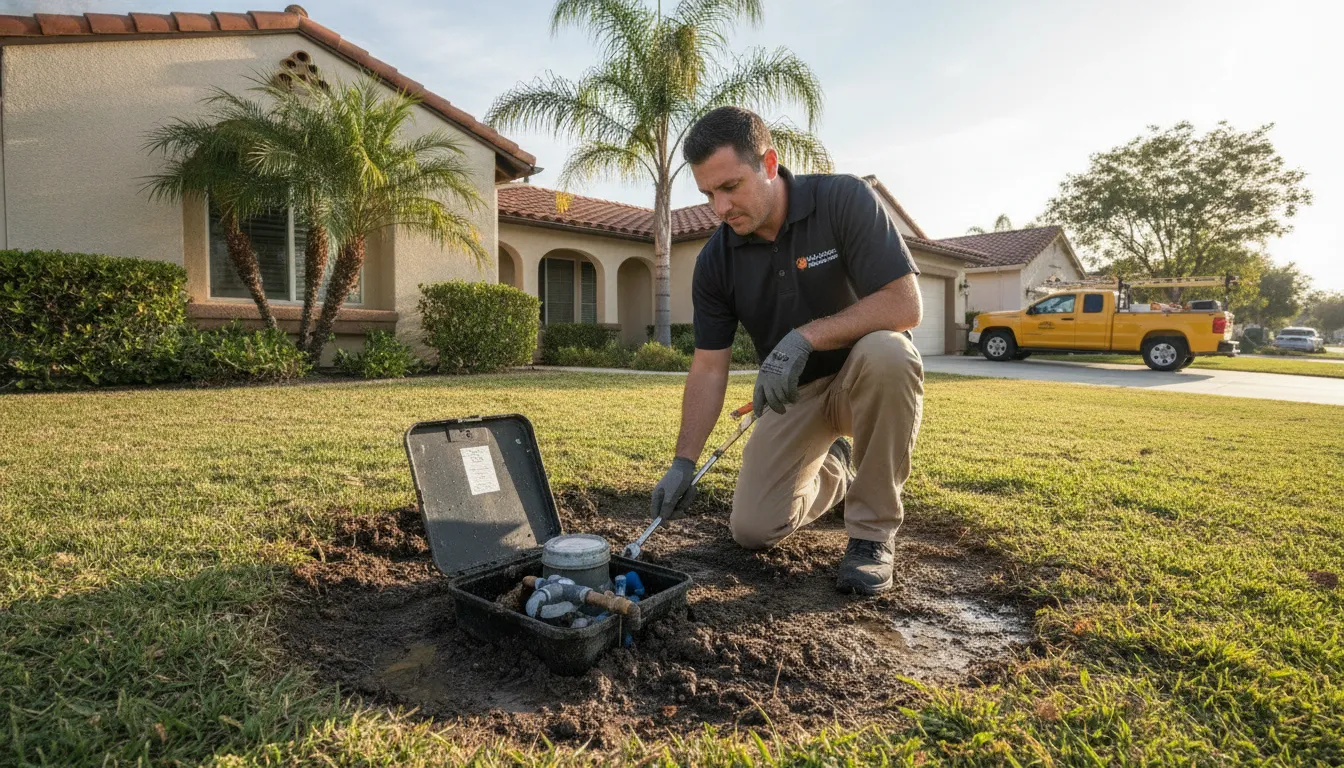
What are the warning signs along a buried supply line?
A buried water line may leak for days before water reaches the surface. Soil type, slope, paving, and the leak’s depth all affect where moisture appears. Water can travel away from the damaged pipe, so the wettest spot is not always directly above the break.
- An unexplained bill increase: Compare similar billing periods and account for seasonal irrigation before assuming a leak.
- Persistent meter movement: The flow indicator moves even after fixtures, appliances, and irrigation are off.
- Wet or unusually soft soil: One area remains damp when nearby ground is dry.
- Unusual plant growth: A narrow patch of grass or landscaping becomes greener or grows faster than surrounding areas.
- New depressions or erosion: Escaping water can move fine soil and create low spots.
- Reduced or fluctuating pressure: Pressure may change when water escapes before reaching the home, although pressure changes can have other causes.
In Riverside and San Bernardino County, dry weather can make a constantly damp patch more noticeable. At the same time, irrigation is common and must be ruled out. Diamond House Plumbing serves communities across the Inland Empire and approaches these signs as clues that need to be tested together, not as proof based on one symptom.
Foundation-area signs need prompt attention
Water that appears near the edge of a slab or foundation deserves attention because an underground leak can saturate supporting soil. A homeowner cannot determine the pipe’s condition from surface moisture alone, but documenting changes helps a professional evaluate the situation.
Look for changes near the house
Check for recurring moisture where the buried line is believed to enter the building. Watch for water collecting against the house, a newly soft strip of soil, sediment washing from a joint, or dampness that returns after the surface dries. Cracks in concrete can have many causes, but a new crack near persistent moisture should be documented and assessed rather than ignored.
Do not seal over a wet area or direct standing water into a neighbor’s property. If practical, move surface water away from the structure without digging. Photograph the area and note when it appears, whether irrigation was active, and whether the meter moved during the same period.
Separate supply-line symptoms from drain problems
A supply-line leak involves pressurized clean water and can move the meter continuously. A sewer or drain issue is more likely to involve slow drains, odors, wastewater, or a backup associated with fixture use. Diamond House Plumbing handles both plumbing and sewer-lateral work, but the diagnosis and repair path differ. Accurate observations help the right equipment and team arrive.
Review Diamond House Plumbing’s underground water leak detection guide before deciding where to dig.
Is the leak indoors, in irrigation, or in the main line?
A moving meter confirms flow after the meter, but several systems may be responsible. A structured check can narrow the possibilities without damaging the property. Begin with visible fixtures and irrigation, then leave underground diagnosis to trained professionals.
| Observation | Possible source | Useful next step |
|---|---|---|
| Toilet tank refills when unused | Toilet valve or flapper | Isolate and repair the toilet, then repeat the meter test |
| Wet area appears after sprinklers run | Irrigation line or valve | Keep irrigation off and compare meter behavior |
| Meter moves with visible fixtures and irrigation off | Hidden indoor or underground leak | Arrange professional leak detection |
| Damp soil follows the route from meter to house | Possible private service-line leak | Document the area and avoid digging |
| Slow drains, odor, or wastewater | Drain or sewer issue | Request a drain or sewer evaluation |
Check fixtures and irrigation first
Listen for toilet refilling and inspect under sinks, around water heaters, and near appliances. Keep irrigation off long enough to see whether the suspicious area begins drying. Check for broken sprinkler heads and valves that continue releasing water after a watering cycle. These steps can eliminate common causes, but they should not involve dismantling equipment or entering unsafe spaces.
Use the private shutoff only if you know it is safe
A professional may compare meter behavior with the home’s private shutoff closed. If the meter still moves, the buried line between the meter and shutoff becomes a stronger suspect. Older or corroded valves can fail when operated, so homeowners should not force a stuck valve. Ask a plumber to perform the isolation test if the shutoff’s condition or location is uncertain.
How does professional leak detection locate the problem?
Professional leak detection combines meter results, line routing, pressure behavior, and specialized listening or locating equipment. The technician selects methods based on pipe material, soil, surface conditions, and the suspected leak size. No single tool works perfectly in every setting, which is why a systematic diagnosis matters.
Why pinpointing matters before excavation
Water may follow a trench, root channel, or compacted soil before surfacing. Digging only where a puddle appears can miss the damaged pipe and disturb more landscaping than necessary. A more precise location helps the plumber plan access, estimate the affected area, and discuss repair versus replacement with better information.
During the visit, share recent water bills, meter-test photos, the time the wet area appears, and any history of line repairs. Mention recent landscaping, driveway work, or changes in pressure. These details help distinguish a new service-line problem from irrigation or an indoor leak.
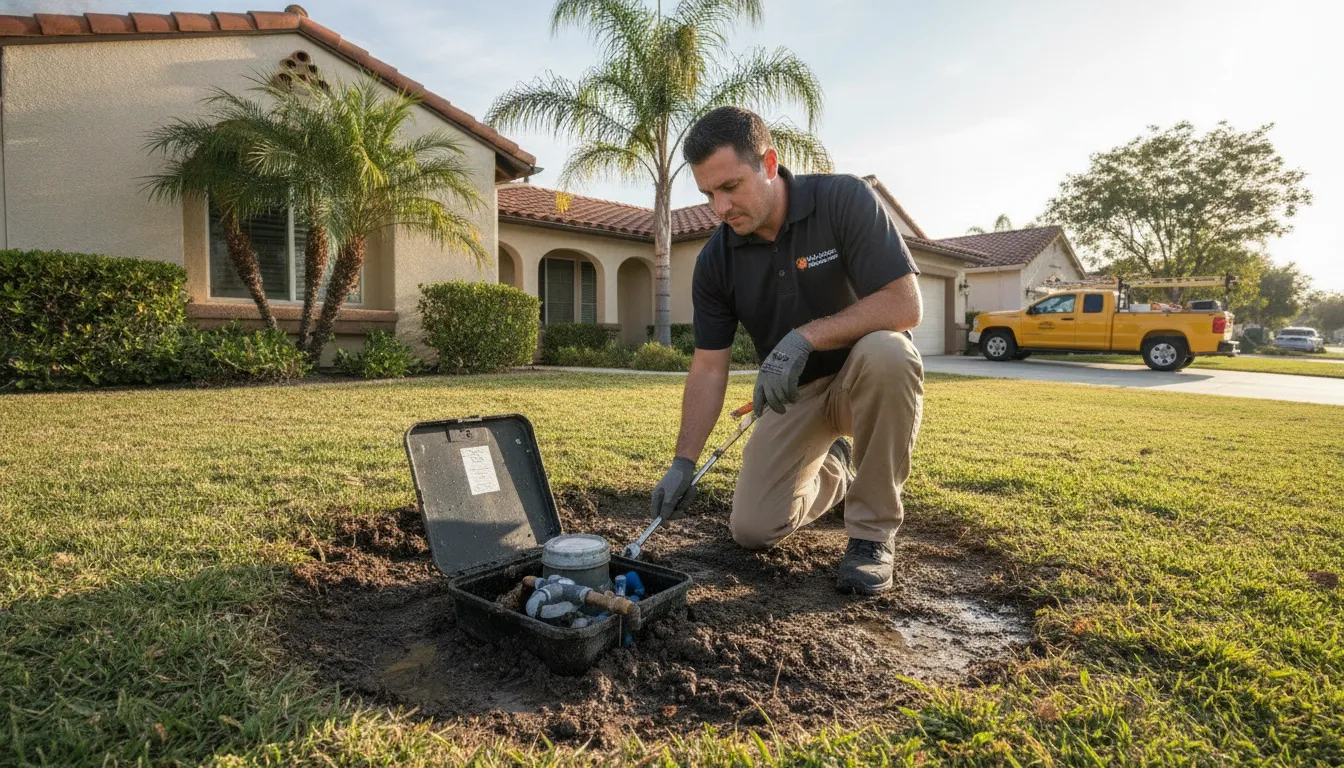
What happens after the leak is located?
After locating the leak, the plumber exposes the affected section as safely and narrowly as conditions allow. The visible pipe condition, material, damage type, line age, and repair history then guide the recommendation. A localized repair may make sense for an isolated defect on an otherwise sound line. Replacement may provide better long-term value when the line has widespread deterioration, repeated failures, or unsuitable material.
Common reasons a service line fails
Buried lines can be damaged by soil movement, corrosion, roots, age, or physical disturbance. Connections and transitions between materials can also become vulnerable. The exact cause should be based on the exposed line and site conditions rather than a guess from the surface.
Repair versus replacement
A sound recommendation should explain what was found, the accessible repair options, and the expected disruption. Homeowners should also ask how the line route, paving, landscaping, and local requirements affect the work. For a fuller overview of replacement decisions, see Diamond House Plumbing’s main water line replacement guide.
Diamond House Plumbing emphasizes careful diagnosis before recommending the next step. That approach is especially important when the service line crosses hardscape or runs close to a foundation, where unnecessary excavation can add avoidable disruption.
Who is responsible for a leak near the water meter?
Responsibility often depends on which side of the meter or utility connection is leaking and on local utility rules. In many areas, the utility maintains its distribution system and meter, while the property owner maintains the private line after the meter. Boundaries and policies vary, so confirm them with the local water provider.
If water appears inside the meter box, report it to the utility and ask whether they need to inspect first. Do not operate utility-owned valves or attempt a meter-box repair. If testing indicates the leak is after the meter on the private side, a licensed plumbing professional can evaluate the property line.
When water is surfacing rapidly, pressure is falling, or moisture threatens the structure, treat the situation as urgent. Diamond House Plumbing provides plumbing support throughout Riverside and San Bernardino County; examples of completed work are available in the company’s project portfolio.
Frequently Asked Questions
Can a water main leak exist without a wet spot?
Yes. Water can remain underground, drain into porous soil, or travel along the pipe trench before surfacing elsewhere. A moving meter and unexplained usage may appear before any visible wet area.
How long should I watch the meter during a leak test?
A 30-minute observation can reveal continuous flow, while a longer period may help identify a slow leak. No water should be used during the test. Repeat the test if an appliance, toilet, or irrigation system may have operated.
Does low water pressure prove the main line is leaking?
No. Low pressure can result from fixture problems, valves, regulators, utility conditions, or a leak. Combine pressure changes with meter movement and other signs, then have the cause diagnosed.
Should I dig where the yard is wet?
No. The wet spot may not be above the leak, and buried utilities can make digging dangerous. Document the area and arrange professional locating before excavation.
Can Diamond House Plumbing help with an underground water line leak?
Yes. Diamond House Plumbing serves residential and commercial properties across the Inland Empire and can evaluate suspected plumbing leaks, explain the findings, and recommend an appropriate next step.
Get a clear diagnosis before the damage spreads
A meter test and careful observations can confirm that something is wrong, but locating a buried leak requires the right equipment and experience. Diamond House Plumbing helps Inland Empire property owners move from uncertain warning signs to a practical repair plan with care and precision.

Leave a Reply