
A sewer backup can close a restaurant, disrupt tenants, or stop customer traffic at an Inland Empire commercial property. Commercial sewer preventive maintenance gives property managers a practical way to identify buildup and damaged sections before they become an operational emergency.
Schedule a commercial sewer inspection with Diamond House Plumbing.
Commercial sewer preventive maintenance at a glance
Commercial sewer preventive maintenance is a documented program of inspections, cleaning, and condition tracking for a property’s sewer lines. The right plan is based on the building’s use, pipe condition, waste load, and service history. It can include sewer-camera inspections, hydro jetting when appropriate, warning-sign checks, and records that help property teams plan service before a backup interrupts business.
Restaurants, dealerships, retail centers, offices, and multi-tenant properties place different demands on their sewer systems. Diamond House Plumbing helps commercial property teams across Riverside and San Bernardino counties evaluate those demands and establish a practical maintenance approach.
Why preventive maintenance matters for commercial properties
A commercial sewer line often serves many fixtures and users at once. When that shared line slows or fails, the effects can spread beyond one restroom or sink. Tenants may lose access to facilities, kitchens may be unable to operate, and contaminated water can reach customer-facing areas.
Protect operations and occupants
Preventive work shifts attention from reacting to a backup to monitoring the conditions that cause one. A scheduled camera inspection can reveal a developing restriction, root intrusion, an offset joint, or a damaged section while the line is still flowing. Property managers can then plan the next step around operating hours instead of responding during peak business.
Early attention also supports a cleaner, safer property. Sewage can damage finishes and create sanitation concerns. If several fixtures drain slowly, floor drains emit persistent odors, or toilets gurgle, the building may be warning you that a shared line is struggling.
Improve maintenance planning
A written service history gives facility teams useful evidence. It shows which line repeatedly collects grease, which section has root activity, and how quickly deposits return after cleaning. That information supports better budgeting and helps prevent unnecessary work on lines that remain in good condition.
Diamond House Plumbing can document findings and explain whether the next step is monitoring, cleaning, or repair. You can review examples of completed sewer and plumbing work in the company’s project portfolio.
What determines the right inspection cadence?
There is no reliable one-size-fits-all schedule. A low-use office with a newer, properly sloped line may not need the same frequency as a restaurant with heavy grease exposure or a busy multi-tenant center. The best cadence starts with a baseline inspection and changes as the property builds a service history.
Use and waste load
Restaurants and food-service spaces may introduce fats, oils, grease, and food particles into branch lines. Dealerships and service facilities can encounter sand, grit, and debris. Offices and retail properties may experience paper-product blockages or heavy fixture use during limited hours. Each pattern affects how quickly restrictions can form.
Pipe material and condition
Older lines, recurring root intrusion, bellies, cracks, and poor connections can increase risk. A camera inspection helps locate these conditions. It also gives the plumber a basis for deciding whether cleaning is appropriate and whether a damaged section should be repaired instead.
| Property condition | Primary concern | Planning response |
|---|---|---|
| Food-service facility | Grease and organic buildup | Track accumulation and clean based on findings |
| Dealership or service property | Grit, debris, and high-use drains | Inspect shared lines and known trouble areas |
| Multi-tenant center | Variable use and shared-line impact | Document tenant reports and inspect common laterals |
| Older property | Roots, offsets, cracks, or low spots | Use camera findings to plan monitoring or repair |
How grease and debris threaten commercial sewer lines
Many blockages develop gradually. Material adheres to the pipe wall, catches more waste, and reduces the open path for water. The line may continue to drain until a high-use period overwhelms the remaining space.
Fats, oils, and grease
Warm grease may enter a drain as a liquid, then cool and adhere to the line. As the layer thickens, it catches food particles and other debris. Grease control practices at fixtures matter, but a property manager should also monitor the downstream line where deposits can accumulate out of view.
Wipes, paper products, and solid debris
Items that do not break down quickly can snag on rough pipe walls, roots, or offset joints. Sediment and grit may settle in low spots and reduce capacity. Repeated snaking can open a temporary path without removing the material coating the pipe wall, so recurring stoppages deserve a closer inspection.
How camera inspections support preventive maintenance
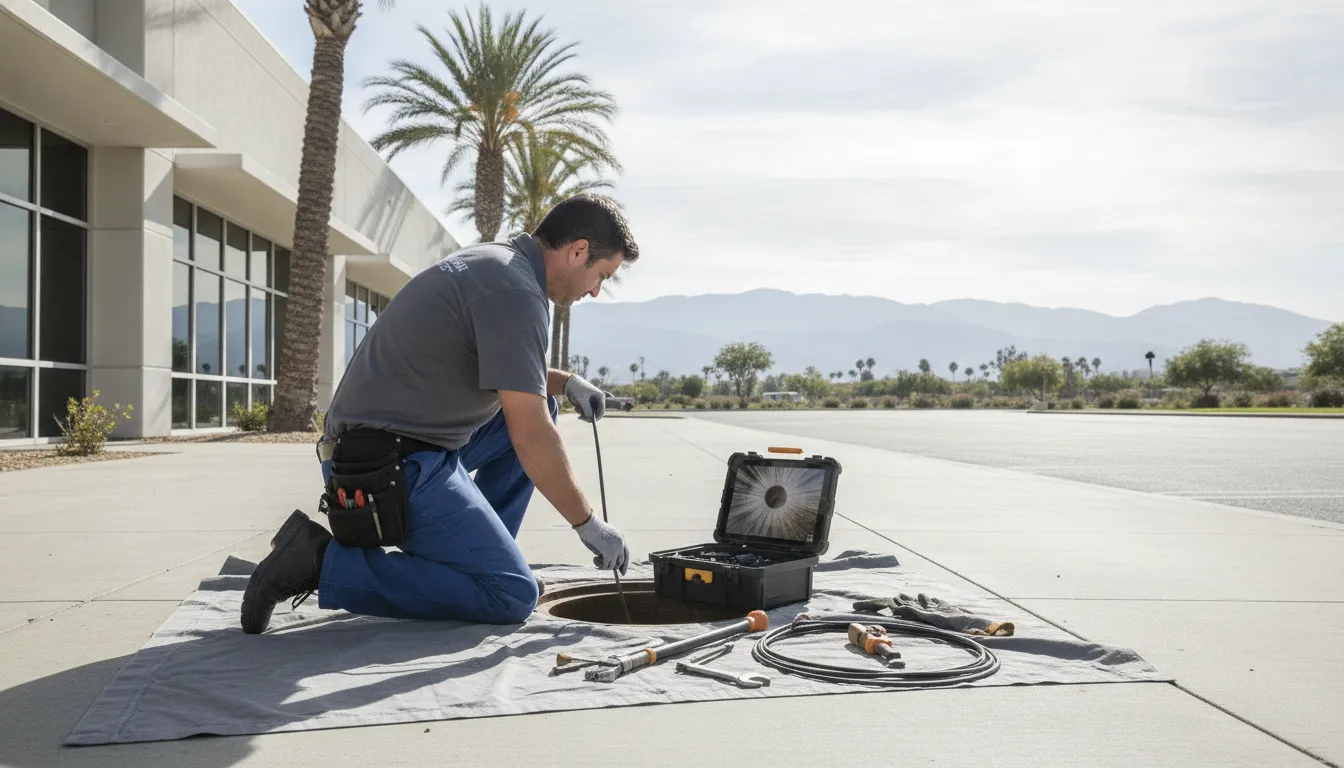
A sewer camera gives the plumber and property manager a view inside an accessible line. It can identify the location and nature of a restriction, confirm whether a line is clear after service, and document defects that cleaning will not solve.
Start with a baseline condition record
A baseline inspection answers practical questions. Is the line open? Where are the recurring trouble spots? Are roots entering at a joint? Does a section hold water? With that record, future inspections can show whether a condition is stable or becoming worse.
Use findings to select the next step
Camera findings help avoid guessing. Soft buildup may point toward cleaning. A broken or badly offset section may require repair. A clear line may only need monitoring. Diamond House Plumbing provides commercial sewer and plumbing services that address both maintenance and repair needs.
A camera inspection has limits. Standing water or a complete blockage can obscure the view, and the camera itself does not repair a defect. It is a diagnostic tool that supports a better service decision.
Document what the camera shows
Ask that important findings be tied to a location whenever possible. A useful report notes the access point, approximate distance, visible condition, and recommended response. That detail helps a facility manager compare later footage with the baseline instead of relying on memory. It also makes it easier to explain a planned repair or cleaning visit to owners, tenants, and maintenance teams.
When hydro jetting fits the maintenance plan
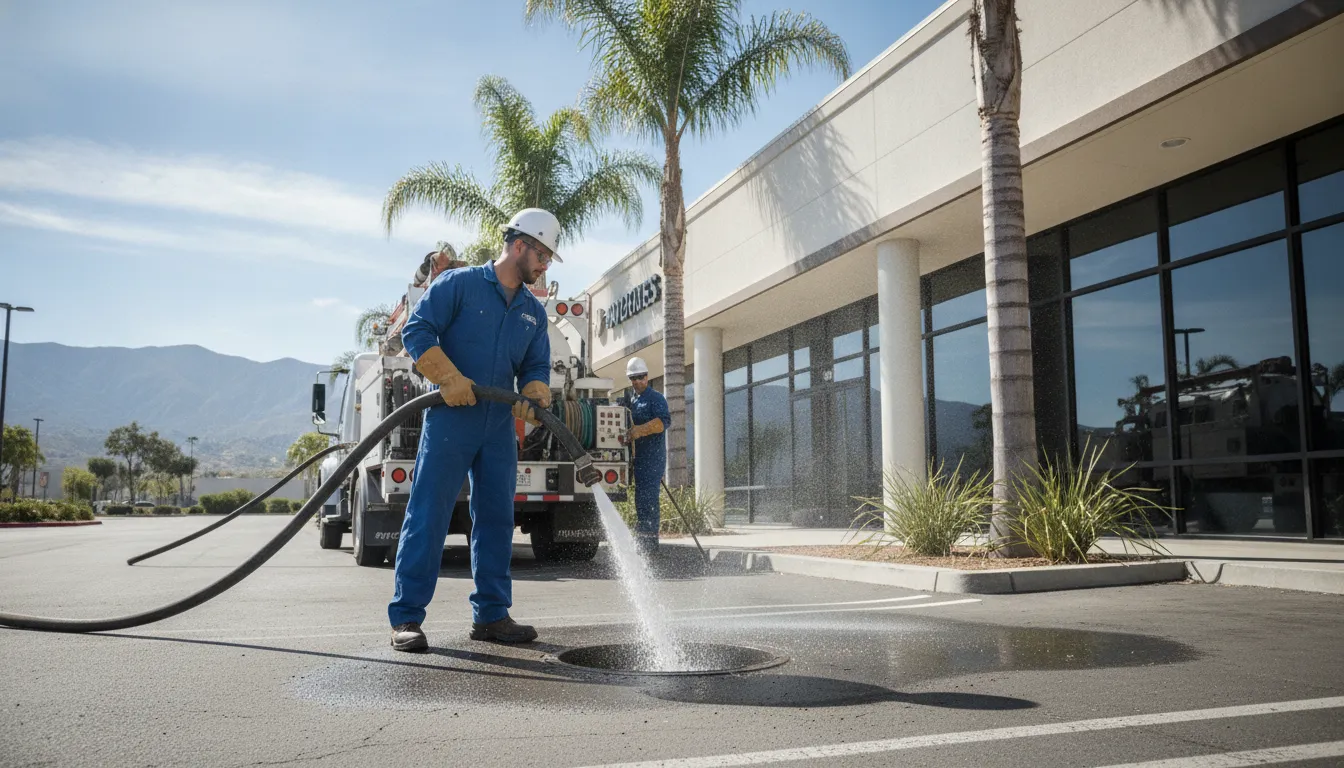
Hydro jetting uses high-pressure water and specialized nozzles to scour deposits from inside a sewer line. Unlike a cable that may create a narrow opening through a blockage, jetting can remove material from more of the pipe wall. It is often considered for grease, sludge, scale, and recurring debris buildup.
Inspect before cleaning
The line should be evaluated before hydro jetting. Pipe material, access, condition, and the type of restriction all affect whether the method is appropriate. A badly damaged line may need repair rather than aggressive cleaning. The goal is not simply to use the strongest tool. It is to use the right method for the line.
Confirm the result
A post-cleaning camera pass can help confirm that deposits were removed and expose defects that buildup previously concealed. The findings also help establish how soon the line should be checked again. For more detail, see Diamond House Plumbing’s guide to commercial hydro jetting for Inland Empire businesses.
What warning signs call for a sewer inspection?
Do not wait for the next scheduled visit when the building shows signs of a shared-line problem. The following conditions justify prompt attention, especially when they affect several fixtures or return after prior service.
- Multiple slow drains: Several fixtures draining slowly can indicate a restriction beyond an individual branch.
- Gurgling or bubbling: Unusual sounds may signal trapped air as wastewater moves around a blockage.
- Persistent sewer odors: Odors near drains or outdoor cleanouts deserve investigation.
- Recurring stoppages: A blockage that repeatedly returns may involve buildup, roots, or a pipe defect.
- Wet or unusually green areas: Changes above a buried line may indicate leakage and require professional evaluation.
If wastewater is already backing up, limit use of the affected fixtures and arrange professional service. Avoid treating a recurring whole-building issue as an isolated drain problem.
How to build a practical maintenance plan
A useful plan is clear enough for property managers, maintenance staff, and vendors to follow. It should identify important assets, define what gets checked, and preserve the records needed to make future decisions.
1. Map the system and access points
Record known cleanouts, shared laterals, lift stations, grease-control equipment, and lines serving high-use areas. Note any sections with a history of stoppages or repairs. This reduces delays when service is needed.
2. Establish a baseline
Use a professional inspection to document current conditions. Keep videos, photos, findings, and service recommendations with the property records. The baseline should distinguish deposits that can be cleaned from defects that may require repair.
3. Set a condition-based cadence
Build the schedule around actual risk rather than a generic calendar. Consider occupancy, operating hours, waste type, prior stoppages, and inspection findings. Review the interval after each visit and adjust it when conditions change.
4. Track warning signs and completed work
Ask staff and tenants to report slow drains, odors, and gurgling promptly. Log the location, date, and response. After service, record what was found and completed. Over time, this turns isolated incidents into a useful maintenance history.
5. Define an escalation process
Document who should be contacted, where water use should be limited, and how affected areas will be protected if a backup occurs. A clear response plan helps the property team act quickly while professional help is arranged.
Coordinate maintenance across the property team
Preventive maintenance is more effective when everyone knows what to report and who owns the response. Property managers can give tenants and maintenance staff a simple process for reporting slow drains, odors, wet areas, and repeated fixture problems. Reports should identify the location and time rather than only saying that a drain is clogged.
Before a scheduled inspection or cleaning, confirm access to cleanouts and affected spaces. Review operating hours, tenant needs, and previous service records with the plumber. Afterward, keep the findings with the property’s maintenance documents. Share any practical use or monitoring instructions with the right team members. This coordination helps turn a single service visit into a stronger long-term plan.
Frequently asked questions
Why is commercial sewer preventive maintenance important?
It helps a business identify restrictions, buildup, roots, and damaged sections before they cause a backup or disrupt operations. It also creates records that support better scheduling and budgeting.
What should a commercial sewer maintenance plan include?
A useful plan documents the sewer layout, known trouble spots, inspection results, cleaning history, warning signs, and a service cadence based on actual site conditions.
How often should commercial sewer lines be inspected?
The right interval depends on use, pipe condition, waste load, and previous problems. A baseline camera inspection helps a plumber recommend an appropriate schedule and refine it as the property builds a service history.
How does hydro jetting support sewer maintenance?
When appropriate for the pipe, hydro jetting removes grease, sludge, scale, and debris from the pipe walls. An inspection should guide the decision, and a follow-up camera pass can help confirm results.
Plan commercial sewer service with Diamond House Plumbing
Commercial sewer preventive maintenance works best when it reflects the property’s real conditions. Diamond House Plumbing serves commercial properties across the Inland Empire with sewer-camera inspections, hydro jetting, sewer-line service, and practical maintenance planning.

Leave a Reply