
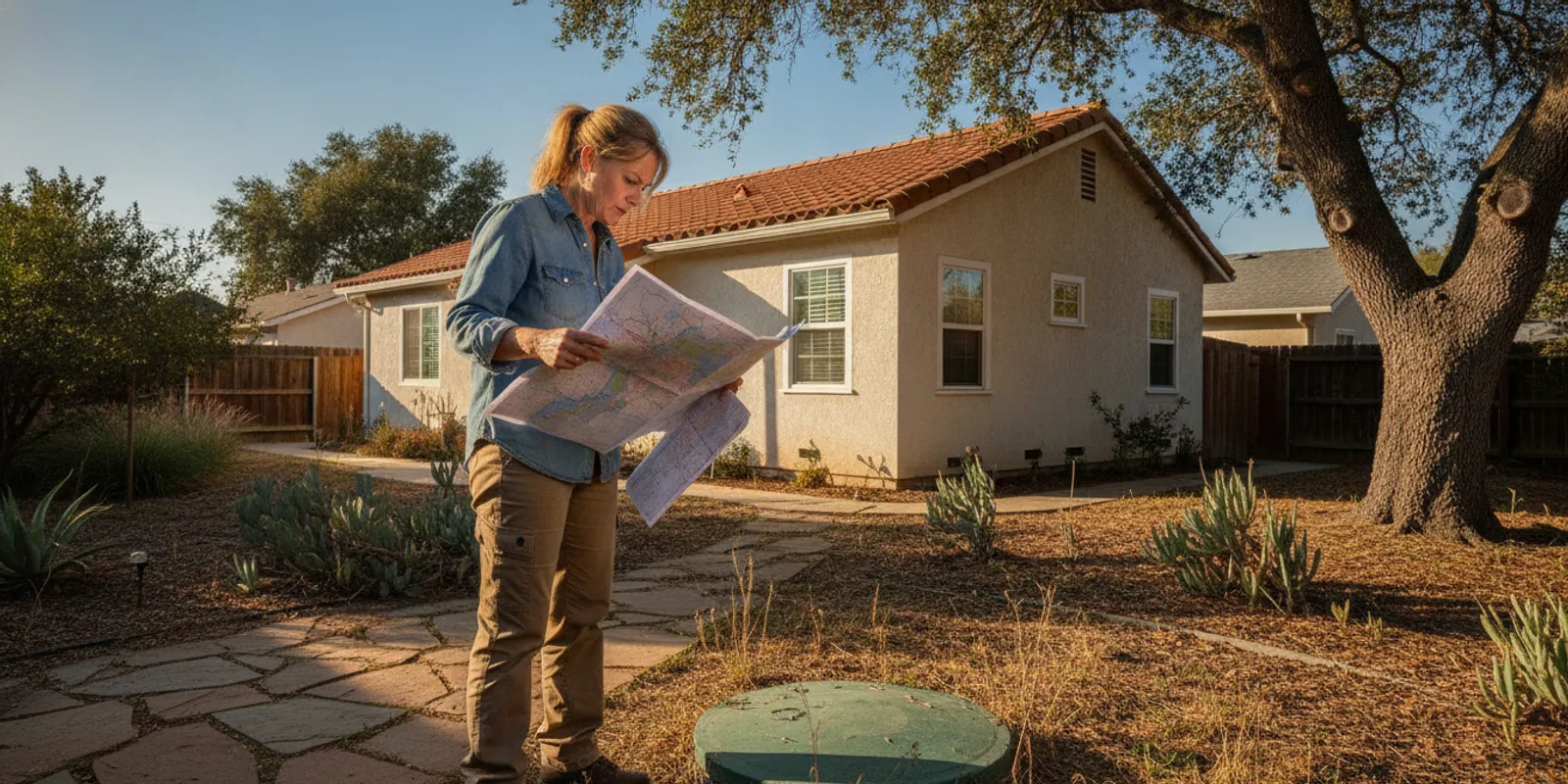
If you are wondering, “how do I find my septic tank?” start with records rather than digging. A septic tank is usually buried, and its exact position may not be obvious from the surface. For homeowners and property managers in Riverside and San Bernardino counties, a methodical search can narrow down the likely location while protecting the tank, pipes, and dispersal area.
Ask about septic locating help
Why can a septic tank be difficult to find?
The tank is underground, and the property may have changed since the system was installed. Landscaping, patios, additions, fences, or grading can hide clues. Older records may show only an approximate location, or the paperwork may have been lost. Do not assume that the shortest route from the house to an open part of the yard shows where the tank sits.
The tank is generally located between the building’s main sewer pipe and the dispersal area, but that is only a broad guide. The actual layout depends on the property and system. Pipes may not run in a straight line, and a tank can be offset from the most obvious route. Finding the tank matters before service, inspection, repairs, or planned landscaping. To understand the parts involved, see this septic system diagram.
What records can show the tank location?
Begin with documents tied to the property. Ask the current or previous owner, property manager, or closing file contact whether they have a septic plan, installation paperwork, inspection notes, pumping receipts, or repair records. A receipt may identify a service access point or note where a contractor worked. A plan may show the tank and dispersal area in relation to the building or lot boundaries.
Look through permit documents and maintenance files. If you do not have a copy, ask the relevant county or local permitting or environmental health office whether records are available for the address. Availability and detail can vary. Treat a drawing as a starting point, not proof that the tank is exactly where its mark appears today.
Compare a plan with stable reference points that have not changed, such as the home’s foundation, driveway, or lot boundary. Check the plan’s date and note later additions or grading. If you find a repair record, note its date and whether the work may have changed a component. Keep copies of conflicting documents rather than choosing one as correct without confirmation.
Which outdoor clues are worth checking?
After reviewing records, make a visual survey from the surface. Do not remove covers or probe the ground. Look for:
- A relatively level area or subtle change in ground contour.
- Grass or plants that differ in a narrow line or patch from nearby areas.
- Visible risers, access lids, or inspection ports, if present and safely accessible from the surface.
- A likely route from the building toward the area identified on an old plan.
- Disturbed soil or landscaping that may correspond with documented service or repair work.
These signs are not definitive. Differences in vegetation can have many causes, and access lids may be hidden beneath mulch or lawn. A property may have several covers, and not every cover identifies the tank itself. Avoid lifting anything heavy, damaged, or unfamiliar. An opening can be hazardous, and surface clues cannot establish the tank’s condition.
Walk slowly and note what you see. Take photographs from a safe distance and mark approximate clues on a sketch. Avoid driving or parking over a suspected tank or dispersal area while you investigate. For more about tank components, read the guide to a septic tank baffle; the baffle is inside the tank, not a surface locator.
How can you narrow the search without damaging the system?
- Gather the paperwork. Collect plans, permits, service invoices, and notes from past owners or contractors.
- Identify stable reference points. Mark the home, driveway, property lines, and other features shown on the plan.
- Compare clues. Look for visible access points and yard changes that fit the documented layout.
- Record uncertainty. Label areas as possible, not confirmed. Note conflicting clues instead of selecting one without evidence.
- Arrange professional confirmation. If the location remains unclear or work is planned, ask a qualified septic professional to locate and identify system components.
Do not use a metal rod, shovel, vehicle, or powered equipment to search for a buried tank. Puncturing a tank, pipe, or other component can cause damage and expose someone to unsafe conditions. Do not enter a tank or lean over an open access point. If you encounter an open, damaged, or unstable cover, keep people and pets away and arrange appropriate assistance.
How do search options compare?
The best next step depends on the records available, the property, and why you need the location. This comparison shows what each approach can—and cannot—tell you.
| Approach | Useful for | Limit | Next step |
|---|---|---|---|
| Property records | Finding a documented layout or previous access point | Plans may be old, incomplete, or approximate | Compare with stable current site features |
| Surface visual survey | Noting possible lids, risers, contours, or disturbed areas | Clues can mislead and do not confirm a tank | Photograph clues; keep the search non-invasive |
| Local records inquiry | Checking whether permits or system documents exist | Record availability and detail vary | Ask the relevant local office about the address |
| Professional locating | Confirming a likely location before service or construction | Methods and scope depend on the property and system | Share records, access concerns, and the reason for locating |
A professional may use site information and appropriate locating methods to narrow down and confirm components. Ask what the visit will identify, whether the tank and related lines are included, and whether the work involves opening or excavation. If planning maintenance, the septic tank pumping guide explains what to consider before arranging service.
What should you avoid while searching?
- Do not dig based on a guess. A suspected location may be wrong, and buried components can be damaged.
- Do not open or enter the tank. Keep away from exposed openings and do not inspect the inside.
- Do not treat one clue as confirmation. Surface features and old drawings may not match the current layout.
- Do not drive heavy equipment across the suspected system. Keep vehicles and concentrated loads away until the layout is known.
- Do not ignore nearby components. Locating the tank alone may not identify pipes or the dispersal area relevant to planned work.
If the system is showing signs of a problem, finding the tank is only one part of diagnosis. An alarm, backup, or unusual wet area calls for attention to the system as a whole. Review septic services and describe symptoms when arranging an assessment.
When should you call a professional?
Contact a qualified professional when records are missing or unclear, the property has been altered, or you need a dependable location before pumping, inspection, repair, or construction. Professional help is especially useful if several possible lids or routes appear, or if the likely tank area is beneath hardscape or near a structure.
Be clear about the purpose of the search. Locating a tank before routine service may differ from mapping components before excavation. Ask whether the scope includes identifying the tank, access points, inlet and outlet routes, or other relevant components. Do not assume locating the tank automatically includes a full system inspection or condition assessment.
Properties connected to a sewer rather than a septic system may need a different investigation. Diamond House Plumbing also provides drain and sewer services. Explain what system you believe the property has when you make contact.
What information should you prepare before arranging help?
A few details can make the conversation more useful:
- The property address and whether it is residential or commercial.
- Any septic plan, permit, installation record, or service invoice you located.
- The approximate age of records and known additions, grading, or yard changes.
- Visible lids, risers, unusual ground features, and where you observed them.
- The reason you need the tank located, such as service, repair planning, or proposed construction.
- Current symptoms, including backups, alarms, or wet areas, and when they began.
Separate what is known from what is a guess. That distinction helps avoid treating an old sketch or a patch of different grass as a confirmed location. You can also ask what access is needed and how the work will be documented for property records.
How should you document the location once it is confirmed?
After a professional identifies the tank, keep the information with the property’s maintenance records. Save any sketch, photographs, service report, and date of the visit where future owners or managers can find them. Include clear reference points, such as a building corner or driveway edge, rather than writing only “backyard.” Preserve details that distinguish the tank from access risers, pipes, and the dispersal area.
Marking the location on a copy of the site plan can help prevent accidental damage during later landscaping or construction. Tie the mark to fixed features and label it with the date and source of the information. A temporary yard marker may not remain visible, and a photograph alone may not communicate precise measurements. If the property changes, update the file with new work records and tell contractors a septic system is present before ground disturbance.
What if the paperwork and visible clues do not agree?
Conflicting information is a reason to pause, not to choose whichever location seems convenient. A plan could describe the original installation while a later repair changed a component. A visible lid might belong to an access point rather than the tank. Write down the discrepancy, retain copies of the documents, and explain the conflict when requesting professional locating.
For example, a drawing might place the tank on one side of a walkway while a service receipt refers to an access point on the other. Do not dig along either route to test the paperwork. Ask the professional to clarify what each document refers to and what can be confirmed during the visit. If the property is under contract or work has a schedule, raise the uncertainty early so locating is not confused with a later inspection, repair, or construction scope.
Frequently asked questions
Can I find my septic tank from the house’s plumbing layout?
The building’s main sewer pipe can suggest a direction to investigate, but it cannot establish the tank’s exact position. Layouts vary, and pipes may change direction. Use this clue alongside records and surface observations, then have the location confirmed before digging or arranging work.
Will a septic plan show the exact tank location?
It may show the tank’s intended or recorded location, but the detail and accuracy depend on the document and later property changes. Check the plan date and compare it with current site features. Treat it as a useful lead, not a guarantee.
Should I uncover a lid if I see one?
Do not lift a heavy, damaged, or unfamiliar cover, and never enter a tank. If you believe you have found an access point, keep the area clear and ask a qualified professional to identify it safely.
Can I locate the tank before scheduling pumping?
Yes. Tell the service provider you do not know where the tank is and ask whether locating is included or needs to be arranged separately. Share plans and past service records so the provider can explain the appropriate scope.
Plan a safe next step
Start with records, compare them with non-invasive surface clues, and stop before digging or opening a suspected access point. If the location is uncertain or work is approaching, Diamond House Plumbing can discuss septic service needs for Inland Empire properties; contact the team with your records and the reason you need the tank located.
Before searching or arranging work, remember that septic systems can present health and safety hazards when accessed improperly. The U.S. Environmental Protection Agency advises owners to keep maintenance records and use qualified septic professionals; see EPA septic system guidance for general information.
Explore septic service options
A careful search protects the system and gives you a clearer basis for planning service or property work.

Leave a Reply