
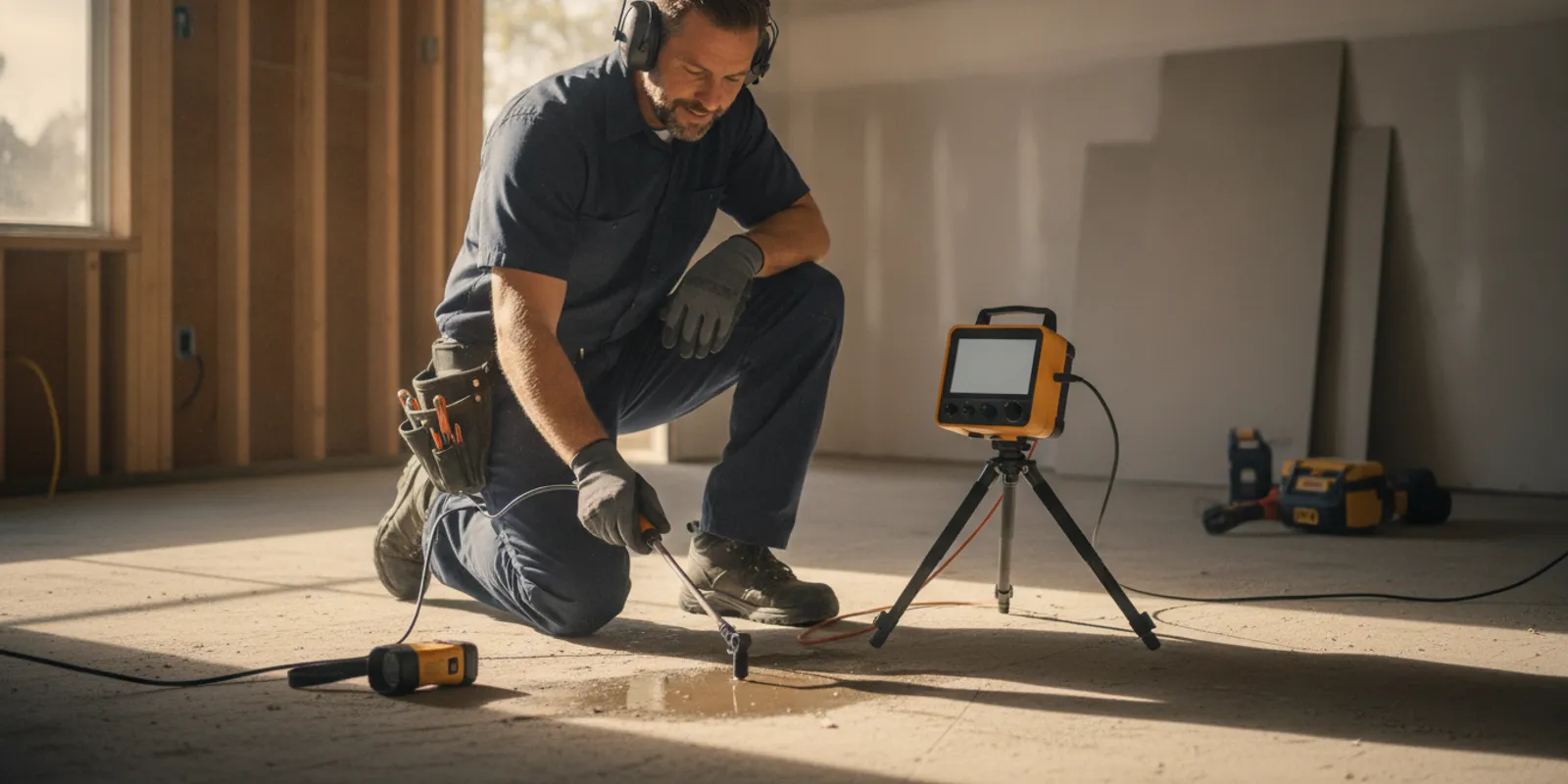
If you suspect a hidden leak beneath your concrete foundation, emergency slab leak repair starts with limiting water damage and arranging a careful assessment. A warm patch of floor, unexplained moisture, or a sudden change in water use can be alarming, but none of these signs alone confirms a slab leak. Take safe steps first, note what you observe, and have a plumbing professional determine the source before deciding on a repair.
Contact Diamond House Plumbing
What makes a slab leak an emergency?
A slab leak is a leak from a water or drain pipe located in, beneath, or near a building’s concrete foundation. The urgency depends on how much water is escaping, where it is moving, and whether the leak affects safe use of the property. A small, contained leak may allow time for a planned repair. A leak that is actively flooding rooms, undermining flooring, or creating a hazard needs faster attention.
Act promptly if water is spreading across the floor, bubbling up through a crack, entering a wall, or reaching electrical equipment. A strong, persistent flow, loss of water pressure, or a meter that continues moving after all known water use is stopped can also point to a significant leak. If water is near outlets, appliances, or a breaker panel, do not enter the wet area or touch electrical equipment. Move people away and contact the appropriate emergency service if there is immediate danger.
Not every damp spot is a slab leak. A leaking appliance, a fixture connection, roof intrusion, condensation, or a drain problem can create similar symptoms. The source matters because opening a floor or shutting down the wrong system can add disruption without solving the problem.
What should you do before the plumber arrives?
Focus on reducing risk and preserving useful information. If you can reach the main water shutoff without crossing a wet or unsafe area, turn it off when water is actively escaping or the flow is substantial. The valve may be near the water meter or where the service line enters the building. If you are unsure where it is, do not spend time searching through standing water; call for help and explain what is happening.
- Keep people and pets away from wet flooring, exposed wiring, and areas that feel unusually hot.
- Move furniture and belongings only when doing so is safe. Avoid walking on a visibly unstable or heavily saturated floor.
- Do not cut into the slab or remove flooring to search for a pipe. A professional needs to locate the leak and consider what lies below the surface.
- Note when you first noticed the problem, whether it is getting worse, and which fixtures or rooms are affected.
- If safe, take photographs or a short video of visible water, stains, and affected belongings. Do not delay a necessary shutoff to document the scene.
- Tell the plumber whether the water is on or off, whether anyone has used water recently, and whether you noticed a change in pressure or sound.
For an active leak, avoid running fixtures until the source is assessed. If the water is off and you need to restore it for essential use, ask the plumber before doing so. Restarting water can increase flow through a damaged pipe. Keep receipts and records related to emergency work, and contact your insurer to ask what documentation it needs. Coverage and claim decisions depend on the policy and circumstances, so do not assume that a particular repair or resulting damage is covered.
Which signs can point to a leak beneath the slab?
Look for a pattern rather than relying on one clue. A warm floor patch may suggest a hot-water line, while unexplained moisture may come from several sources. The following observations can help a plumber narrow the investigation, but they are not a substitute for testing.
- Water without an obvious source: Damp flooring, wet carpet, or water at a floor edge when no spill or fixture overflow occurred.
- A persistent sound: Hissing, rushing, or trickling when water-using fixtures are turned off. Sounds can travel through pipes and framing, so location by ear is not definitive.
- Changes in water pressure: A noticeable change may accompany a leak, although other plumbing problems can cause it too.
- Floor or finish changes: Buckling, lifted flooring, loose tile, or new discoloration may indicate moisture. These changes can also have other causes.
- A water meter that keeps moving: With fixtures and appliances off, movement may indicate water flowing somewhere in the system. Confirm that no automatic equipment is using water before drawing conclusions.
- Recurring moisture or odor: Damp smells or repeated wet spots deserve attention, especially when the area dries and then becomes wet again.
Tell the plumber what you have observed and what you have already shut off. You can also review the general signs and detection discussion in this slab leak repair guide. The immediate concern in an emergency is controlling active water and finding the source, not deciding from a symptom list that the pipe is definitely under the slab.
How can you tell a slab leak from another plumbing problem?
Location and timing provide clues, but an assessment is needed to confirm the cause. A leak near a sink cabinet may originate from a fixture supply line. A wet ceiling below a bathroom may point to a drain, shower, or supply connection. Moisture at an exterior wall can come from irrigation or outdoor plumbing. A leak under a slab is more likely when the signs appear at floor level and cannot be linked to a visible fixture, but that still does not prove the source.
Describe where the wet area first appeared, whether it changes when fixtures are used, and whether the building has more than one affected spot. If the water meter moves while all known water use is stopped, mention that observation. Do not repeatedly turn the water on and off to test a suspected leak when water is already spreading. A plumbing professional can use suitable checks to distinguish a supply-line problem from a drain leak or another source.
For background on how a plumber can inspect a drain line, see the sewer camera inspection guide. Camera inspection is relevant to accessible drain piping, but it is not a universal test for every pressurized water line or every leak beneath concrete. The appropriate method depends on which pipe is suspected.
How does a plumber assess an emergency slab leak?
An emergency visit usually begins with the symptoms, the property layout, and the status of the water supply. The plumber may ask about recent water use, meter movement, pressure changes, warm or damp areas, and any earlier repairs. These details help direct testing. If water is actively escaping, limiting the flow may come before a full investigation.
Next, the plumber evaluates the plumbing system and considers whether the suspected line is a hot-water line, cold-water supply, or drain. Depending on the conditions, professional leak detection may include checking the meter, isolating sections, listening for leak sounds, testing pressure, or using tools that help locate heat or moisture patterns. No single test is right for every property. Access, pipe material, floor construction, and the amount of water present can all affect the investigation.
Before disruptive work begins, ask the plumber to explain what evidence supports the suspected location, what will be opened, and whether further confirmation is needed. A clear assessment should distinguish a confirmed leak from a possible source. If the first likely location does not match the evidence, a careful diagnosis may prevent unnecessary demolition.
The next step is a repair plan. That plan may involve exposing and repairing a specific section, rerouting a line, or considering a broader piping solution. The right choice depends on the pipe condition, access, the leak’s location, and the condition of nearby plumbing. A slab leak does not automatically mean the entire floor or foundation must be replaced.
What does concrete slab leak repair involve?
Concrete slab leak repair begins with confirming the failed line and the location of the leak, not simply treating the first damp spot. A plumber may combine water-use history with meter or pressure checks and leak-detection tools, then explain what the findings establish and what remains uncertain. Ask whether the proposed opening is based on confirmed evidence and whether additional testing is needed before concrete or flooring is disturbed.
The access and repair method depend on the pipe, its condition, the leak location, the building layout, and how much access the area provides. The work may involve opening a limited section of flooring or slab to reach and repair the pipe, accessing the line from another available side, rerouting a line, or considering a broader solution when the existing route is difficult to repair. A less disruptive method is not automatically appropriate; the plumber should explain why the selected method fits the property.
Before approving the scope, ask what restoration is included after the plumbing work. Clarify whether the estimate covers protecting the work area, removing and replacing flooring, filling and patching the opened slab, basic cleanup, drying, or coordination with another restoration professional. Plumbing repair and finish restoration may be separate parts of the project, so the written scope should identify those boundaries.
The estimate pathway should separate the known work from conditions that could change the scope. Request a written description of leak confirmation, access or opening, pipe repair, testing before the water is restored, and the included cleanup or restoration. Ask how the plumber will communicate a change if the pipe condition, access, or water damage differs after opening the area. This gives you a clearer basis for comparing repair plans without assuming a one-size-fits-all price or timeline.
How do emergency actions and permanent repairs compare?
Emergency steps reduce immediate risk; they are not necessarily the final repair. A temporary shutoff can stop or limit water but may leave the property without service. A permanent repair aims to address the failed pipe and restore plumbing based on the diagnosed cause. Ask what each proposed step will accomplish and whether it is temporary or intended to be complete.
| Option | When it may be considered | What to clarify |
|---|---|---|
| Shut off water | Water is actively escaping or continued flow could worsen damage. | Which valve controls the affected supply, and what water service will remain unavailable? |
| Expose and repair a localized section | The leak location and pipe condition support access to a specific area. | What area must be opened, how will the pipe be tested, and what restoration is included? |
| Reroute a line | Accessing the damaged portion directly may be impractical or a new route is appropriate. | Where will the new route run, what surfaces may be affected, and how will the old line be handled? |
| Repair or replace a broader pipe section | Inspection indicates more extensive wear or more than one affected area. | What findings support the scope, what alternatives exist, and how will work be staged? |
This table is a conversation guide, not a diagnosis. A plumber should explain which options are feasible in the particular building. The slab leak repair options overview provides additional context on comparing approaches. Avoid approving a scope based only on a general symptom or a verbal guess; ask what the inspection found and how the proposed work addresses it.
What can affect the repair plan and timing?
There is no reliable one-size estimate for emergency slab leak repair. The total scope can depend on how quickly the leak is located, pipe type and condition, access to the damaged section, the repair approach, and the amount of flooring or concrete that must be opened. Water damage, difficult access, and the need to coordinate other trades can affect how the work proceeds. A plumber can provide a property-specific explanation after inspection.
Ask for a written description of the proposed work and the assumptions behind it. It should be clear whether the estimate covers detection, access, pipe repair, testing, and basic cleanup. Confirm which flooring or concrete restoration is included and which work may require a separate contractor. If more damage appears after opening the area, ask how the plumber will discuss a change in scope before proceeding.
When comparing plans, look beyond a single total. Confirm that the proposals address the same leak location and include comparable work. Ask whether the water supply can be restored after the repair, how the repaired line will be checked, and what conditions could alter the timeline. A lower initial scope may not address the same piping concern as a more complete proposal, while a larger recommendation should be supported by clear findings.
For another local plumbing issue where inspection findings shape the work, see this water pipe repair guide. It can help frame questions about diagnosis and repair planning, but the actual slab leak decision should be based on the conditions found at your property.
What should you ask before approving emergency work?
In an urgent situation, it is reasonable to ask for a concise explanation before authorizing work. You do not need to know the technical details in advance. You need to understand what is known, what remains uncertain, and what the next step is expected to achieve.
- What observations or tests indicate the source is beneath the slab?
- Is the immediate work intended to stop active water, locate the leak, or complete a lasting repair?
- What sections of flooring, concrete, or wall may need to be opened?
- Are there less disruptive options, and what are the trade-offs for this property?
- What is included in the written estimate, and what is excluded?
- How will the pipe be tested after repair, and what will happen if testing finds another issue?
- When can water service be restored, and what restoration work is separate?
- Who should I contact if I see new moisture or a return of the same symptoms?
For broader water-use and conservation information, consult the U.S. Environmental Protection Agency. For a property-specific assessment or service question, you can review Diamond House Plumbing’s plumbing services or discuss the issue directly with the team.
Request help with a suspected slab leak
Frequently asked questions
Can I keep using water while waiting for a plumber?
If water is actively escaping or symptoms are worsening, keep water use off and shut the supply only if you can do so safely. If the water is already off, ask the plumber before restoring it. Continued flow may increase damage through a failed supply line.
Does a warm floor always mean a hot-water slab leak?
No. A warm area can be a clue, but other sources of heat or building conditions may produce a similar sensation. A plumber needs to test and evaluate the plumbing before identifying the cause.
Will every slab leak require cutting through concrete?
No. The repair route depends on where the leak is, how the pipe is installed, its condition, and which repair options are suitable. Ask the plumber to explain why the recommended access or rerouting approach fits the inspection findings.
Should I contact my insurance company?
You can contact your insurer to ask about notice requirements, documentation, and how your policy applies. Keep photographs, invoices, and written repair information. Coverage varies, and the insurer determines how policy terms apply to a specific loss.
Plan a safe next step
When a slab leak is possible, do not rely on guesswork or wait for a small wet spot to explain itself. Limit water use if safe, keep clear of electrical and unstable areas, record what you observe, and request a professional assessment. A careful diagnosis helps match the response to the actual leak and gives you a clearer basis for approving the repair.

Leave a Reply