
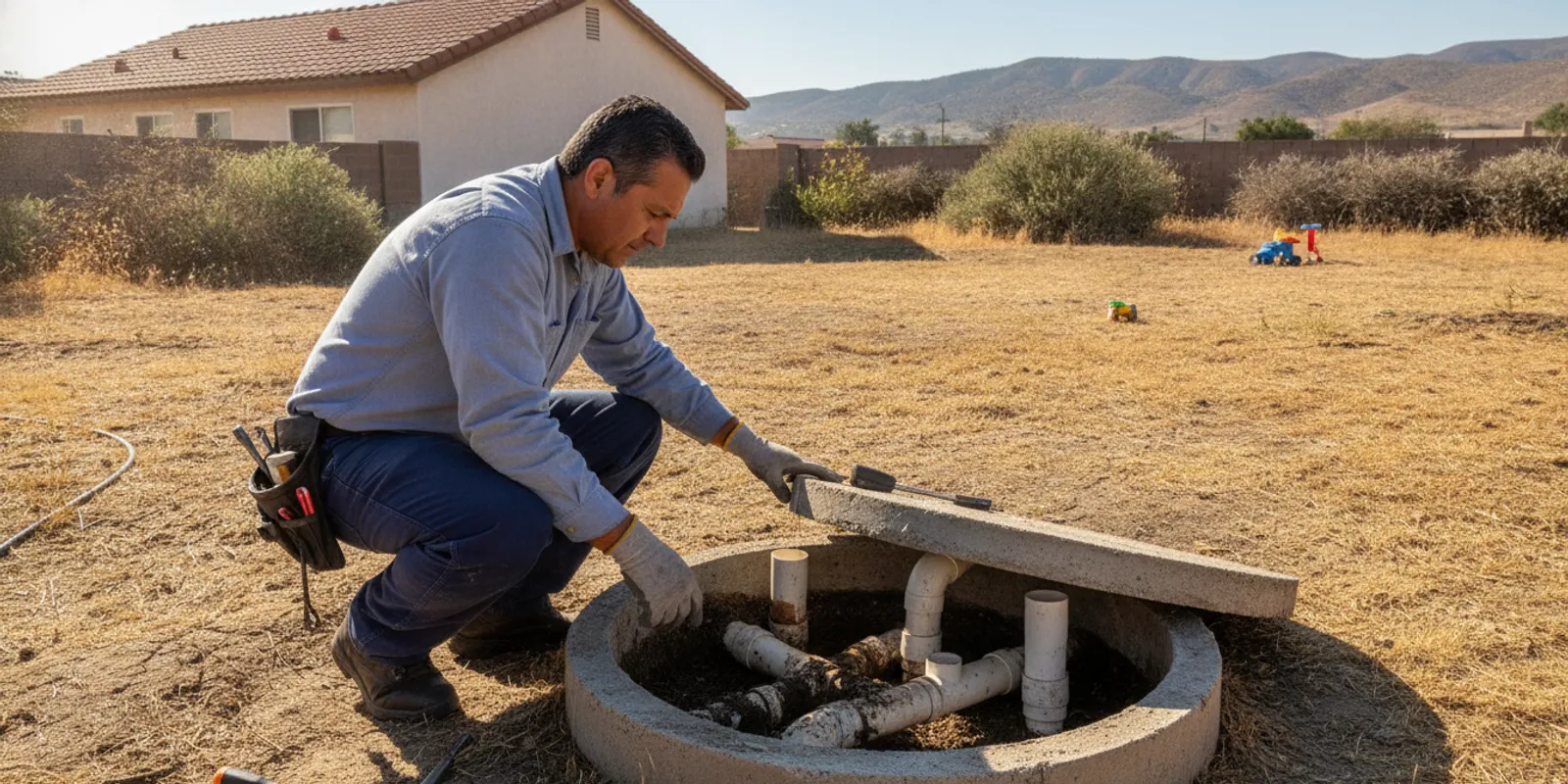
Septic system distribution box repair cost depends on what an inspection finds, how accessible the box is, and whether the problem is limited to the box or involves connected lines or the drain field. A distribution box (D-box) directs wastewater from the septic tank into multiple drain-field lines. For property owners in Riverside and San Bernardino counties, a careful diagnosis is the first step toward understanding the work and estimate.
Request a septic service assessment
What does a septic distribution box do?
The distribution box sits between the septic tank outlet and the drain field. It divides effluent among the field’s branch lines. Inside, outlets should be positioned so flow is distributed as designed. A damaged, shifted, blocked, or uneven box can send too much wastewater into one part of the field and too little into another.
The box is only one part of the system. A symptom near the box may also point to a tank outlet issue, a plugged or damaged pipe, uneven field lines, or a drain-field problem. That is why a quote based only on a brief surface observation may not describe the full scope. Learn more about the main parts of a septic system and how they connect.
What affects septic system distribution box repair cost?
There is no single dependable price for every property. The estimate should reflect the work needed at the specific site. These factors commonly influence the scope and labor:
- Type and extent of damage: A cracked or displaced box may require a different scope from one with damaged outlet connections or internal components.
- Access and excavation: Depth, soil conditions, landscaping, hardscape, and the location of the lid affect how the crew reaches the box and restores the area.
- Condition of connected piping: Broken, obstructed, or misaligned inlet and outlet pipes may need attention along with the box.
- Leveling and flow distribution: The box and outlet elevations may need adjustment so the connected lines receive flow as intended.
- Evidence of a larger system issue: Standing wastewater, saturated ground, or recurring backups can call for additional evaluation of the tank and drain field.
- Permits or local requirements: Applicable requirements depend on the jurisdiction and the work. Confirm these directly with the relevant county or local authority rather than assuming the same process applies everywhere.
These are scope factors, not a price list. A responsible estimate should identify what has been observed, what work is proposed, what remains uncertain, and whether restoration or separate approval is included. If the symptoms suggest a broader septic concern, review the available septic services and ask what diagnostic steps fit the property.
How do common repair scopes compare?
| Observed situation | Possible scope to discuss | What the estimate should clarify |
|---|---|---|
| Box is accessible and damage appears limited | Expose and inspect; repair or replace the affected box or component | Included excavation, parts, labor, and surface restoration |
| Box is shifted or outlets are uneven | Assess position and outlet elevations; correct alignment where appropriate | How flow balance will be checked and what connected lines are included |
| Connections appear damaged or obstructed | Inspect inlet and branch connections; repair affected piping as specified | Which pipe sections are included and how concealed damage is handled |
| Field symptoms continue after box work | Further evaluation of tank, lines, or drain field may be needed | What additional inspection is proposed and whether it requires separate authorization |
This comparison is for discussion, not a diagnosis. The actual repair depends on inspection findings and applicable site conditions.
What signs can point to a distribution box problem?
Possible warning signs include repeated slow drainage or backups, wet or unusually lush areas over part of the drain field, odors, or symptoms that recur after pumping. None proves that the D-box is the cause. Several septic problems can look alike, and surface symptoms may appear some distance from the failed component.
Reduce water use if wastewater is backing up or surfacing, and keep people and pets away from affected areas. Avoid opening or entering septic components. Arrange an evaluation and describe when the symptoms started, which fixtures are affected, and any recent pumping or repair history. For related background, see this guide to what a septic system inspection can cover.
What happens during diagnosis and repair?
- Discuss symptoms and system history. Share the property address, known system layout, past work, and current signs.
- Locate and access the component. A technician determines where the box is and what access is needed. Do not assume it is directly beside the tank.
- Inspect the box and connections. The assessment should consider the box condition, outlet levels, and connected piping, while checking whether symptoms suggest a wider issue.
- Review findings and proposed scope. Ask what is confirmed, what is a possibility, and what would trigger additional work.
- Complete authorized work and verify it. The repair plan should describe the components addressed and how the completed work will be checked.
Work involving onsite wastewater systems may be subject to local rules. The U.S. Environmental Protection Agency’s frequent questions on septic systems explain general septic-system considerations, but they do not replace county-specific requirements. Ask the relevant local authority about current requirements for your parcel and proposed work.
How can you compare estimates fairly?
Compare scope, not just the total. Two proposals may describe different amounts of investigation, excavation, parts, piping, or restoration. Request a written description that answers these questions:
- What inspection findings support the proposed repair?
- Is the estimate for repairing the existing box, replacing it, or correcting connections as well?
- Does it include locating, excavation, backfill, and restoration of disturbed landscaping or paving?
- Are permits, fees, or inspections included, excluded, or still to be confirmed?
- How will additional concealed damage be documented and approved before work proceeds?
- What checks will be performed after the work, and what records will you receive?
Ask each provider to distinguish confirmed work from contingent work. If more investigation is proposed, find out what question it will answer and whether you will receive the findings before deciding on additional repairs. Diamond House Plumbing provides septic system services for Inland Empire properties; you can learn about the company or contact the team with your questions.
How should Inland Empire owners prepare?
Gather any septic plan, prior inspection notes, pumping receipts, or repair invoices you have. Note the location of wet areas and whether problems change after heavy household water use. Tell the technician about buried utilities, gates, pets, and landscaping or hardscape that may affect access. Do not excavate or attempt to adjust the box yourself; septic components can expose people to hazardous gases and wastewater, and incorrect changes can worsen flow problems.
Because local processes may differ between Riverside County, San Bernardino County, and individual jurisdictions, verify current requirements for the property’s location before assuming a permit or inspection pathway. The EPA source above provides general system information, not local approval instructions.
What details should an estimate spell out?
A useful proposal makes it possible to see how the diagnosis connects to each task. Ask for the location of the box that was inspected, the visible condition of its body and connections, and the reason the recommended work addresses the reported symptoms. If the box is buried, ask what method will be used to expose it and whether the estimate assumes a particular depth or access condition. These details help distinguish a preliminary allowance from a defined repair scope.
Clarify what happens if the excavation reveals a different condition. For example, a proposal might cover the box itself but not a damaged branch line discovered nearby. Ask whether work will pause for documentation and your approval before the scope changes. Find out how the contractor will handle backfill and whether disturbed lawn, gravel, concrete, or other surfaces will be restored. A written boundary for included and excluded work can make estimates easier to compare without relying on assumptions.
It also helps to ask what the final check can establish. A visual review of the repaired box may confirm its placement and connections, while persistent field symptoms could require a separate assessment. Ask what observations or records you will receive and what follow-up would be appropriate if the same symptoms return. Avoid treating a proposed repair as proof that every part of the septic system has been evaluated.
What can change the work after excavation begins?
Buried components are not always visible during an initial surface assessment. Once the box is exposed, a technician may find that an inlet or outlet pipe is disconnected, cracked, obstructed, or set differently than expected. Soil movement or water conditions can also affect access and the repair plan. These possibilities do not mean additional work is inevitable; they are reasons to agree on a process for documenting unexpected findings before authorizing a change.
Ask how the crew will protect the exposed area, how long it can remain open if a decision is needed, and what precautions keep people and pets away. If the proposed scope changes, request a plain-language explanation of the new finding, the options being considered, and the effect on the estimate and schedule. That gives you a chance to decide based on evidence rather than pressure at the work site.
How can household use and site conditions matter?
Details about water use and the yard can help frame the assessment. Note whether symptoms appear after laundry, long showers, or several fixtures running at once, and whether wet ground is present continuously or only at certain times. This history does not identify the failed component on its own, but it can help a professional ask better questions and compare the timing of symptoms with system use.
Keep vehicles and heavy equipment away from the suspected box and drain-field area unless the service provider confirms an access route. Compaction or damage from traffic can complicate work around buried wastewater components. Before the appointment, point out irrigation lines, retaining walls, paved areas, and known utility routes. Share any available property or septic layout, while understanding that old plans may not show later changes accurately.
Frequently asked questions
Can a distribution box be repaired, or does it always need replacement?
That depends on the material, condition, connections, and whether the box can be returned to proper function. An inspection should explain why repair or replacement is recommended for the specific system.
Can a D-box problem damage the drain field?
Uneven distribution can place more flow in some field lines than others. Whether damage has occurred requires evaluation of the system; symptoms alone cannot establish the condition of the field.
Does pumping the septic tank fix a distribution box issue?
Pumping removes accumulated solids from the tank, but it does not correct a damaged, shifted, or poorly connected distribution box. A technician can determine whether pumping is appropriate in addition to other work.
Should an estimate include landscaping restoration?
Ask for this in writing. Excavation may disturb soil, plants, paving, or other surfaces, and restoration may be included, excluded, or handled separately depending on the proposal.
Discuss a septic system concern
A clear diagnosis and itemized scope help you understand the work behind a distribution box repair estimate and make an informed decision for your property.

Leave a Reply